
Last updated November 18, 2026
Insulation Warning Signs: A North Las Vegas Homeowner’s Reference Guide
A dark gray stain on attic insulation directly above an interior wall is not evidence of a roof leak. It’s evidence of stack-effect air movement carrying interior dust through an unsealed top plate. Replace the insulation without sealing the bypass and you’ll restore the R-value and the staining within 18 months. That’s the part most warning-sign guides leave out. They describe what you see and skip why it’s happening, so homeowners end up paying twice for the same problem. This guide traces each symptom back to its physical cause so you know whether you’re looking at an insulation failure, an air-sealing failure, or a moisture problem. We’re writing it from North Las Vegas, where summer attic temperatures routinely clear 150°F and the climate punishes a bad diagnosis fast.
Quick Answer
Insulation warning signs in a North Las Vegas home are rarely about R-value alone. The most common causes are unsealed top plates and can lights letting conditioned air escape, settled or missing batts in specific bays, and moisture intrusion that degrades insulation from below. A symptom like a hot ceiling or a spike in summer cooling bills almost always points to an air-sealing failure first and an insulation shortfall second – so the correct sequence is to seal, then insulate, then verify with a blower-door test.
Table of Contents
- The Hot Ceiling Test: Finding Problem Bays With an Infrared Thermometer
- What Attic Insulation Staining Patterns Tell You
- Reading Your Energy Bills for a 15-20% Cooling Cost Climb
- Pest Evidence in Blown Insulation and What It Means for Sealing
- Moisture Warning Signs Specific to North Las Vegas Construction
- Insulation Failure vs. Air-Sealing Failure: How to Tell Them Apart
- How a Blower-Door Test Confirms the Diagnosis
- What Documentation You Should Walk Away With
The Hot Ceiling Test: Finding Problem Bays With an Infrared Thermometer
You don’t need an inspection to spot your first warning sign. You need a non-contact infrared thermometer and a July afternoon. A basic infrared gun runs $25 to $40, and it will show you surface temperatures that your hand can’t feel precisely enough to be useful. Wait until the outside temperature is at least 105°F and the air conditioner has been running for several hours. Then scan the interior ceiling of each room, keeping the thermometer a foot or two from the surface.
The temperature differentials tell you three different things:
- Isolated hot spots (5-10°F above surrounding ceiling): a specific bay that’s missing insulation, has settled, or was never covered. In garage-adjacent rooms and back bedrooms of single-story homes across North Las Vegas, we regularly see a whole bay of Johns Manville batt skipped for a recessed can light that was installed later.
- Broad warm bands (3-6°F above average, running room to room): a continuous strip of insulation that’s been compressed or displaced – often along the line of the top plate.
- Evenly warm ceiling (uniform 4-8°F above a nearby interior wall): insulation that’s below the recommended R-value for the climate zone, or that’s been contaminated by dust and moisture so it doesn’t trap air the way it used to.
North Las Vegas homes built between 2015 and 2025 in neighborhoods like Tule Springs and Aliante frequently have blown-in fiberglass at the code minimum. Code minimum is not the same thing as performance – the insulation can hit its R-value target and still not deliver a comfortable ceiling if the air beneath it is moving.
What Attic Insulation Staining Patterns Tell You
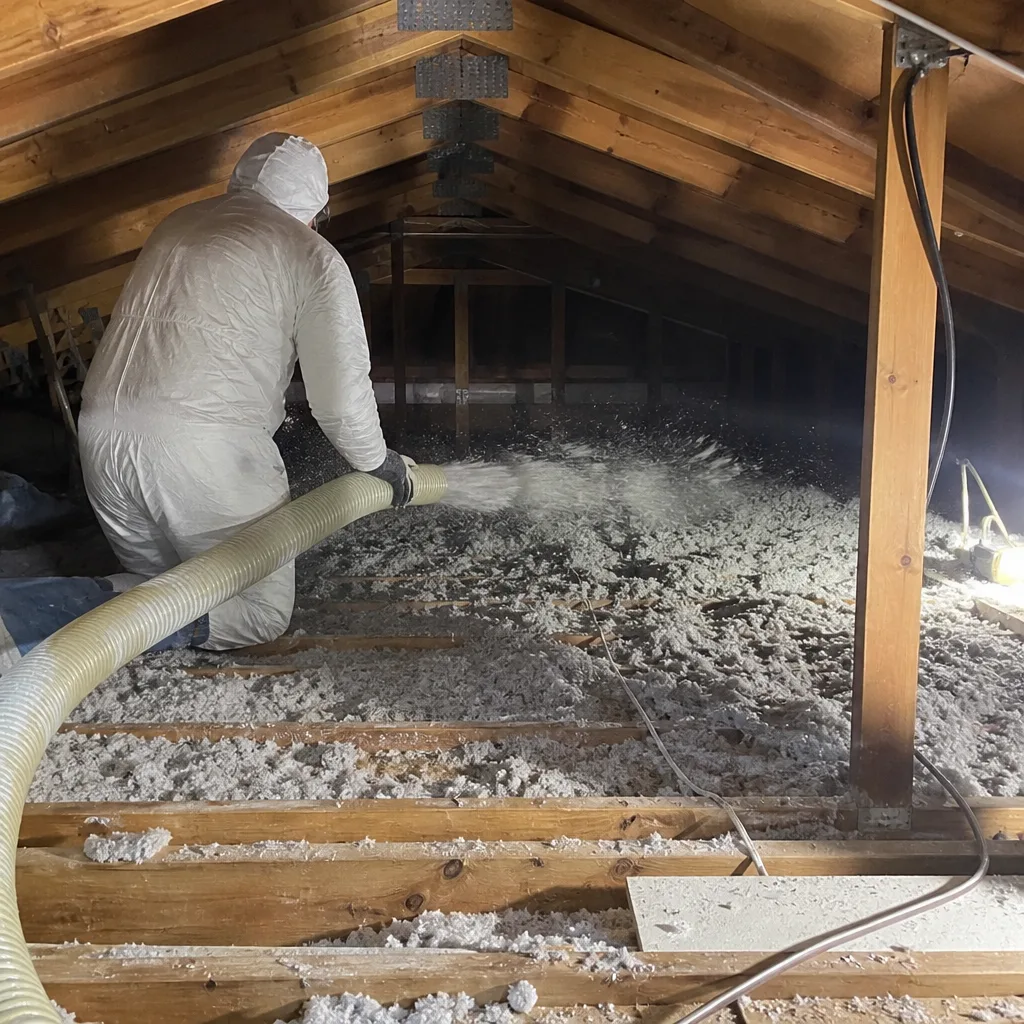
Staining is the most misread warning sign we encounter. The color rarely points to the cause; the pattern does. Here’s how to read it before you call anyone.
- Radial staining – a stain that radiates outward from a single point: a point-source air leak. Most often a recessed can light or a bath fan housing that was cut through the ceiling without an air-sealed box around it. Warm moist interior air exits at that point, contacts the cooler insulation, and leaves a ring.
- Linear staining – a stain running in a straight line across the attic floor: a top-plate bypass. The junction between interior and exterior walls is where the framing meets the ceiling, and unless it’s been sealed with spray foam or caulk, interior dust and moisture ride stack effect right through the gap. This is the stain we most often diagnose in North Las Vegas homes and the one most often missed.
- Uniform discoloration – the whole surface of the insulation looks dingy or gray: overall air movement rather than a single defect. Air is moving through the envelope broadly. Fixing one hole won’t solve it; the whole attic floor needs a sealing pass.
If you see any of these and just add new insulation on top, the stain will reappear. Under the Envelope Insulation North Las Vegas home standard, we won’t blow insulation over an unsealed attic floor for exactly this reason. Sealing comes first. Insulation second.
Reading Your Energy Bills for a 15-20% Cooling Cost Climb
Your utility bill is a diagnostic tool that most homeowners read as a complaint. Read it as a trend, and it tells you when to call for a professional test. A 15-20% increase in cooling costs over two summers – holding your household size, thermostat settings, and NV Energy rate schedule constant – is a quantified warning sign. It’s not one-month noise. It’s a two-summer pattern that says either your envelope got worse or something broke.
Pull your meter data or bills for the last three summers. Compare peak July and August usage year over year, and confirm NV Energy’s summer rate schedule hasn’t shifted in a way that explains the change. If the usage growth is real and only shows up in cooling months, the most likely causes are:
- Compressed or settled insulation in the attic (common after duct work or solar installers have been up there)
- A new gap at the top plate, rim joist, or around a replaced can light
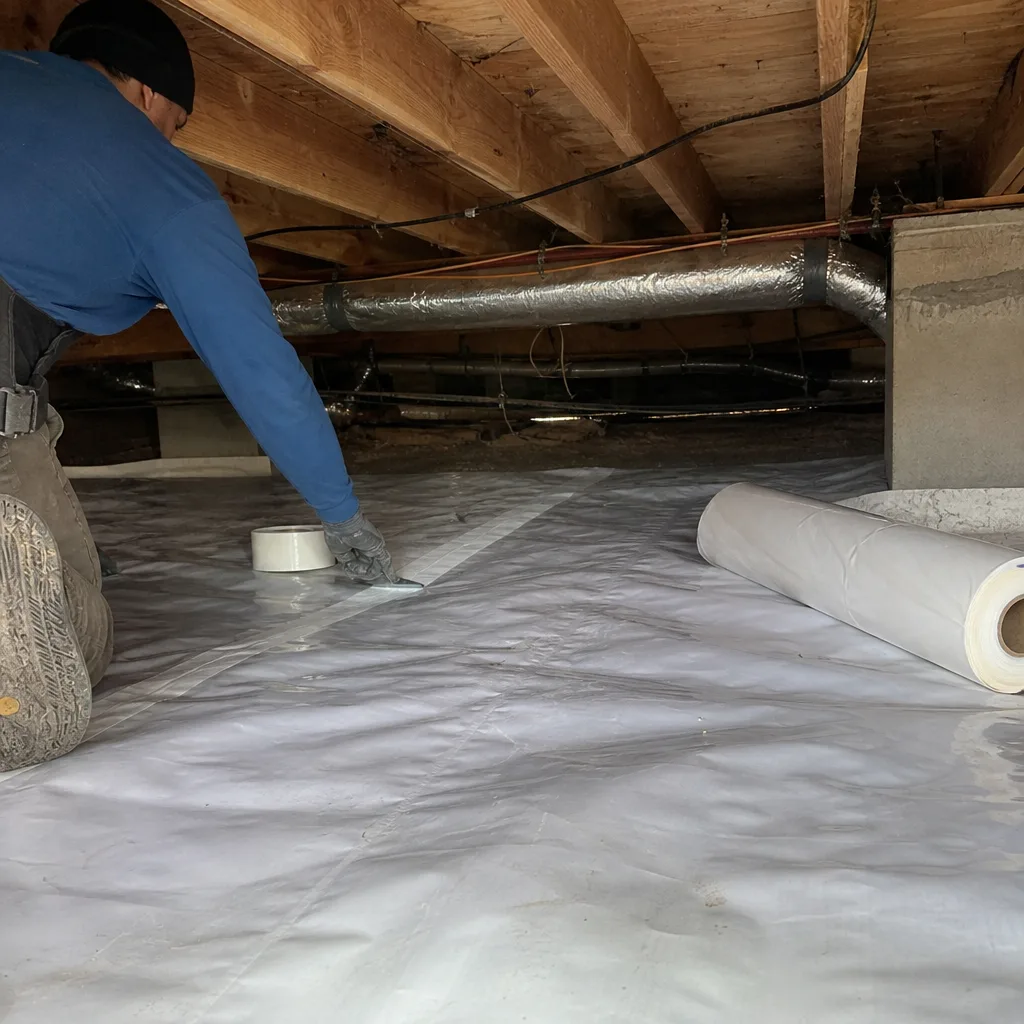
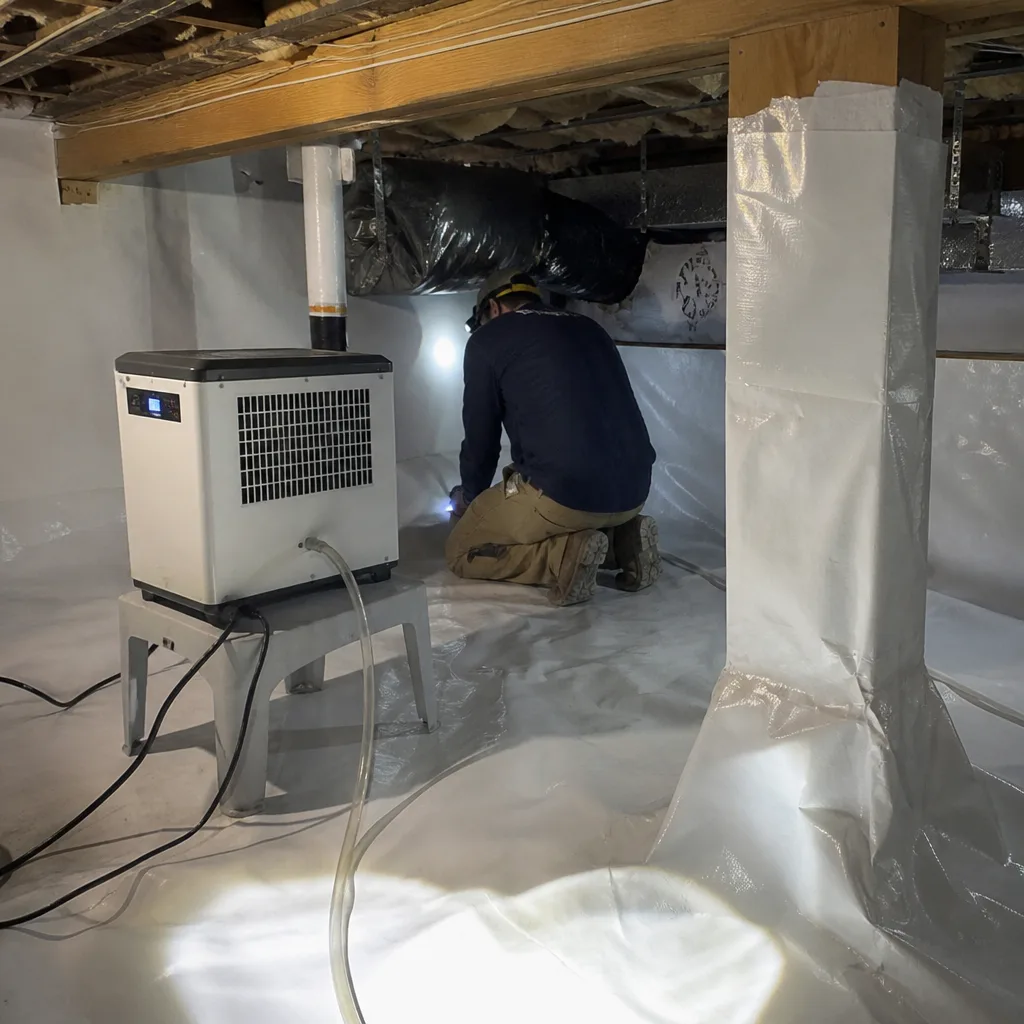
- Crawl-space vapor barrier compromised, letting humid air push up into the living space
A blower-door retest settles the question in an hour. The test measures how much air the envelope is losing – a single figure that shows whether your cooling dollars are escaping through a gap you can’t see. If you’ve never had one done, the first reading is your baseline.
Pest Evidence in Blown Insulation and What It Means for Sealing
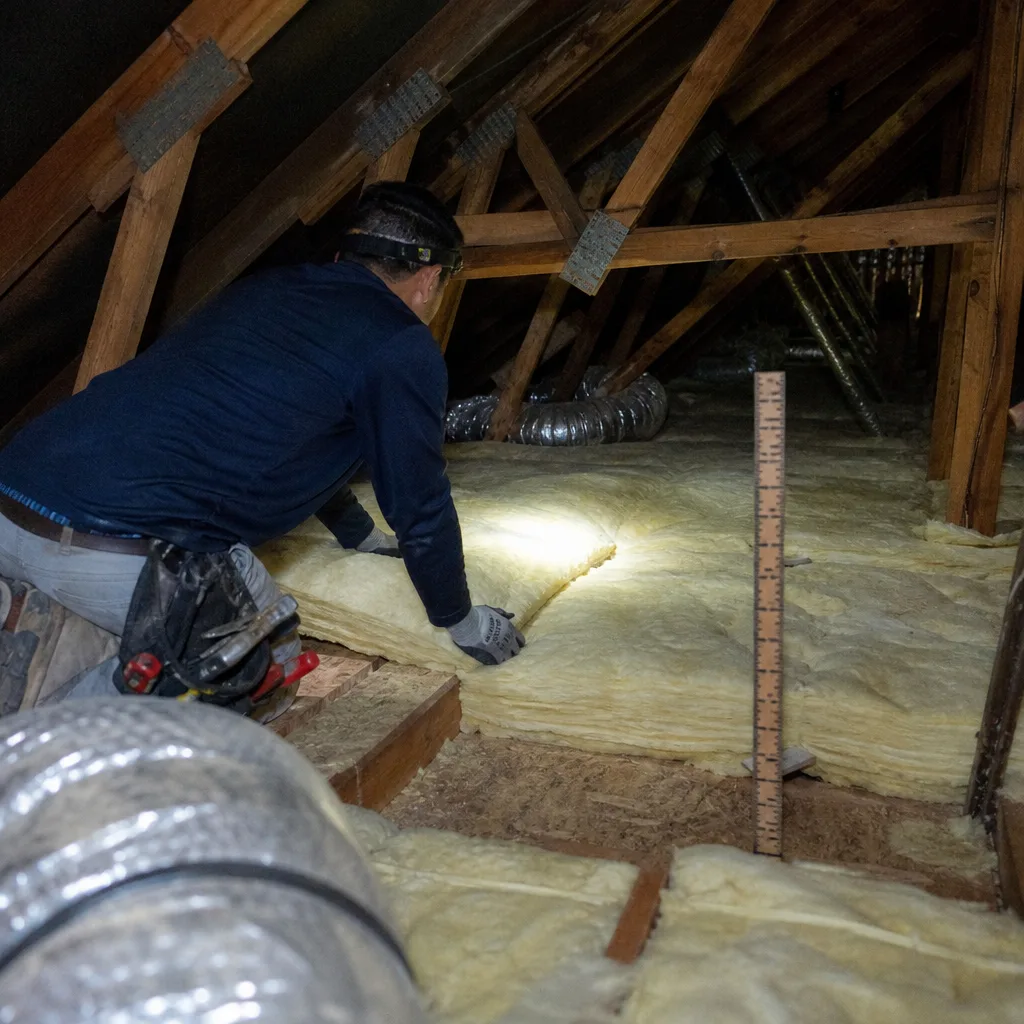
Not every disturbance in blown insulation is a rodent. This matters, because replacing insulation over an active pest issue means replacing it again in a year. The diagnostic detail is whether the insulation has been tunneled through (compromised) or shifted on the surface (cosmetic).
Tunneling shows up as narrow channels cut horizontally through the material, often with a small pile of displaced insulation at the end. Rodent activity like this compromises air sealing – the animal enters from the exterior through a gap that was already an air leak, and the pathway enlarges with use. Surface disturbance looks different: the insulation is pushed to the side in a broad sweep, typically from duct access or a service technician stepping over it.
In North Las Vegas, the two pests that show up most often in attic insulation are roof rats and, in older construction near the historic downtown, roof rats plus desert mice. Neither is solved by re-blowing insulation. The order of operations is:
- Identify and exclude the entry points (gap at roof line, foundation vent, gable vent screen)
- Remove contaminated insulation where required
- Air seal the attic floor under the affected areas
- Replace insulation with a fresh, documented installation
For more on the sealing and installation side, see Attic Insulation in North Las Vegas. Pest remediation finished before insulation goes in, not after.
Moisture Warning Signs Specific to North Las Vegas Construction
Moisture is the insidious third category. It rarely announces itself as a leak. In North Las Vegas construction it shows up as three specific findings, and each one has a diagnostic meaning.
- Efflorescence on block walls in the crawlspace – a white powdery bloom: water moving through the block, evaporating on the interior face, and leaving mineral salts behind. Efflorescence alone doesn’t mean the block is failed, but it always means moisture is present. If it’s on the wall and the vapor barrier below the floor is torn or absent, the moisture is likely coming up from the soil, not through the wall.
- Rust on attic HVAC fasteners – screws, duct straps, the hardware holding the air handler: condensation forming in the attic during the summer and staying. A warm, humid attic plenum where HVAC equipment runs cold creates condensation on every metal surface. Left unchecked, that moisture finds insulation and degrades it.
- Frost on the underside of a roof deck in January: warmer moist air from the living space reaching the cold roof deck and freezing on contact. It’s a signature of an unsealed bypass – the same interior air that carries your conditioned cooling out in July carries water vapor up in January.
That last one is worth sitting with. Frost on the roof deck in January and a $280 July cooling bill are frequently the same problem showing up in two seasons. The fix starts below the deck, not on it. Our guide to Crawl Space Encapsulation & Vapor Barrier in North Las Vegas walks through what sealing the moisture source actually involves.
Insulation Failure vs. Air-Sealing Failure: How to Tell Them Apart
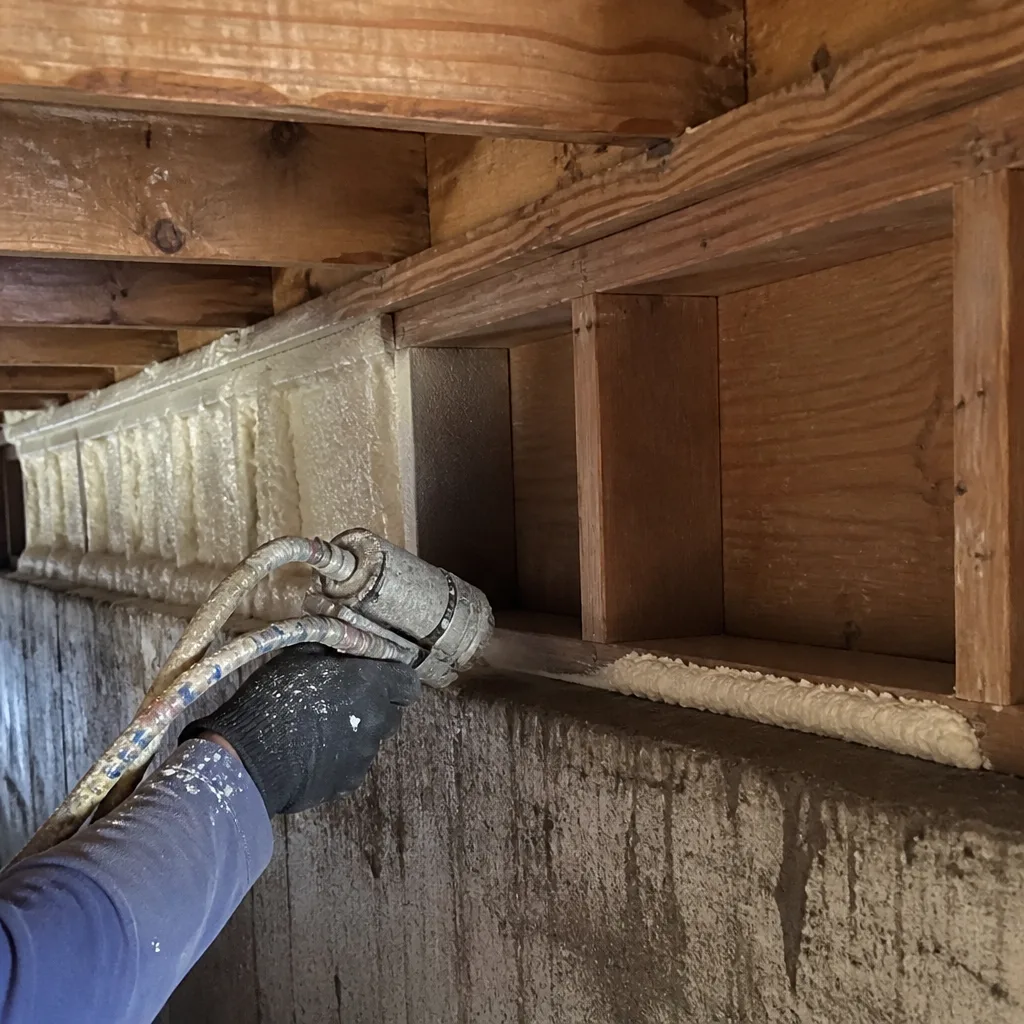
Here’s the distinction that saves homeowners the cost of a second remediation. An insulation failure means the material itself isn’t doing its job – it’s been compressed, wet, contaminated, or was installed at the wrong depth. An air-sealing failure means the insulation is fine, but conditioned air is flowing past it, so the material never had a chance to work. The two look similar from inside the living room. They don’t look the same in the attic.
Some markers to sort them:
- Insulation failure: visible compression, moisture, or pest contamination in the material itself. The insulation at the attic floor is below the labeled depth. R-value test (a simple core sample) confirms it.
- Air-sealing failure: insulation looks healthy, but you can see staining or dust trails along top plates, can lights, and penetrations. The blower-door reading is high even after insulation was recently replaced.
- Both: very common in homes built 2010 or earlier and untouched since. The previous owner added insulation, but no one sealed first.
The proof is in the test, not the guess. When we open an attic and see fresh insulation over an unsealed floor, that’s the honest diagnosis – and it isn’t the insulation company’s fault for selling insulation. It’s the sequencing that was wrong. Spray foam at the ceiling plane or a dedicated air-sealing pass changes the outcome. For homes where the ridge is tight or the ceiling plane is complicated, see Spray Foam Insulation in North Las Vegas for the materials that hold a seal long-term in high-heat conditions.
How a Blower-Door Test Confirms the Diagnosis
Every warning sign in this guide points toward one question: how much air is your building envelope losing, and where? A blower-door test answers both. It’s a pressurization reading that shows, in one number (CFM50, or cubic feet per minute at 50 pascals of pressure), how much air the envelope leaks. It takes about an hour. It requires no attic access for the homeowner and no steps on your part beyond opening the home to the technician.
A trained technician runs the fan to a set pressure, watches the manometer settle, and reads the number. A high reading with a low insulation depth means both sealing and insulation are needed. A high reading with healthy insulation means the insulation is being bypassed. A low reading with a high bill points somewhere else entirely – the HVAC system, duct leakage, or appliance load.
The reason you want a before-and-after number on the written report is that it’s the only figure that proves what you paid for. Owens Corning Fiberglas, Knauf EcoBatt, and Rockwool Safe’n’Sound all perform to their labeled R-value – when they’re installed over a sealed attic floor. The blower-door reading is the proof that the sealed floor existed before the insulation went on. Ask any contractor for the number. If they can’t produce it, you’re being asked to take the result on faith.
What Documentation You Should Walk Away With
Warning-sign diagnosis is worth exactly as much as the paper trail behind it. Here’s what a documented record looks like after any insulation or air-sealing visit, and what you should expect to receive.
- A written price before any work starts. Not a verbal estimate. A written scope of the sealing locations, the insulation depth and R-value targeted, and the price.
- Before-and-after blower-door readings. On any applicable job, the two numbers belong on your report. If sealing was done, the number should improve. If it doesn’t, the diagnosis was wrong.
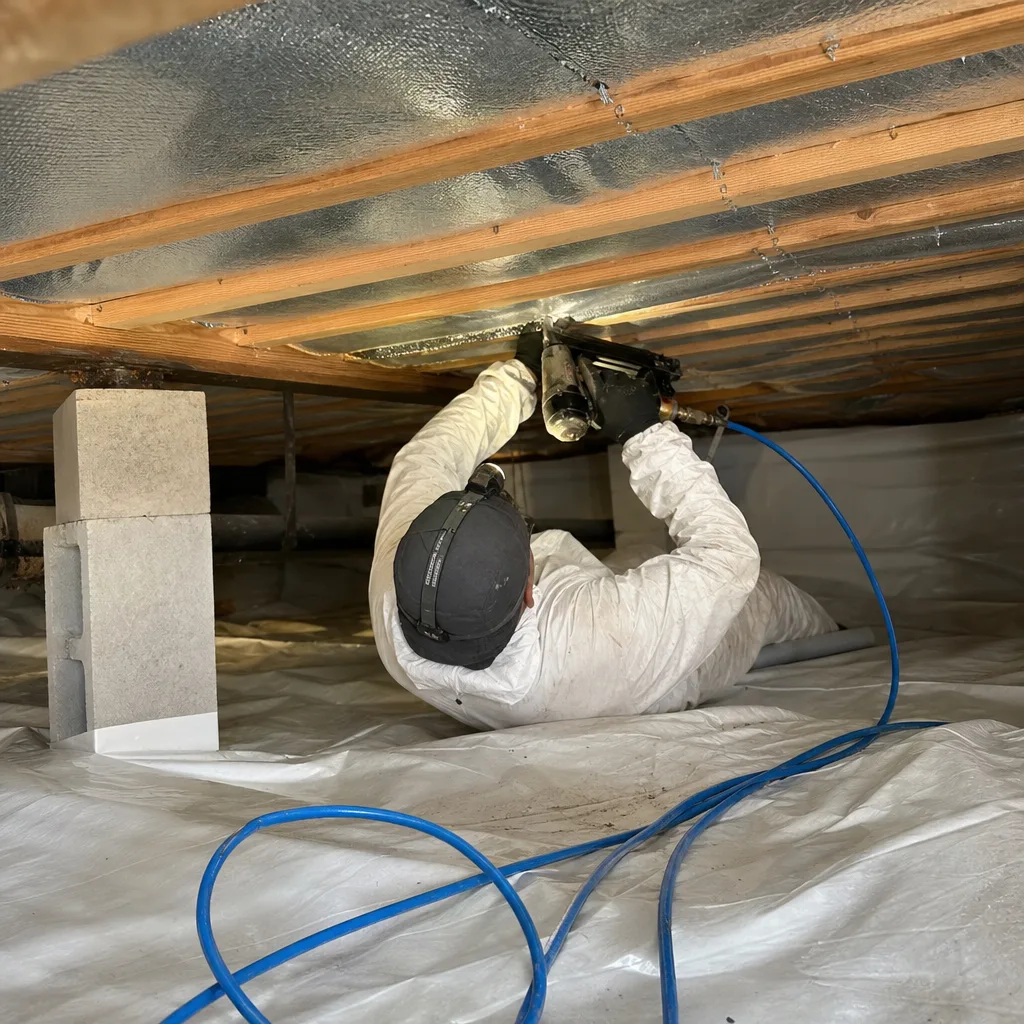
- Photos of the sealed locations. Top plates, can lights, plumbing penetrations, bath fans, and any HVAC boot seals should be photographed before the insulation goes over them.
- A written warranty. The 365-Day Done Right Promise – if it’s not done right, we make it right – is only meaningful if the scope of “done right” is defined before the job.
We’ve completed over 9,000 homes sealed and insulated since 2016, and every one of them closes with a written price already on file and a documented photo record when the crew leaves. Free second opinion on any written estimate you bring us – we’ll read it with you before we talk about price.
Common Mistakes to Avoid
- Adding insulation over an unsealed attic floor. This is the single most common mistake we correct. It buries the air leak you needed to find, restores the R-value, and lets the same symptoms return within 18 months.
- Treating a dust stain as a roof leak. Stains above interior walls are usually top-plate bypasses, not water. Call a roofer for a water stain and you’ll pay a service call for the wrong diagnosis.
- Skipping the blower-door test. Without a before-and-after reading, you can’t tell whether the work you paid for changed your home’s performance. The number is the deliverable, not the aesthetic of a fresh attic.
- Re-insulating before pest remediation is finished. Active rodent activity will compromise a fresh installation the same way it compromised the old one. Seal the entries first.
- Assuming the summer bill is a rate problem. A 15-20% climb over two summers with steady household use is a signal. Check NV Energy’s rate schedule to rule it out, then call for the test.
- Ignoring January frost on the roof deck because it’s “just winter.” Frost on the underside of the roof deck in a North Las Vegas January is a bypass at work. It’s the same air leak that’s costing you in July.
- Accepting a verbal scope. If the price, depth, R-value target, and blower-door commitment aren’t in writing before work begins, you have no way to verify what was done.
When to Call a Professional
Call a professional insulation contractor in North Las Vegas when any of these show up: a 15-20% climb in summer cooling bills over two summers that you can’t tie to a rate change; an infrared scan showing isolated hot spots on a ceiling when outdoor temperatures are 105°F or higher; visible staining patterns in the attic that follow radial, linear, or uniform shapes; pest tunneling in blown insulation; efflorescence in the crawlspace, rust on attic HVAC fasteners, or January frost on the roof deck; or a blower-door reading that came back high even after new insulation was installed. Also call if a competing written estimate doesn’t include the sealing locations, R-value target, or blower-door commitment – those omissions are worth a second read. Envelope Insulation North Las Vegas offers free estimates in North Las Vegas – call (833) 630-4008. Calls are answered by a live person, 24/7, and we’ll bring a written scope, a flat price, and a documented photo record to the visit.
Frequently Asked Questions
Compare peak July and August usage over the last three summers with your household size and NV Energy rate schedule held constant. A 15-20% climb across two summers is a quantified warning sign and justifies a professional blower-door test. Call (833) 630-4008 to book the test – it takes about an hour. The written reading is your baseline.
Look at the pattern, not the color. Radial stains point to a single-source air leak like a can light. Linear stains running across the attic floor usually indicate a top-plate bypass. Uniform discoloration points to broad air movement. Roof leaks tend to follow roof geometry and show up with wet active staining, not the dry gray dust pattern we’re describing. Call (833) 630-4008 and we’ll look at it in person with photos and a written diagnosis.
No. Replacing insulation without sealing the attic floor restores R-value but leaves the bypass active, and the same staining returns within 18 months in most cases we see. The correct sequence is seal first, then insulate, then verify with a blower-door reading. Call (833) 630-4008 for a written scope and price before any work starts.
North Las Vegas sits in IECC Climate Zone 3, so attic insulation should target around R-38 to R-49 depending on construction and ceiling type. Code minimum is not the same as performance – a home can hit the code minimum and still lose conditioned air if the attic floor isn’t sealed. Call (833) 630-4008 and we’ll list the target R-value and sealing locations on the written scope before work begins.
Most attic air-sealing jobs in a North Las Vegas home run between $1,200 and $2,800, and a combined sealing plus insulation job typically runs between $3,200 and $6,500, depending on square footage, current insulation depth, and how many penetrations need sealing. Blower-door testing is included on applicable jobs. Call (833) 630-4008 for a written price on your specific home – the price is written before any work starts.
Same-day diagnostics are available in North Las Vegas depending on schedule, and calls are answered by a live person 24/7. If you’re seeing active water intrusion, frost on the roof deck in winter, or pest tunneling in the insulation, call (833) 630-4008 and we’ll give you the earliest available window and what to document before we arrive.
The Bottom Line
If you take one thing from this guide, take the sequence: symptom, cause, test, then work. Read the stain pattern before you assume a leak. Read your bills across two summers, not one. Use an infrared thermometer on a hot July afternoon to find the specific bays that are struggling. And on any job that involves both sealing and insulation, ask for the before-and-after blower-door numbers – they’re the only evidence that the money you spent changed your home’s performance. In North Las Vegas, the diagnosis saves more than the price comparison does. Under Haven Standard: Have it in writing, and it stays in writing until the crew leaves.
Written by the team at Envelope Insulation North Las Vegas.