
Last updated November 18, 2026
The Complete Crawl Space Encapsulation & Vapor Barrier Guide for North Las Vegas Homeowners
Clark County averages about 4.2 inches of rainfall a year, yet crawl space moisture calls spike every August. The North American Monsoon drops short, intense rain that saturates the top 12 inches of soil faster than it can drain, and vapor keeps pushing into unencapsulated crawl spaces for weeks after the storm passes. In a desert, that surprises people. In North Las Vegas, it’s the reason a vapor barrier matters. This guide covers how encapsulation works in an arid climate, why 20-mil reinforced poly beats 6-mil sheeting on our rocky lots, how to read a moisture meter before and after, and exactly what documentation you should walk away with.
Quick Answer
Crawl space encapsulation in North Las Vegas means sealing the ground and walls of the crawl with a heavy reinforced vapor barrier, sealing the rim joist and penetrations, and controlling ventilation or adding a dehumidifier so the space stays dry year-round. In our monsoon-driven desert climate, a sealed crawl usually outperforms passive venting because it stops soil vapor at the source instead of inviting humid August air in. A full scope runs from ground cover to rim joist sealing, and it’s verified with moisture readings, not guesswork.
Table of Contents
- Why crawl space moisture in North Las Vegas isn’t a rain problem
- Vented vs. unvented: what IRC Section R408 gets wrong for desert monsoon conditions
- Vapor barrier materials: 20-mil reinforced poly vs. 6-mil sheeting
- How to read a moisture meter at the rim joist and subfloor
- What a complete encapsulation scope includes (and what a partial one skips)
- The documentation you should keep after the job
- Encapsulation vs. a vapor barrier: what’s the difference?
- What encapsulation costs in North Las Vegas
Why crawl space moisture in North Las Vegas isn’t a rain problem
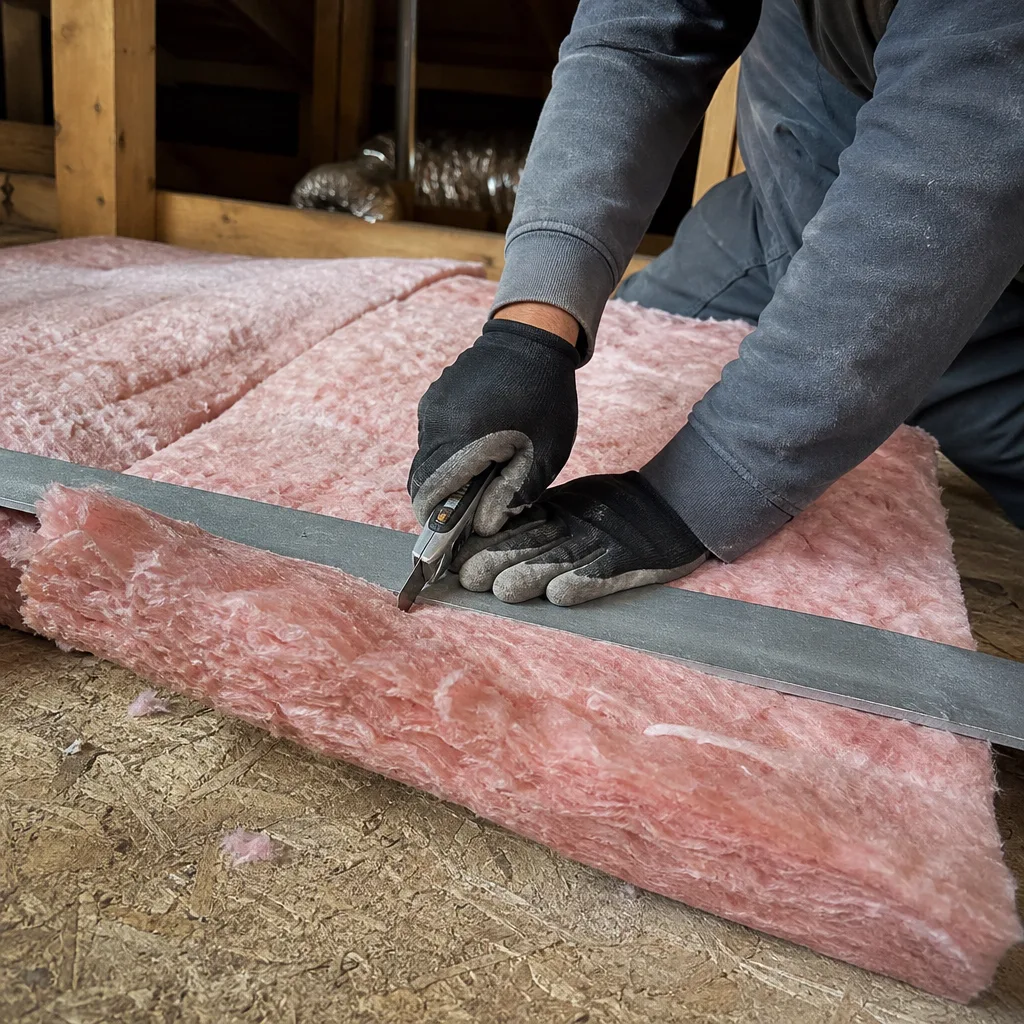
Most crawl space guidance is written for the Southeast, where the threat is constant humidity and driving rain. North Las Vegas doesn’t work that way. Our moisture comes from three specific sources, and passive venting handles none of them well.
The first is irrigation overspray. Drip lines and sprinkler heads set too close to the foundation push water into the soil along the stem wall, and in a crawl with an open ground plane, that water turns to vapor and rises. The second is monsoon saturation. When a July or August storm dumps an inch in twenty minutes, the caliche-heavy soil common on Clark County lots sheds it sideways, and the first 12 inches stay wet for days. The third is residual construction moisture. Newer homes built on slab-adjacent framing between 2015 and 2025 often trap moisture from the concrete pour inside an unvented crawl, and it never fully dries without airflow or dehumidification.
We’ve opened crawls in North Las Vegas where the joists read fine at the top and 22% at the base plate, because the moisture was wicking up from the soil, not falling from the sky. That pattern is exactly why a ground barrier matters more here than window vents. If you want the full picture of how all your envelope components interact, our guide to Envelope Insulation North Las Vegas home performance walks through how crawl moisture, attic air leaks, and wall insulation stack up together.
Vented vs. unvented: what IRC Section R408 gets wrong for desert monsoon conditions
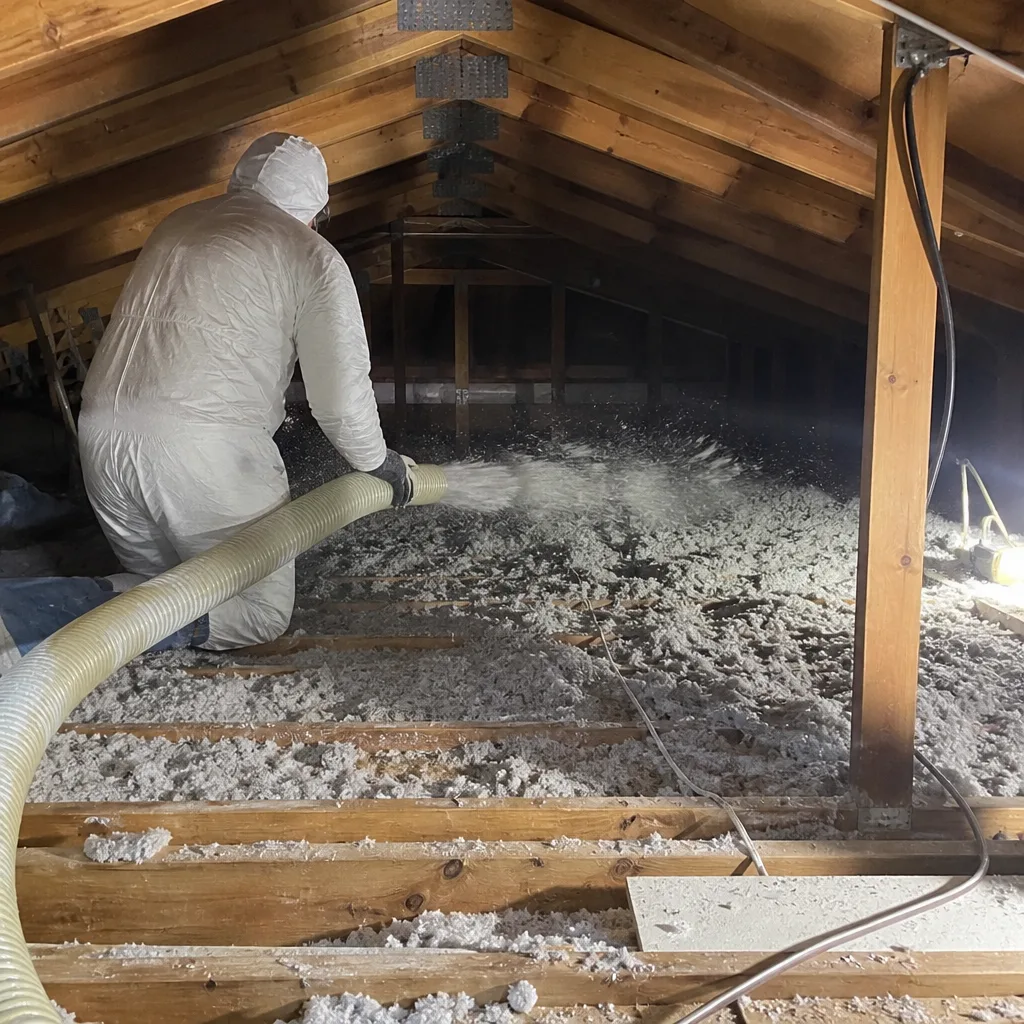
IRC Section R408 sets the standard most builders follow for passive crawl space venting: a ratio of vent area to floor area, typically 1 square foot of vent per 150 square feet of crawl. On paper, that works. In August in North Las Vegas, it doesn’t.
The logic behind venting assumes outside air is drier than crawl air, so opening the space lets moisture escape. During a monsoon event, the opposite is true. Outside air hits 60% to 80% relative humidity while an unvented, unencapsulated crawl can sit at 40%. Open the vents and you’re actively pumping wet air into the space, where it condenses on cooler framing and ductwork. This is why we see more mold and wood-rot calls in North Las Vegas in the two weeks after a storm than in the middle of summer heat.
A sealed crawl inverts the problem. You cap the soil vapor at the ground with a barrier, seal the rim joist and any penetrations, and either close the vents or manage them deliberately. Here’s what changes:
- Soil vapor stops entering. The barrier is the primary defense; vents become secondary.
- Cooler surfaces stay dry. Without humid outside air, condensation on ducts and joists drops sharply.
- Conditioned air stays inside. Sealing the rim joist and penetrations cuts the stack-effect leaks that pull treated air down through the floor.
That last point connects directly to your attic. Crawl and attic leaks work together to drive energy loss, which is why we treat air sealing as a prerequisite, not an add-on, on any Attic Insulation in North Las Vegas project.
Vapor barrier materials: 20-mil reinforced poly vs. 6-mil sheeting
Not all vapor barriers are built for a North Las Vegas crawl. The two materials you’ll most often see quoted are 6-mil standard poly and 20-mil reinforced poly. In our climate, with the substrate we have, they are not equivalent.
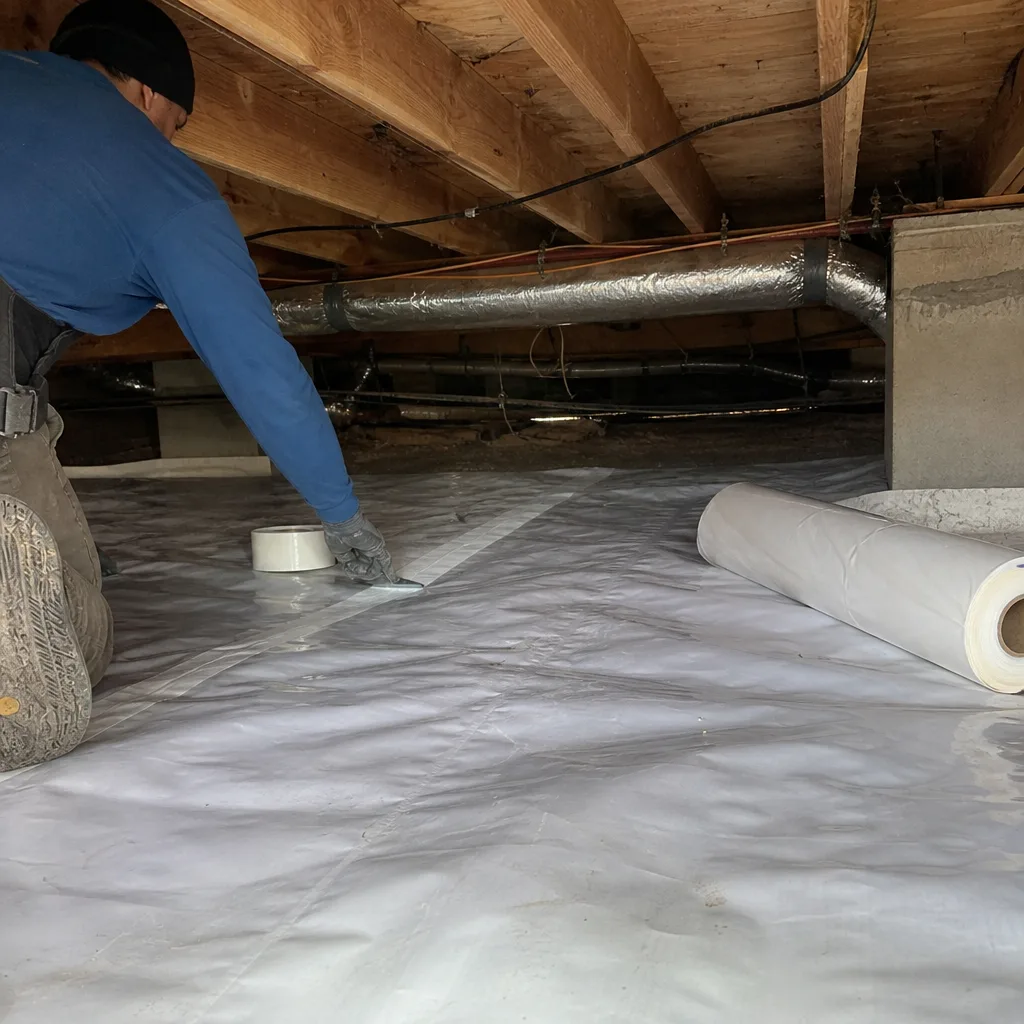
North Las Vegas lots often sit on graded caliche and decomposed granite that leave a rocky, uneven crawl floor. A 6-mil sheet laid over that surface punctures easily during installation, during later plumbing or HVAC trips, and from foot traffic. Once a barrier has holes, it functions as a partial barrier at best. A 20-mil reinforced poly – a thicker polyethylene sheet with a scrim layer that resists tearing – handles the abrasive substrate, stays in place with fewer fasteners, and holds up to the annual maintenance that happens under homes here.
What to look for in the spec sheet before you sign:
- Mil thickness called out explicitly. Ask for the number in writing, not “heavy-duty.”
- Reinforcement or scrim layer. This is what differentiates 20-mil reinforced from plain poly.
- ASTM E1745 compliance for the material class.
- Brand-documented products. We source barrier materials alongside Johns Manville and CertainTeed insulation products so the spec is verifiable, not generic.
A 6-mil sheet that costs $0.15 a square foot and fails in two years isn’t cheaper than a 20-mil barrier that lasts. It’s a repeat job.
How to read a moisture meter at the rim joist and subfloor
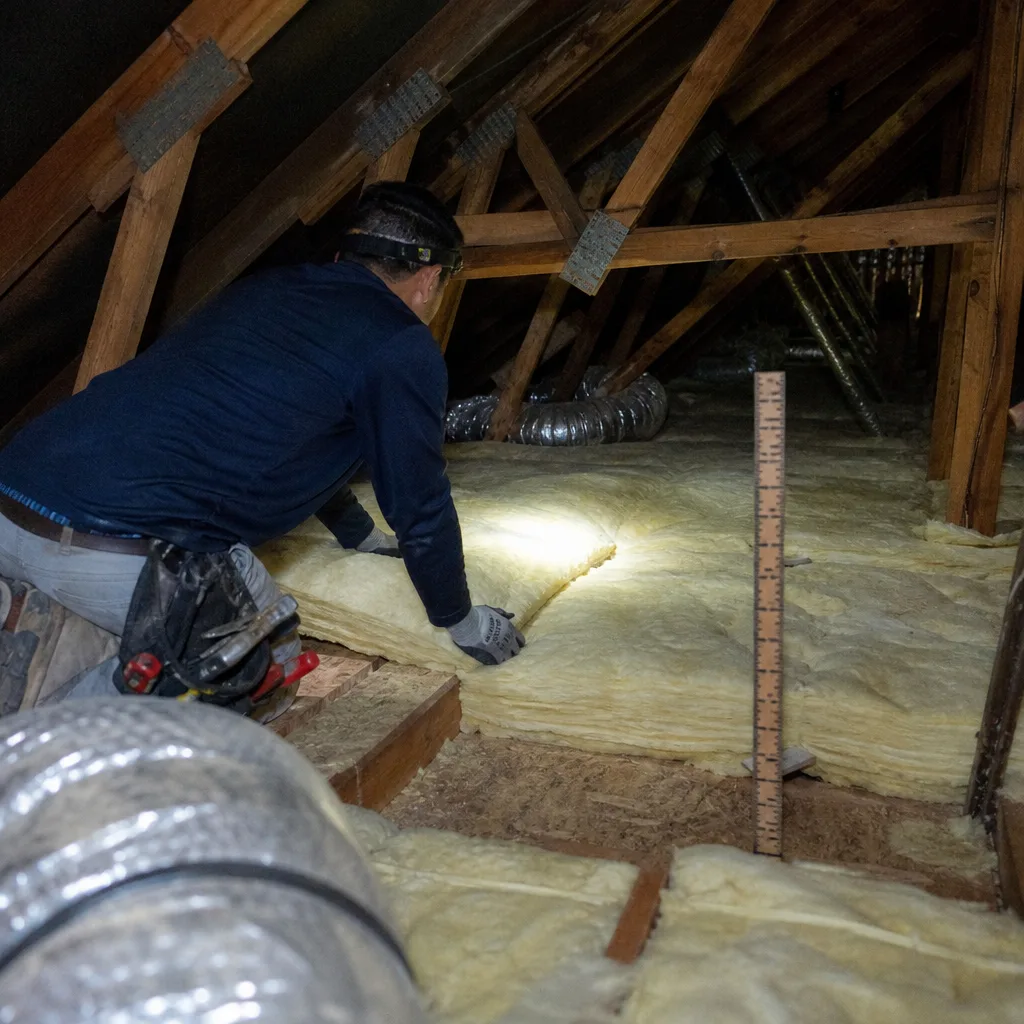
You can’t judge crawl moisture by stepping into the space and smelling the air. You measure it. A pin-type moisture meter – a hand-held tool that reads water content in wood by electrical resistance – gives you a number you can compare before and after, and that’s what makes encapsulation verifiable instead of optimistic.
- Set a baseline on the subfloor. Take readings at several points across the underside of the subfloor, not just one. Wood should be below 16% for structural comfort; anything above 20% is active moisture.
- Read the rim joist. The rim joist is where the floor frame meets the foundation. Readings here tell you whether moisture is wicking up from the ground or coming in from outside.
- Check the base plate and joist ends. These are the coldest, most vulnerable points. High readings here usually mean soil vapor, not a roof leak.
- Note the outdoor conditions. A reading taken after an August monsoon will look catastrophic compared to one taken in April. You want both.
- Repeat the same points after the job. Same meter, same locations, same conditions where possible.
In our experience, a properly encapsulated North Las Vegas crawl with dehumidification reads 10% to 12% at the subfloor within two to three weeks of installation, where the pre-job baseline sat in the 18% to 24% range. If a contractor can’t tell you what the readings were before they started, that’s a signal.
What a complete encapsulation scope includes (and what a partial one skips)
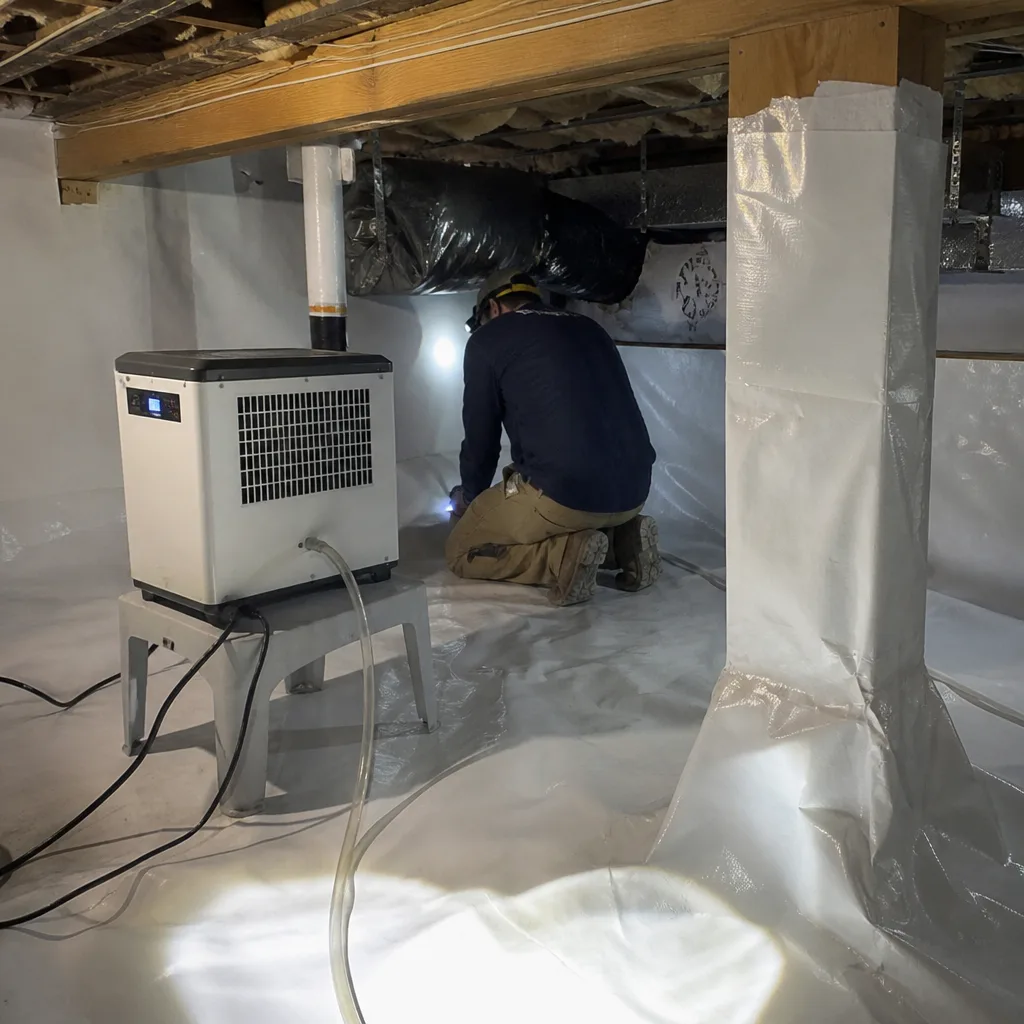
The single biggest difference between quotes for crawl space work in North Las Vegas is scope. A partial barrier addresses the floor. A complete encapsulation addresses the whole envelope of the crawl. Here’s what a full scope looks like, in order:
- Debris clearing and grading. Remove loose material and knock down high points that would puncture the barrier.
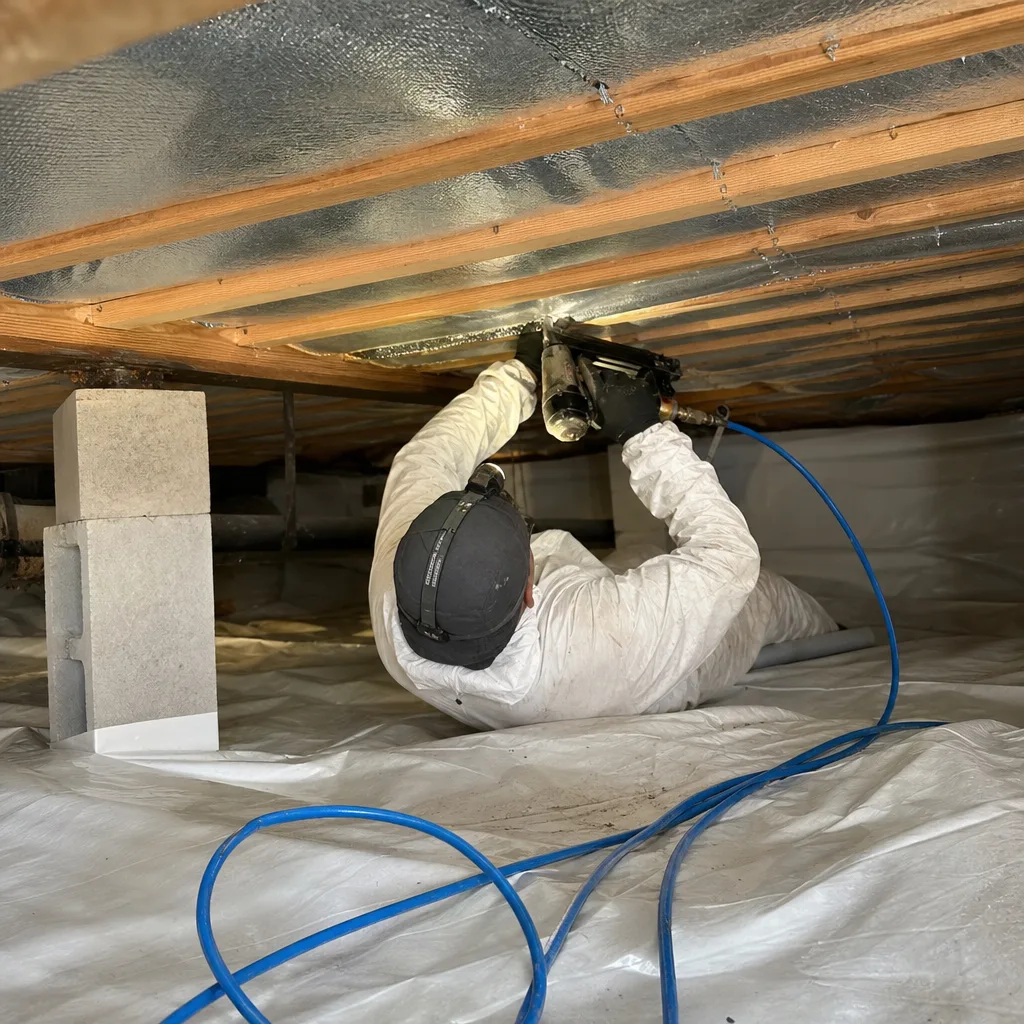
- Ground cover. Full 20-mil reinforced barrier, seams lapped and sealed, edges fastened and terminated at the stem wall.
- Wall liner. Barrier carried up the foundation walls to the subfloor, not stopped at the floor.
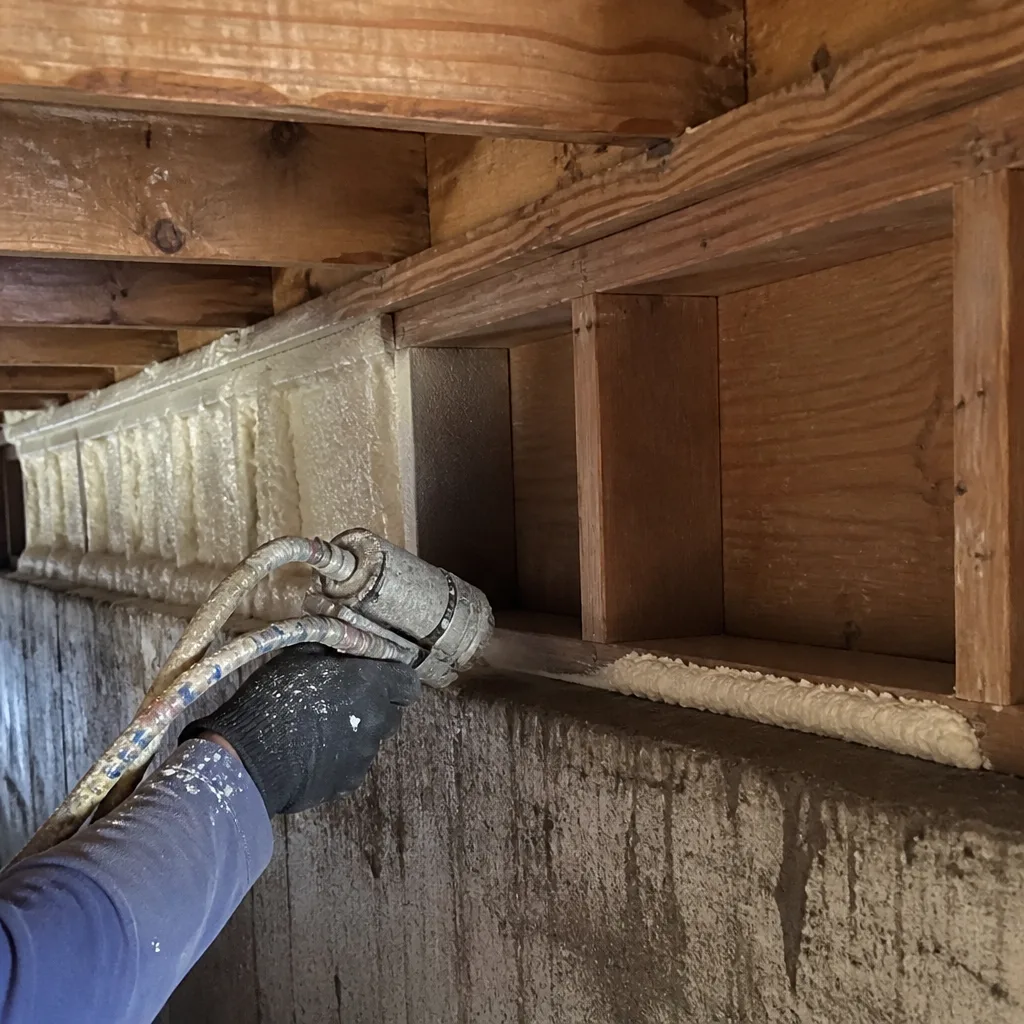
- Rim joist sealing. Foam or sealant at the rim joist, sill plate, and any penetrations for plumbing, electrical, and HVAC.
- Vent management. Vents either sealed or controlled, depending on the design.
- Dehumidification or mechanical ventilation. A sealed crawl needs humidity control to manage the residual moisture it still produces. Skipping this is the most common shortcut we see.
- Verification. Post-install moisture readings and photos.
A quote that lists only “6-mil barrier and tape” is a partial scope. It will help, but it won’t stop soil vapor at the rim joist, and it won’t address the monsoon-season load. For the full service breakdown, our Crawl Space Encapsulation & Vapor Barrier in North Las Vegas page shows what a documented scope looks like from beginning to end.
The documentation you should keep after the job
You should leave an encapsulation job with a paper trail, not just a finished crawl. Under Haven Standard Clause 1, a written price, written scope, and written warranty exist before anyone lifts a tool, and a Documented Photo Record is included on every visit. For encapsulation specifically, ask for and keep:
- Pre-job moisture readings at the subfloor, rim joist, and base plate.
- Post-job moisture readings at the same points.
- Material specifications with the mil thickness and reinforcement called out.
- A diagram of the encapsulated footprint so the next tradesperson who crawls under your house knows what’s there.
- Photos of the finished barrier, especially at the rim joist and wall liner terminations.
That record does two things. It lets you verify the result instead of trusting it, and it protects you when you sell. A buyer’s inspector who asks about crawl moisture wants numbers, and you’ll have them.
Encapsulation vs. a vapor barrier: what’s the difference?
A vapor barrier is the ground cover: a sheet of reinforced poly laid over the crawl floor to stop soil moisture from rising. Encapsulation is the whole system: ground cover, wall liner, rim joist sealing, vent management, and humidity control. The barrier is one component of encapsulation; encapsulation is not a synonym for the barrier.
If a quote says “vapor barrier only,” you’re getting the first step, not the finished job. Most North Las Vegas crawl complaints we hear trace back to this distinction, because a barrier laid without sealing the rim joist still leaves the biggest leak path open.
What encapsulation costs in North Las Vegas
Pricing varies with crawl square footage, access, whether dehumidification is included, and how much debris needs clearing. These are the ranges we typically see on North Las Vegas jobs, and every one is written on the estimate before work starts:
- 6-mil barrier only: $1.50 to $2.50 per square foot of crawl floor.
- 20-mil reinforced barrier with wall liner: $3.00 to $5.00 per square foot.
- Full encapsulation with rim joist sealing and vent management: $5.00 to $8.00 per square foot.
- Dehumidifier or mechanical ventilation: $1,200 to $2,800 installed, depending on capacity and wiring.
- Debris clearing and prep: $250 to $900 on heavily cluttered crawls.
For a typical 1,200-square-foot North Las Vegas crawl, a complete job usually lands between $6,000 and $10,000. If you’re also dealing with attic issues, our Spray Foam Insulation in North Las Vegas page shows how the two projects interact on a combined envelope scope.
Common Mistakes to Avoid
- Treating venting as the whole solution. Passive vents in North Las Vegas pull monsoon humidity into the crawl instead of letting it out. Sealing is the answer; venting is a design decision.
- Using 6-mil sheeting over rocky caliche. It punctures on installation and again every time a plumber crawls through. Pay for 20-mil reinforced.
- Skipping the wall liner. A ground barrier alone leaves the stem wall wet, and vapor rises from the wall straight into the rim joist.
- Omitting dehumidification on a sealed crawl. A sealed crawl still generates some moisture from residual construction and minor leaks. Without humidity control, that moisture has nowhere to go.
- Not taking baseline readings. If nobody measured before the job, nobody can prove anything improved after it.
- Ignoring the attic side of the stack effect. Crawl leaks and attic leaks work together. A whole-envelope approach fixes both in the right order.
- Accepting a verbal price. Under Haven Standard Clause 1, a flat price, written scope, and written warranty exist before anyone starts. A verbal estimate isn’t documentation.
When to Call a Professional
Some crawl work can wait. Some shouldn’t. Call if you’re seeing moisture readings above 20% on any framing member, if you smell a persistent musty odor coming up through the floor, if you’re seeing wood rot at the sill plate or joist ends, or if a prior 6-mil barrier has torn or shifted and you’re not sure what’s still intact. Call if you’re buying a North Las Vegas home built between 2015 and 2025 and the inspection report flags crawl moisture – that residual construction moisture is real and it’s worth measuring before you close. Call if your energy bills have jumped without explanation after a monsoon season. Envelope Insulation North Las Vegas offers free estimates in North Las Vegas. Call (833) 630-4008 and we’ll take baseline moisture readings, price the scope in writing, and leave you with a Documented Photo Record when the work is done.
Frequently Asked Questions
Yes, because the threat isn’t total annual rainfall. It’s the concentrated monsoon events in July and August plus irrigation overspray that push vapor into an unencapsulated crawl for weeks. Clark County averages about 4.2 inches a year, but one August storm can put more water into your soil than the previous six months combined. Call (833) 630-4008 for a free moisture reading and a written scope.
Usually not. Rocky caliche and decomposed granite floors common to North Las Vegas lots puncture 6-mil sheeting during installation and maintenance, and a punctured barrier is a partial barrier. 20-mil reinforced poly with a scrim layer holds up to the substrate and stays intact. Ask for mil thickness in writing on the estimate.
In most North Las Vegas cases, yes, or at least control them. IRC Section R408 passive venting assumes outside air is drier than crawl air, which holds in much of the country but not during monsoon season. During August, vents pull humid outside air into a cool crawl where it condenses on framing and ducts. Sealing the vents and adding humidity control is the standard approach for a desert crawl.
Most jobs on a 1,000- to 1,500-square-foot crawl finish in one to two days. Larger crawls with debris clearing, wall liner, rim joist sealing, and dehumidifier installation can run two to three days. If the crawl has active water intrusion or extensive rot, expect extra time for repair before the encapsulation begins. Call (833) 630-4008 and we’ll tell you what your specific crawl looks like.
Yes, in most cases, because the musty smell is soil vapor carrying microbial byproducts up through the floor. Once the ground cover, wall liner, and rim joist seals are in place and humidity is controlled, that vapor path closes. The one caveat: if rot has already started in the joists, the odor source is the wood, not the ground, and that repair work has to come first.
For a home with pre-job subfloor readings in the 18% to 24% range, yes. Post-job readings typically come in at 10% to 12% within two to three weeks, verified with the same meter at the same points. Beyond moisture, a sealed crawl reduces the stack-effect air loss that shows up in blower-door readings. If you can’t verify the improvement with numbers, ask the contractor why.
The Bottom Line
Crawl space encapsulation in North Las Vegas is a specific fix for a specific problem: monsoon-saturated soil, irrigation overspray, and residual construction moisture hitting a crawl that passive venting handles poorly. The materials matter – 20-mil reinforced over 6-mil on our rocky substrate. The scope matters – ground cover, wall liner, rim joist sealing, vent management, and dehumidification, not just a sheet of plastic. The documentation matters most of all – pre- and post-job moisture readings, mil thickness on the spec sheet, and a diagram of what’s under your floor. Under Haven Standard Clause 1, the price is written before anyone starts, and the record is delivered when they finish. If it’s not done right, the 365-Day Done Right Promise applies. Call (833) 630-4008 for a free estimate.
Written by the team at Envelope Insulation North Las Vegas.