
Last updated November 18, 2026
The Complete Radiant Barrier Installation Guide for North Las Vegas Homeowners
North Las Vegas recorded 145 days above 100°F in 2023. On those days, the roof deck of a typical 2×4 framed home reaches 155 – 165°F, and that heat has to go somewhere. A radiant barrier’s only job is to stop the roof deck from broadcasting that heat down into the attic. Whether it does that job depends on two details most guides skip: the emissivity of the product installed and the size of the air gap facing the foil. This guide covers both, in plain terms, for North Las Vegas homes. You’ll learn what the physics actually allows, how the two installation methods differ in this climate, the mistakes that quietly erase performance, and the documentation you should walk away with.
Quick Answer
A radiant barrier in North Las Vegas works by reflecting infrared heat radiated from the roof deck, not by adding R-value. It’s effective only when the foil has a clean, unobstructed air gap facing it (typically 0.75 inch minimum) and a low emissivity rating (0.05 reflects 95% of radiant heat; 0.25 reflects just 75%). It must be paired with adequate attic insulation and air sealing, because it does nothing for conductive or convective heat loss.
Table of Contents
- How a Radiant Barrier Actually Works
- Emissivity: The Number That Matters Most
- Two Installation Methods for North Las Vegas Attics
- Why the Air Gap Decides Everything
- Pairing Radiant Barriers With Insulation and Air Sealing
- Common Mistakes to Avoid
- What Documentation to Expect
- When to Call a Professional
How a Radiant Barrier Actually Works
The roof deck on a North Las Vegas home in July doesn’t just get hot, it radiates. Radiant heat moves in straight lines through air without warming the air itself, which is why your attic can sit at 140°F even when the outdoor temperature is 108°F. What the foil does is reflect that infrared energy back toward the roof deck before it reaches the attic floor and, eventually, your ceiling. That’s it. One job.
Understanding what a radiant barrier does not do is just as important as understanding what it does:
- It has no effect on conductive heat transfer (heat moving through solid materials like rafters and drywall).
- It has no effect on convective heat transfer (hot air physically moving through leaks and gaps).
- It does not add R-value. R-value measures resistance to conductive heat flow. Radiant barriers resist radiant heat flow. Different physics, different measurement.
That means a radiant barrier is an additive layer, not a substitute for insulation. In our experience walking North Las Vegas attics from Aliante to the older single-story neighborhoods near Civic Center Drive, we regularly find radiant foil stapled up under rafters above 3 to 4 inches of settled fiberglass, with the attic still hitting 130°F by midmorning. The foil is reflecting some heat. But the unsealed ceiling plane is losing conditioned air, and the thin insulation can’t resist the conduction that comes through the drywall. The barrier is doing its job. The rest of the envelope isn’t.
Anyone in North Las Vegas who installs radiant barrier alone, without pairing it with proper attic insulation in North Las Vegas, is paying for half a solution.
Emissivity: The Number That Matters Most
Emissivity is the measure of how much radiant heat a surface emits or, read from the other side, how much it reflects. The scale runs from 0 to 1. A perfect reflector (which doesn’t exist) would sit at 0. A perfect radiator (a black body) is 1.0. Real products sit somewhere in between, and that number is what determines how much heat actually bounces back off your foil.
Two examples make the point:
- Emissivity 0.05 reflects approximately 95% of radiant heat. That’s a true radiant barrier.
- Emissivity 0.25 reflects approximately 75%. That’s still a barrier, but 20 percentage points of heat are getting through.
The gap matters more than most sales pitches admit. An attic deck radiating 160°F of heat toward a foil rated 0.25 will pass noticeably more of it through than one rated 0.05. Over a full summer in North Las Vegas, that difference shows up on your cooling bill and your attic temperature.
Here’s the practical rule: ask for the product data sheet. Not the marketing brochure, not the spec sheet from the insulation aisle card. The manufacturer’s technical data sheet lists the tested emissivity alongside reflectance and, in most cases, the ASTM test method used. If the vendor can’t produce it, that’s a data point in itself. We source radiant barrier material through suppliers who publish third-party-tested emissivity values, and the same standard should apply to any product you’re considering.
Two Installation Methods for North Las Vegas Attics
There are two ways to install radiant barrier in a North Las Vegas home, and neither is universally right. The choice depends on attic access, existing insulation, and the location of HVAC equipment.
Method 1: Staple-Up Under the Rafters
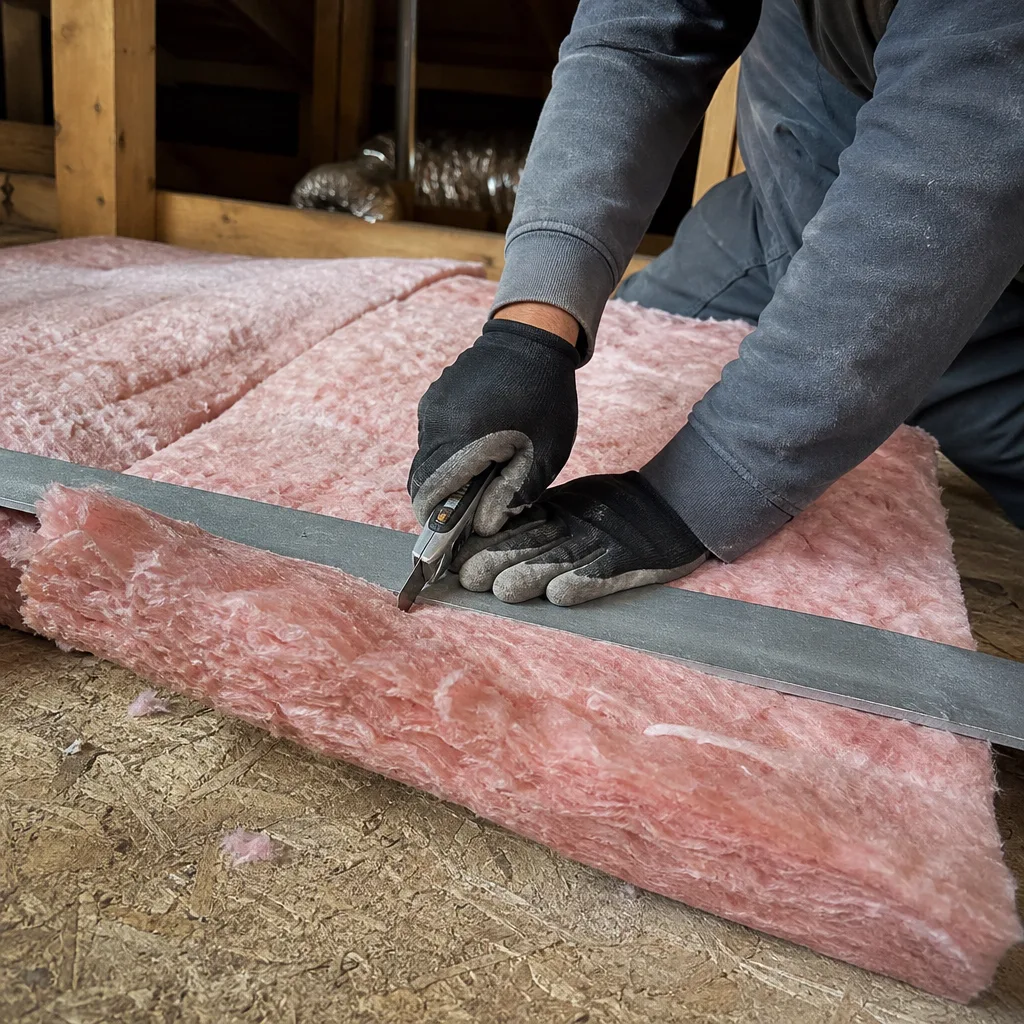
This is the preferred approach for new construction or any attic with clear rafter bays. The foil is stapled to the underside of the roof rafters, facing down, with the shiny side oriented toward the attic space. The air gap between the foil and the roof deck does the work of reflecting, and the foil’s underside faces open space instead of insulation. This method performs reliably in North Las Vegas attics because it preserves the gap that keeps dust off the reflective surface.
Method 2: Lay-Over Above Existing Insulation
In a retrofit, installers often lay the foil over the existing insulation, shiny side up, positioned so the foil faces an open air gap between it and the roof deck. On paper this is fine. In practice, once HVAC equipment, duct plenums, and flex runs are already in the attic, an unobstructed air gap across the full plane of the foil is nearly impossible to achieve. Foil laid over ductwork sits within inches of it. Foil laid around platform-mounted air handlers gets pinched. If the foil touches anything, it conducts heat rather than reflecting it, and the barrier has lost its purpose.
For most existing North Las Vegas homes, staple-up under the rafters is the method that actually delivers. If the attic is tight, vaulted, or has significant mechanical clutter, the better answer might be to seal and air-seal first, then focus on spray foam insulation in North Las Vegas applied to the roof deck rather than trying to fit a foil plane into free space that doesn’t exist.
Why the Air Gap Decides Everything
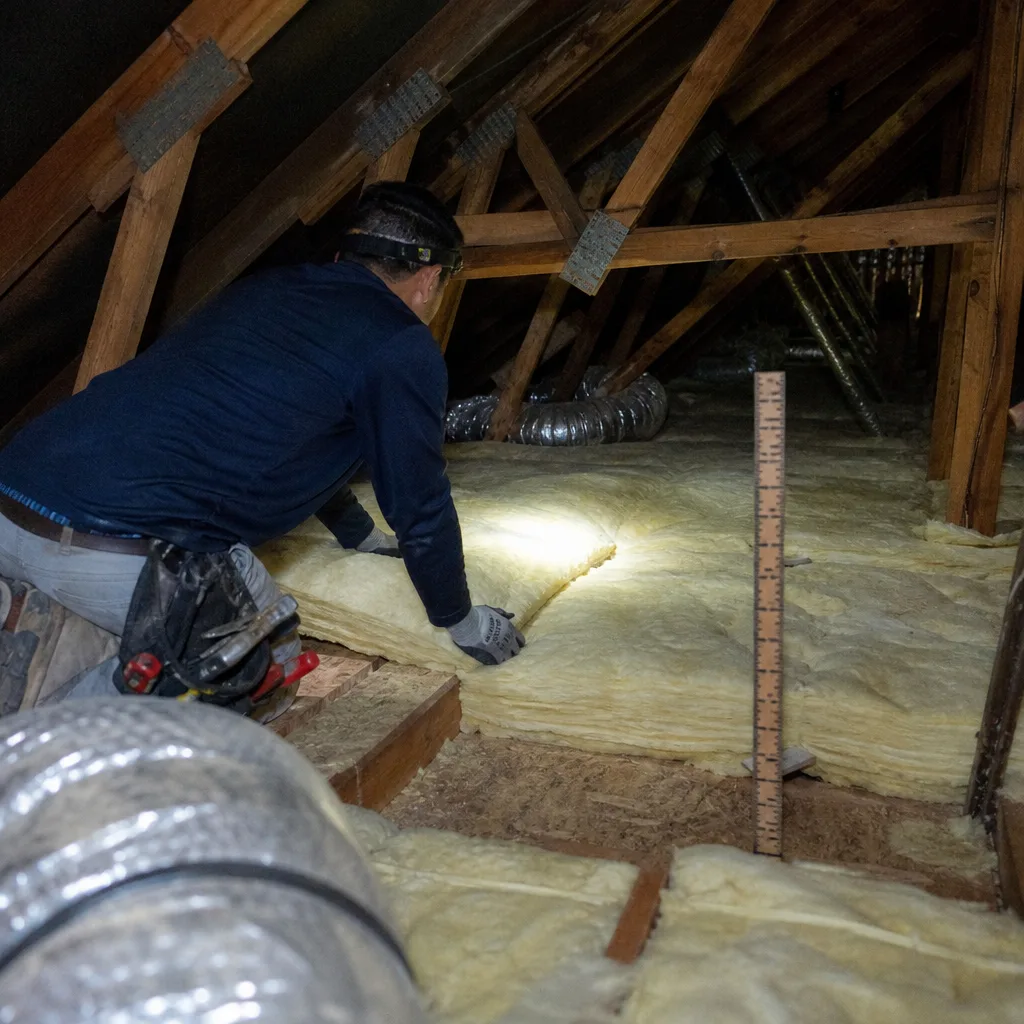
Radiant heat reflection only happens at the surface. If the foil has no air space facing it, the heat simply conducts through the foil into whatever it’s touching, and you’ve paid for metal-coated paper. Industry guidance widely recommends at least 0.75 inch of air space on the reflective side. Most installers aim for the half-inch minimum and treat it as good enough. In a North Las Vegas attic where roof deck temperatures can swing 80°F in a single afternoon, a half-inch gap that closes up in summer contact isn’t a barrier anymore.
Walk the attic three ways to verify a gap actually exists:
- Look at the foil edge along the rafter. It should not touch the rafter face. Staples should pin the foil with a fold, not flatten it against wood.
- Check the ridge and eave transitions. These are where foil sags, folds, or gets pinched during installation. If the foil makes contact at either end of the run, the whole bay loses performance.
- Look at any point where the foil passes a mechanical penetration. Ducts, junction boxes, and vent stacks compress the gap quickly. If the foil wraps a duct, it’s not a barrier anymore.
We’ve measured attic air temperature in North Las Vegas attics before and after barrier installation where the gap was verified at every rafter bay, and the difference between “installed” and “installed correctly” is sometimes 15 to 20 degrees at the attic floor.
Pairing Radiant Barriers With Insulation and Air Sealing
A radiant barrier belongs on top of a sealed, insulated attic envelope, not in place of one. The order matters, and in our practice it’s the same order every time: seal first, then insulate, then consider a barrier.
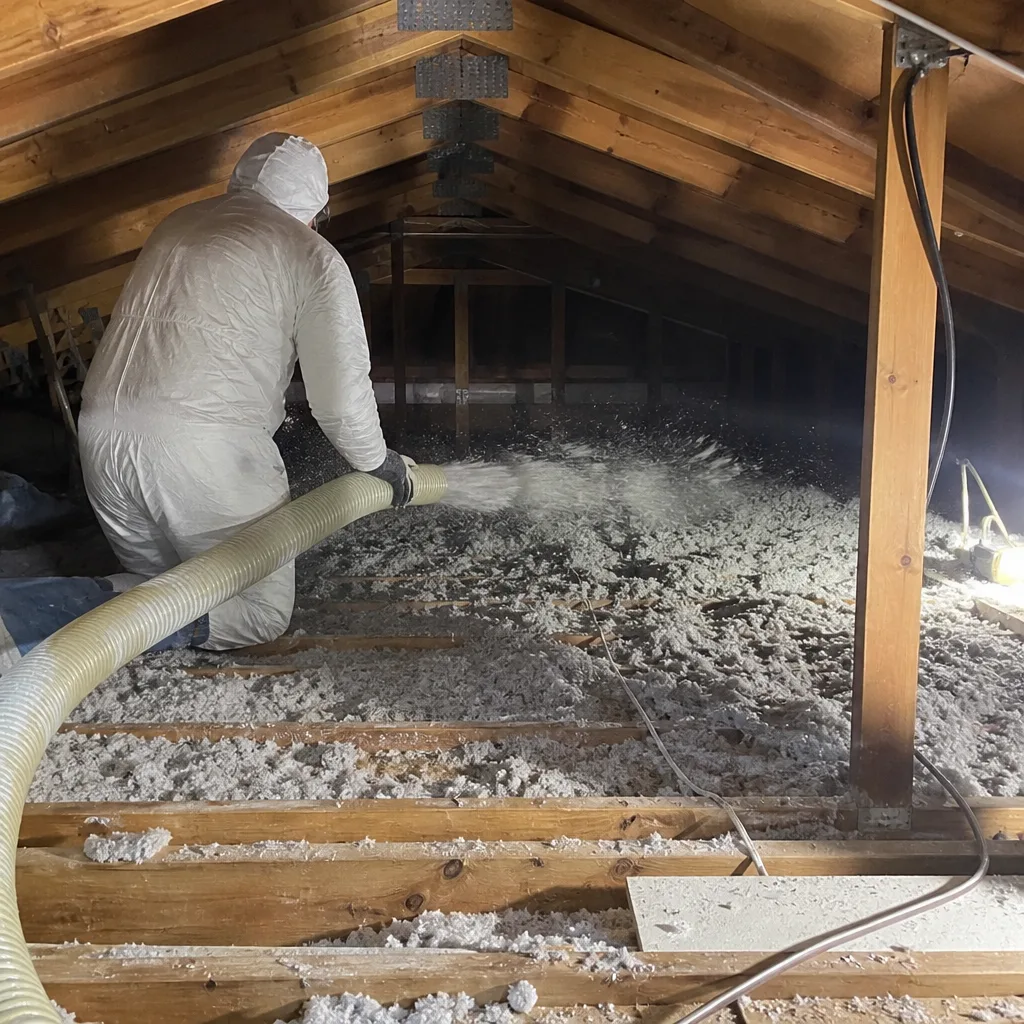
- Air seal the ceiling plane. Top plates, can lights, wiring penetrations, plumbing chases, and the joint where the ceiling meets the wall all leak in a typical North Las Vegas home. A blower-door test – a pressurization reading that shows, in one number, how much air your envelope is losing – usually reads somewhere between 3,500 and 5,500 CFM50 (cubic feet per minute at 50 pascals) before air sealing on a home built in the 2000s. After sealing, it drops into the high 1,000s or low 2,000s. Air sealing is not optional and not an upsell. Blowing insulation over an unsealed ceiling is the single most common installation error we find.
- Insulate to current code or beyond. North Las Vegas homes fall in IECC climate zone 3, where attic insulation at R-38 or above is the practical target. GreenFiber blown-in cellulose or CertainTeed fiberglass are standard choices and both perform well in this climate.
- Add the radiant barrier only after 1 and 2 are done. The barrier reflects heat that would otherwise reach the attic floor. If the floor isn’t sealed and insulated, the barrier has nothing to protect.
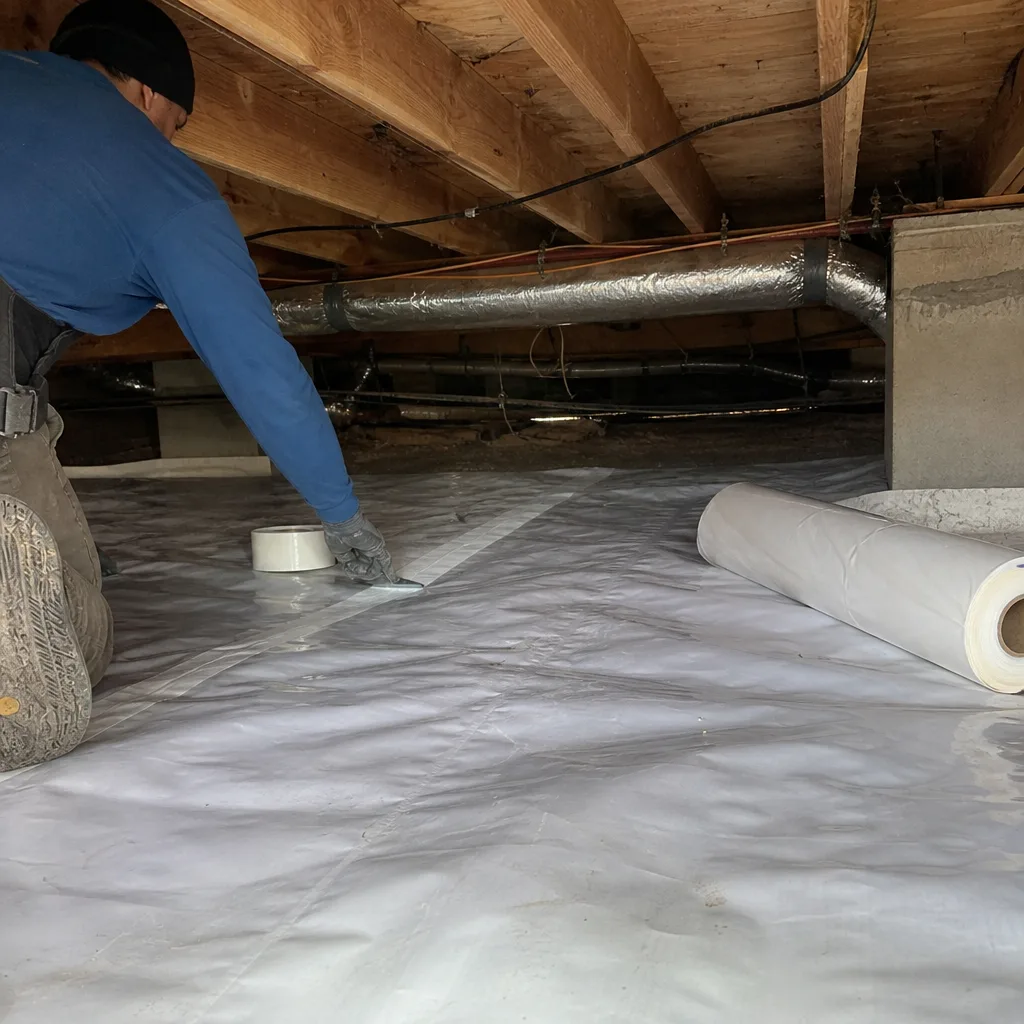
Homeowners moving through this sequence should also look at crawl space encapsulation and vapor barrier in North Las Vegas if their home has a raised foundation, since moisture control from below is the mirror image of heat control from above. Both parts of the envelope work together.
Common Mistakes to Avoid
- Stapling the foil tight against rafters. Contact turns a reflector into a conductor. The foil needs a fold or slack so the reflective face stays clear of wood.
- Skipping the ridge and eave transitions. These gaps let heat bypass the barrier entirely, and in North Las Vegas attic summits they’re also where the hottest air concentrates.
- Installing foil face-down over insulation with no air gap. Dust accumulates on the foil surface within 3 – 5 years, and by then the reflective value is largely gone. Face-down is only correct when the shiny side faces an open air gap, which is rare in a finished attic.
- Choosing product by marketing claim instead of emissivity spec. Ask for the technical data sheet. A 0.25 product in a North Las Vegas attic is not the same as a 0.05 product.
- Installing the barrier over an unsealed ceiling. Air leaks carry heat past the foil no matter how reflective the surface is. Seal first.
- Letting the foil contact HVAC equipment. Ducts and air handlers radiate their own heat. Foil wrapped near them conducts instead of reflects.
- Accepting an installation with no documentation. Without attic temperature readings and photos of the air gap, you have no way to know whether the barrier is performing.
What Documentation to Expect
A properly documented radiant barrier installation gives you a record you can inspect, share, or reference if something goes wrong. Any contractor installing radiant barrier in North Las Vegas should deliver the following, in writing, before you sign off:
- Attic temperature readings before and after installation, taken at the same time of day in similar weather. Not “we noticed it felt cooler,” an actual temperature record at the attic floor and near the roof deck.
- The manufacturer’s emissivity specification sheet for the exact product installed, listing tested reflectance and emissivity.
- Photo documentation of the air gap at three rafter bays minimum, showing the clearance between the foil face and the roof deck, plus the ridge and eave transitions.
Under The Haven Standard, every applicable job at Envelope Insulation Co. closes with a written price before work starts and a documented record when the crew leaves. That includes before-and-after blower-door numbers on jobs where air sealing was part of the scope, so you can compare what the envelope was actually losing before the work against what it loses after. If air sealing is on the scope alongside radiant barrier, you should get the numbers, not a paragraph about how much better it feels.
When to Call a Professional
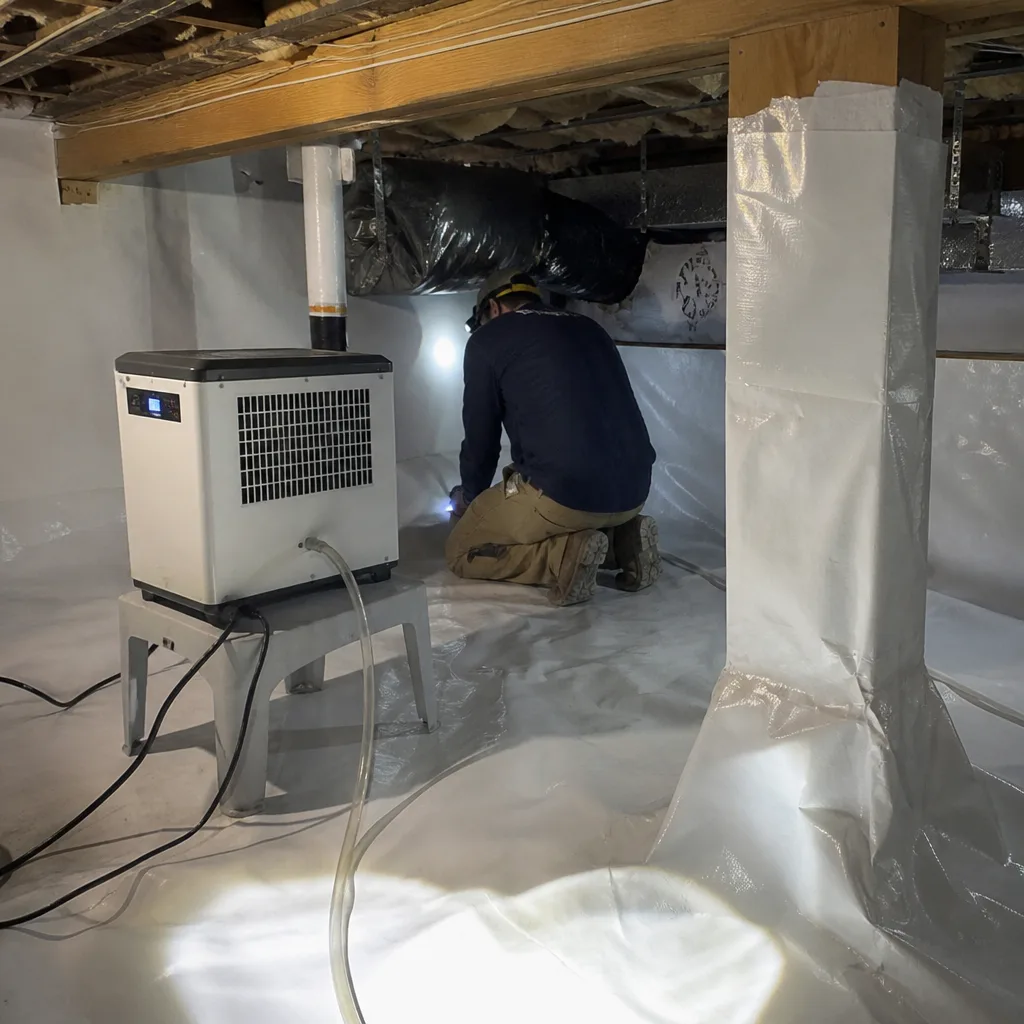
A radiant barrier installation is not a DIY job in most North Las Vegas attics. Attic temperatures in July routinely exceed 130°F, rafter bays are low and tight in many 1990s and 2000s builds, and getting the air gap right on a 40-foot run of foil requires a second set of hands and a trained eye. More importantly, the physics only works if the air sealing and insulation are correct first, and diagnosing the whole envelope is work for someone who has walked hundreds of attics in this climate.
Call a professional if any of the following describe your situation:
- Your attic has HVAC equipment, duct runs, or a platform-mounted air handler that makes gap verification difficult.
- You don’t know whether your ceiling plane is air-sealed, or you can’t find a record of any blower-door test on the home.
- You’ve seen attic dust on existing foil, or you have an older installation that isn’t performing.
- Your cooling bills have climbed without a corresponding change in usage.
If you want a real estimate, we connect North Las Vegas homeowners with trained local professionals who follow the seal-first, insulate-second, barrier-third sequence and document each step. Calls are answered by a live person, and there’s a free second opinion on any written estimate you already have from another contractor. Reach us at (833) 630-4008 for a free estimate.
Frequently Asked Questions
Yes, but only when it’s installed with a correct air gap and paired with adequate insulation and air sealing. In North Las Vegas, where attic roof decks reach 155 – 165°F on summer afternoons, a properly installed barrier with 0.05 emissivity cuts a meaningful portion of the radiant load reaching the ceiling. A poorly installed barrier or one added over an unsealed ceiling shows little to no measurable effect. Call (833) 630-4008 if you want an honest read on whether it’s the right next step for your attic.
Most radiant barrier installations on a typical single-story North Las Vegas home run between $1,200 and $2,400 depending on attic size, which installation method applies, and whether the ceiling plane needs air sealing first. Staple-up under rafters is generally closer to the low end; lay-over installations on attics with HVAC clutter tend to price higher because the gaps take more time to verify. A written price before work starts is the standard to expect from any pro. Call (833) 630-4008 for an exact quote on your home; estimates are free.
Ask for 0.05 emissivity or better, which reflects about 95% of radiant heat. Products at 0.25 emissivity reflect only 75%. Always request the manufacturer’s technical data sheet, not a marketing claim, and make sure the spec sheet lists the tested emissivity value alongside the test method.
Yes, but only if the foil faces up with an unobstructed air gap between it and the roof deck. In North Las Vegas attics that already contain HVAC equipment, ductwork, and flex runs, achieving a true gap across the whole plane of the foil is usually not possible. Staple-up under the rafters performs better in most retrofit attics. If you’re unsure which method fits your home, call (833) 630-4008 and we’ll walk your attic with you.
No. A radiant barrier reflects radiant heat. Insulation resists conductive heat flow. Air sealing stops convective air leaks. All three address different heat transfer methods and all three matter in a North Las Vegas attic. Removing insulation to install a barrier makes the home worse, not better. For help sequencing the full envelope, see our Envelope Insulation North Las Vegas home page.
A properly installed radiant barrier with a clean, unobstructed air gap lasts decades. The failure mode is dust accumulation on the foil surface when the reflective side is installed face-down with no air gap, which typically degrades performance within 3 – 5 years. If your existing barrier was installed face-down over insulation, an inspection is worth the call. (833) 630-4008.
The Bottom Line
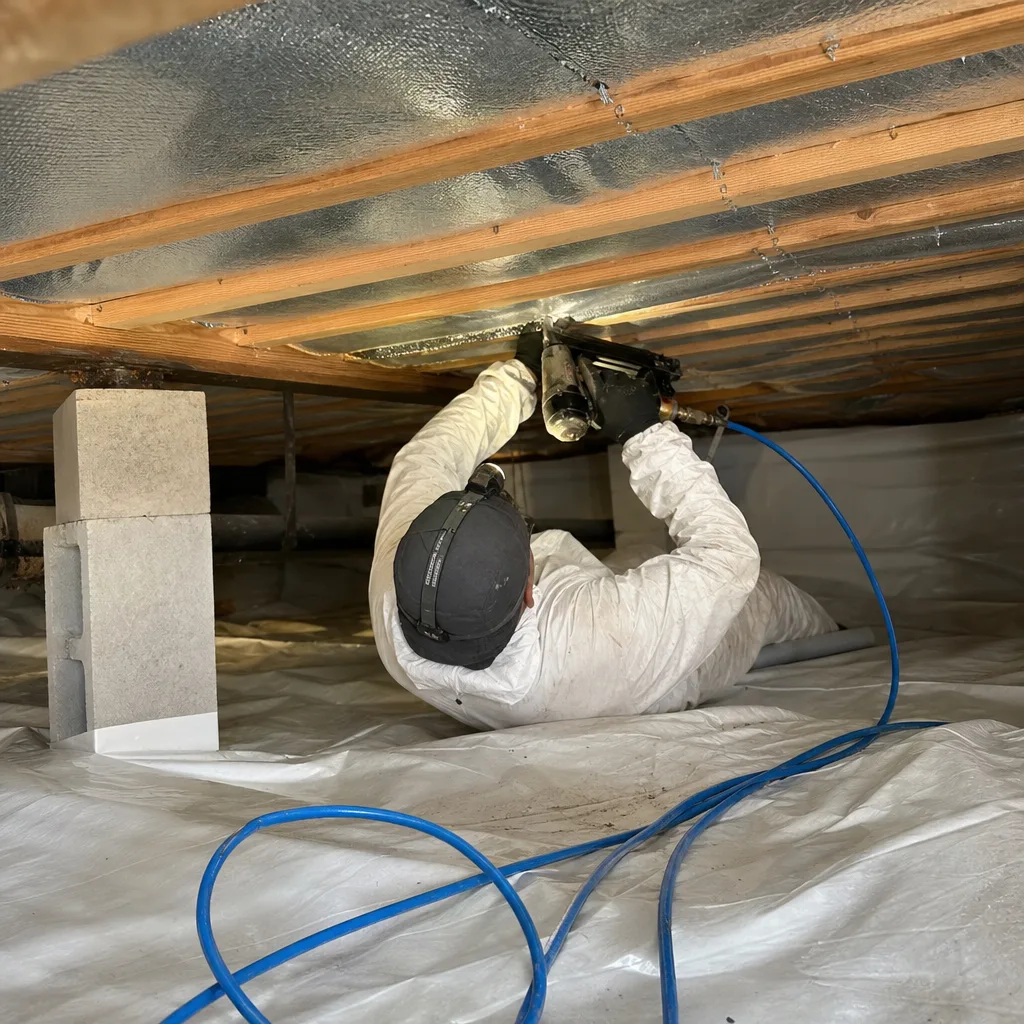
Radiant barrier installation in North Las Vegas is a real, measurable improvement to a home’s attic envelope when three things are true: the product has a low emissivity (0.05, not 0.25), the foil has a verified air gap of at least three-quarters of an inch, and the ceiling plane underneath has been sealed and insulated first. Miss any one of those, and you’ve paid for foil that mostly reflects nothing useful. The documentation you should demand is simple: attic temperature readings before and after, the emissivity spec sheet, and photos of the air gap at multiple rafter bays. That’s the record that proves the work was done, not just that the truck showed up.
If you want to schedule an attic walk with a trained local professional, get a written price and a documented record, or bring us a competing radiant barrier estimate for a free second opinion, call (833) 630-4008. Calls are answered by a live person, not routed to voicemail.
Written by the team at Envelope Insulation North Las Vegas.