
Last updated November 18, 2026
Crawl Space Encapsulation & Vapor Barrier Maintenance Schedule: What to Do and When
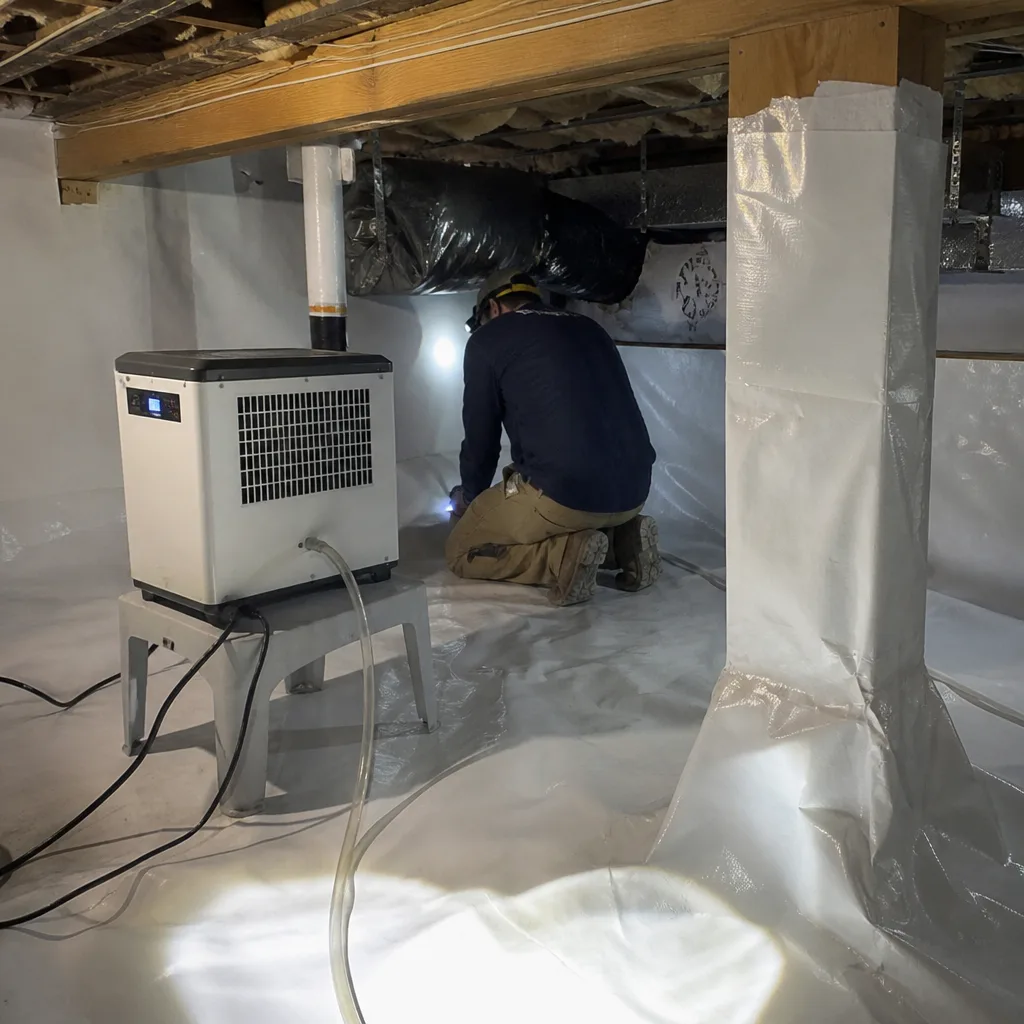
A dehumidifier that hasn’t been serviced in 18 months pulls the same wattage as a working one. It just may be removing 30-40% less moisture. You pay the electricity either way, but the barrier slowly stops doing its job and you won’t know until you smell it. We’ve opened North Las Vegas crawl spaces where a five-year-old encapsulation looked fine from the access hatch and had three separated seams and a clogged condensate line underneath. What follows is the maintenance schedule we’d put on the wall of any encapsulated crawl space here: what to check, how often, and how to record it so degradation is measurable instead of a guess.
Quick Answer
An encapsulated crawl space needs an annual inspection (dehumidifier coil and filter, condensate drain flush, three fixed-point moisture readings, and a full barrier and seam walk), plus a post-monsoon check in late August or September at the footer-to-wall liner transition. Mechanical parts follow their own intervals: dehumidifier filters every 3-6 months, pump float switches tested annually, and seam tape inspected yearly. Keep every reading dated and located so year-over-year comparison is possible.
Table of Contents
- Why Encapsulation Is Not a Set-and-Forget Job
- The Annual Inspection Protocol, Step by Step
- The Post-Monsoon Check: The August-September Walk
- Service Intervals for Mechanical Components
- How to Document Baseline Moisture Readings
- Barrier Inspection: Punctures, Seams, and Pests
- What Records to Keep for a Home Sale
- Common Mistakes to Avoid
Why Encapsulation Is Not a Set-and-Forget Job
Most encapsulation proposals you’ll read present the installation as a finished product. In practice it’s a system, and the system has parts that degrade at different rates. The 20-mil liner itself holds up well. What fails first is the interface between materials: the seam tape where two panels meet, the transition where the liner is sealed to the footer, the condensate line running from the dehumidifier to the sump. Those fail quietly.
In North Las Vegas, the failure modes have a local flavor. Our thermal cycling is intense: summer crawl space temperatures can climb well past 100°F while night air drops 30 degrees, and that expansion and contraction works on every taped seam and every adhesive-backed termination. The air is also dry, which sounds helpful until you realize the barrier is being asked to hold a moisture differential that’s driven entirely by the soil underneath and the season. Our pest pressure compounds it. Scorpions, crickets, and rodents investigate the cool dark space under a slab, and a rodent that gets in and chews a corner of the liner has just breached the vapor barrier.
We’ve pulled 6-mil barriers in North Las Vegas homes that were laid down with a promise of “never touch it again” and found the plastic brittle and shredded where foot traffic crossed it. The encapsulation itself is a genuine upgrade. But the maintenance schedule is what keeps the performance you paid for. If you’re still deciding whether encapsulation is right for your home, our guide to Crawl Space Encapsulation & Vapor Barrier in North Las Vegas covers the installation side. This page covers everything after.
The Annual Inspection Protocol, Step by Step
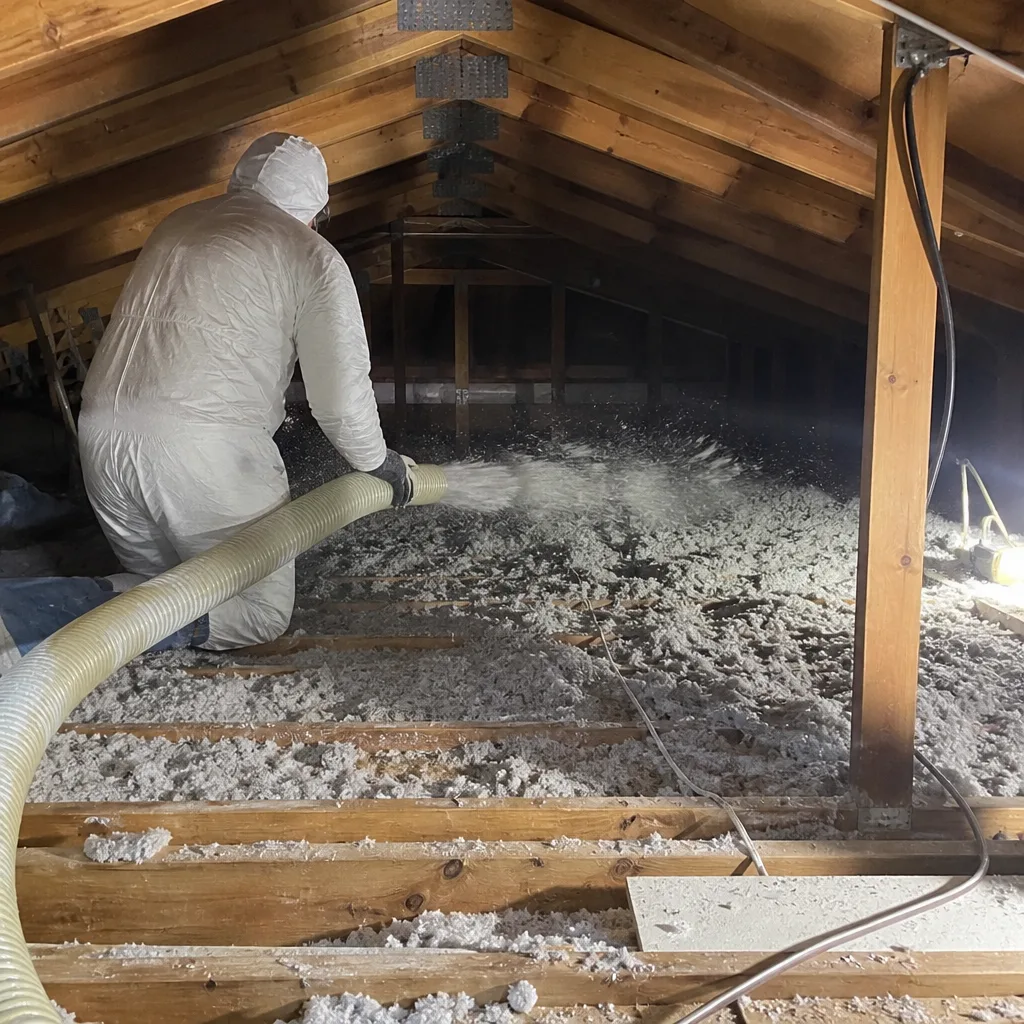
Set one date a year and hold it. The schedule below takes a trained technician between 45 minutes and two hours depending on access and the number of penetrations. The order matters because you want the readings taken before anything is moved or disturbed.
- Take the three fixed-point moisture readings first. A pin or pinless moisture meter placed at three labeled locations (we suggest: near the access hatch, at the farthest corner, and beside the sump pit) before anyone walks the space gives you a clean comparison to last year’s numbers.
- Service the dehumidifier coil and filter. Pull the filter, clean or replace it, and inspect the coil fins for dust mat. A matted coil runs hot and dehumidifies poorly.
- Flush the condensate drain line. Run water through the line to the sump or exterior termination and confirm flow. A slow line will eventually back up into the unit or overflow.
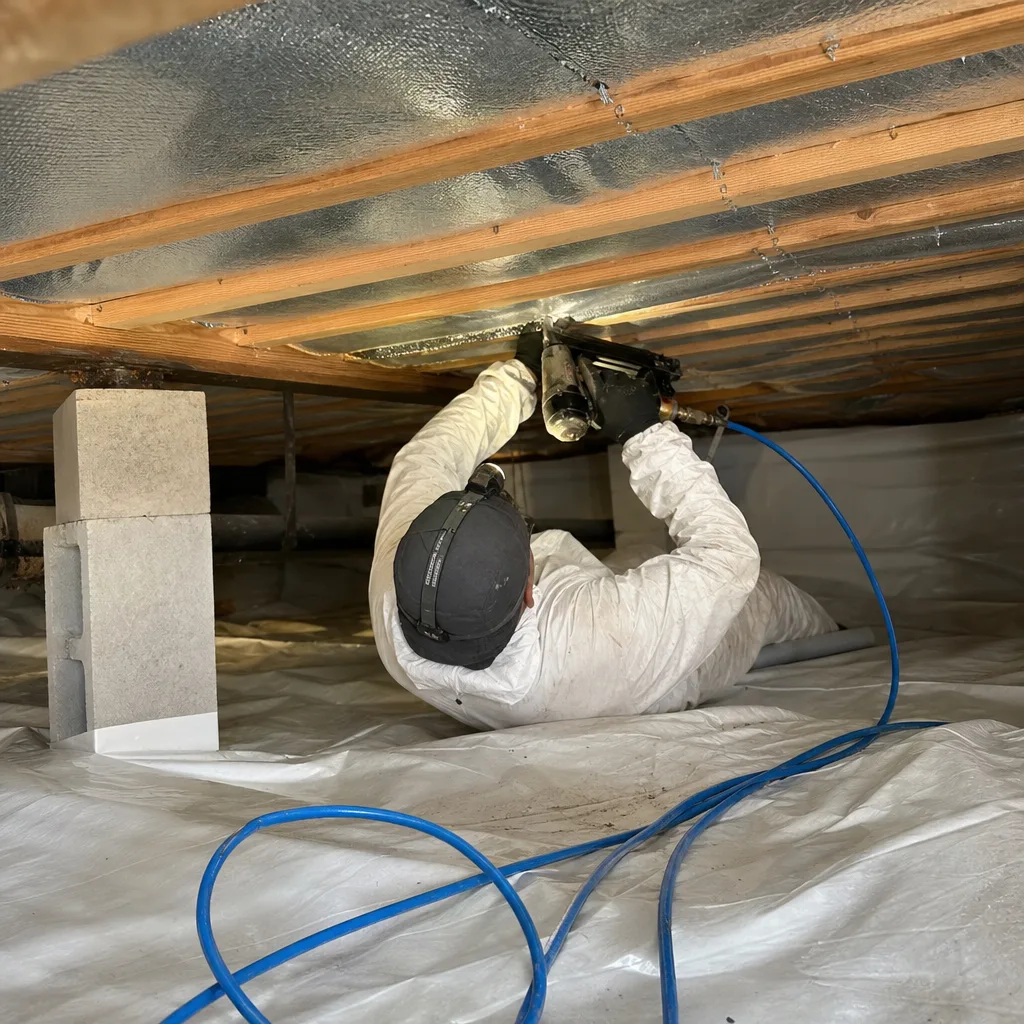
- Inspect the barrier for punctures. Walk the entire floor with a flashlight held low, looking for tears, rodent chew, and areas where the liner has pulled back from the wall.
- Check every seam. Run your hand along taped seams at the overlaps and at the top perimeter; a lifted edge is the earliest sign of tape failure.
- Verify the sump pump float. Lift the float manually and confirm the pump kicks on and off. This is a 60-second test that prevents a flooded crawl space.
- Photograph everything and log the date. Same angles year to year. The photo record is what makes next year’s comparison useful.
The Post-Monsoon Check: The August-September Walk
North Las Vegas sits in the Mojave, and while our annual rainfall is low, the monsoon season from July through September delivers the short, hard downbursts that cause localized flooding. That matters for encapsulation because the most common post-rain failure point is not the liner floor. It’s the footer-to-wall transition, where the top of the liner is sealed against the wall footing.
When the soil behind the foundation saturates faster than it drains, hydrostatic pressure pushes water to that transition. If the seal has any weakness (adhesive failure, mechanical damage, a nail from a previous repair), water finds it and works its way under the barrier. You’ll find the evidence as staining, lifted tape, or a soft spot at the liner edge.
We recommend a walk within two weeks of any heavy monsoon event. What to look for:
- Lifted or discolored tape at the wall-to-footer termination – the first sign of water pushing the seal
- Standing water or damp soil visible through the liner at the perimeter
- A moisture reading at the transition that’s higher than your annual baseline
- Sump pump running more often than usual, or a waterline mark in the pit
- Musty odor in the living space above (which can signal a crawl space issue before the crawl space shows it)
If you find water at that transition, don’t just re-tape it. The tape failed for a reason, and re-sealing over an active moisture path hides the problem. That’s one of the scenarios in our “When to Call a Professional” section below.
Service Intervals for Mechanical Components
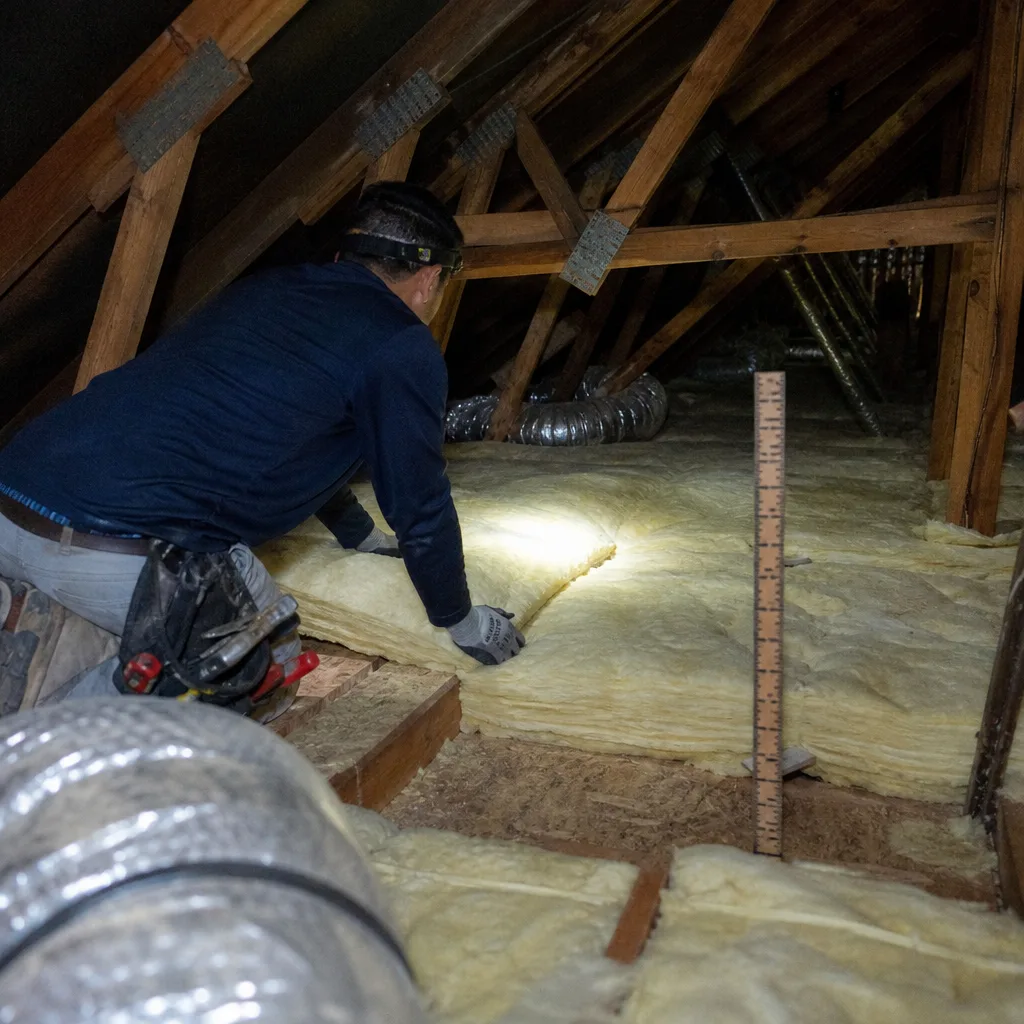
The mechanical parts of an encapsulation ask more of you than the liner does. This is where most homeowners fall behind, because the equipment runs silently in a space no one visits.
| Component | Service Interval | What Fails |
|---|---|---|
| Dehumidifier filter | Every 3-6 months | Clogs; unit runs but removes less moisture |
| Dehumidifier coil | Annual cleaning | Dust mat; reduced capacity, higher wattage |
| Condensate drain line | Annual flush | Slow clog; overflow or unit shutdown |
| Sump pump float switch | Annual test | Stuck float; pump doesn’t fire |
| Seam tape | Annual inspection | Adhesive failure from thermal cycling |
| Crawl space lighting | Annual test | Fixture failure; makes inspection harder |
In our North Las Vegas work, the dehumidifier filter is the single most-neglected item on this list. Summer dust in the valley is relentless, and a filter that would last six months in a humid climate can load up in three here. Change it at the start of cooling season and again mid-summer. If you use a dehumidifier rated for continuous operation, the coil needs cleaning once a year regardless of filter changes.
How to Document Baseline Moisture Readings
You can’t measure degradation without a starting point. The most useful maintenance habit you can build on an encapsulated crawl space is a baseline moisture log taken at the same three points on the same date every year. Here’s the format we recommend:
- Three fixed measurement points, physically marked. Put a small label on the liner at each point so the same spot gets read every time. We suggest near the access hatch, the farthest wall, and next to the sump.
- Two numbers per point per visit: date and moisture content (as % wood moisture equivalent on framing, or relative humidity at each point).
- Photograph each reading. A photo of the meter display beats a written number you’ll later question.
- Note ambient conditions. A reading taken during a monsoon week is not comparable to one taken in April. Record whether it’s been dry or wet in the previous two weeks.
What you’re watching for is a trend, not a single number. A rise from 52% to 58% relative humidity at the farthest corner over two years tells you something is changing – a seam has loosened, the dehumidifier is losing capacity, or the soil moisture regime has shifted. Without the baseline, you’re just guessing. This is the same reason we publish before-and-after blower-door readings on applicable jobs: a single figure shows the change you actually paid for, and it becomes the reference point for every future visit. If you’ve never had a building-envelope measurement in your home, a Envelope Insulation North Las Vegas home energy audit is the place to start.
Barrier Inspection: Punctures, Seams, and Pests
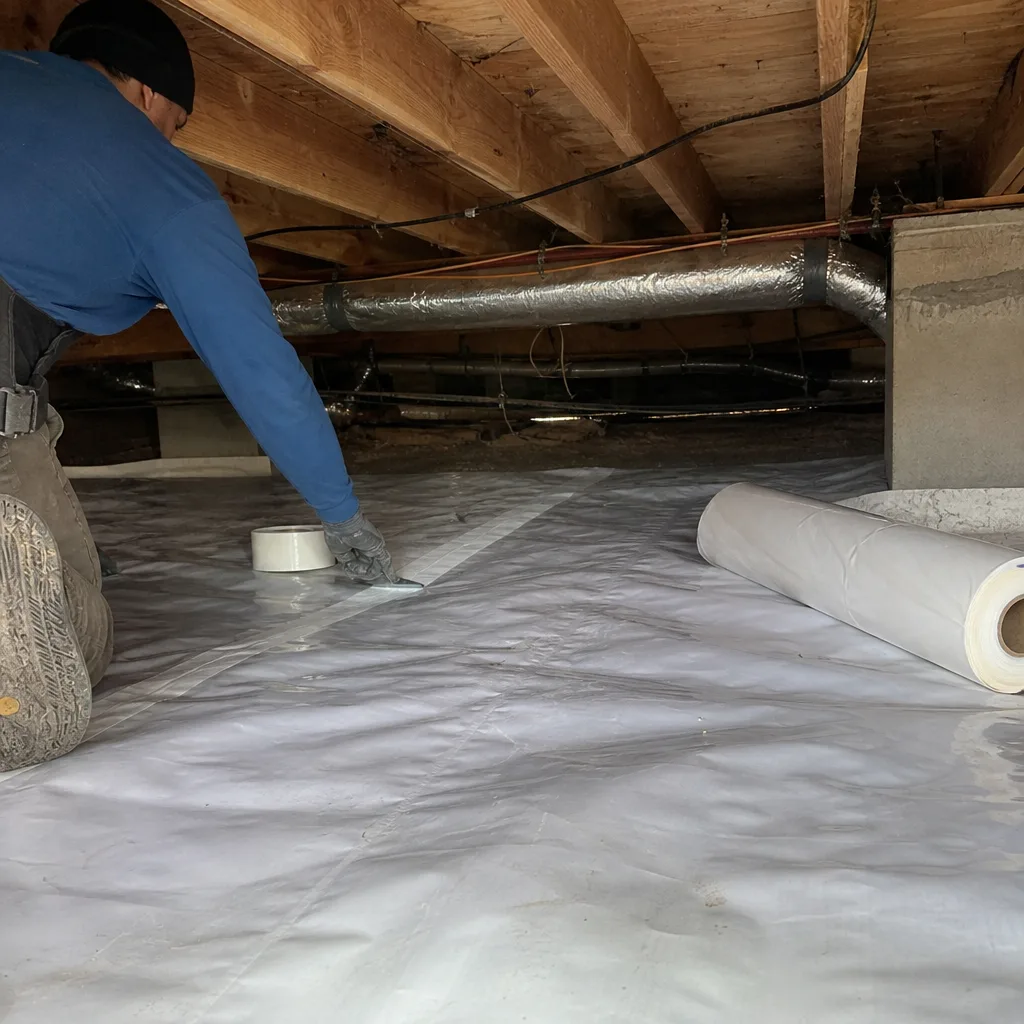
The liner itself is tough. What isn’t tough is the way it interfaces with everything around it. On an annual walk, focus on the seams and the penetrating details rather than the open floor.
Seams. Every overlap is taped, and every tape joint sees thermal cycling. A North Las Vegas crawl space swings 30-40 degrees between day and night in summer. Tape adhesive softens and re-bonds under that cycle, and over two or three years edges lift. Run a hand along the seams – you’ll feel a lifted edge before you see it.
Punctures. Mechanical damage comes from three usual suspects: the service trades (HVAC and plumbing techs walking the space), pests (rodents chewing corners), and the homeowner’s own storage (anything heavy or sharp set down on the floor). A puncture is small and fixable, but only if it’s found.
Pest entry. In North Las Vegas, rodents and insects in a crawl space are common. Most encapsulation systems include mechanical rodent exclusion at the perimeter, but it degrades. If your annual walk turns up droppings, chewed liner, or a breach, that’s not just a pest problem. It’s a vapor barrier problem, and it needs a repair. We handle rodent proofing as part of attic insulation in North Las Vegas and crawl space work separately; both require the same approach of fixing the entry point first.
The sump and dehumidifier penetrations. Every pipe or wire passing through the liner creates a seal that can fail. Check the sealant ring around each penetration annually and re-seal if it’s cracked.
What Records to Keep for a Home Sale
Encapsulation documentation is increasingly requested in real estate transactions here. Buyers and home inspectors have gotten sophisticated about building-envelope information, and an uninspected encapsulation with no service history is a question mark, not a selling point.
Keep these records together:
- Original scope and written price from the installation – the document that states what was installed and what was promised
- Material specifications – liner mil thickness, tape product, dehumidifier make and model, sump pump model
- Installation photos – what the space looked like when work was completed
- Service log – every annual inspection, moisture reading, filter change, and repair, dated
- Repair records – any seam repairs, liner patches, or equipment replacements, with photos
A formal written scope and a documented photo record are the two documents that most reliably answer a buyer’s questions. This is one of the reasons we build a Documented Photo Record into every job rather than offering it on request: the file this year’s buyer wants was created on the day of the install, not retrieved after the sale. If you’re considering spray foam for any of the framing above the crawl space, our Spray Foam Insulation in North Las Vegas page covers the materials we source from Icynene and others, and why we keep material selection open rather than locking into one product.
Common Mistakes to Avoid
- Treating installation as the finish line. The five-year mark is when seam tape and condensate lines start needing attention. A regular inspection beats an emergency one.
- Running the dehumidifier with a clogged filter for months. The unit runs, the coil mats, and the moisture removal capacity drops while the electricity bill doesn’t. Change the filter on a schedule, not when you remember.
- Re-taping a footer transition without diagnosing why it failed. If water pushed the seal, re-taping over the failure hides an active moisture path. Find the source first.
- Skipping the post-monsoon walk. North Las Vegas’s July-September storms are exactly the conditions the footer transition is most vulnerable to. A walk within two weeks of a heavy event catches problems while they’re small.
- Not marking the moisture measurement points. Readings taken at different spots each year can’t be compared. Label the points once and read them every time.
- Storing anything heavy or sharp in the crawl space. A box of holiday decorations or a set of lumber leaning against the liner is the most common source of homeowner-created punctures.
- No written service record. A buyer inspecting the encapsulation will want the service log and the original scope. Keep them with the home’s other maintenance files.
When to Call a Professional
Some jobs belong in the homeowner’s annual routine. Others need a trained eye and the right equipment. Call a professional when:
- Standing water is present in the crawl space or at the footer transition, or the sump pump runs constantly
- A moisture reading has climbed significantly against your baseline with no obvious cause
- Seam separation runs more than a few inches, or liner has pulled away from the wall footer
- Pest activity has breached the barrier, or you find chewed liner near a perimeter
- The dehumidifier is running but the relative humidity isn’t coming down
Envelope Insulation North Las Vegas offers free estimates in North Las Vegas – call (833) 630-4008. We start every job with a Written Price Before Any Work Starts and a written scope, and we close with a Documented Photo Record so the maintenance log we’re helping you build stays complete.
Frequently Asked Questions
Once a year for the full inspection, plus a post-monsoon walk in late August or September if there’s been a heavy rain event. Mechanical components have shorter intervals: dehumidifier filters every 3-6 months, condensate lines annually, sump pump floats annually, and seam tape annually.
Near the access hatch, at the farthest corner from the hatch, and beside the sump pit. Mark each with a label on the liner and read your meter at exactly those spots every year, so year-over-year numbers are comparable. Take a photo of the meter display at each point.
Watch your condensate output and your electricity use. A unit that’s still running but removing less moisture will show lower condensate volume at the same humidity, and a matted coil will draw more wattage without added moisture removal. Filter and coil service every 3-6 months (filter) and annually (coil) prevents most capacity loss.
Envelope Insulation North Las Vegas offers free estimates on any encapsulation service, including inspection and repair. Call (833) 630-4008 to schedule. We arrive with a written scope and a photo record, the same standard we apply to every job.
Stop and diagnose rather than re-tape. Water at that transition usually means hydrostatic pressure from soil that’s saturated faster than it drains. A trained professional can read the liner, the seal, and the sump behavior together and identify the true source before any repair. Call (833) 630-4008 for an inspection.
Yes. As selling-side inspections have gotten more sophisticated, buyers and home inspectors frequently request encapsulation documentation: original scope, material specifications, service log, and installation photos. A dated service record shows the system has been maintained and is the strongest answer to a buyer’s question about the crawl space.
The Bottom Line
Encapsulation is not a finished product; it’s a system with mechanical parts and material interfaces that degrade at different rates. The core schedule to keep: annual three-point moisture readings with dated photos, annual dehumidifier filter and coil service, annual condensate flush and sump float test, and an annual seam and barrier walk – plus a post-monsoon check in late August or September at the footer transition, which is where North Las Vegas crawl spaces fail most often. Keep every reading, every photo, and every service record. When something needs repair, get a written price and a documented record. Call Envelope Insulation North Las Vegas at (833) 630-4008 for a free estimate.
Written by the team at Envelope Insulation North Las Vegas.