
Last updated November 18, 2026
DIY vs Professional Attic Insulation: What’s Safe to Do Yourself
Home Depot hands out blowing machines when you buy the bags, so the physical act of spreading insulation is genuinely within reach for most homeowners. Here’s the part that trips people up: a 2019 Lawrence Berkeley National Laboratory study found that bypasses left unsealed before insulation went in accounted for about 40% of the total air leakage in the homes tested. The question isn’t whether you can blow insulation. It’s whether you can find and seal every air-bypass location first, because insulating over open bypasses locks the problem in place and makes it harder and more expensive to fix later. We’ll walk through what’s safe to touch, what isn’t, and how to tell the difference before you spend a Saturday in a North Las Vegas attic.
Quick Answer
Adding blown insulation over an already-sealed, already-insulated attic floor with no electrical or HVAC work underway is genuinely safe to do yourself. Everything that touches air sealing around can lights, wiring penetrations, top plates, or an HVAC plenum requires trade knowledge, and spray foam installation can fail permanently if it’s mixed off-ratio. In Nevada, the rebate paperwork and post-install blower-door test alone usually push the whole job toward a professional.
Table of Contents
- Why the Order of Operations Matters More Than the Material
- What’s Genuinely Safe to Do Yourself
- What You Should Leave to the Trades
- How to Self-Audit Your Air Sealing Before Adding Insulation
- Rebates, Liability, and the Paper Trail Problem
- How to Read a Professional Bid So It Beats the DIY Option
- North Las Vegas Climate and the Attic Reality Here
Why the Order of Operations Matters More Than the Material
Insulation slows heat transfer. Air sealing stops air from moving through the envelope. Those are two different jobs, and the second one has to happen first. When a bypass – a recessed light can, a wiring hole drilled through a top plate, a plumbing penetration, a dropped soffit – stays open, the insulation around it becomes a filter. Hot attic air pours down through it in summer and conditioned air escapes upward in winter, and you get the worst of both seasons. The R-value on the bag tells you nothing about that leak.
The 40% figure from the Berkeley Lab work is what makes this an order-of-operations problem rather than a material problem. Those bypasses weren’t hidden in some exotic location. They were the ordinary openings every house has. A homeowner can absolutely find many of them with the right method, which we’ll cover below. What they can’t always do is seal the ones that sit near a heat source or inside a duct chase without creating a new problem. Sealed first, then insulated – in that order – is the only sequence that produces a measurable result.
What’s Genuinely Safe to Do Yourself
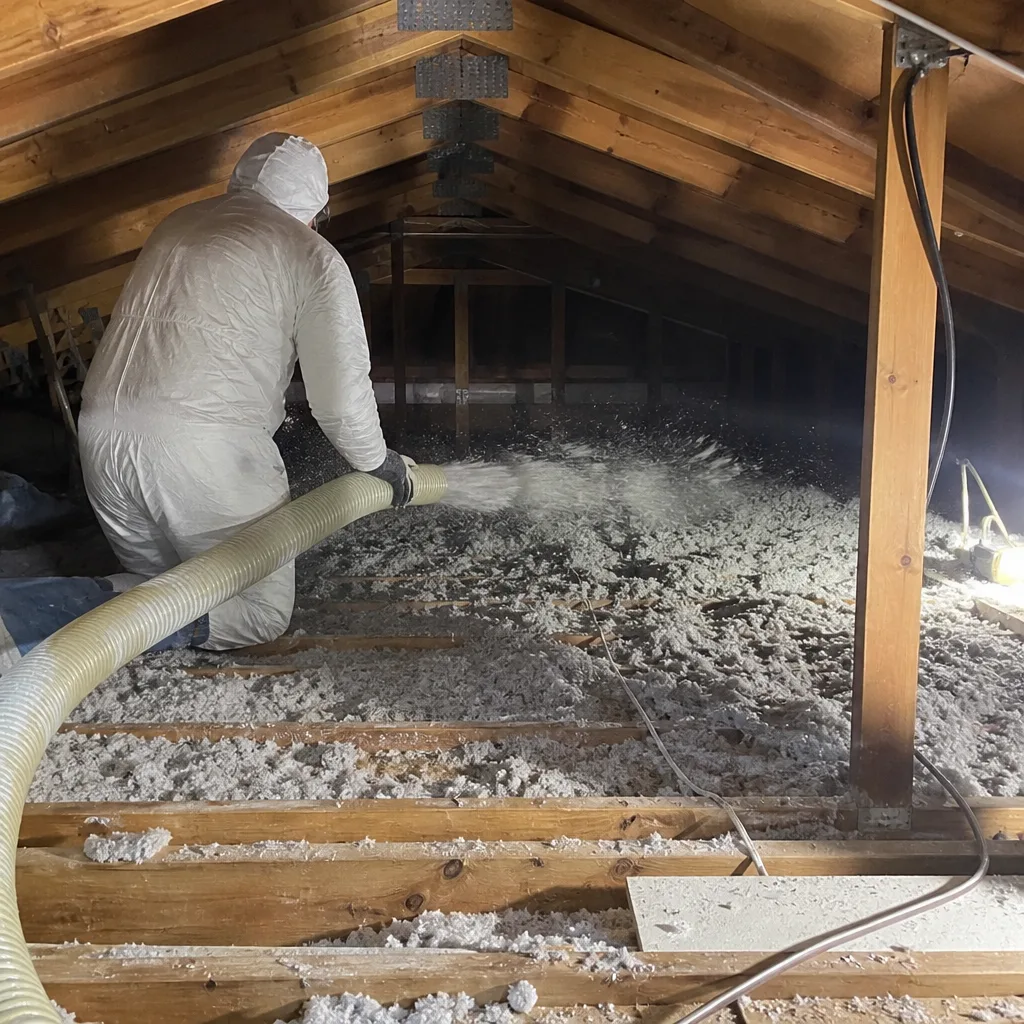
There is a real, narrow window where the DIY route makes sense. It’s when the attic floor is already sealed and already insulated, and you’re simply adding depth on top of an existing layer. No electrical work in progress. No HVAC. No penetrations you’d need to think about. If that describes your attic, adding blown insulation to raise the R-value is a reasonable weekend project.
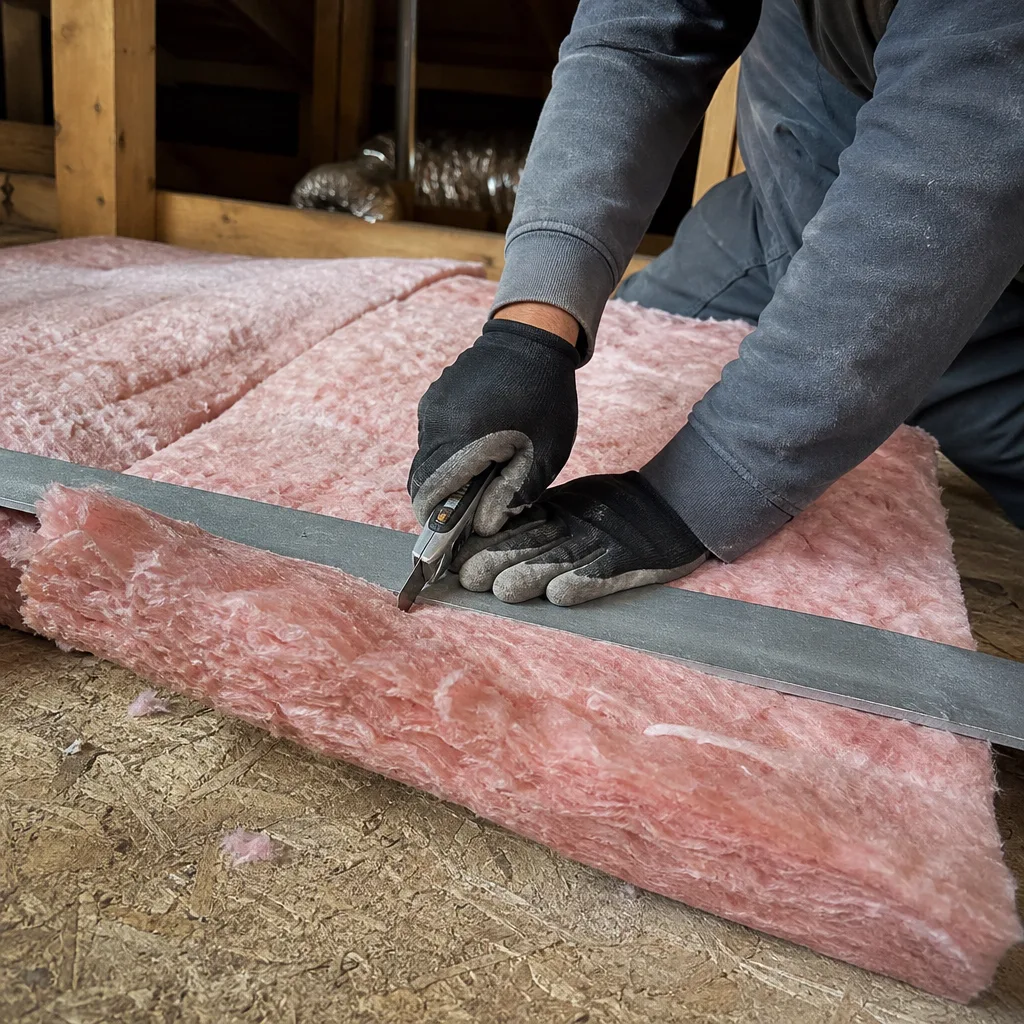
The materials are forgiving. Loose-fill fiberglass and cellulose from brands like Owens Corning and GreenFiber handle amateur installation without much penalty – bag counts and machine settings are printed on the packaging, and a slightly uneven depth still performs close to spec. Fiberglass batts are similarly forgiving if you’re careful not to compress them or leave gaps at the edges. The blowing machine is usually free with a qualifying bag purchase, and the labor is just slow, dusty work.
Even here, a few rules apply:
- Know your target R-value. Clark County attics in North Las Vegas typically want R-38 to R-49 because summer attic temperatures routinely crest 150°F. Undershooting wastes the effort.
- Don’t cover anything that needs to stay accessible. Junction boxes, recessed fixtures rated non-IC, and furnace flues all need clearance.
- Wear a proper respirator and goggles. Fiberglass in an enclosed attic is not a dust mask situation.
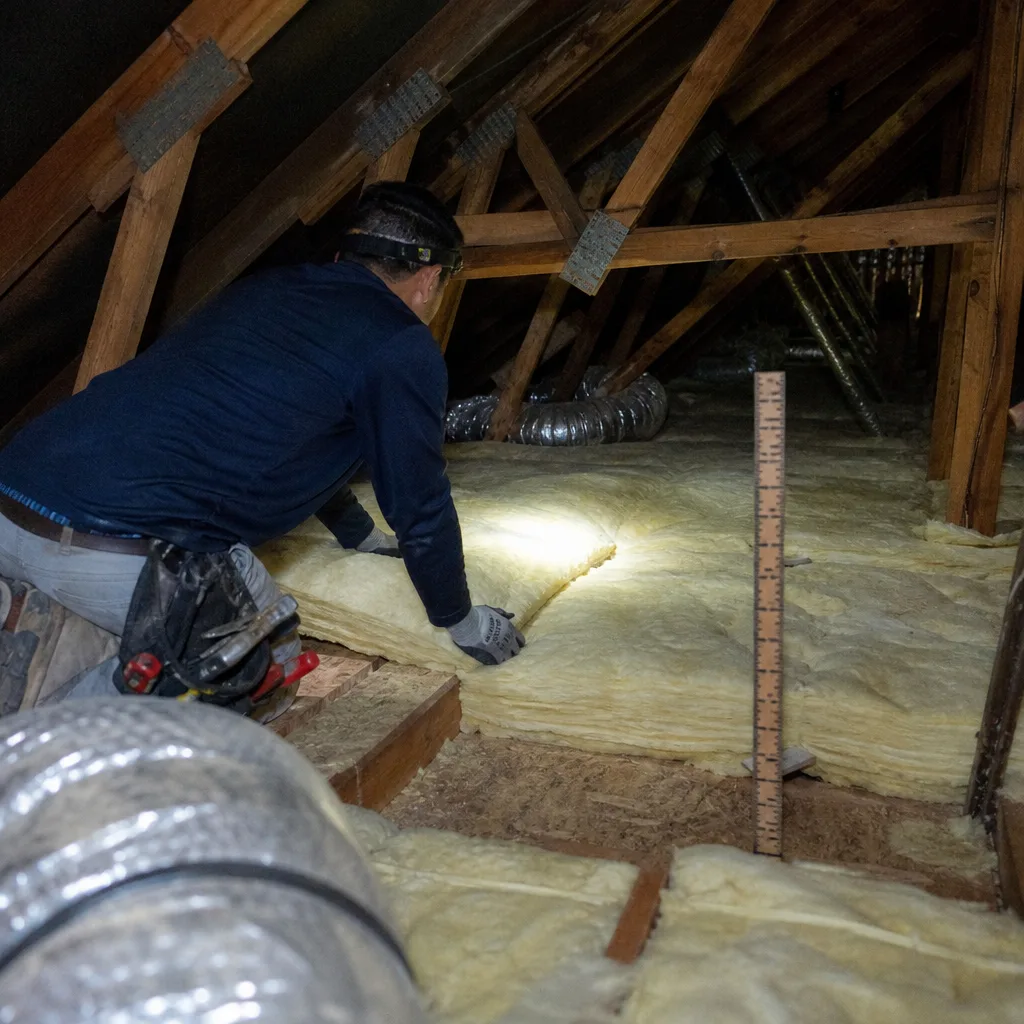
- Measure before you buy. Bag coverage tables assume a specific existing depth. Measure yours at several points – it varies more than you’d think.
If your North Las Vegas attic fits the profile above and you have no air-sealing work pending, adding blown insulation yourself is defensible. The money saved on labor is real.
What You Should Leave to the Trades
The line gets sharper fast once you leave that scenario. Three categories are worth naming specifically because they’re the ones homeowners ask us about most.
Spray foam application
Spray foam is a two-part chemical reaction, and the mixing ratio matters. Off-ratio foam can stay tacky, fail to cure, or cure brittle and crumble inside a wall cavity – and it’s a permanent installation that has to be cut out and redone. This is not a material you want to learn on. In a North Las Vegas attic where surface temps swing wildly between seasons, a foam that cured wrong is a problem you’ll be living with for years. Foam from Demilec and similar manufacturers is engineered for specific temperature and humidity windows; hitting those windows takes equipment and experience. For a deeper look at where foam makes sense and where it doesn’t, see our page on Spray Foam Insulation in North Las Vegas.
Recessed light sealing around IC-rated fixtures
IC-rated (“insulation contact”) fixtures are designed to have insulation right up against them. Non-IC fixtures are not, and covering them is a fire risk. Sealing around a can light requires knowing which type you have, understanding clearance requirements, and using a fire-rated sealant that won’t off-gas or fail under heat. This is a code issue in Nevada residential work, not a judgment call. Errors here are fire errors.
Work inside the HVAC plenum
Any penetration, seam, or mechanical connection within the supply or return plenum is under positive or negative pressure. Sealing it wrong can create a backdraft, starve a combustion appliance, or push conditioned air into the attic. This is licensed trade territory. We don’t seal plenums ourselves without an HVAC partner on site, and no homeowner should either.
How to Self-Audit Your Air Sealing Before Adding Insulation
Before you buy a single bag of insulation, run this test. It takes about 45 minutes and tells you whether the DIY route is even available to you.
- Set up negative pressure. Close all exterior windows and doors. Place a box fan in one window, blowing outward, sealed around the frame with cardboard and tape. This depressurizes the house and pulls air in through every leak.
- Go to the attic with a stick of incense. With the fan running, move the incense slowly along the attic floor – one pass along each top plate, then around every recessed light, then around every wire and pipe penetration.
- Watch the smoke. Where the smoke gets pulled toward a gap, air is being drawn in. Mark it with a piece of painter’s tape or a chalk mark.
- Log every mark. This becomes your work list. Group them: top plates, can lights, penetrations. Each group needs a different sealing method.
- Photograph the whole floor from one corner. Before-and-after photos of the same angle are how you verify the work – and how any contractor should document it.
This method won’t find every bypass. It won’t find duct leakage inside the plenum, and it won’t catch a poorly installed chase. What it will do is tell you, in a concrete way, whether your attic floor is already sealed or full of holes. If you find more than a handful of clear pulls, the DIY window has closed. If your attic in North Las Vegas reads clean, you can proceed to adding depth. The professional version of this test is a blower-door test – a pressurization reading that shows, in one number, how much air your building envelope is losing. It’s the objective version of what your incense already told you.
Rebates, Liability, and the Paper Trail Problem
This is where the DIY math often stops working. NV Energy offers rebates for attic insulation work, but the program is not written to reimburse a homeowner’s own labor. Rebate documentation typically requires contractor invoicing and a post-install blower-door test verifying the performance change. If you do the work yourself, you can be proud of it and still be ineligible for the rebate – which narrows the gap between DIY and professional more than people expect.
Liability is the second piece. If you seal and insulate yourself and later discover a bypass was missed, the fix is more expensive than it would have been the first time because the insulation has to be pulled back before the sealing can be done. That’s the locked-in problem. A sprinkler leak, a rodent intrusion, a failed sealant – all of those are on you if you did the work. There’s no warranty to fall back on.
A third piece: resale. In North Las Vegas, a well-documented insulation job with before-and-after blower-door readings is a selling point. A homeowner-installed layer with no paperwork is invisible on a listing.
How to Read a Professional Bid So It Beats the DIY Option
The only reason a professional job is worth the money is that it does something the DIY version can’t: it produces a documented performance result. If the bid in front of you doesn’t, it’s not worth more than a Home Depot run. Here’s what to check before you sign.
- A separate air-sealing line item. It should be priced separately from the insulation. If the bid bundles the two with no breakdown, you can’t verify the order of operations. A reputable contractor will never insulate over an unsealed attic floor.
- A specified R-value, not a bag count. “R-49” is a target; “20 bags” is a unit count. You want the target.
- The pre-job blower-door result. This is your baseline. Without it, nobody – you or the contractor – has a number to beat.
- The post-job blower-door result in writing. The performance change you paid for lives in this number. Ask to see it as a condition of the bid.
- Written scope and written warranty before anything starts. Not a proposal. Not an estimate. A written price, written scope, and written warranty in your hand before a single tool comes out.
- The photo record. What you get when the crew leaves. A documented photo record should be standard, not an add-on.
If the professional bid clears all six points, it’s genuinely better than anything you can do yourself, because you end up with proof of the performance change. If it clears fewer than four, keep shopping. Our guide to Attic Insulation in North Las Vegas goes deeper on what a complete job looks like. And if you’re bringing us a competing bid to read together, we do that as a free second opinion – no strings.
North Las Vegas Climate and the Attic Reality Here
Local conditions change the calculation in a few specific ways. Summer attic temperatures here routinely pass 150°F, which pushes the target R-value higher than the national default (R-38 to R-49 rather than R-30). Winter nights can drop into the 30s, so the air-sealing percentage matters in both directions – not just summer cooling load. The dry climate also means cellulose can last longer than it would in humid markets, but it also means loose-fill needs careful installation to avoid dust migration into living spaces.
Neighborhood patterns matter too. In North Las Vegas neighborhoods like Aliante and the older sections off Craig Road, we regularly see attic bypasses from the original 1990s and 2000s construction – recessed lights that were spec’d non-IC, top plates that were never sealed, and dropped soffits over kitchens that leak directly into the attic. In the newer build corridors around the northern beltway, we more often find penetrations from HVAC retrofits and solar installs done after the fact, each one a new leak. The pattern shifts; the principle doesn’t.
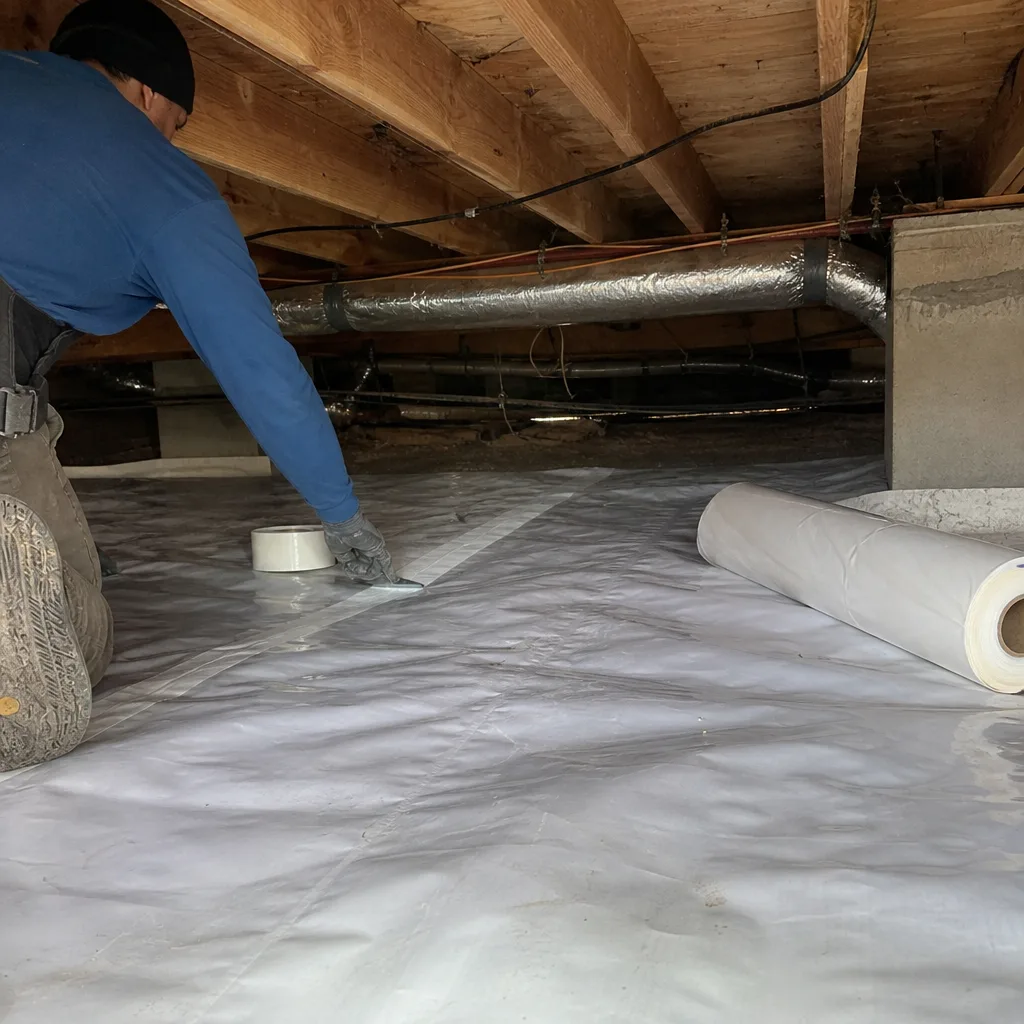
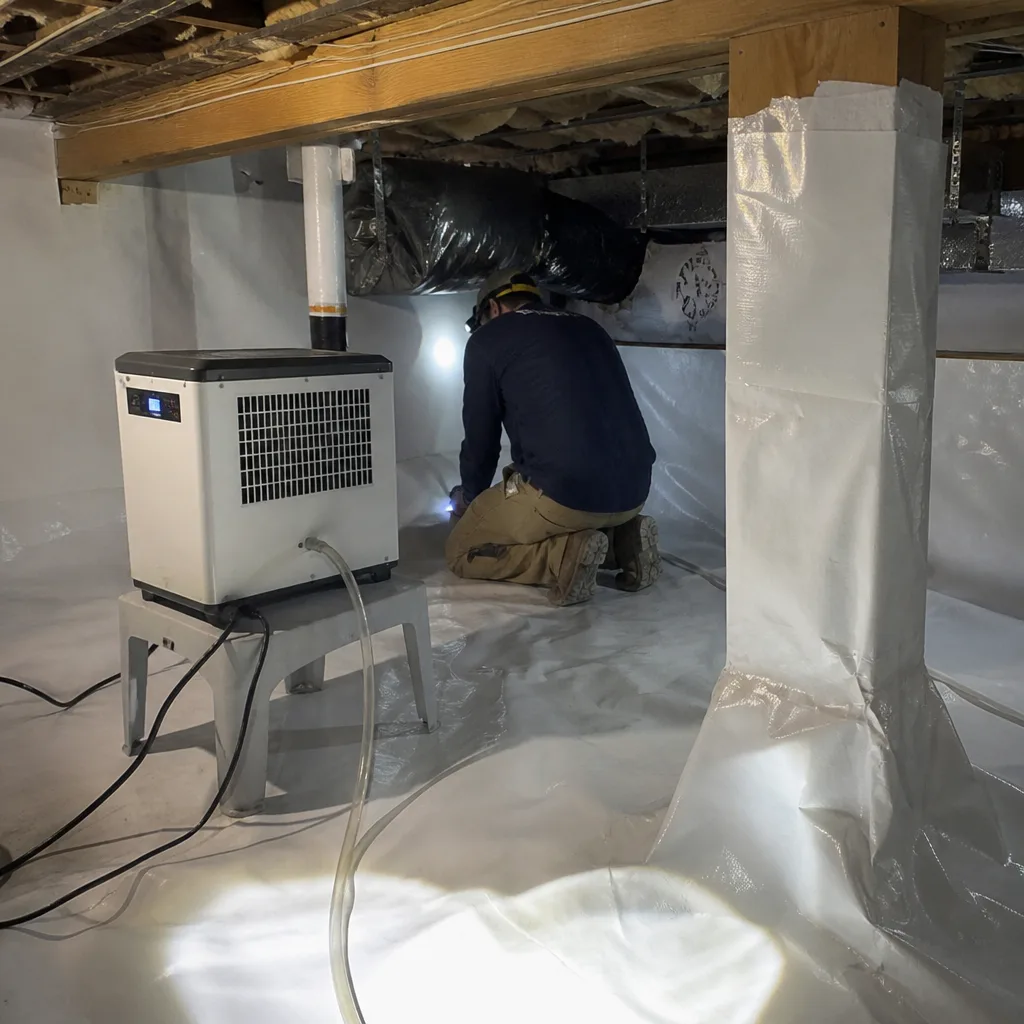
One more local note: crawl space work and attic work interact in a North Las Vegas home. A leaky attic pulls conditioned air up out of the house, and that air has to come from somewhere – often the crawl space, which drags in soil gas and moisture. Sealing the attic changes crawl space behavior, which is why we look at both together. Our page on Crawl Space Encapsulation & Vapor Barrier in North Las Vegas covers what that means in practice, and you can read more about our full-service approach on the Envelope Insulation North Las Vegas home page.
Common Mistakes to Avoid
- Insulating before sealing. The single most common mistake. Loose-fill over an unsealed top plate turns the insulation into a filter. Sealed first, insulated second, no exceptions.
- Covering non-IC recessed lights. Every can light in a North Las Vegas attic needs to be identified as IC or non-IC before anything goes over it. Covering a non-IC fixture is a fire risk, not a performance tradeoff.
- Undershooting R-value because the bags are cheaper. R-49 costs more than R-30 and pays it back many times over in this climate. Undershooting wastes the labor as surely as skipping the job.
- Skipping the blower-door test to save money. Without a before-and-after number, you don’t know whether the job worked. It also closes the door on NV Energy rebate eligibility, which usually makes the test the cheapest part of the project.
- Spraying foam without a mixing check. Off-ratio foam that fails to cure is a demolition job, not a repair. There is no budget version of this work that ends well.
- Doing the job yourself and then discovering rebate rules exclude DIY labor. Check the NV Energy program terms before you buy anything. The gap between DIY and professional is usually smaller than the sticker price suggests.
- Treating a missing bid line item as a detail. A bid without an air-sealing line and a post-job blower-door result isn’t a complete bid, regardless of price.
When to Call a Professional
Call a professional if any of the following is true: your attic floor has open bypasses you can see (or smell, with incense), you have non-IC recessed lights, you’re considering spray foam, any sealing needs to happen inside an HVAC plenum, or you want the NV Energy rebate. Call also if your attic has never been air sealed and you’re not certain you can identify every penetration – the cost of a missed bypass is higher than the cost of the job done right the first time. Envelope Insulation North Las Vegas offers free estimates in North Las Vegas. Every quote comes with a written price, written scope, and written warranty before any work starts, and every applicable job closes with a documented photo record and before-and-after blower-door numbers. Call (833) 630-4008.
Frequently Asked Questions
Yes, if your attic floor is already sealed and already insulated and you’re simply adding depth. Blowing machines are free with a qualifying bag purchase, and fiberglass and cellulose are forgiving materials. If the attic floor still has open bypasses around can lights, top plates, or penetrations, the DIY window has closed and you should seal first.
Air sealing stops air from moving through the envelope; insulation slows heat transfer. They’re different jobs. Air sealing has to happen first because insulation installed over open bypasses turns into a filter and locks the leak in place. The Berkeley Lab study found unsealed bypasses accounted for roughly 40% of total air leakage in the homes tested.
Because the rebate program is tied to a documented performance result – typically a post-install blower-door test and contractor invoicing. The program isn’t structured to reimburse homeowner labor. That documentation gap usually makes the professional route cheaper net of the rebate than the DIY route.
A blower-door test pressurizes the house and measures how much air escapes, expressed in CFM50 (cubic feet per minute at 50 pascals of pressure). Before-and-after readings tell you, in a single number, how much conditioned air the home was losing before the work and how much it’s losing after.
No. Spray foam is a two-part chemical reaction and the mixing ratio matters. Off-ratio foam can stay tacky or cure brittle and crumble, and it’s a permanent installation that has to be cut out and redone. This is one of the categories that stays firmly on the professional side of the line, especially in North Las Vegas attics where temperature swings complicate the cure window.
A separate air-sealing line item, a specified R-value target (typically R-38 to R-49 for this climate), a pre-job blower-door reading, a post-job blower-door result in writing, a written scope and written warranty before any work starts, and a documented photo record when the crew leaves. If any of those are missing, the bid isn’t complete regardless of price. Call (833) 630-4008 for a free second opinion on a bid you already have.
The Bottom Line
Adding blown insulation to an already-sealed attic floor is a reasonable DIY project. Sealing around can lights, penetrations, and top plates, applying spray foam, and touching anything inside an HVAC plenum are not. The Berkeley Lab study is the reason this line is so firm – unsealed bypasses accounted for about 40% of leakage in the homes tested, and installing insulation over them locks the problem in place. If you’re in North Las Vegas and you’re not certain your attic floor is sealed, get a blower-door reading first. Then decide. Call (833) 630-4008 for a free estimate – we’ll bring you a written price, written scope, and written warranty before any work starts.
Written by the team at Envelope Insulation North Las Vegas.