
Last updated November 18, 2026
DIY vs Professional Insulation: The North Las Vegas Homeowner’s Decision Guide
Home Depot’s blown-in insulation rental program gives any homeowner access to a blower machine. It does not give them a blower-door test, a calibrated depth gauge, or a way to find the air bypasses that determine whether the insulation they just added performs at the labeled R-value or something lower. That gap between “access to equipment” and “ability to verify the result” is where most North Las Vegas insulation projects succeed or fail. This guide sorts the work into what a careful homeowner can genuinely handle and what requires measurement tools and trade training to do right.
Quick Answer
In North Las Vegas, most homeowners can safely DIY blown fiberglass in an accessible attic during the cooler months, October through April, or add batts in a conditioned crawlspace. Everything else – two-component air sealing, closed-cell roofline foam, and any job that needs a blower-door baseline to prove performance – is professional work. Skill is rarely the limiting factor. Attic access, temperature, and the ability to measure before-and-after performance are.
Table of Contents
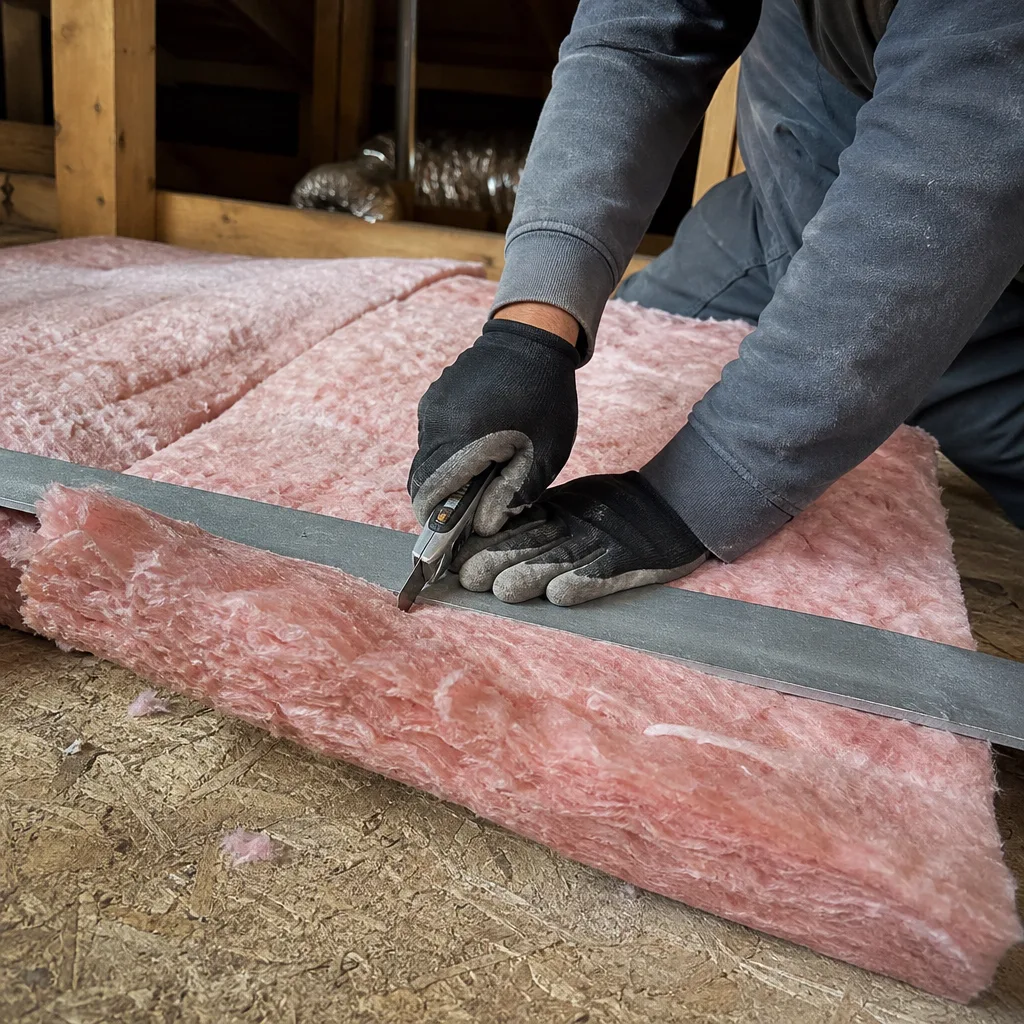
- The Four Variables That Sort Every Job
- What a North Las Vegas Homeowner Can Safely DIY
- What Requires Professional Equipment
- The Hidden Cost of Insulating Without Measuring
- Rebates, Liability, and the Nevada License Requirement
- Why North Las Vegas Attics Reach 140°F and What That Means
- Common Mistakes to Avoid
- When to Call a Professional
The Four Variables That Sort Every Job
The standard DIY-versus-professional framing asks whether a homeowner has the skill to install insulation. That’s the wrong question for North Las Vegas. Four conditions determine whether a job is DIY-feasible here, and none of them is “can you operate a blower machine.”
- Attic temperature at the time of installation. North Las Vegas attic decks routinely register 130°F to 140°F from May through September. A homeowner working in that heat for four to six hours faces genuine heat-illness risk, and blowing insulation over a hot deck also settles unevenly. October through April keeps attic temperatures in a workable range.
- Existing air-sealing condition. If the top plates, can lights, plumbing penetrations, and wire holes in the attic floor are open, any insulation you blow over them leaks conditioned air straight through. Insulation slows conductive heat flow; it does not stop air bypass.
- Presence of existing material requiring removal. Contaminated, compacted, rodent-damaged, or wet insulation has to come out before new material goes in. Removal is a containment and disposal job, not a homeowner one.
- Blower-door access. A blower-door test – a pressurization reading that shows, in one number, how much air your building envelope is losing – is the only way to know whether your work moved the needle. Without it, you’re guessing.
If two or more of those four land on the wrong side – hot attic, unsealed penetrations, existing material to pull, no way to measure – the job belongs with a professional. If all four land clean, you may be able to handle it.
What a North Las Vegas Homeowner Can Safely DIY
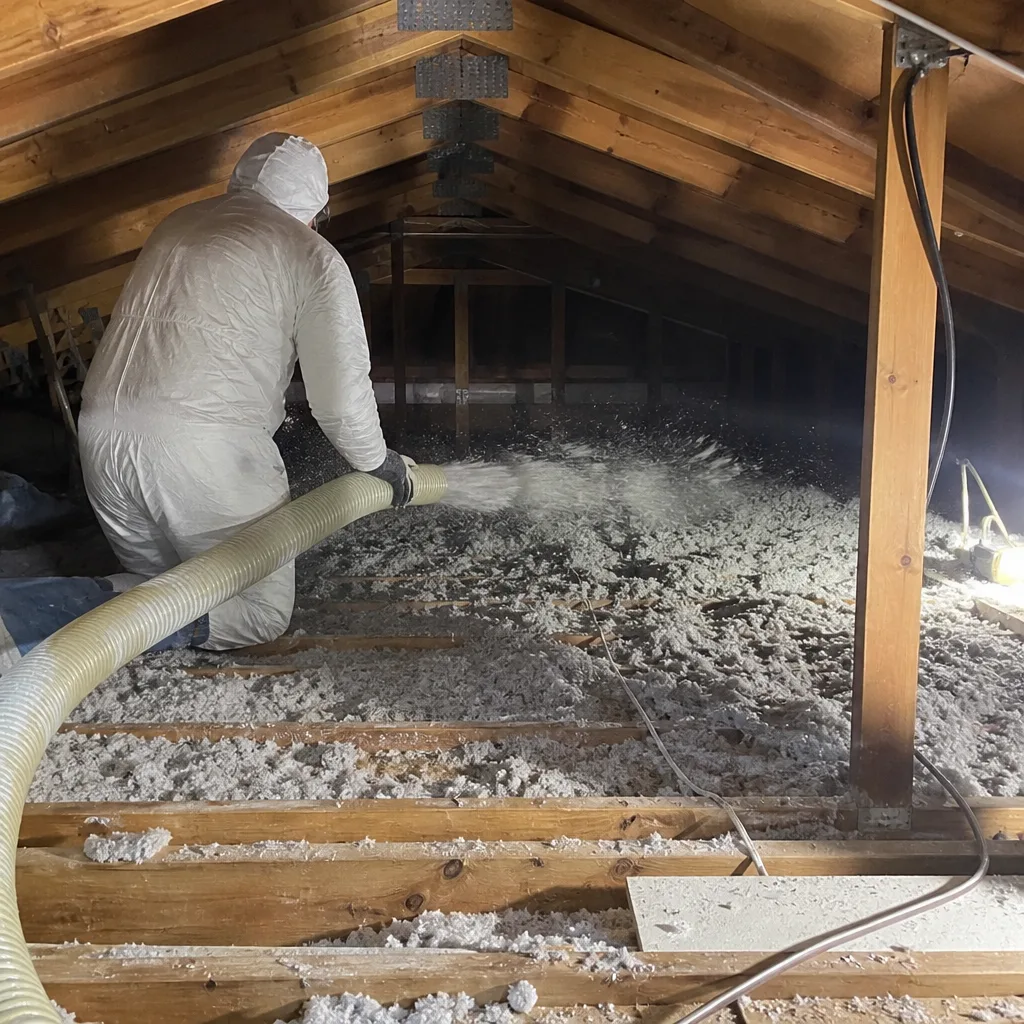
Two categories are genuinely within reach for a careful homeowner in North Las Vegas. We tell people this directly, because the honest answer is that some insulation work doesn’t need us.
Adding blown fiberglass in an accessible attic, between October and April. This is the most common DIY win. Requirements to do it safely and correctly:
- Two people minimum – one feeding the machine, one in the attic. Never work in an attic alone.
- Respirator rated for fiberglass particulate (N95 at absolute minimum), eye protection, gloves, long sleeves, and knee boards so you don’t step through the ceiling.
- A rental blower machine plus enough hose to reach the far corners of the attic without dragging the machine up.
- Depth markers stapled to the joists every few feet so you can hit target R-value rather than eyeballing it.
- Layered work, not dumped work – blowing in even passes across the whole floor rather than mounding one corner.
The trade vocabulary here matters: fiberglass blown to the labeled depth achieves its stated R-value only if the density is right and the air is still. A fluffy, under-dense install reads fine on a tape measure and underperforms in July.
Adding fiberglass batts in a conditioned crawlspace. If your crawlspace is sealed and dry, friction-fit batts between joists with a proper vapor barrier on the warm side can be a reasonable DIY project. If the crawlspace is vented and damp, stop. Batt insulation in a vented crawlspace in North Las Vegas’s soil conditions is the classic setup for compressed, moldy material a few summers later. That’s a crawl space encapsulation and vapor barrier conversation before anything else.
What Requires Professional Equipment
Three categories of work in a North Las Vegas home are not realistically DIY, and it comes down to tools and safety rather than skill.
- Two-component air sealing. Sealing top plates, can lights, plumbing chases, and wire penetrations properly requires a two-component spray foam kit – the kind that cures in seconds and expands into gaps you can’t see. Single-can hardware-store foam is a different product, cures slowly, and doesn’t seal the same way. Getting this wrong means blowing insulation over leaks that stay leaks.
- Closed-cell spray foam at the roofline. Roof-deck foam changes your attic from a vented assembly to an unvented one, which changes code compliance, moisture behavior, and combustion-air requirements. That’s spray foam insulation in North Las Vegas territory and it should not be attempted without trade licensing and equipment. High-pressure foam in untrained hands is a burn and respiratory hazard.
- Any job that needs a blower-door baseline. If the goal is to prove performance – before-and-after numbers, rebate documentation, a warranty record – the measurement itself is professional equipment. A homeowner can rent a blower door for a few hundred dollars, but setup, calibration, and interpretation are a separate skill.
One more: high-tension or concealed structural components in the attic – anything involving modifying the roof structure, cutting new chases, or changing vent strategy – falls outside any homeowner’s safe scope. A trained professional should handle those.
The Hidden Cost of Insulating Without Measuring
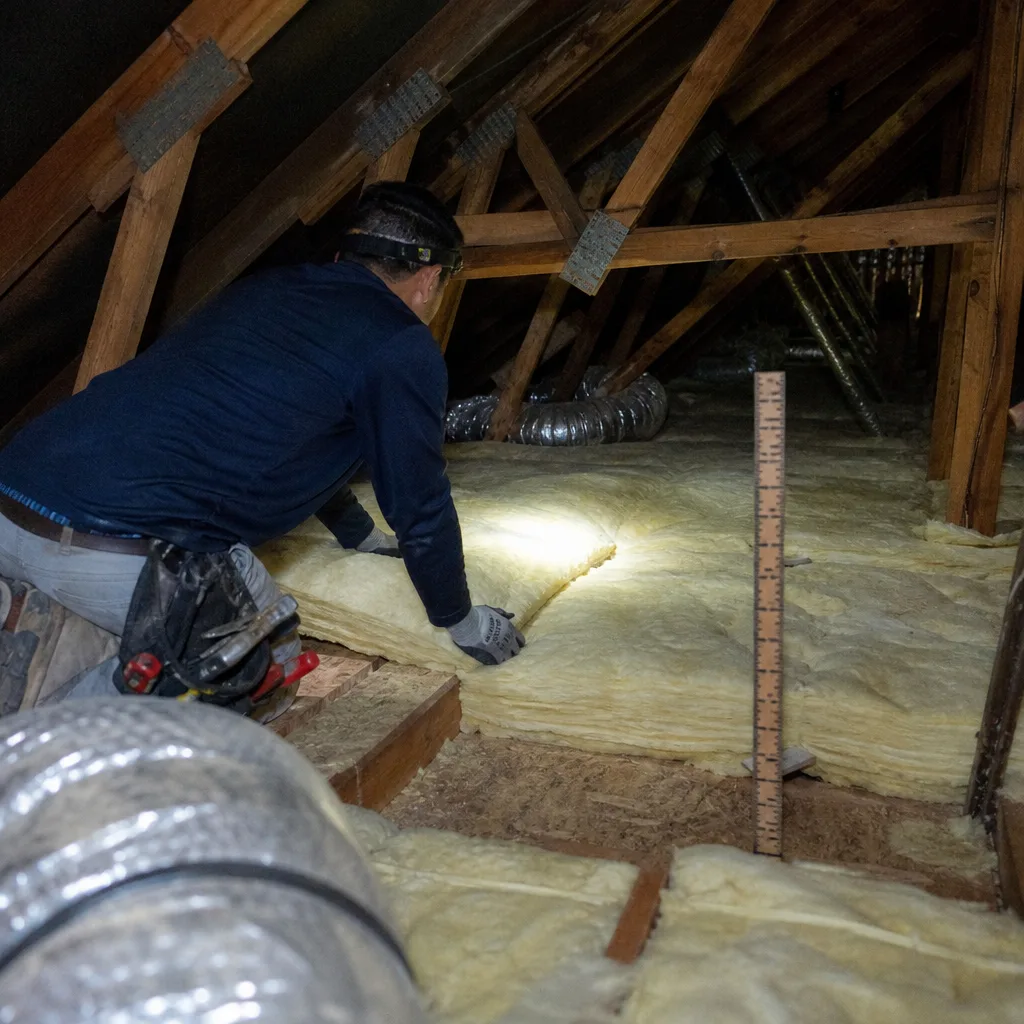
The most expensive DIY insulation job is the one that looks finished and doesn’t perform. Here’s a scenario we see in North Las Vegas neighborhoods like Aliante and Centennial Hills after a homeowner project.
Homeowner buys R-19 batts and installs them in a vented crawlspace, spending roughly $400 in materials. They don’t seal the band joist – the rim area where the floor framing meets the foundation wall – because they can’t easily reach it and it isn’t visually obvious. That band joist bypass dominates heat transfer in the assembly. The $400 in batts delivers maybe $80 a year in energy savings, because the air finding its way past the batts is doing more work than the batts are.
Measured on a blower door, this shows up as a CFM50 reading barely changed from the pre-install reading. Measured on a power bill, it shows up as a homeowner who spent a weekend in the heat and can’t tell whether the project helped.
The point isn’t that DIY never works. It’s that DIY without measurement is a project you can’t verify, and that’s how a $400 project becomes a $400 lesson. The comparison point that matters: on jobs where we air-seal and insulate in that order, a typical pre-work reading in a 1990s-built North Las Vegas home lands around 4,200 CFM50, and post-work readings around 2,100 – a halving of envelope air loss that no depth gauge on its own would have delivered.
Rebates, Liability, and the Nevada License Requirement
This is where the DIY math usually flips, and it’s the piece most homeowners miss before they rent the blower machine.
| Factor | DIY | Professional Installation |
|---|---|---|
| NV Energy insulation rebate | Not eligible | Usually eligible (rebate programs require a licensed Nevada contractor’s number on the invoice) |
| Workmanship warranty | None available | Written warranty delivered before work starts |
| Verification of performance | Not typically measured | Blower-door readings recorded before and after |
| Injury liability | On the homeowner | Covered by the professional’s insurance |
| Code compliance documentation | None | Scope and photo record provided |
The rebate point is concrete and worth running the numbers on before you commit. NV Energy’s residential insulation rebates are administered through contractor-installed work with a Nevada state license number attached to the invoice. A homeowner can do a spotless job and still be ineligible. That’s not a policy quirk; it’s how the program is structured, and it doesn’t change based on quality of work.
The liability side matters too. Attic work in North Las Vegas routinely involves maneuvering around HVAC lines, electrical runs, and ductwork at high attic temperatures. A fall or a heat-illness incident in a DIY session is on the homeowner. On a professional job, it’s on the contractor’s insurance. There’s also a quieter hazard: hidden gas or electrical penetrations in older attics that a homeowner doesn’t recognize as dangerous. A trained technician does. Electrical and gas work in a home is not a DIY category regardless.
If a rebate is part of the reasoning for insulating, get a written estimate first and read the rebate terms in it. Under our Haven Standard, a free second opinion on any written estimate is available – bring a competitor’s quote to us and we’ll read it with you.
Why North Las Vegas Attics Reach 140°F and What That Means
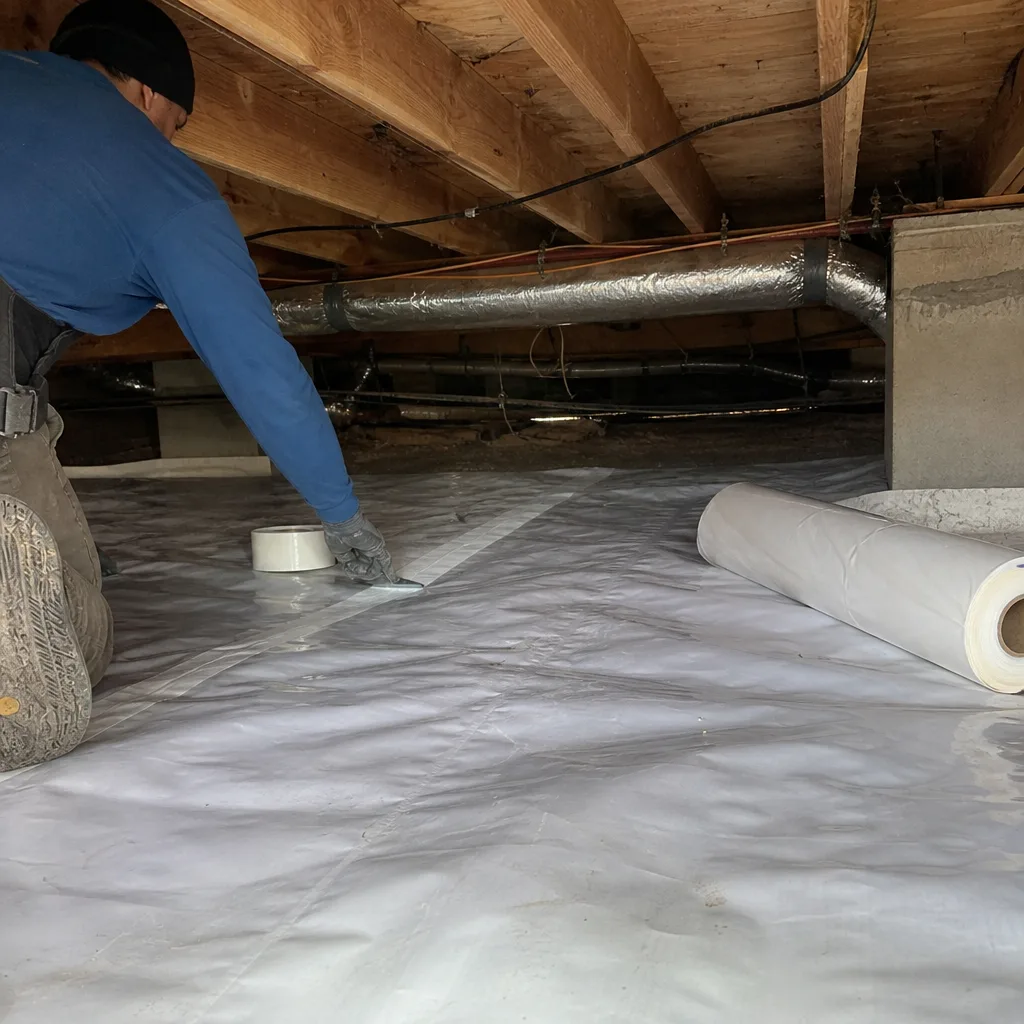
North Las Vegas summers are not a footnote to this decision. They shape it. Between June and September, attic deck temperatures in a home without updated insulation routinely hit 130°F to 140°F by mid-morning and stay there until evening. Local climate also brings the monsoon months of July and August, when abrupt humidity spikes push moisture into vented assemblies that a homeowner sealed without understanding the vent strategy.
Two things follow. First, installation season matters: work done in a 140°F attic is a real heat-safety problem, and the honest DIY window in North Las Vegas is October through April. Second, the assembly that performs in a Sun Belt climate is not the same as the assembly that performs in a moderate one. In the older housing stock around downtown North Las Vegas and off Civic Center Drive, we regularly see attic penetrations that were never sealed because the builder relied on the dry heat to keep moisture damage invisible. It did – but it also meant the leaks were never addressed. The house uses more cooling energy every summer as a result. That’s the pattern that gets fixed by air sealing first, then insulation, in that order.
If you’re not sure what assembly your home needs, a home energy audit tells you before anyone touches a blower machine.
Common Mistakes to Avoid
- Insulating over unsealed top plates and can lights. Blowing new material over an unsealed attic floor traps the leak under the insulation and hides it from the next inspection. The performance loss is real and the fix is demolition. Seal first, then insulate – always in that order.
- Installing in July or August. The temperature risk is genuine, and blown fiberglass in a hot attic can bridge and settle unpredictably. The DIY window in North Las Vegas is October through April. Waiting four months costs less than a heat-illness incident.
- Diagnosing savings from a power bill. A single summer month of savings is noise. Without a blower-door reading or a proper energy audit, the number on your bill is confounded by weather, thermostat habits, and rate changes. Measure the envelope, not the bill.
- Skipping the vapor barrier side of crawlspace work. Batts in a vented, damp crawlspace in North Las Vegas soil conditions compress and degrade within a few summers. If the crawlspace isn’t sealed first, the batts are a temporary install.
- Assuming “R-value on the bag” equals “R-value in the attic.” Density, coverage, and air movement all affect what you actually installed. A labeled R-38 blown at half depth is not delivering R-38.
- Doing work you can’t warranty. If you sell the home within a few years, a DIY insulation project with no documented scope and no warranty is a conversation the buyer will want to have. A written scope and a photo record travel with the house.
- Underestimating what rodent activity does to existing material. Rodents tunnel through fiberglass and destroy its performance. Insulating a floor that has active rodent access just gives them new material to work through. Rodent proofing comes before insulation, not after.
We also see one more regularly: homeowners who skip the air sealing intro entirely because they’ve heard “insulation” and stopped at the material. The attic insulation in North Las Vegas conversation starts with the seal, and any contractor who pitches insulation without the seal first is booking a repeat visit.
When to Call a Professional
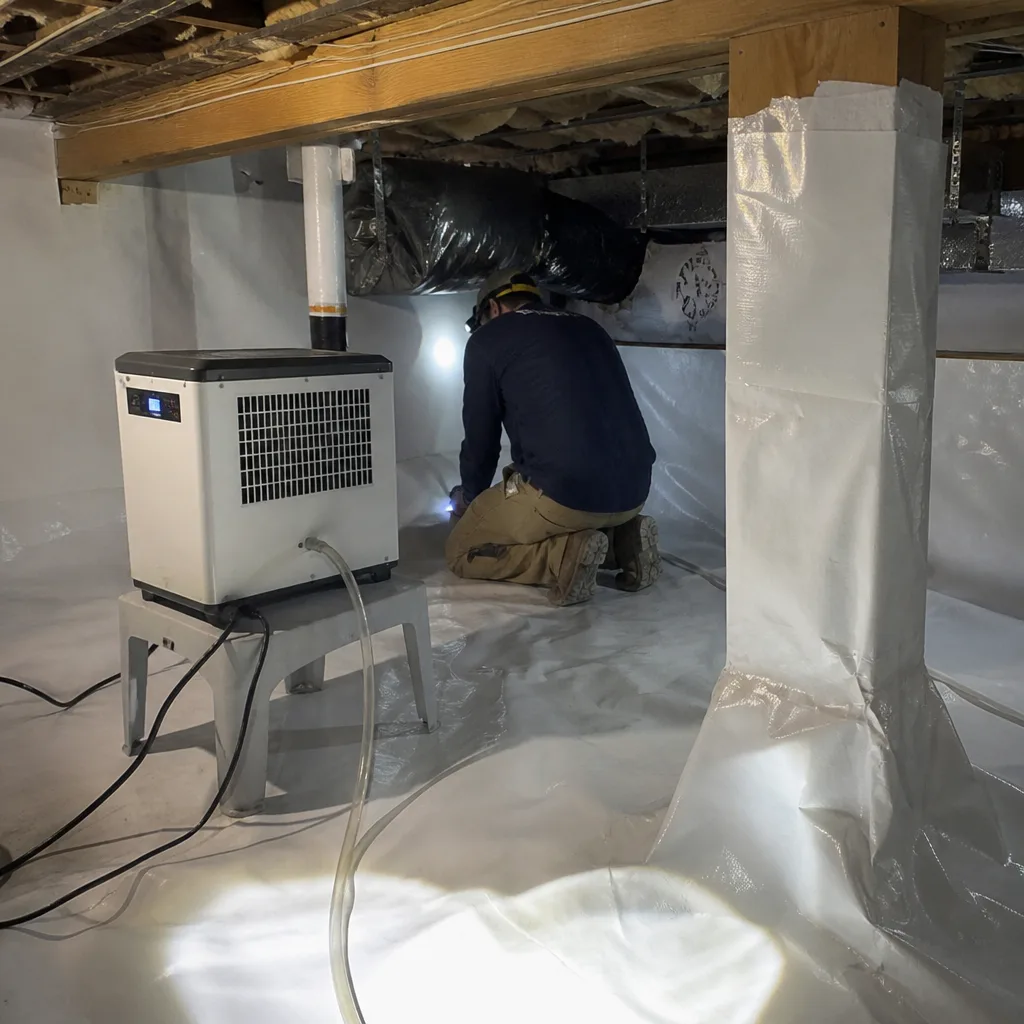
Call a professional when any of these is true: your attic deck is running over 100°F at the time you planned to work; your air sealing is incomplete or unknown; your existing insulation is contaminated, rodent-damaged, or wet; you want NV Energy rebate eligibility; you want documented before-and-after blower-door readings; you’re considering closed-cell foam at the roofline; or you’re scheduling any work in a home that may have unsealed electrical or gas penetrations in the attic. In those scenarios, professional equipment isn’t a luxury – it’s the only way to do the job correctly and prove it afterward.
Envelope Insulation North Las Vegas offers free estimates in North Las Vegas – call (833) 630-4008. Every job starts with a written price before any work begins, and closes with a documented photo record on every visit.
Frequently Asked Questions
Yes, in specific conditions: an accessible attic, installation between October and April, complete existing air sealing, and no removal work required. The limiting factor is usually measurement, not skill – a rental blower machine doesn’t include a blower-door test, and without one you can’t verify what your work actually delivered. If any of those four conditions is unmet, the job is professional work.
Repair is cheaper when the existing material is sound and only the coverage is thin – a top-off of R-11 to R-49 in a North Las Vegas attic typically runs a fraction of a full replacement. Replacement is required when the material is contaminated, rodent-damaged, compacted, or wet. Removal and replacement runs substantially higher because it’s a containment and disposal job. For an exact number on your home, call (833) 630-4008 – estimates are free and written.
Because the program is structured to require a Nevada-licensed contractor’s number on the invoice. The requirement isn’t about work quality – it’s how the rebate is administered, and it doesn’t change based on how carefully a homeowner does the work. If a rebate is part of your reasoning, get a written estimate from a licensed Nevada contractor before doing anything yourself.
Below 100°F, ideally 80°F to 90°F. In practice that puts the workable DIY window at October through April in North Las Vegas. Professional crews handle higher temperatures with rotation, hydration, and proper respirators – but the materially safer plan is to schedule in the cool season regardless of who does the work.
No, not properly. Two-component spray foam is the correct material for sealing top plates, can lights, and penetrations, and that’s professional equipment. Single-can hardware-store foam cures differently and doesn’t seal the same way. Air sealing is the prerequisite work that determines whether insulation performs at its labeled R-value – if it’s done wrong, the insulation you add over it delivers less than it should. Call (833) 630-4008 for a free estimate that includes the air sealing step.
You measure the envelope, not the power bill. A blower-door test reading before and after the work is the only reliable check – it shows in one CFM50 number how much air your home was losing, and how much it still is. Seasonal bill comparisons are confounded by weather, thermostat habits, and rate changes; they don’t isolate the insulation. Envelope Insulation North Las Vegas publishes before-and-after blower-door readings on every applicable job so the performance change is documented rather than inferred.
The Bottom Line
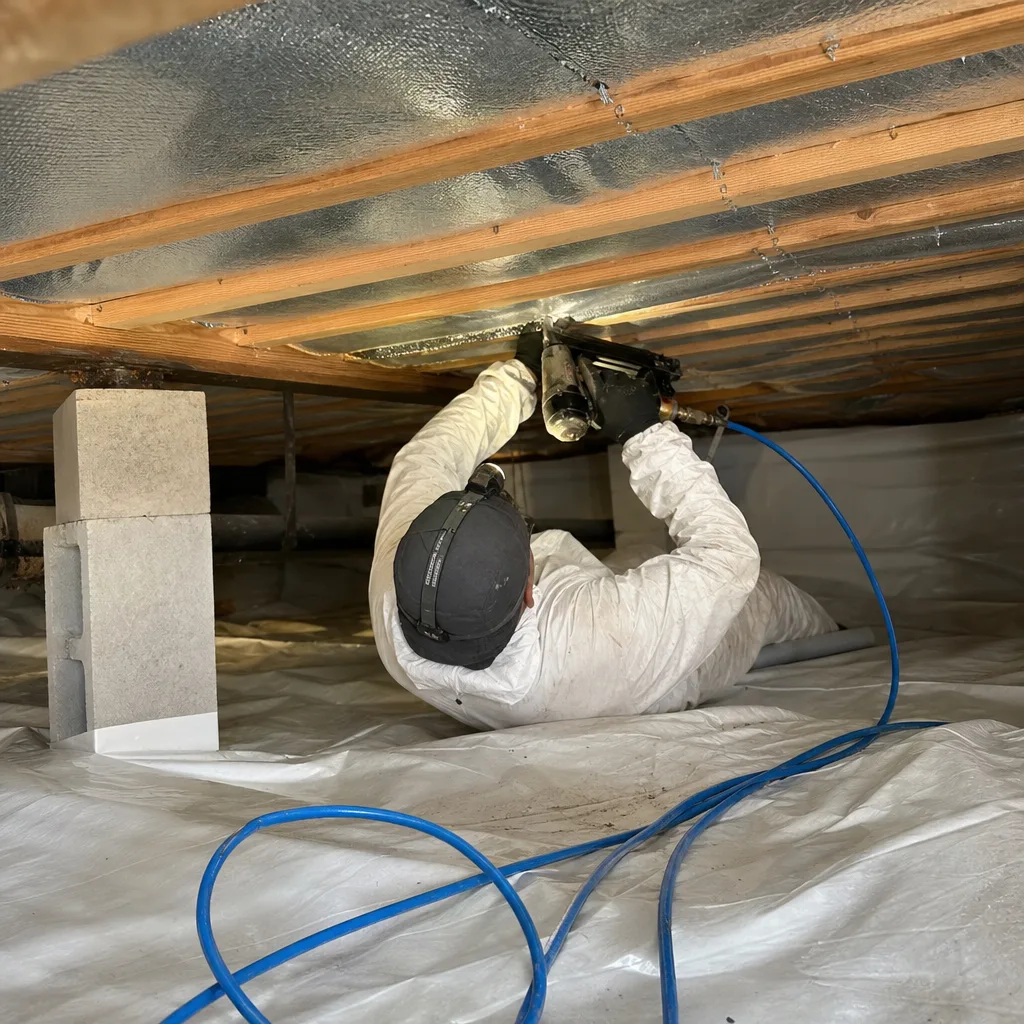
Some insulation work in North Las Vegas is genuinely DIY-feasible: blown fiberglass in an accessible attic between October and April, and batts in a conditioned, sealed crawlspace. Everything else – air sealing with two-component foam, closed-cell roofline work, removal of existing material, and any job that needs a blower-door baseline – requires professional equipment and training. The two questions that matter most are whether you can safely access the attic in summer heat, and whether you can measure the result. If the answer to either is no, the rebate eligibility and the documentation of performance tilt the math toward a professional install. Skill is rarely the deciding factor.
Get a Written Price Before Any Work Starts
If you’re weighing a DIY project against a professional install, the most useful next step is a written estimate you can hold side by side with your own plan. Envelope Insulation North Las Vegas provides free estimates across North Las Vegas, sealed-first-then-insulated in that order, with documented photo records on every visit and before-and-after blower-door readings on applicable jobs. If you already have a written estimate from another contractor, we’ll read it with you at no charge. Call (833) 630-4008 to schedule.
Written by the team at Envelope Insulation North Las Vegas.