
Last updated November 18, 2026
DIY vs Professional Blown-In Insulation: What’s Safe to Do Yourself
Home improvement retailers rent insulation blowers for roughly $150 a day, and the machine makes the job look like laying mulch. What the rental counter doesn’t tell you: if your attic has 3 ACH50 worth of unsealed bypasses, blowing insulation over them just builds a wind tunnel with better walls. We’ve opened attics in North Las Vegas where a prior homeowner spent a weekend and $800 doing exactly that, and the energy bill never moved. This guide separates the part of the job you can genuinely do yourself from the part that needs a blower door, a trained eye, and a written record when it’s done.
Quick Answer
Blowing insulation into an already-air-sealed attic is a manageable DIY project for a careful homeowner. Blowing insulation before the air barrier is fixed is the most common way people waste money on this work, because loose fill over unsealed top plates, can lights, and plumbing chases insulates a space that still leaks. The safe-to-DIY task is installation. The task that should not be DIY is air sealing and verifying it with a blower-door test.
Table of Contents
- The Two Tasks People Confuse
- When DIY Is Unsafe No Matter How Careful You Are
- What “Correct Depth” Actually Means
- The Honest Cost Comparison
- What a Professional Job Documents That DIY Can’t
- North Las Vegas Conditions That Change the Calculation
- Common Mistakes to Avoid
- When to Call a Professional
The Two Tasks People Confuse
Blown-in insulation gets sold as one job. It’s really two, and they have completely different risk profiles.
Air sealing is finding and closing the holes where conditioned air escapes into the attic. That means foam or caulk on top plates (the wood cap where wall framing meets the ceiling), sealing around can lights with the correct covers, and closing the gaps around plumbing, wiring, and duct penetrations. It requires knowing where to look, and it requires a blower-door test to confirm you actually got it. You cannot see air leaking. You measure it.
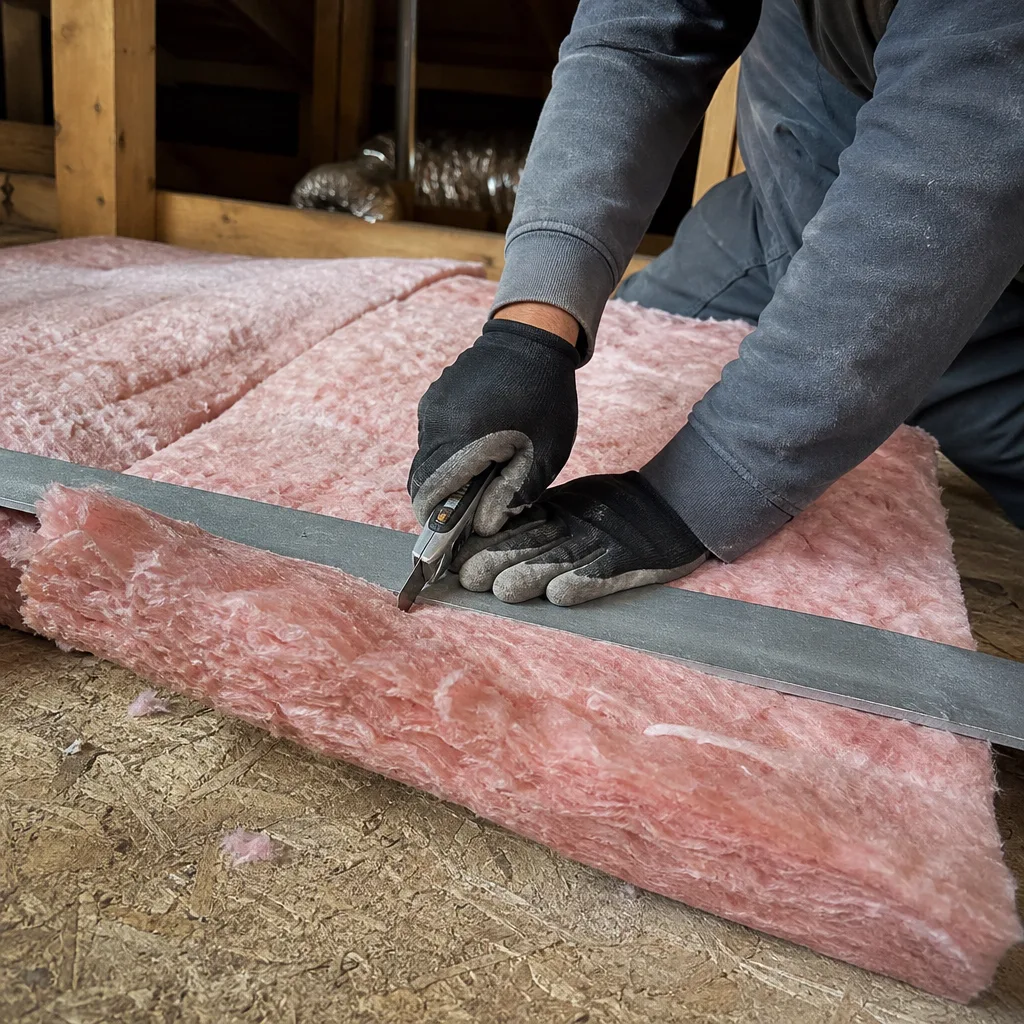
Insulation installation is the part the rental blower does. You set a depth gauge, feed fiberglass or cellulose into the hopper, and build up an even blanket to a target R-value. It’s dusty, physical work, but it’s forgiving.
Here’s the sequence that matters: air sealing comes first, insulation second, in that order. Envelope Insulation North Las Vegas will never blow insulation over an unsealed attic floor, because doing so hides the leaks under 14 inches of cellulose and makes the next attempt at fixing them far more expensive. If you’re doing this yourself, the same rule applies. Attic insulation in North Las Vegas starts with the sealing, always.
Most homeowners who call us after a failed DIY attempt didn’t get the insulation wrong. They got the order wrong.
When DIY Is Unsafe No Matter How Careful You Are
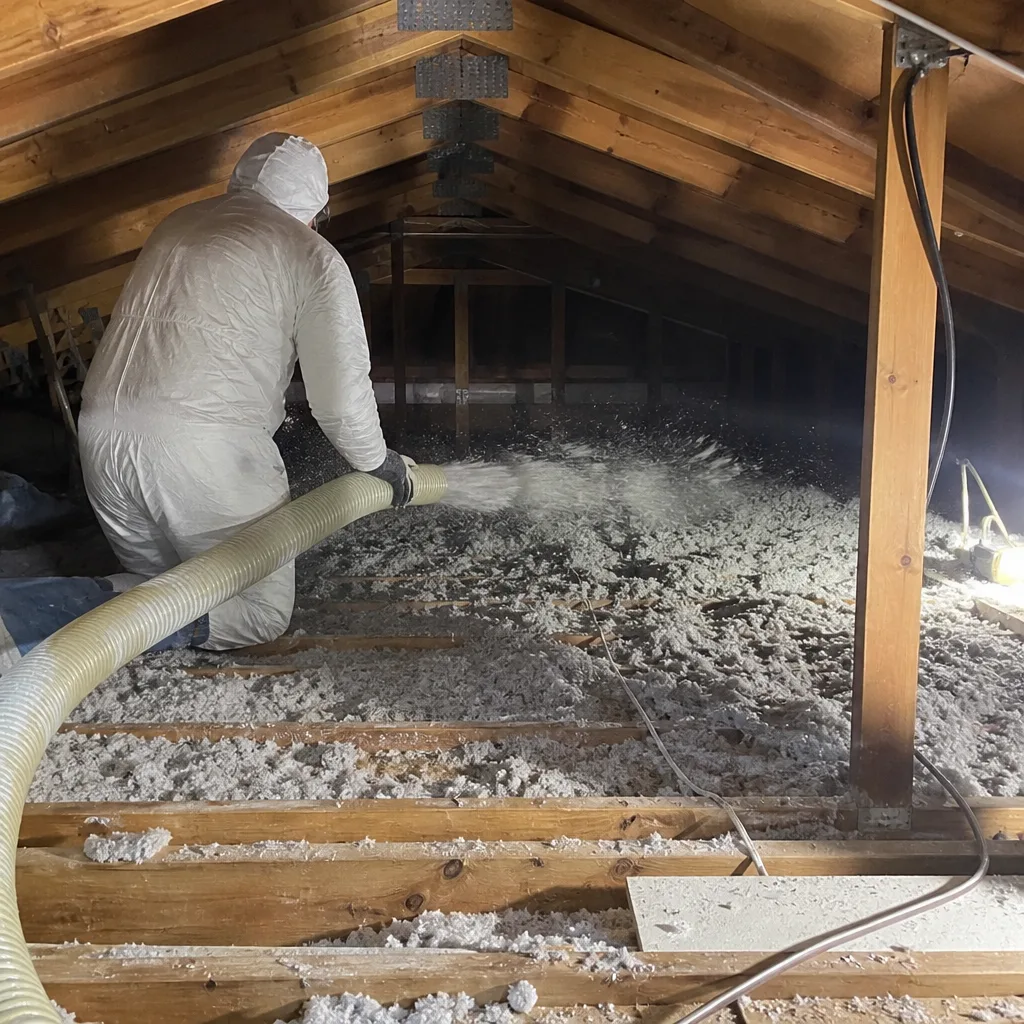
Some attic conditions turn a weekend project into a hazard, and skill level doesn’t change that. If you find any of these, stop and bring in a professional.
- Knob-and-tube wiring within 3 inches of the fill zone. This old wiring style runs hot and was never designed to be buried. Covering it with insulation is a fire risk, and the code required clearance exists for a reason. Many older homes in North Las Vegas neighborhoods built before the 1970s still have it in the attic.
- Vermiculite. If the existing loose fill has a pebbly, gray-brown, mica-like texture, it may contain asbestos. Do not disturb it, do not blow over it, do not vacuum it. Testing comes first, and removal is a licensed abatement job, not a homeowner job.
- Active soffit-to-ridge bypass channels. If you can feel air moving through specific spots, you have a bypass. Insulating over it doesn’t stop the airflow, it just routes conditioned air through the insulation and out the roof. Each one has to be sealed before fill goes down.
- Any moisture, mold, or rodent evidence. Insulation over an active leak traps moisture against the deck. Insulation over rodent runs gets contaminated and needs removal. Both need addressing before new material goes in.
- Recessed can lights not rated IC (insulation contact). Non-IC fixtures get hot and cannot be covered directly. They need an airtight box or a fixture swap first.
Every one of these is a stopping point, not a workaround. If you’re unsure what you’re looking at, a professional inspection answers it in an hour.
What “Correct Depth” Actually Means
The bag coverage chart on the insulation package tells you how many bags per square foot to hit a target R-value. That chart assumes uniform depth across the whole attic. Attics are not uniform.
The number that actually matters is the depth at the thinnest point, not the average. If you blow 16 inches in the middle of the attic and 9 inches at the eaves because the hose couldn’t reach the corners, your effective R-value is closer to the 9-inch figure. Heat moves through the weakest spot.
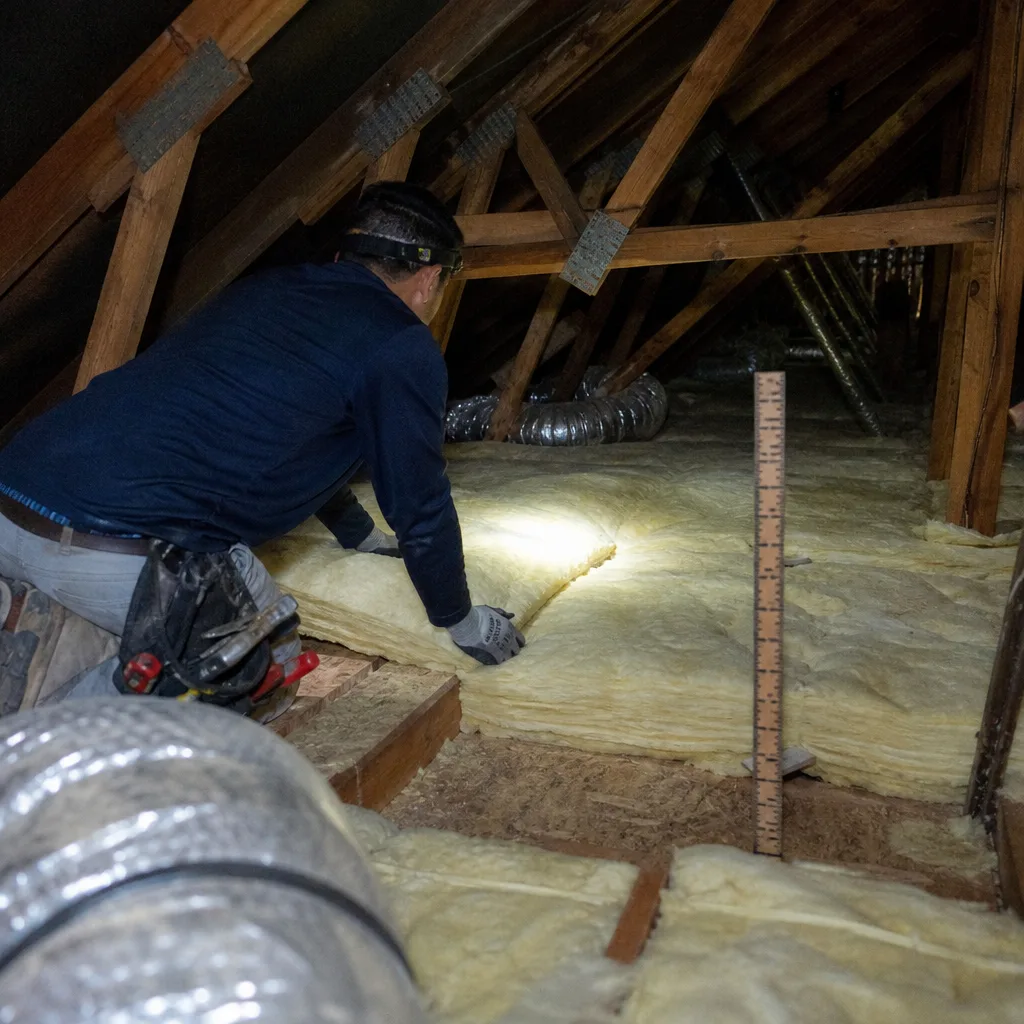
The reliable method is a marked depth gauge every 4 feet. Here’s the process:
- Measure your current insulation depth in at least eight spots across the attic and record the shallowest reading.
- Work out the R-value you have now, then the R-value you’re targeting. In North Las Vegas’s climate zone, most attics should reach R-38 to R-49.
- Mark a vertical gauge (a stake with depth marks, or painter’s tape on a broom handle) and set one every 4 feet, running the full length of the attic bay.
- Blow the insulation in passes, checking against the gauges as you go, rather than trying to hit final depth in one sweep.
- Walk the attic at the end and confirm every gauge reads at or above target. Correct any low spots before you call it done.
Materials matter here too. Cellulose like GreenFiber settles over time, so you install slightly above target to land at depth after settling. Fiberglass like Owens Corning or Johns Manville holds its loft better but is less forgiving of gaps. Whichever you use, the depth gauge is what tells you the work is finished, not the empty bag count.
The Honest Cost Comparison
We’re not going to pretend professional install is free. Here’s the real math, ballpark numbers for a typical 1,200-square-foot attic.
- DIY material + blower rental: roughly $0.85 to $1.15 per square foot, or about $1,000 to $1,400 for the attic, before any sealing materials.
- Professional blown-in install with air sealing: roughly $1,400 to $2,400 for the same attic, including the sealing, the depth verification, and the blower-door readings.
- The DIY delta: typically $0.25 to $0.35 per square foot cheaper for the insulation alone.
That delta is real. It’s also the only part of the comparison that favors DIY. The savings disappear in three scenarios:
- You skip air sealing. The attic still leaks, the energy bill doesn’t drop, and you’ve spent the money for nothing. We’ve seen annual savings come in at $40 where the homeowner expected $400, purely because the bypasses were never sealed.
- You have to redo it. Uneven depth, an over-filled baffle that blocks the soffit vents, or insulation blown against a non-IC can light all mean paying twice. The second time usually costs the professional price plus removal.
- You can’t document it. When you sell, or when you’re chasing a utility rebate, a professional job comes with the paperwork. A DIY job comes with a receipt from the home improvement store.
If your attic is already well sealed, DIY genuinely saves you money. If it isn’t, the honest number is that DIY costs you more.
What a Professional Job Documents That DIY Can’t
This is the part most comparison articles skip, and it’s the reason we publish blower-door numbers on every applicable job.
A blower-door test is a pressurization measurement. A calibrated fan mounts in an exterior door, pulls the house to a set pressure, and reads the airflow needed to hold it there. The result is reported in CFM50 (cubic feet per minute at 50 pascals of pressure) and converted to ACH50 (air changes per hour at that pressure). It is, in one number, how much air your building envelope is losing.
What a professional job should hand you when the crew leaves:
- A pre-work blower-door reading, so you know the baseline.
- A post-work blower-door reading, so you can see the change. A well-executed sealing job on a leaky attic might cut CFM50 by 30 to 50 percent. The number is the proof.
- Before-and-after photos of the sealed penetrations and the finished depth gauges.
- The written scope and warranty, delivered before work starts, not after.
A homeowner with a blower and a bag of cellulose can produce none of this. You’ll be able to see that the insulation looks deeper. You won’t be able to say what your home’s air leakage was before or after. That gap matters if you sell, if you apply for a rebate, or if you simply want to know whether the work did what you paid for.
Envelope Insulation North Las Vegas treats these numbers as the deliverable, not the marketing.
North Las Vegas Conditions That Change the Calculation
Insulation decisions are local, and North Las Vegas has specific conditions that shift the DIY calculus in ways the national how-to articles don’t account for.
Heat, not cold, is the driver. North Las Vegas summers push attic temperatures past 140°F. That heat doesn’t just sit in the attic; it radiates down through the ceiling assembly into the living space, and every unsealed bypass in the ceiling plane becomes a direct path from a 140°F space into your supply ducts and living room. Air sealing here does more for summer comfort than adding R-value alone.
Ductwork in the attic. Many North Las Vegas homes built in the 1990s and 2000s run the HVAC ductwork through the attic. If you blow insulation over ducts that aren’t sealed at the joints, you don’t gain much, because the ducts themselves lose cooling before the air reaches a room. Duct sealing belongs in the same session as attic air sealing. This is part of why we treat the whole envelope as one project, and part of why spray foam insulation in North Las Vegas is a real option for attics with ductwork that can’t be sealed by other means.
Newer construction and builder-grade installs. A large share of North Las Vegas housing went up in the last 25 years. Many of those attics have builder-grade insulation that was installed to whatever the code minimum was at permit time, often with gaps at the eaves and around penetrations. It’s common for a home from the 2000s to have less insulation than a homeowner assumes, and a blower door to show far more leakage than the age of the house suggests.
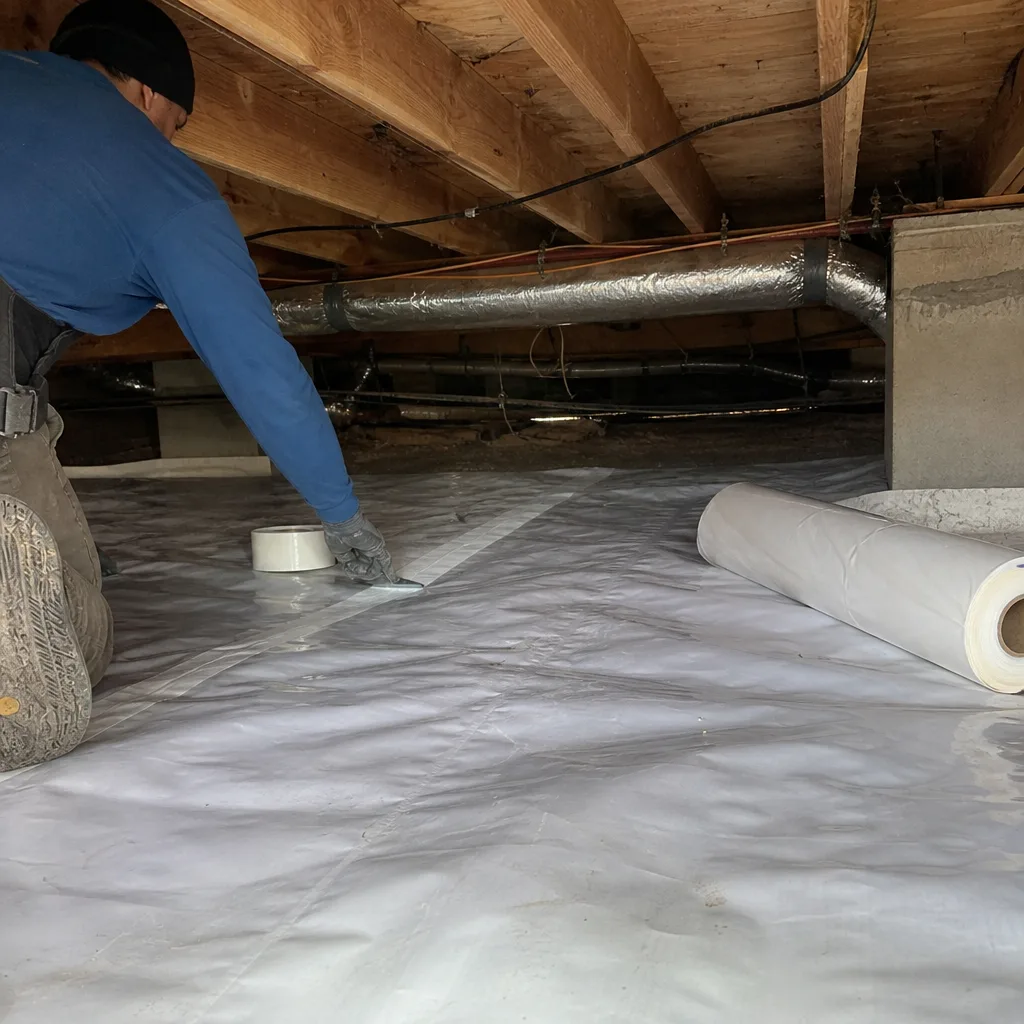
Crawl space humidity. Some North Las Vegas homes sit over a crawl space rather than a slab. If your attic work is part of a broader air sealing job, the crawl space is the other half of the envelope. Crawl space encapsulation and vapor barrier in North Las Vegas addresses the moisture path that keeps the attic work from performing the way it should.
If you’re planning to do the insulation yourself, these conditions are what you need to check before renting the blower. Our team at Envelope Insulation North Las Vegas checks all of them on every estimate.
Common Mistakes to Avoid
- Blowing over unsealed bypasses. The most expensive mistake in the category, because you pay for the insulation and then pay again for removal if you want to fix the leaks underneath. Seal first, fill second.
- Blocking the soffit vents. Insulation blown tight against the roof deck at the eaves chokes the attic’s air intake and can drive moisture problems. Baffles protect the soffit vent path. This is the second most common weekend-job error we see in North Las Vegas.
- Going by the bag chart instead of a depth gauge. The chart gives you an average. The gauge gives you the shallowest point, which is what determines performance.
- Assuming the rental blower will reach the whole attic. Long attics with limited access need an extension hose or a second person at the eaves. If you can’t reach the far corner, that corner stays at the original R-value.
- Skipping the pre-work inspection. Knob-and-tube wiring, vermiculite, and mold are deal-stoppers, and they’re not findable from the attic hatch. Go up with a flashlight before you commit to the project.
- Not documenting the before. Take photos of the attic before any material goes down: the existing depth, the penetrations, the vents. You’ll want them when the job is finished and when you sell.
- Doing it in July. North Las Vegas attics hit 140°F in summer. If you’re doing your own install, do it in the cool part of the morning or wait for a cooler month. Heat exhaustion in an attic is a real risk.
When to Call a Professional
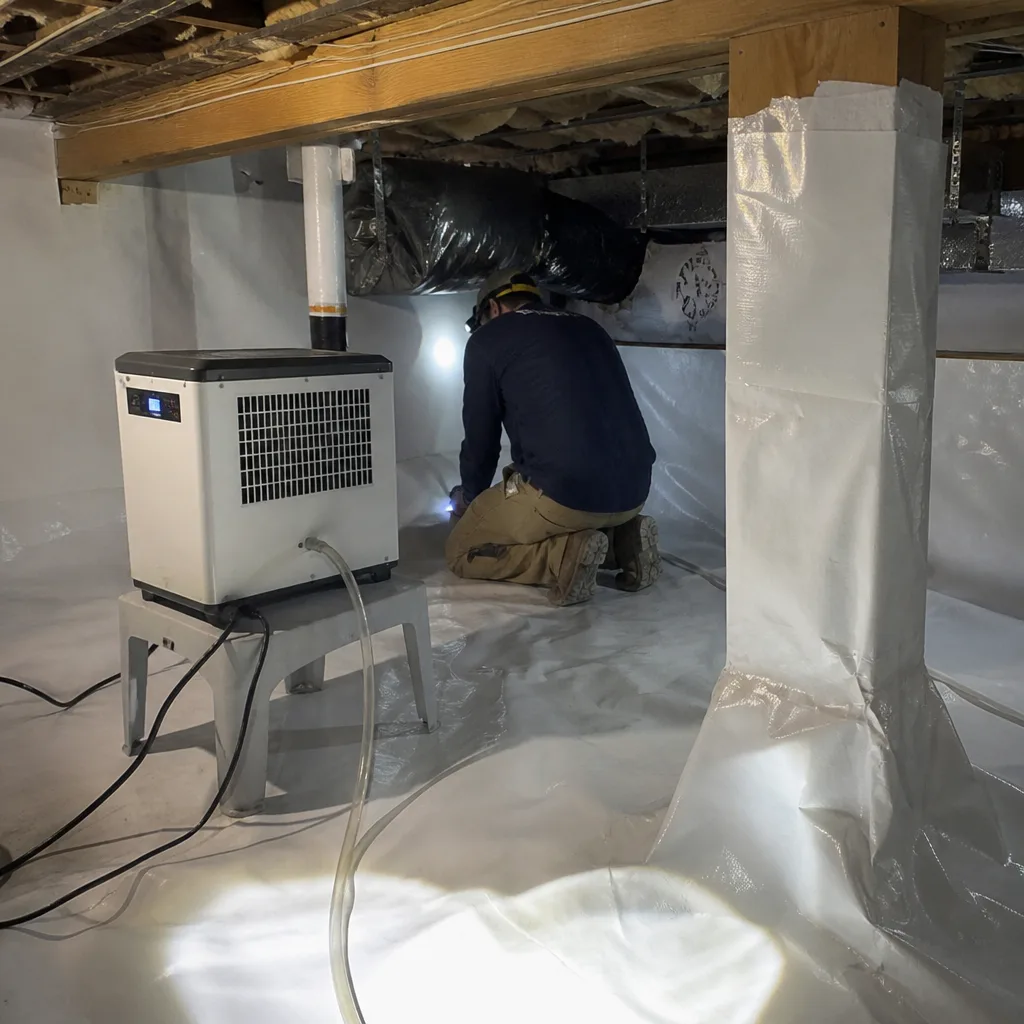
Call a professional if any of the following applies: the attic hasn’t been air sealed and you have no way to verify the air barrier’s current condition; you find knob-and-tube wiring, vermiculite, or mold during inspection; the attic is over a crawl space or contains unsealed ductwork; the job spans more than one envelope component; or you simply cannot confirm the work is done to depth without a blower-door reading. The last one is the common and quiet reason most homeowners hire out. They want the documentation, not just the insulation.
Envelope Insulation North Las Vegas offers free estimates in North Las Vegas – call (833) 630-4008. Every estimate is a written price before any work starts, and every job closes with a Documented Photo Record and before-and-after blower-door readings.
Frequently Asked Questions
No, blown-in insulation without air sealing rarely delivers the energy savings homeowners expect. The insulation slows conductive heat loss, but the attic still leaks conditioned air through unsealed top plates, can lights, and penetrations. In our experience the bill barely moves if sealing isn’t done first. Call (833) 630-4008 for a written estimate that includes sealing as a line item, not an upsell.
DIY materials and blower rental typically run about $0.25 to $0.35 per square foot cheaper than a professional install for the insulation alone. The savings evaporate if the job needs a redo, if the attic wasn’t sealed first, or if you need documentation for a sale or rebate. Call (833) 630-4008 for an exact written quote on your attic.
Yes, if the existing insulation is dry, uncontaminated, and not vermiculite. Blowing new fiberglass or cellulose over existing material is standard practice and cheaper than removal, but the existing material has to be sound and the air barrier beneath it still has to be sealed. If you’re unsure about the existing material, we can inspect and advise.
You can’t confirm it by eye; you need a blower-door test, which measures whole-house air leakage in ACH50. A well-sealed home in North Las Vegas typically reads in the 2 to 4 ACH50 range. Without a baseline reading, you’re guessing, and guessing is what fails. Call (833) 630-4008 to schedule a test.
Most North Las Vegas attics should reach R-38 to R-49 in insulation value. Climate zone 3 drives that target range. The number that will actually deliver that value is the depth reading at the shallowest point, not the average depth. If you measure, measure in at least eight spots.
You can, and many homeowners do. The honest answer is that a weekend is only enough time for one of the two tasks, and insulation is the second one. If the attic was sealed before the installation, a weekend is realistic. If it wasn’t, no. Call (833) 630-4008 to discuss your attic conditions before you book the rental.
The Bottom Line
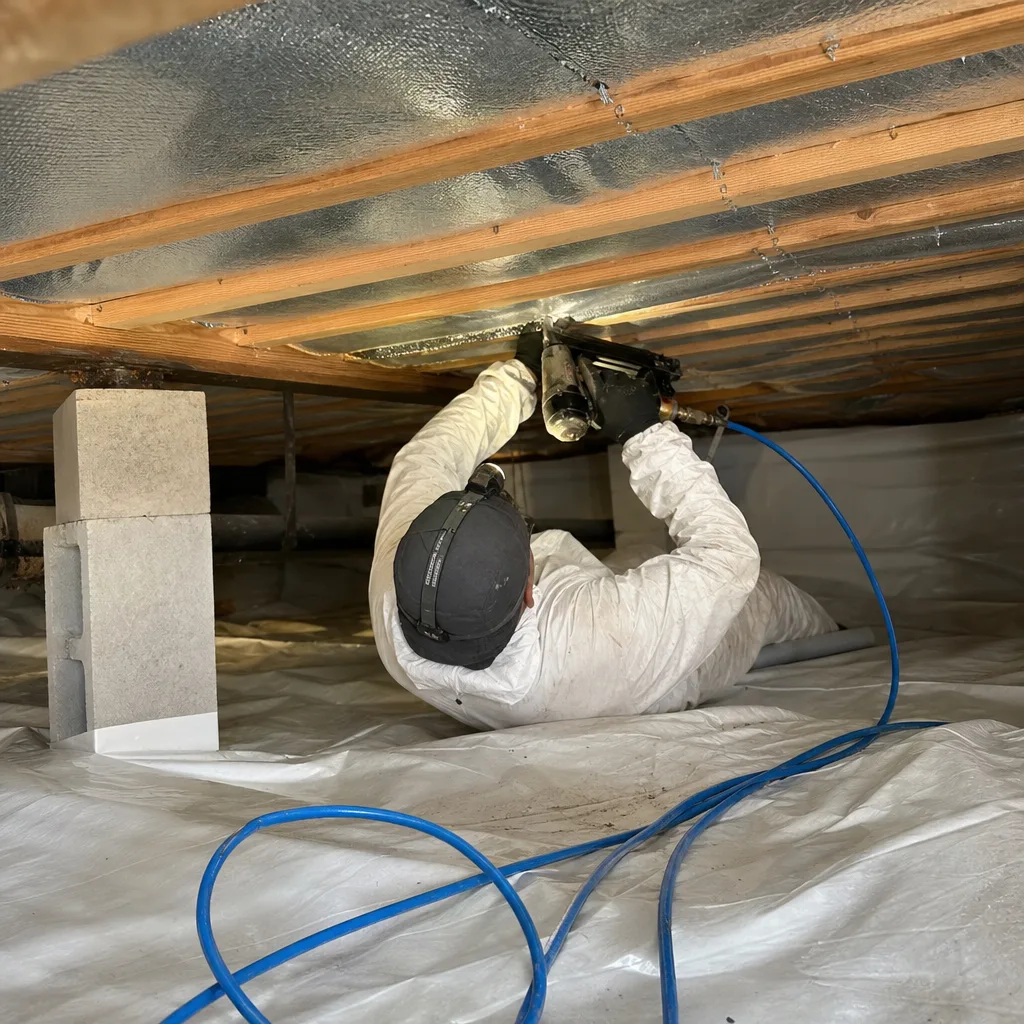
The DIY vs professional question isn’t really about whether you can run a blower hose; it’s about whether your air barrier is already done. Air sealing needs a blower door to verify and a trained eye to find the leaks. Insulation installation is genuinely manageable for a careful homeowner who sets depth gauges and protects the soffit vents. If you’re uncertain about the first half, spend an hour with a professional before you spend $800 at the rental counter. In North Las Vegas, the failures we see most often are attics that got insulated over leaks, and the fix always costs more than doing it in order.
Written by the team at Envelope Insulation North Las Vegas.