
Last updated November 18, 2026
The Complete Spray Foam Insulation Guide for North Las Vegas Homeowners
Attic air temperatures in North Las Vegas regularly climb past 160°F in July. That single number reshapes almost every spray foam decision a homeowner here has to make, because it pushes open-cell foam past the performance range its published specs assume. Most of the guidance you’ll read online was written for a mid-Atlantic or Pacific Northwest climate, and it does not transfer cleanly to the Mojave. This guide covers what actually matters in North Las Vegas: the unvented attic assembly, Climate Zone 3B R-value targets, block and stucco wall construction, and the documentation that proves the job changed how your house performs.
Quick Answer
For most North Las Vegas homes, closed-cell spray foam applied to the underside of the roof deck (an unvented attic assembly) is the standard choice, at roughly R-6 to R-7 per inch, because it holds its rated performance at the temperature extremes this climate produces. Climate Zone 3B code minimums under the 2021 IECC are R-38 for the attic, R-13 for framed walls, and R-10 for slab edges. A proper job begins with a blower-door test that establishes your air leakage baseline, and ends with before-and-after numbers you keep.
Table of Contents
- Why Spray Foam Behaves Differently in North Las Vegas
- Closed-Cell vs. Open-Cell: Which One Belongs in Your Attic
- The Unvented Attic Assembly, Explained
- R-Value Targets and Code Minimums for Climate Zone 3B
- Spray Foam on North Las Vegas Block Walls
- How a Blower-Door Test Proves What the Foam Changed
- What Your Documented Job Record Should Contain
- What Spray Foam Insulation Costs in North Las Vegas
Why Spray Foam Behaves Differently in North Las Vegas
Spray foam is a temperature-sensitive material. Its R-value is published at a mean temperature (usually 75°F), and that number drifts as the foam gets hotter or colder. In a vented attic in coastal Oregon, the deck might hit 110°F on a hot afternoon. In a North Las Vegas attic in July, the deck surface routinely reads well above 150°F, and the air under it can exceed 160°F before the sun comes off the roof.
That matters most for open-cell foam, which is a lower-density product and loses a larger share of its rated R-value as temperature climbs. It also matters for the assembly itself: a vented attic in this climate is a machine for pulling hot air in through soffit vents, pushing it across ductwork, and exhausting it through the ridge. Any duct run in that attic is sitting in a 150°F-plus stream.
Three variables drive almost every decision here:
- Attic temperature extremes. A 160°F attic is not an edge case in North Las Vegas, it is a normal July. Materials have to hold performance there.
- Low ambient humidity. Desert air is much drier than the climate the standard vapor management rules were written for, which changes how moisture moves through block and stucco.
- Thermal mass in block construction. Painted concrete masonry absorbs heat all day and re-releases it into the evening, so walls need insulation placed to interrupt that flow, not just to add R-value.
In our experience working Envelope Insulation North Las Vegas home jobs, the homes that feel hottest in the late evening are usually the ones where block walls are absorbing the day’s heat and handing it back after sunset.
Closed-Cell vs. Open-Cell: Which One Belongs in Your Attic
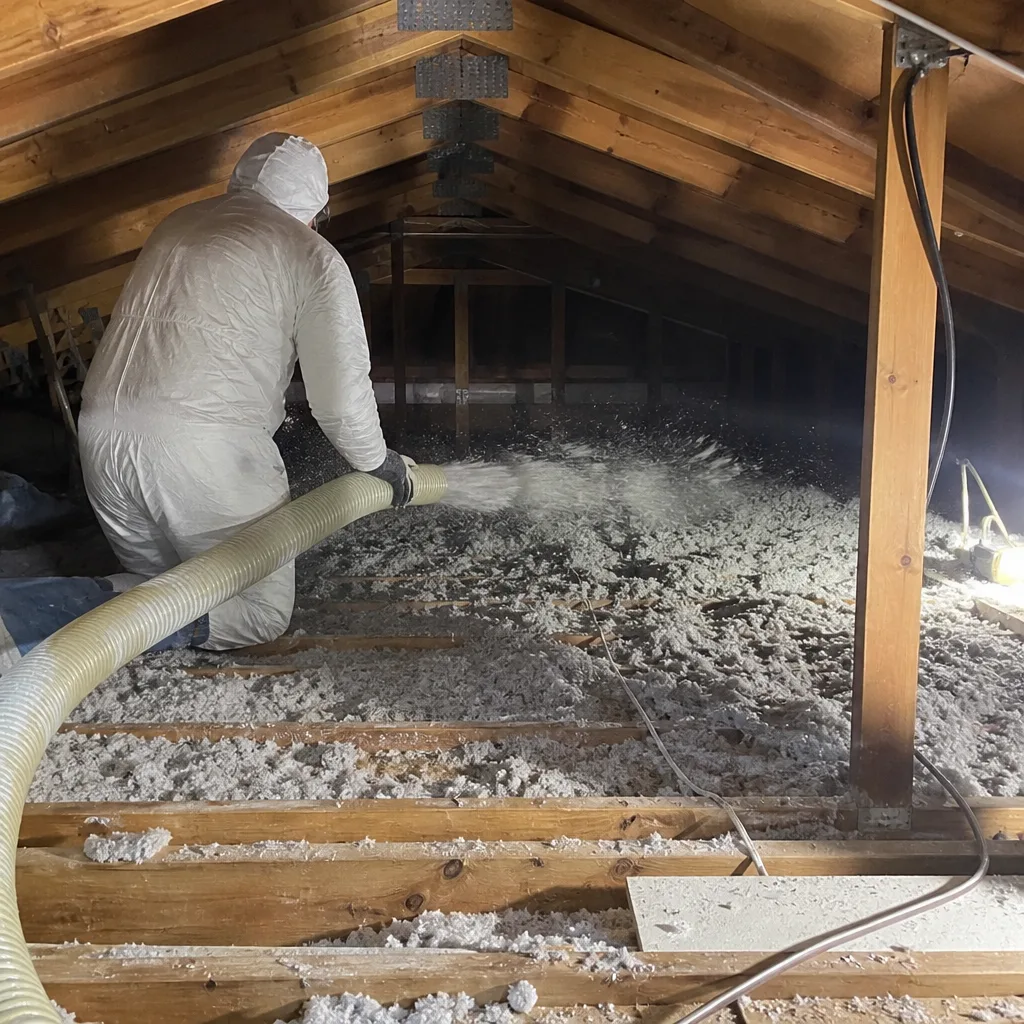
Closed-cell foam is the standard choice for an unvented attic roof deck in North Las Vegas, and that’s a performance conclusion, not an upsell. Closed-cell polyurethane has a closed cell structure that resists temperature-related R-value loss far better than open-cell, adds structural rigidity to the deck, and acts as its own vapor retarder at the thickness used on a roof deck. At the R-values this climate calls for, it gets you to target in roughly half the thickness of open-cell.
Open-cell foam still has a place. Interior wall cavities in conditioned space, where the temperature swing is modest and deeper fills are acceptable, are a reasonable application. It’s also less expensive per board foot, so if budget is the constraint, a hybrid approach is common: closed-cell on the roof deck where the heat load lives, open-cell or a batt product in interior partitions.
Side-by-side
- R-value per inch: closed-cell roughly R-6 to R-7; open-cell roughly R-3.5 to R-4.
- Temperature performance: closed-cell holds its rated value across a wider range, which is the deciding factor in a 160°F attic.
- Vapor behavior: closed-cell is a vapor retarder at typical thickness; open-cell is vapor-permeable and needs a different moisture strategy.
- Air sealing: both are effective air barriers when installed with the right thickness and coverage.
We source closed-cell and open-cell systems from established manufacturers, including Icynene and Demilec, so the material spec on your paperwork names a real product with a real data sheet.
The Unvented Attic Assembly, Explained
An unvented attic changes where the boundary between conditioned and unconditioned space sits. In a traditional vented attic, the insulation sits on the attic floor and the attic itself stays outside the envelope. Ductwork, air handlers, and any mechanical equipment in that attic are operating in the outdoors.
When you spray closed-cell foam to the underside of the roof deck and seal the attic from the outside air, the attic becomes part of the conditioned volume. Three things follow:
- Ducts move inside the envelope. A duct run in a 160°F attic loses cooling before it reaches the register. In a conditioned attic, that run is in air closer to the house temperature, so the air arriving at the room is colder.
- The insulation sees the roof deck, not the attic floor. Covering the deck is more surface area than covering the floor, so thickness and coverage matter more, and air sealing at the eaves is critical.
- Ventilation strategy changes entirely. Once the attic is unvented, soffit and ridge vents get sealed and the assembly is designed as a closed system with the foam as the air and vapor control layer.
That third point is where a lot of North Las Vegas retrofits are done wrong. Sealing the vents without adequately covering the deck, or leaving gaps at the transition from wall to roof, defeats the assembly. This is exactly the kind of decision we walk through in our Spray Foam Insulation in North Las Vegas service, and it’s also why air sealing comes first, before any insulation is applied.
R-Value Targets and Code Minimums for Climate Zone 3B
North Las Vegas sits in Climate Zone 3B, the hot-dry zone. The 2021 International Energy Conservation Code sets the floor here, and a good contractor will tell you the code minimum is the starting point, not the design target, because this climate’s attic temperatures push ordinary installed performance below the label.
2021 IECC minimums for Climate Zone 3B new construction
- Attic (ceiling): R-38. In an unvented assembly, that R-38 is achieved at the roof deck, not the ceiling plane.
- Above-grade framed walls: R-13, or R-20 where cavity plus continuous is specified.
- Slab edges and crawl space: R-10, and a vapor retarder on the ground in a crawl space.
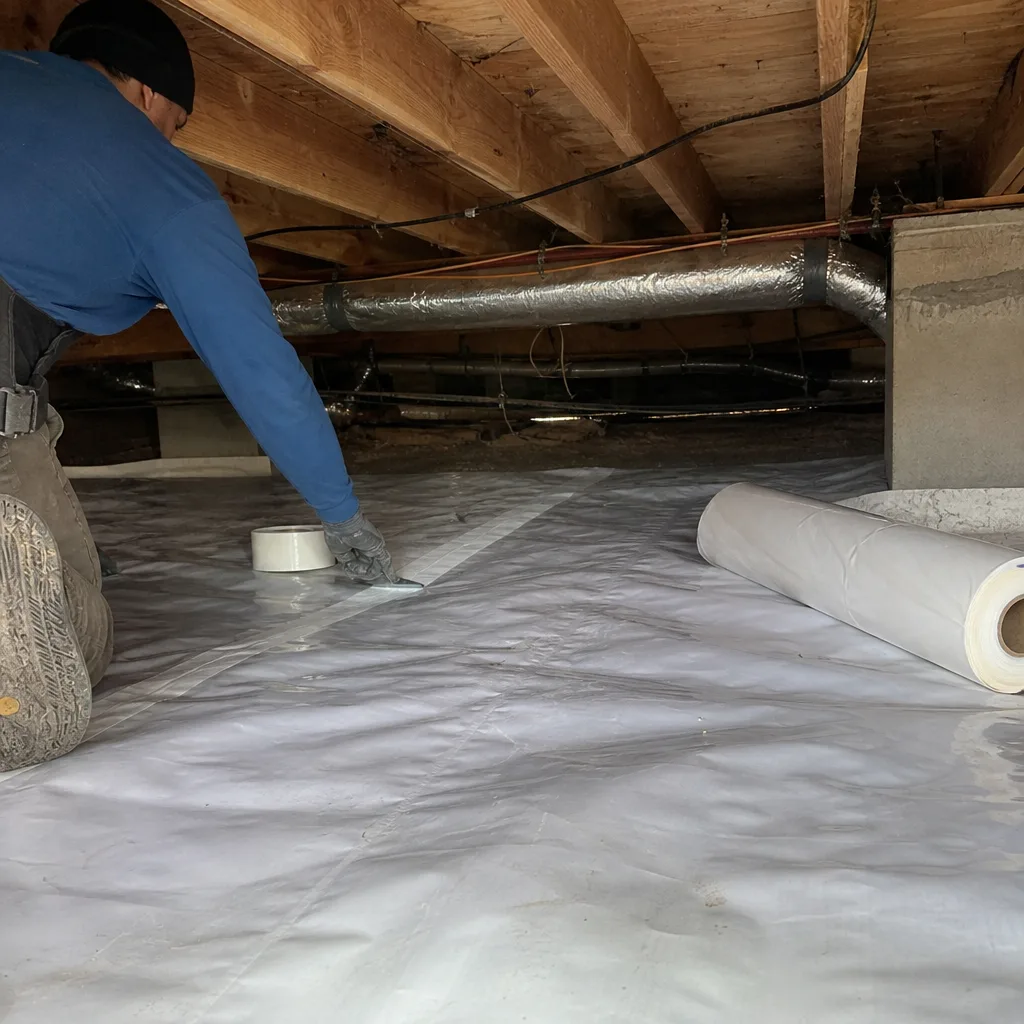
For a retrofit, the sensible target is usually somewhat above code. We recommend designing the roof deck to R-30 to R-38 of closed-cell in a North Las Vegas unvented attic; at R-6.5 per inch that’s about 5 to 6 inches at the deck. Framed walls get R-13 to R-20 depending on cavity depth. Slab edges get R-10. If your home has an unconditioned crawl space, the plan changes to encapsulation rather than foam, which we cover in Crawl Space Encapsulation & Vapor Barrier in North Las Vegas.
If your attic is vented and you’re staying vented, the equivalent is a properly air-sealed attic floor with blown insulation to R-38 or better. That’s the work described in Attic Insulation in North Las Vegas. What we will not do is blow insulation over an unsealed attic floor; under Haven Standard Clause 1, the air sealing of top plates, can lights, and penetrations is finished before any insulation goes down.
Spray Foam on North Las Vegas Block Walls
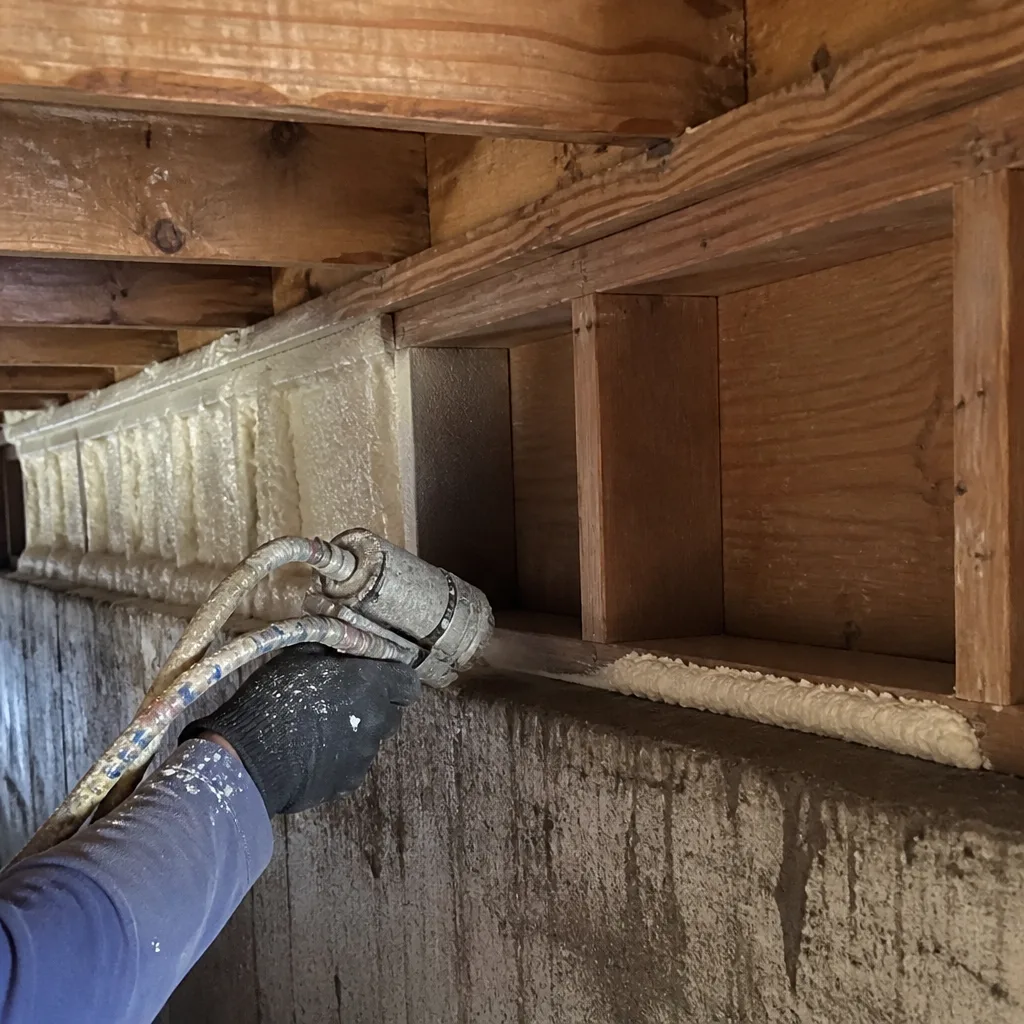
A lot of older North Las Vegas housing stock is concrete masonry unit (CMU) construction with stucco on the exterior. Block walls don’t have a cavity to fill the way framed walls do, so the foam goes on the interior face of the block as a continuous layer. That application does three jobs at once: it adds R-value, it creates an air barrier where painted block usually leaks at mortar joints and penetrations, and it places the insulation to interrupt the heat the block absorbed during the day.
Moisture management is the part generic guidance gets wrong here. In a humid climate, interior-applied foam on block would put the dew point inside the assembly and trap moisture against the block. In North Las Vegas, ambient humidity is very low, and the block itself dries toward the exterior. Interior foam with a proper air and vapor strategy, installed by someone who understands that stucco is the exterior finish and the block is a reservoir, works. The details matter: the foam has to be continuous, the transitions at the top plate and floor have to be sealed, and any exterior paint or stucco that’s compromised should be addressed before the interior work.
What this delivers, in practice: the wall stops re-radiating stored heat into the room in the evening, and the interior surface temperature comes up to something close to room temperature. In block homes we’ve worked on, that’s usually the complaint that gets resolved first, the bedroom that was still warm at 10 p.m.
How a Blower-Door Test Proves What the Foam Changed
A blower-door test is a pressurization reading: a fan is mounted in an exterior door, the house is brought to a consistent pressure difference (usually 50 pascals), and the airflow required to hold that difference is measured. The result is reported as air changes per hour at 50 pascals (ACH50) or in cubic feet per minute at 50 pascals (CFM50). It converts “the house feels leakier than it used to” into a number.
The order matters. A pre-install test establishes the baseline, and the post-install test, run the same way, tells you what the work actually changed. That is the whole reason we run both:
- Pre-install blower-door test. Establishes baseline ACH50 or CFM50. This also locates the biggest leaks, which tells us where air sealing goes first.
- Air sealing. Top plates, can lights, plumbing and electrical penetrations, attic hatch, eaves transitions, and any wall-floor junctions get sealed. This is completed before insulation.
- Spray foam and insulation. Closed-cell foam applied to the specified assemblies at the specified nominal thickness.
- Post-install blower-door test. Same method, same conditions where possible, so the two numbers are comparable.
A leaky house might read 6 to 8 ACH50 before work on a typical older North Las Vegas home. Well-sealed new construction in a hot-dry climate is often targeted around 3 ACH50. The gap is the air you were conditioning and losing. We publish the before-and-after readings on every applicable job so the change is on paper, not in a brochure.
What Your Documented Job Record Should Contain
When the crew leaves, you should have a record you can hand to a future buyer, an insurer, or a warranty department. Under The Haven Standard, that record is written before work starts (the scope and the price) and completed when the work is done (the documentation). Here’s what belongs in it:
- Pre-install blower-door reading: ACH50 and/or CFM50, taken before work. Note the test conditions if they matter.
- Post-install blower-door reading: Same method, same calculation, so the improvement is directly comparable.
- Foam type at each assembly: Closed-cell or open-cell, with the manufacturer’s product name (e.g., Icynene, Demilec), at each location: roof deck, wall, rim joist, crawl space.
- Nominal installed thickness at each assembly: In inches, at each location, so R-value is a calculation, not a claim.
- Batch and lot numbers: Tied to the material used on your job. This is what makes the manufacturer’s warranty traceable to your install.
- Written scope and written warranty: Delivered before anyone lifts a tool. The 365-Day Done Right Promise and the specific scope both belong here.
- Documented photo record: A photo record of the assemblies before foam, after air sealing, after foam, and any areas the customer wants to see.
If a contractor can’t tell you what will be in their job record before the job starts, that’s a sign to ask harder questions. Any written estimate can also get a Free Second Opinion from us, line by line, before you sign anything.
What Spray Foam Insulation Costs in North Las Vegas
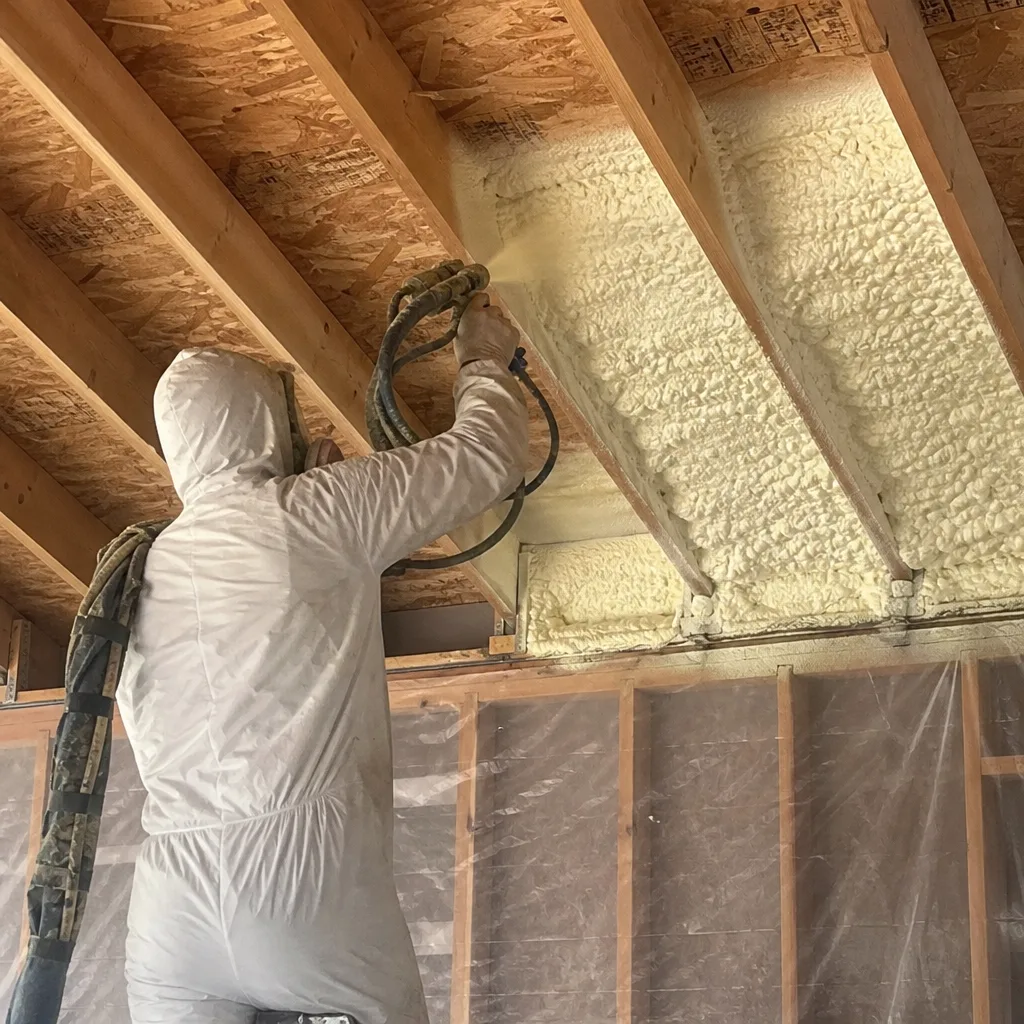
Spray foam is priced per board foot, which is one square foot at one inch thick. Whole-home numbers swing with attic size, whether the roof deck needs full coverage, and how much air sealing has to happen first. For a typical North Las Vegas single-family home in the 1,800 to 2,500 square foot range, these are the ranges we see:
| Assembly | Typical range | Notes |
|---|---|---|
| Closed-cell roof deck, unvented attic (1,800 – 2,500 sq ft home) | $4,500 – $8,500 | 5 – 6 in. nominal, R-30 to R-38 at deck |
| Open-cell roof deck (where applicable) | $2,800 – $5,200 | Larger thickness, lower R per inch, temperature-sensitive |
| Interior block wall, per linear foot of 8 ft wall | $22 – $38 | Dependent on thickness and coverage |
| Rim joist / attic hatch / air sealing package | $900 – $1,800 | Completed before foam |
| Pre/post blower-door testing | $250 – $450 | Included on applicable jobs |
These are ranges, not promises. A ranch home with a simple gable roof prices very differently from a two-story with a complex roofline and three gables. The only number that matters is a written price for your specific house. Haven Standard Clause 1 is a written price and written scope before any work starts, and that’s the number we stand behind.
Common Mistakes to Avoid
- Insulating over an unsealed attic floor. Blown insulation over top plates, can lights, and penetrations traps the air you were losing. The sealing must come first; that’s non-negotiable for us, not a sales step.
- Using open-cell foam on a North Las Vegas roof deck. Open-cell foam loses a larger share of its rated R-value in hot attics, and at 160°F deck temperatures, that loss is real. Closed-cell is the standard here for a reason.
- Sealing soffit vents without closing the assembly correctly. An unvented attic is a designed system. Sealing vents while leaving the eave, ridge, and wall-roof transitions gap-prone puts moisture and heat movement back inside.
- Skipping the pre-install blower-door test. Without a baseline, the post-install number means nothing. The whole point is the delta between the two.
- Not documenting batch and lot numbers. In North Las Vegas, a warranty claim on a spray foam job needs to tie material to the install. Without those numbers, the manufacturer’s process gets harder than it needs to be.
- Insulating block walls on the exterior under new stucco without a plan. The interior face of block is where the foam goes in most North Las Vegas retrofits. Doing it wrong on the outside interrupts the drying path the block relies on.
- Ignoring the crawl space. A home with an unconditioned crawl space that gets attic foam will still have a moisture and air path from below. Encapsulation belongs in the plan.
When to Call a Professional
Spray foam installation involves pressurized two-component chemical systems, isocyanate exposure, and high-temperature application in enclosed spaces. It is not a homeowner project, and we don’t describe it as one. Call a trained professional when:
- Your attic is unvented or you’re considering converting it, because the ventilation strategy has to be designed, not changed after the fact.
- You have block or stucco walls and want to know where the foam belongs, and what it does to moisture management.
- You’ve been quoted a job and want a second opinion on the scope, the R-value, or the price.
- Your home is in a North Las Vegas neighborhood with attics that run hot and ducts that run through them, and you want a before-and-after blower-door reading to know what actually changed.
Envelope Insulation North Las Vegas offers free estimates in North Las Vegas. Call (833) 630-4008 and a live person will answer, 24/7.
Frequently Asked Questions
Usually yes, in a specific sense: closed-cell foam on an unvented attic roof deck in North Las Vegas is one of the few retrofits that addresses duct performance, air leakage, and roof deck heat load in a single assembly. Whether it’s worth it for your home comes down to what the pre-install blower-door test shows and what your ducts are doing in the summer. Call (833) 630-4008 for a free estimate and a written price before any work starts.
Closed-cell is the standard choice for an unvented attic roof deck in North Las Vegas because it holds its rated R-value across a wider temperature range, and attic air here regularly exceeds 160°F. Open-cell has a place in interior walls and hybrid plans, but it’s not what we recommend on a Mojave roof deck. Call (833) 630-4008 for an exact quote and a scope that names the foam type at each assembly.
The 2021 IECC minimum for Climate Zone 3B is R-38 in the attic, R-13 for framed walls, and R-10 at slab edges. In practice, for an unvented attic in North Las Vegas, we design the roof deck to R-30 to R-38 in closed-cell, which is about 5 to 6 inches thick. Call (833) 630-4008 for an exact quote on your specific attic.
For a typical 1,800 to 2,500 square foot home in North Las Vegas, closed-cell on the roof deck typically runs $4,500 to $8,500, and the air-sealing and blower-door testing package adds $900 to $1,800. The only number that matters is a written price for your house. Call (833) 630-4008 for a free estimate; estimates are free, and the price is written before any work starts.
Rarely, and not as a shortcut. In most North Las Vegas retrofits, the existing insulation comes out, the attic floor and top plates get sealed, and the new foam goes on the roof deck in the unvented assembly. Spraying over old batt or blown insulation traps debris and hides the leaks you were trying to seal. Call (833) 630-4008 and we’ll tell you what your attic actually needs.
A typical single-family attic in North Las Vegas is a one to two day job for the foam itself, and the blower-door testing and air sealing usually extend the schedule by a day depending on the home. The written scope tells you the exact duration before work starts. Call (833) 630-4008 for a free estimate and a schedule.
The Bottom Line
Spray foam in North Las Vegas is not the same decision it is in a wetter climate. The attic runs hotter than the product spec assumes, the walls are often block and stucco, and the humidity is low enough that moisture management works differently. Closed-cell foam on an unvented roof deck is the standard choice here, at R-30 to R-38, with air sealing finished first. The proof is in the blower-door numbers: a pre-install baseline and a post-install reading that show, in one figure, what the work changed. Get it in writing, keep the batch and lot numbers, and get the photo record. That’s the job record. Call (833) 630-4008 for a free estimate in North Las Vegas.
Written by the team at Envelope Insulation North Las Vegas.