
Last updated November 18, 2026
Blown-In Insulation Troubleshooting: Common Problems and How to Fix Them
Homeowners re-insulate an attic to R-49 and expect the power bill to fall off a cliff. Then it doesn’t. In our experience, most blown-in problems come down to two root causes: the material isn’t as deep as you think it is (it settled), or the attic is leaking air around the insulation through gaps nobody sealed (bypasses). The fix is different depending on which problem you have. This guide shows you how to measure settled depth against installed depth, how to spot attic bypasses with a smoke pencil, and how to tell a settling problem from an air-sealing problem before you spend money on more material. We work on blown-in every week across North Las Vegas, and the diagnosis almost always starts with a tape measure.
Quick Answer
Blown-in insulation problems usually come from one of two things: the material has settled below its original R-value, or it’s been installed over an attic full of unsealed air leaks. Measure settled depth with a tape measure (or attic depth markers) and compare it against the installed depth. If the depth is short, top-off blown-in is the fix. If the depth is fine but the home still loses heat, air sealing must happen before any more insulation goes down. Both can be diagnosed before work is specified; a blower-door test shows you the actual air leakage number so you can verify the result.
Table of Contents
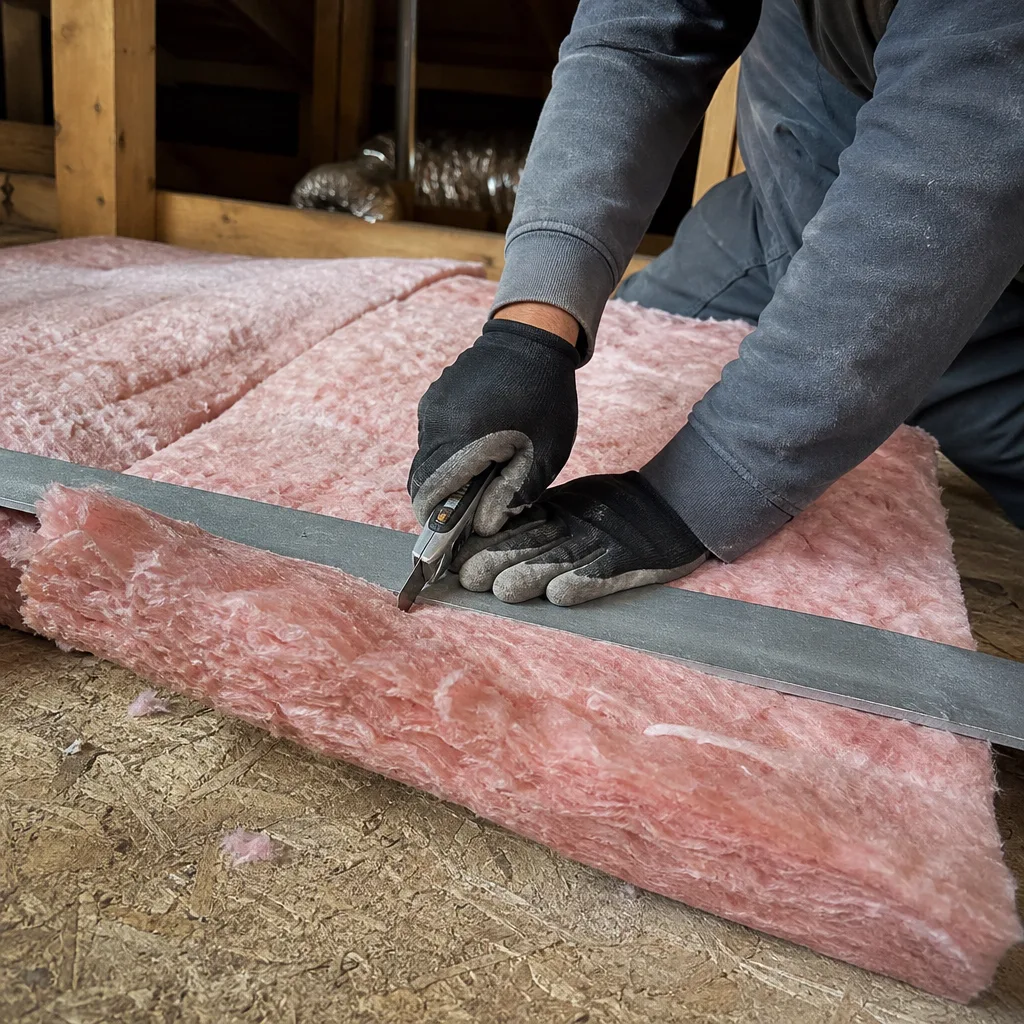
- How do you measure settled depth versus installed depth?
- What R-value is your blown-in actually performing at?
- How do you find attic bypasses with a smoke pencil?
- What happens when HVAC or electrical work disturbs the blown-in?
- What does wet cellulose look like, and where is the moisture coming from?
- Settling versus air sealing: how do you decide what to fix?
- Common mistakes to avoid
- When to call a professional
How do you measure settled depth versus installed depth?
Blown-in insulation settles. It always does. Loose-fill cellulose and fiberglass are installed to a target depth to hit a target R-value; over time the material compresses under its own weight and loses thickness, and every lost inch of depth removes R-value with it. The only way to know whether your attic is performing where it was designed to perform is to measure the depth you have today and compare it to what was installed.
Two ways to do this, and both are simple:
- Attic depth markers. When blown-in is installed correctly, depth markers (usually foam rulers stapled or taped to the joists) are placed at intervals so the installer can confirm they hit the target depth. If your attic has them, read them. If the material is below the marker line, you have settlement.
- Tape measure at multiple points. Take a tape measure to at least five or six spots across the attic floor and measure from the top of the joist (or the drywall between joists) to the top of the insulation. Average the readings. A single measurement can be misleading because material piles unevenly around obstructions. We measure at multiple points because we’ve pulled readings of 9 inches near the HVAC plenum and 4 inches on the other side of the same attic in North Las Vegas homes.
Write down the readings and the date. That baseline is what you’ll use to confirm whether top-off is justified.
What R-value is your blown-in actually performing at?
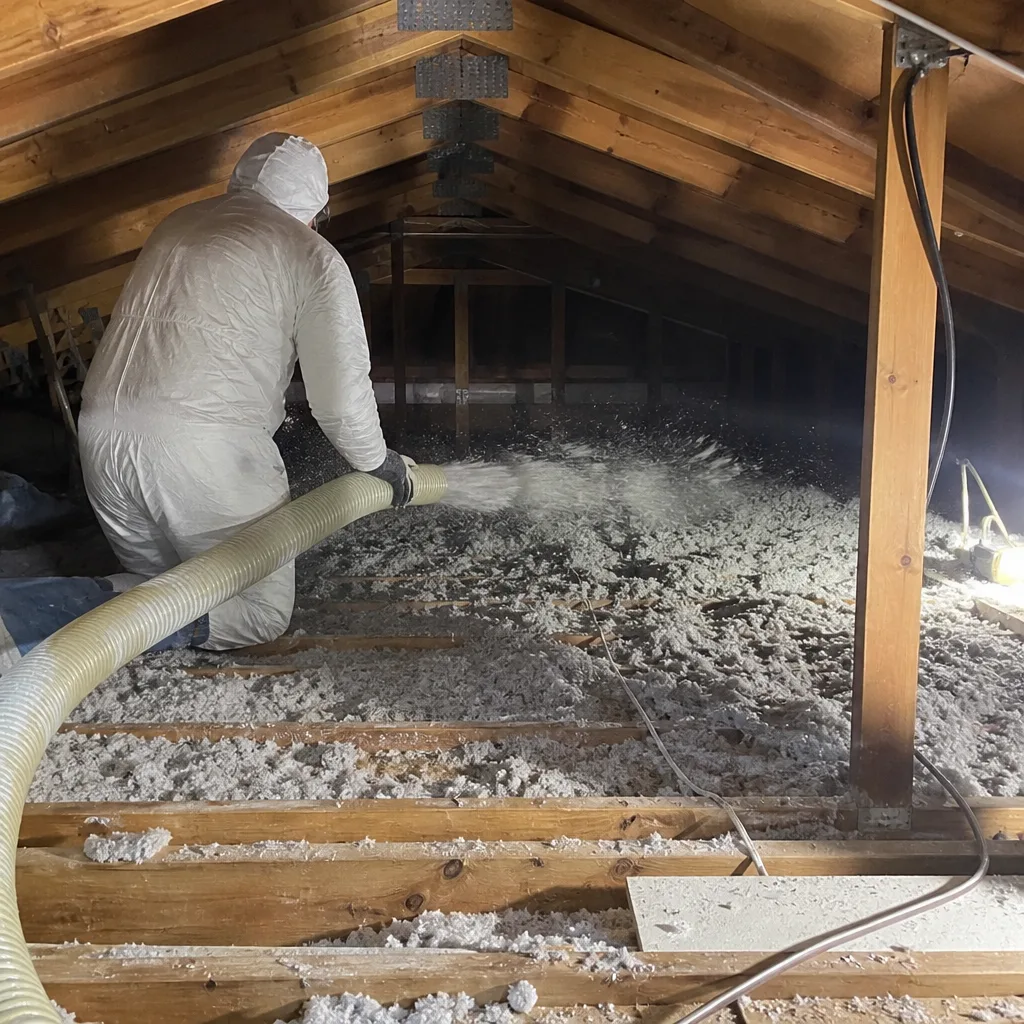
R-value is the number that tells you how well a material resists heat flow. It’s measured per inch of thickness, and it’s the number the code cares about. Blown-in cellulose and fiberglass don’t settle to the same degree, so the math is different for each.
Here’s the settled R-value per inch, laid out so you can do the calculation yourself:
- Blown-in cellulose: about 3.2 to 3.7 per inch settled. A 12-inch cellulose installation (a common target for roughly R-38 to R-44) may settle to 10 inches over several years, landing at roughly R-32 to R-37.
- Blown-in fiberglass: about 2.2 to 2.7 per inch settled, and slightly less once it’s been compressed by foot traffic. A 15-inch fiberglass install at R-38 can settle to 12 inches and drop toward R-30.
Run your measured depth against those numbers. If you measure 10 inches of cellulose where the original installation was specified at 12, you’ve lost roughly 6 to 8 points of R-value. In a North Las Vegas attic that reads 130°F in July, that difference is heat moving into the living space every afternoon.
One more thing to note: if the depth is short but the material is clean and dry, top-off is a reasonable fix. If the depth is short and the attic is leaking air, topping off without sealing won’t fix the temperature problem, because the heat moves with the air, not through the insulation.
How do you find attic bypasses with a smoke pencil?
An attic bypass is a hole, crack or gap that lets air move between the living space and the attic. Warm air leaving a house in winter, or hot attic air entering in summer, travels through bypasses no matter how much insulation you put on top of them. The insulation slows conductive heat flow; it doesn’t stop air that’s moving through a quarter-inch gap beside a recessed can light.
The way you find them is with a blower-door test and a smoke pencil. The blower door depressurizes the house (pulls the inside to a negative pressure), which means air rushes in through every unsealed opening. Then you walk the attic with a smoke pencil – a small wand that produces a thin trail of smoke – and watch which spots pull the smoke toward them. Where the smoke gets sucked toward a gap, that’s a leak.
In our experience, the bypasses that account for the highest percentage of air leakage are:
- Top plates at interior walls. The gap where the wall meets the attic floor is often unfilled; every wall in the house has one.
- Recessed can lights. Older fixtures leak like a sieve; even “IC-rated” cans can have gaps around the trim ring.
- Duct boots. The metal collar where ductwork comes up through the attic floor is frequently a straight open path from the ceiling below.
- Attic hatch perimeter. The access door rarely seals; a poorly fitted hatch can leak enough to undercut the whole attic’s R-value.
- Plumbing and electrical penetrations. Every wire and pipe that passes through a top plate or ceiling is a potential bypass.
Seal those gaps – with caulk, spray foam, and rigid covers on the can lights – before any new insulation goes in. That order matters, and a blower-door reading before and after is how you prove the sealing worked.
What happens when HVAC or electrical work disturbs the blown-in?
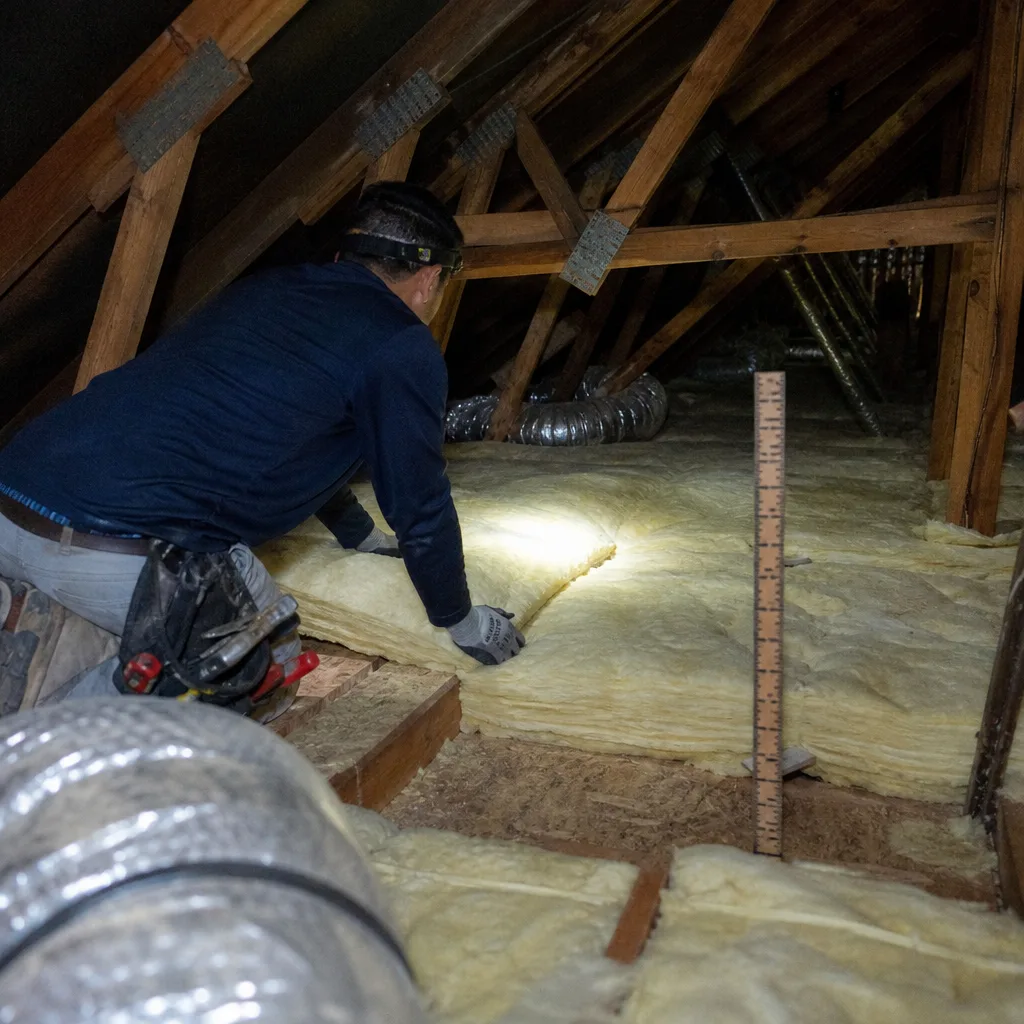
Here’s a scenario we see constantly: a contractor comes out to service the air handler or add a circuit, walks through the attic, and drags 8 inches of blown-in cellulose around with their knees, boots, and equipment. They leave. The insulation never gets raked back into place. In our experience, a single attic service call can displace 40 to 60 square feet of coverage, and sometimes more if the equipment is heavy or the technician is up there for hours.
What a post-service inspection should check:
- Bare patches on the attic floor where the material was pushed aside.
- Compressed mats under walkways or from equipment set down repeatedly.
- Displaced material piled up against the HVAC unit or plenum, which does very little for the floor below it.
- The depth markers – if the material is below them in a patch, that area needs to be raked back and leveled.
If you’ve had attic work done in North Las Vegas recently, take five minutes in the attic and look for bare drywall or joists. Anything you can see is radiating heat straight into the house. Rake the material back to uniform depth before cold season; if the depth was already short before the service call, a top-off might be the better solution.
What does wet cellulose look like, and where is the moisture coming from?
Cellulose is made from recycled paper fiber treated with fire retardant, which makes it a fine insulation material and also means it can hold onto moisture if it gets wet. Wet cellulose is a problem well beyond a loss of R-value – it can grow mold and rot the framing below, so it needs to be found and fixed.
Here’s what wet cellulose looks like:
- Clumping. Dry cellulose is loose and fluffy; when it clumps together in baseball-size balls, it has taken on water.
- Gray staining. Dark gray or black staining on the joists, rafters or drywall below the insulation.
- Compressed mats. The material looks packed flat and dense rather than loose, often with a “crust” on top.
Identifying the source is the hard part, and it matters because re-insulating wet material without fixing the source is throwing money at a leak:
- Roof leak. Typically shows up as a streak or a stain directly below the roof penetration (chimney, vent, skylight). Often one localized spot.
- Condensation. Where the attic leaks air into a cold winter attic, condensation forms on the underside of the roof deck and drips down. This shows up in a broader pattern than a roof leak; the moisture is a symptom of unsealed bypasses.
- HVAC drain. A clogged or improperly pitched condensate drain for the air handler leaks into the pan, overflows, and wets the surrounding insulation.
In all three cases, fix the source first. Then check with a moisture meter to make sure the framing is dry, then re-install. In our experience, this is the diagnosis that most often gets skipped; the material gets replaced, the leak was never fixed, and the same spot is wet again within one season.
Settling versus air sealing: how do you decide what to fix?
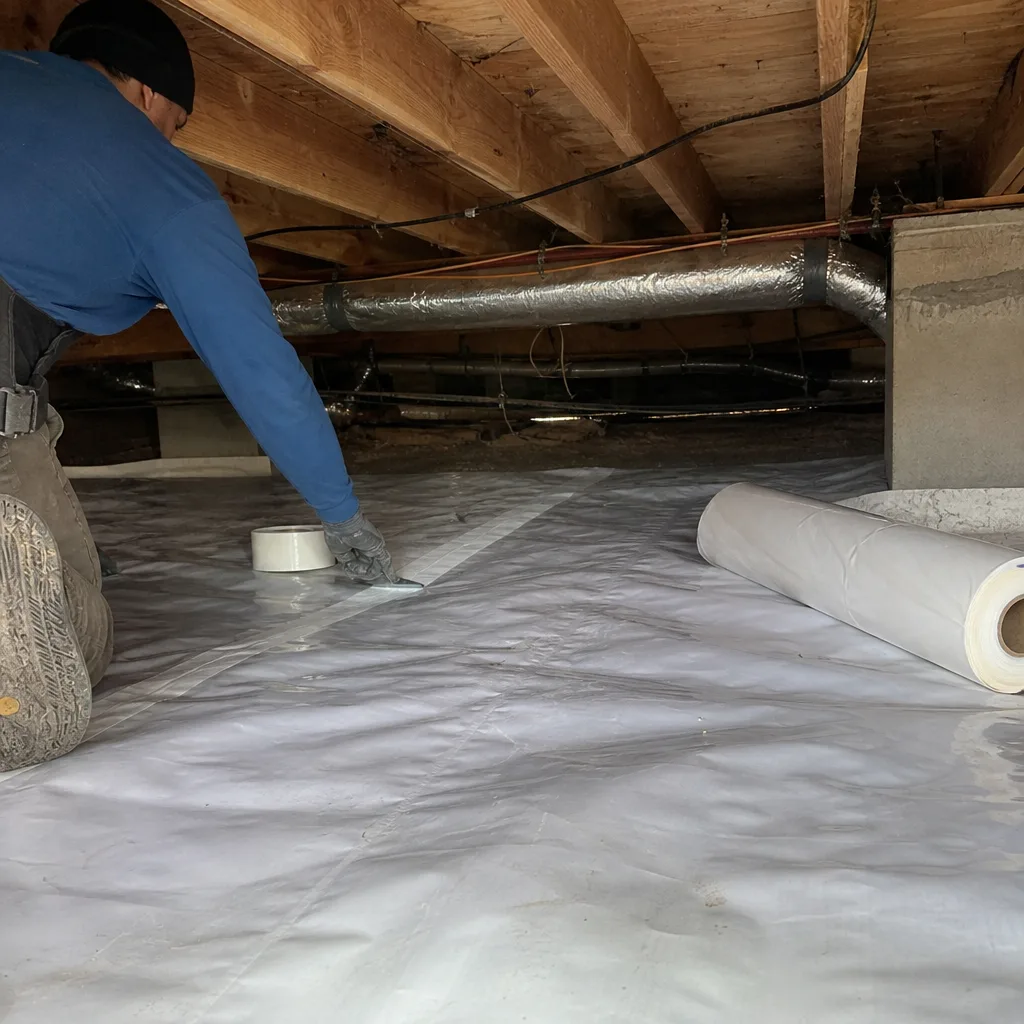
The decision tree comes down to two questions you can answer with the measurements above:
- Is the settled depth short of the target R-value? If yes, and the material is clean and dry and the attic is reasonably sealed, top-off is the fix. Add blown-in to bring depth back to the target. This is a low-cost intervention and works well on an attic that’s already air-sealed.
- Is the depth at target but the house is still hot or cold? That’s an air sealing problem. If the blower-door test shows your home is losing conditioned air through the building envelope, adding more insulation without air sealing will not measurably improve the blower-door reading, and the homeowner will see the number instead of the improvement. This is why we publish before-and-after blower-door readings on every applicable job – so the actual improvement is on record and not just claimed.
Ask any contractor to show you the pre- and post-sealing blower-door readings. A pressurization number, measured in CFM50, is a single figure that tells you exactly how much air the building envelope was losing before the work, and how much it’s losing after. If a contractor can’t or won’t provide it, you have a legitimate reason to ask why.
If you want the full picture of what goes into a proper attic spec, the Attic Insulation in North Las Vegas service page covers the scope of the work. For crawl spaces, where vapor barriers and encapsulation are often part of the same envelope conversation, the Crawl Space Encapsulation & Vapor Barrier in North Las Vegas page lays it out. And for homes where the attic underside needs a continuous barrier rather than loose-fill, the Spray Foam Insulation in North Las Vegas approach is worth reading.
Common Mistakes to Avoid
- Topping off without air sealing first. Blowing new material over an attic full of unsealed bypasses costs several thousand dollars and reduces heat gain by roughly 10 to 15 percent. The math on the remaining loss goes through the unsealed penetrations, not the insulation. If the air leaks aren’t sealed, the insulation can’t do its job.
- Trusting the original install spec over the current measurement. The label on the job papers said R-38; the attic says otherwise. Measure the settled depth and calculate the R-value from what’s actually there.
- Skipping the smoke pencil. A visual walkthrough will miss most bypasses. A blower door and a smoke pencil will show you exactly where the air is moving. In our experience, this step is where most “we don’t know why it’s still hot” mysteries get solved.
- Ignoring the attic hatch perimeter. It’s a small opening, but a poorly fitted hatch in a North Las Vegas attic can leak enough to undermine the whole floor’s R-value. Seal it as part of the air-sealing scope.
- Re-insulating wet cellulose without fixing the moisture source. If the cellulose is clumped, gray or packed, the source has to be found (roof leak, condensation, or HVAC drain) and repaired before any new material goes down.
- Assuming a recent attic service call did no damage. Walk the attic after every HVAC or electrical visit; a single call can displace 40 to 60 square feet of material. Pull on the depth markers and look for bare floor.
- Accepting a written estimate without a blower-door reading. If the contractor is recommending re-insulation, ask for the before-and-after blower-door numbers. If they can’t provide them, that’s worth a second opinion.
When to Call a Professional
Blown-in insulation troubleshooting itself is not dangerous; the diagnosis cuts you against the risks of climbing around an attic with exposed rafters and hot temperatures, and the work of sealing and re-installing is a different matter. If the attic is over 120°F, or you can see active moisture in the material, or you’ve got a long run of bypasses to seal, that’s the point to call a professional who does it every day. A blower-door test requires equipment and training to set up and read correctly. If you want the actual air leakage number for your home and a written scope of what to fix, Envelope Insulation North Las Vegas offers free estimates in North Las Vegas – call (833) 630-4008. A live person answers the phone around the clock.
Frequently Asked Questions
The right depth depends on the target R-value for your climate zone and the material. North Las Vegas homes typically target a range in the R-38 to R-49 band, which works out to roughly 12 to 15 inches of settled cellulose or 15 to 19 inches of settled fiberglass. Measure what you have with a tape measure or the attic depth markers and calculate from there. Call (833) 630-4008 for a written estimate on an exact target for your attic.
Some can: air sealing and top-off on a clean, dry attic is usually a one-day job. Problems with active moisture, or cases where the diagnosis needs a blower-door test first, often require a two-step approach. The written scope lays out the steps before any work starts so you know what’s happening.
Because adding insulation without sealing attic bypasses does not stop air movement. The bypasses – top plates, can lights, duct boots, hatch perimeter – let conditioned air move through the envelope regardless of how much insulation is on the floor. Ask for the before-and-after blower-door readings so you can see whether the air sealing was done as part of the job. Call (833) 630-4008 for a free second opinion on any written estimate.
Look for clumping, gray or black staining on the framing, and compressed mats that look more like dense packing than loose fill. If you find any of those, the moisture source – a roof leak, condensation from air leaking into a cold attic, or an HVAC condensate drain – has to be found and repaired before the material is replaced. A free estimate includes a documented photo record so you can see what we found.
Top-off is almost always cheaper if the existing material is clean, dry and still in place, because you’re only paying to add material, not to remove and re-install the full depth. Replacement makes sense when the material has been wetted, contaminated, or compressed to the point where it isn’t performing. Call (833) 630-4008 for pricing on both options in writing before any work begins.
Air sealing closes the gaps and penetrations in the building envelope so air can’t move through them; insulation slows heat conduction through the material itself. Both are needed for the attic to perform; the order matters. Sealing first, then insulating, is the only way the numbers show up in the blower-door reading. Call (833) 630-4008 to schedule a diagnostic.
The Bottom Line
Most blown-in insulation failures come down to a short settled depth or a leaking attic, and the fix is different for each. Measure the settled depth with a tape measure or the depth markers and calculate the R-value from what’s actually in the attic, not what was supposed to be. If depth is short, top-off is the fix; if depth is fine but the house still performs poorly, the problem is air sealing, and no amount of additional material will fix an unsealed envelope. A blower-door test gives you the actual number. Get a written scope before any work is specified. The evidence is what matters. Get a free estimate from Envelope Insulation North Las Vegas home – call (833) 630-4008.
Written by the team at Envelope Insulation North Las Vegas.