
Last updated November 18, 2026
The Complete Attic Insulation Guide for North Las Vegas Homeowners
Most attic insulation advice you’ll read online was written for a milder climate. That’s the problem. The DOE recommends R-38 for Climate Zone 3, which covers North Las Vegas, but that figure is a floor, not a finish line. On a July afternoon, an attic here can reach 160°F, and at those temperatures standard fiberglass batts lose roughly 20% of their rated R-value through convective looping, where air currents inside the batt itself carry heat past the insulation. Add tile and flat roofs that soak up radiant heat all day and the math behind a national average falls apart. This guide is built around matching material choice, R-value target and air sealing to actual North Las Vegas conditions, not a chart written for a different state.
Quick Answer
Attic insulation in North Las Vegas works when the attic floor is air-sealed first, then insulated to at least R-38 (R-49 to R-60 is better for our heat load), with a radiant barrier at the roof deck to address the Mojave radiant heat that mass insulation alone can’t stop. A whole-home job typically runs $2,000 to $5,500 depending on square footage and material. The single biggest mistake we see is adding insulation over unsealed top plates, can lights and penetrations, which leaves the air leaks intact underneath and wastes most of what you paid for.
Table of Contents
- Why Climate Zone 3B Changes Everything About Your Attic
- What R-Value Do You Actually Need in North Las Vegas?
- The Stack Effect: Why Air Bypass Beats Insulation
- Air Sealing the Attic Floor vs. the Roof Deck
- Material-by-Material Comparison With Installed Cost
- Radiant Barriers: The Companion, Not the Substitute
- How to Read a Blower-Door Result in ACH50
- What Documentation to Demand Before the Crew Leaves
Why Climate Zone 3B Changes Everything About Your Attic
North Las Vegas sits in IECC Climate Zone 3B, the hot-dry designation. That “B” matters. A dry climate means less moisture to manage but far more radiant heat to reject. The desert sun loads the roof surface for eight to ten hours a day through summer, and that load transmits straight through concrete tile or a flat membrane roof into the attic cavity. Homes in North Las Vegas communities like Aliante and the older tract blocks near downtown deal with this on every summer afternoon, and two-story plans amplify it because the upper attic takes the full radiant hit while the lower floor stays warmer than it should.
What does that mean for insulation? Three things drive every decision:
- Temperature cycling. Attic temps swing from under 40°F on a January night to 160°F at the roof deck in July. Materials that handle that swing without settling or losing loft perform better here than materials built for a steady mild climate.
- Radiant load over conductive. In mild markets, conductive heat transfer (heat moving through solid material) dominates. In North Las Vegas, radiant heat from a hot roof deck is the larger share. Insulation at the ceiling plane slows conduction, but it does nothing about radiant energy crossing an open attic.
- Duct placement. Many North Las Vegas homes run HVAC ducts through the attic. When that attic hits 140°F, ducts lose cooling capacity before air ever reaches a register. Sealing and insulating the attic changes the temperature the ducts operate in.
Get this right and the payoff is real. Get it wrong, or skip the air sealing, and you’ve bought a number on paper that doesn’t show up on your power bill.
What R-Value Do You Actually Need in North Las Vegas?
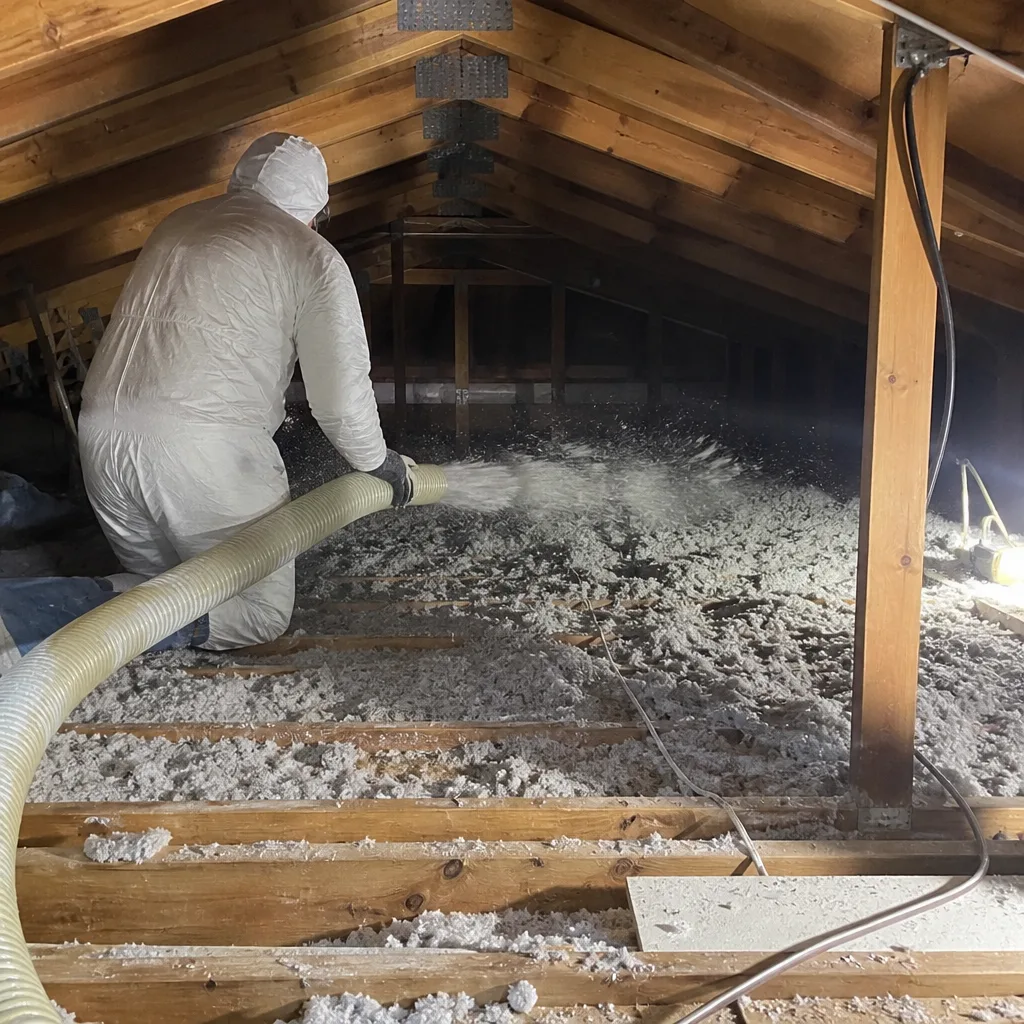
R-38 is the DOE recommended minimum for Climate Zone 3. In our experience, that’s where you start, not where you stop. For a North Las Vegas attic under a tile or flat roof, we recommend R-49 to R-60 on the attic floor with a radiant barrier at the deck. The extra depth costs relatively little at install and pays back faster here because our cooling season is long.
A working number for the ceiling plane:
- R-38 (minimum): about 12 to 14 inches of blown fiberglass, or 10 to 11 inches of blown cellulose.
- R-49 (recommended for most North Las Vegas homes): about 16 to 18 inches of blown fiberglass, or 13 to 15 inches of cellulose.
- R-60 (best for flat roofs and full-sun tile): about 20 to 22 inches of blown fiberglass, or 16 to 18 inches of cellulose.
Two caveats. First, depth only counts if the material is installed at the right density and stays there. Blown fiberglass settles; cellulose settles less but still settles. Second, R-value assumes still air inside the cavity. Convective looping in a 160°F attic reduces effective R-value, which is why the radiant barrier and a well-sealed ceiling plane do as much work as the insulation itself. A contractor who quotes you a single R-number without discussing air sealing and radiant load is quoting a chart, not your North Las Vegas attic.
The Stack Effect: Why Air Bypass Beats Insulation
Here’s the part most homeowners never hear. In a two-story North Las Vegas home, warm air rises and escapes through every unsealed penetration in the attic floor: top plates where walls meet the ceiling, recessed can lights, plumbing and electrical chases, the attic hatch, bath fan housings. That rising column of air is the stack effect. As it leaves, it pulls replacement air in at the bottom of the house, through gaps around doors, window frames and the garage. In a leaky North Las Vegas home, that stack effect can move more BTUs of conditioned air than the gap between R-38 and R-49 insulation ever will.
Which means the order of operations is not optional:
- Seal the attic floor first. Top plates, can lights (with rated covers), wiring and plumbing penetrations, the attic hatch, and the top of every interior wall cavity get sealed. This is the hard prerequisite, not an upsell.
- Verify the seal with a blower-door test. A pressurization reading in CFM50 tells you, in one number, how much air the envelope is losing. It’s the before-photo of the whole job.
- Then add insulation. Once the bypasses are closed, insulation actually does its job because there’s no moving air to short-circuit it.
- Add the radiant barrier at the deck. This handles the radiant load the mass insulation can’t, keeping the attic cavity itself cooler.
Blowing insulation over an unsealed attic floor traps the leaks under a blanket you can’t see. It tests well on paper and performs at a fraction of the rating. We’ve opened North Las Vegas attics where a previous crew added six inches of new material over the original batts and untouched can lights; the house still ran hot because nothing had been sealed.
Air Sealing the Attic Floor vs. the Roof Deck
Both approaches seal air, but they belong in different homes. The choice comes down to what’s under the roof and whether the attic is inside or outside the conditioned space.
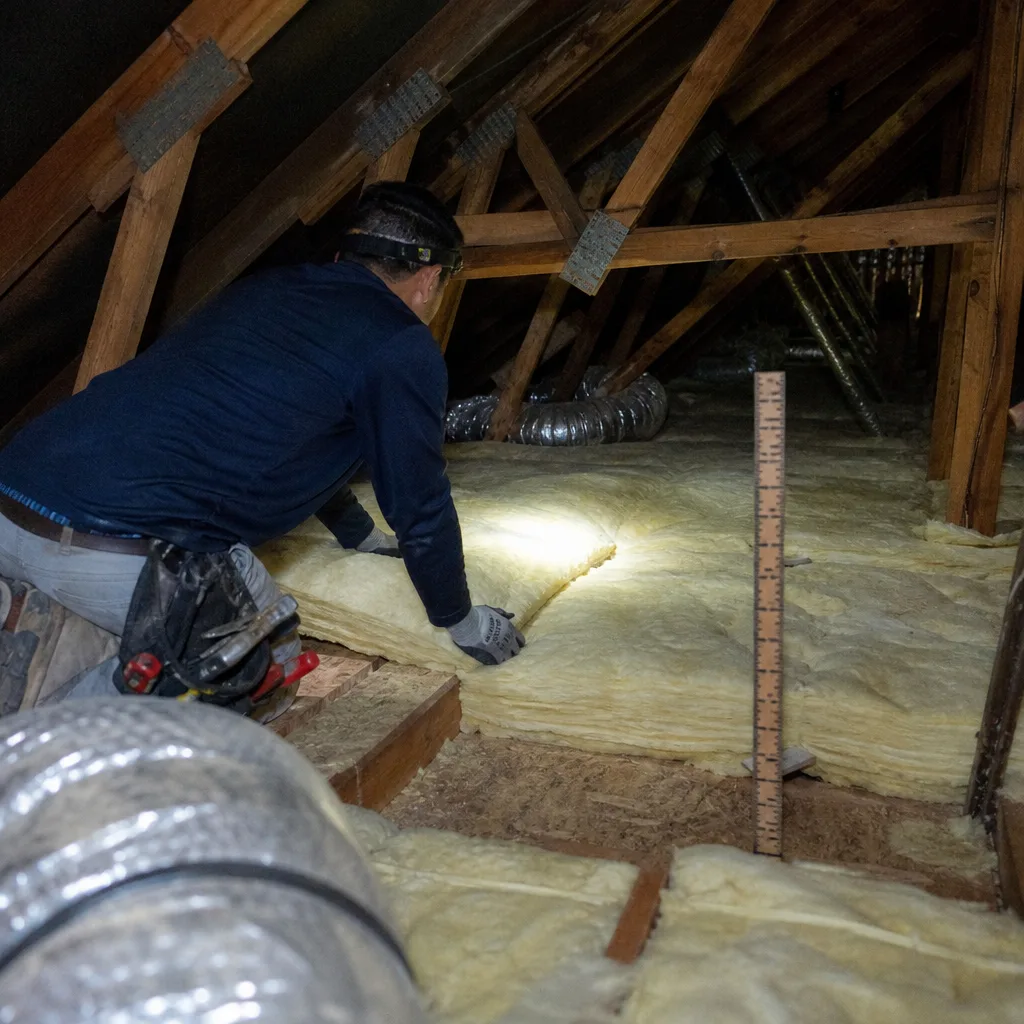
Attic floor sealing (the standard approach). The ceiling plane becomes the pressure boundary. You seal penetrations at the attic floor and insulate between and over the joists. The attic itself stays hot, which is fine if your ducts and equipment are sealed or minimal. This is the right call for most North Las Vegas tract homes built before 2000 with a vented attic and ducts at the ceiling. It’s the least expensive path and the easiest to document.
Roof deck sealing (the conditioned attic approach). The insulation goes at the underside of the roof sheathing, usually closed-cell spray foam applied directly to the deck, so the attic becomes part of the conditioned envelope. This is appropriate when HVAC equipment and ducts live in the attic and you want them inside the thermal boundary, when the roof line is complex with knee walls and dormers, or when a homeowner is converting attic space. It’s a bigger investment and demands a careful moisture and ventilation plan, but it solves duct losses in one move.
What’s wrong in North Las Vegas: mixing the two. We’ve seen spray foam at part of a deck and blown fiberglass on the floor of the same attic, which creates a pressure-boundary puzzle that no blower-door reading can reconcile. Pick one boundary, seal it completely, and insulate to it. The spray foam insulation in North Las Vegas page covers the deck-side approach in detail if your equipment lives in the attic.
Material-by-Material Comparison With Installed Cost
Here’s a straight comparison of the three materials we install most in North Las Vegas attics, with installed cost per square foot and how each holds up to our heat cycling. Pricing reflects what we see in the North Las Vegas market for a straightforward attic-floor job; complex attics, removal of old material, or extensive air sealing push the number up.
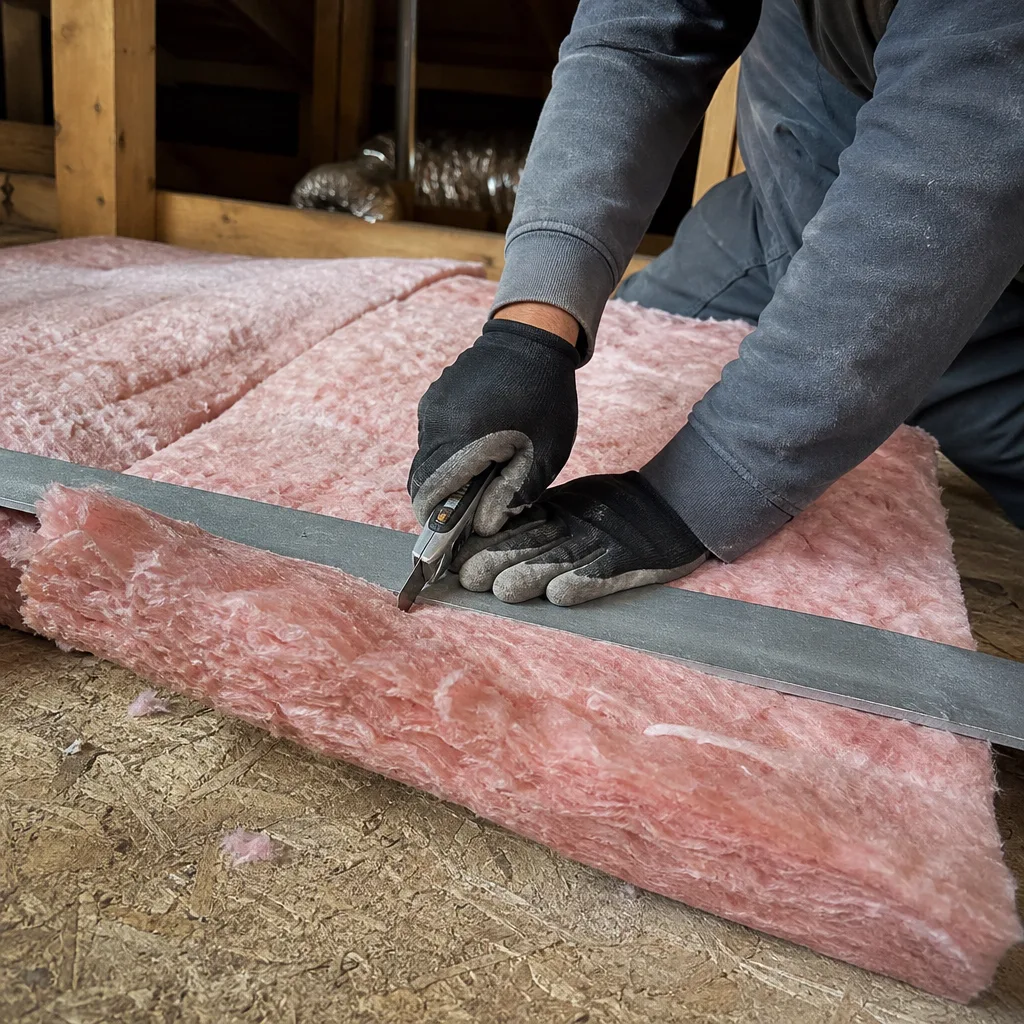
- Blown fiberglass (Johns Manville, Knauf): $1.30 to $2.10 per sq ft installed at R-49. Holds its R-value well when installed at the correct density, resists moisture, and won’t feed mold. Downsides: it settles over time and can lose effective R-value to convective looping in a hot attic if not dense enough. Best for vented attics with good sealing and a radiant barrier above.
- Blown cellulose: $1.50 to $2.40 per sq ft installed at R-49. Denser than fiberglass, so it resists convective looping better and settles less. Treated for fire and pest resistance. Downsides: heavier, can absorb moisture if a roof leak goes unnoticed, and needs to be kept dry. Best for owners who want the most stable long-term R-value per dollar in a hot climate.
- Closed-cell spray foam at the deck (Icynene, Demilec): $4.50 to $7.50 per sq ft installed at R-38 to R-49 equivalent. Highest performance per inch, seals air and insulates in a single application, and creates the conditioned attic that solves duct losses. Downsides: the most expensive option, requires a moisture and ventilation plan, and the deck must be dry at install. Best for attics with HVAC equipment and ducts inside, or complex roof lines.
One note on brands: we source from Owens Corning, Johns Manville, Knauf, Rockwool, CertainTeed, Icynene, Demilec and GreenFiber. We don’t lock you into a proprietary product. If you have a written estimate from another contractor, we’ll read it with you and compare material specs line by line as a free second opinion.
Radiant Barriers: The Companion, Not the Substitute
A radiant barrier is a reflective surface, usually foil-faced sheathing or a spray-applied reflective coating, installed at the roof deck to reflect radiant heat back toward the roof instead of letting it radiate into the attic. And that’s exactly what North Las Vegas needs, because our dominant heat path in summer is radiant, not conductive.
Where homeowners get this wrong is treating a radiant barrier as a replacement for insulation. It isn’t. Mass insulation slows conductive heat flow through the ceiling plane; a radiant barrier reduces the radiant load arriving at the deck. They do different jobs and you need both. The three common forms in North Las Vegas:
- Foil-faced roof decking (installed during a re-roof). The cleanest option, but only viable when you’re already replacing the roof. If your North Las Vegas home is due for a re-roof, plan the radiant barrier into that project.
- Radiant barrier paint sprayed on the underside of the deck. A spray-applied reflective coating for existing attics where foil isn’t practical. Works on most deck types, and the coating is applied directly to the sheathing. Requires proper prep and a dry deck.
- Foil radiant barrier stapled to rafters. The traditional retrofit. Effective when installed correctly with an air gap on the reflective side, but it can trap moisture against the deck if ventilation is wrong, which is why we inspect ventilation before recommending it.
On a North Las Vegas tile roof, the radiant barrier plus R-49 mass insulation is the combination we recommend most. The barrier keeps the attic cavity cooler, the insulation slows heat crossing the ceiling, and the sealed ceiling plane stops the stack effect. All three together do what no single measure can.
How to Read a Blower-Door Result in ACH50
A blower-door test is a pressurization measurement: a fan in a doorway pulls the house to a set pressure and the meter reads how much air leaks in, in cubic feet per minute at 50 pascals (CFM50). Divided by the home’s volume, that becomes ACH50, the air changes per hour at that pressure. It’s the single clearest number for how leaky your envelope is, and it’s the number we publish before and after on applicable jobs.
For context, a typical pre-retrofit ACH50 for a 1,990 sq ft North Las Vegas tract home built before 2000 lands in the range of 8 to 14 ACH50. Newer construction with modern sealing typically tests lower, though “newer” in North Las Vegas terms can still mean a 2015 build with unsealed penetrations. After a full air-sealing and insulation job, a well-executed retrofit can cut that reading substantially, often by a third or more, and the before-and-after pair tells the homeowner exactly what they paid for.
What to look for when you read the report:
- The before number taken at the start, before any sealing. Without it, the after number means nothing.
- The after number taken after sealing and insulation, on the same equipment, ideally by the same technician.
- The units. Insist on ACH50 or CFM50, not a vague percentage. A percentage of what?
- The date and time. A blower-door number without a date is a claim, not a measurement.
If a contractor can’t or won’t show you before-and-after readings, that’s information. Our attic insulation service in North Las Vegas treats the blower-door pair as part of the deliverable, not an add-on.
What Documentation to Demand Before the Crew Leaves
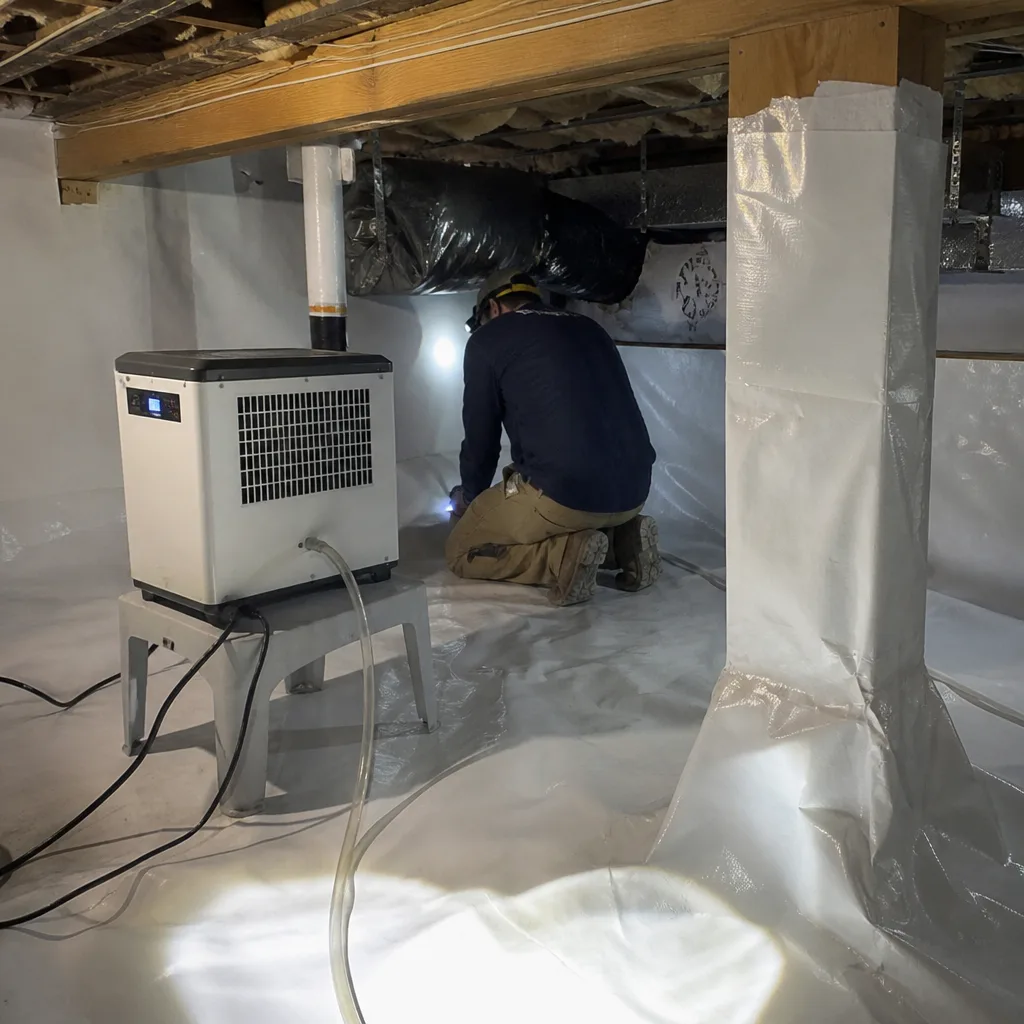
Documentation is what turns a job into a verifiable record. Under The Haven Standard, every job we complete closes with a Documented Photo Record on every visit. Here’s the full set we think any North Las Vegas homeowner should demand before the crew drives away:
- A written scope before work starts. Flat price, written scope, written warranty. No work should begin until you have all three in hand. That’s Haven Standard Clause 1, and it applies to any contractor worth hiring.
- The pre-work blower-door reading (CFM50 and ACH50). Captured before any sealing or insulation.
- The post-work blower-door reading. Same equipment, same technique, paired with the before reading.
- A thermal imaging scan. An infrared camera pass across the ceiling plane shows where heat is still crossing after the job. It catches missed penetrations and insulation gaps a photo can’t.
- Installed-depth photos with a tape measure in frame. Every attic, with a rule showing the depth of blown material at several points. R-value depends on depth; photos prove the depth was delivered.
- Photos of the sealed penetrations. Top plates, can lights, hatch, bath fans. These are the leaks you’re paying to close.
- A written warranty and the 365-Day Done Right Promise in writing. If it’s not done right, it gets made right, and that commitment is on paper before anyone lifts a tool.
Ask for this list on any estimate. A contractor who does this work well will recognize the list. One who doesn’t will tell you it’s unnecessary.
Common Mistakes to Avoid
- Insulating over an unsealed attic floor. This is the mistake we see most in North Las Vegas. New material buried over top plates and can lights looks thorough and tests poorly, because the stack effect still pulls conditioned air out through unsealed penetrations under the blanket.
- Choosing R-value by national average instead of local load. R-38 is a floor for Climate Zone 3B. Stopping there under a full-sun tile roof in North Las Vegas leaves performance on the table. Match the target to the roof and the sun exposure, not to a chart.
- Skipping the radiant barrier because the insulation is thick. Mass insulation doesn’t stop radiant heat. In our climate you need both, especially on tile and flat roofs.
- Mixing ceiling-plane and deck-plane strategies in one attic. Sealing the deck and the floor at the same time makes the pressure boundary ambiguous and the blower-door result meaningless. Pick one boundary and stay with it.
- Not removing old, damaged or contaminated insulation first. If the existing material is water-damaged, pest-contaminated or settled below useful density, adding new material on top hides the problem instead of fixing it. Sometimes the right first step is removal and replacement.
- Hiring a crew that won’t show blower-door readings or depth photos. No before-and-after numbers means no way to verify the work. Under the Haven Standard, the documentation is the offer.
- Forgetting that ducts live in the attic. If your North Las Vegas home has HVAC ducts in a hot attic, insulating the ceiling without addressing duct sealing and the duct run leaves a big share of the losses untouched. Heating and cooling duct work is sometimes the larger culprit.
When to Call a Professional
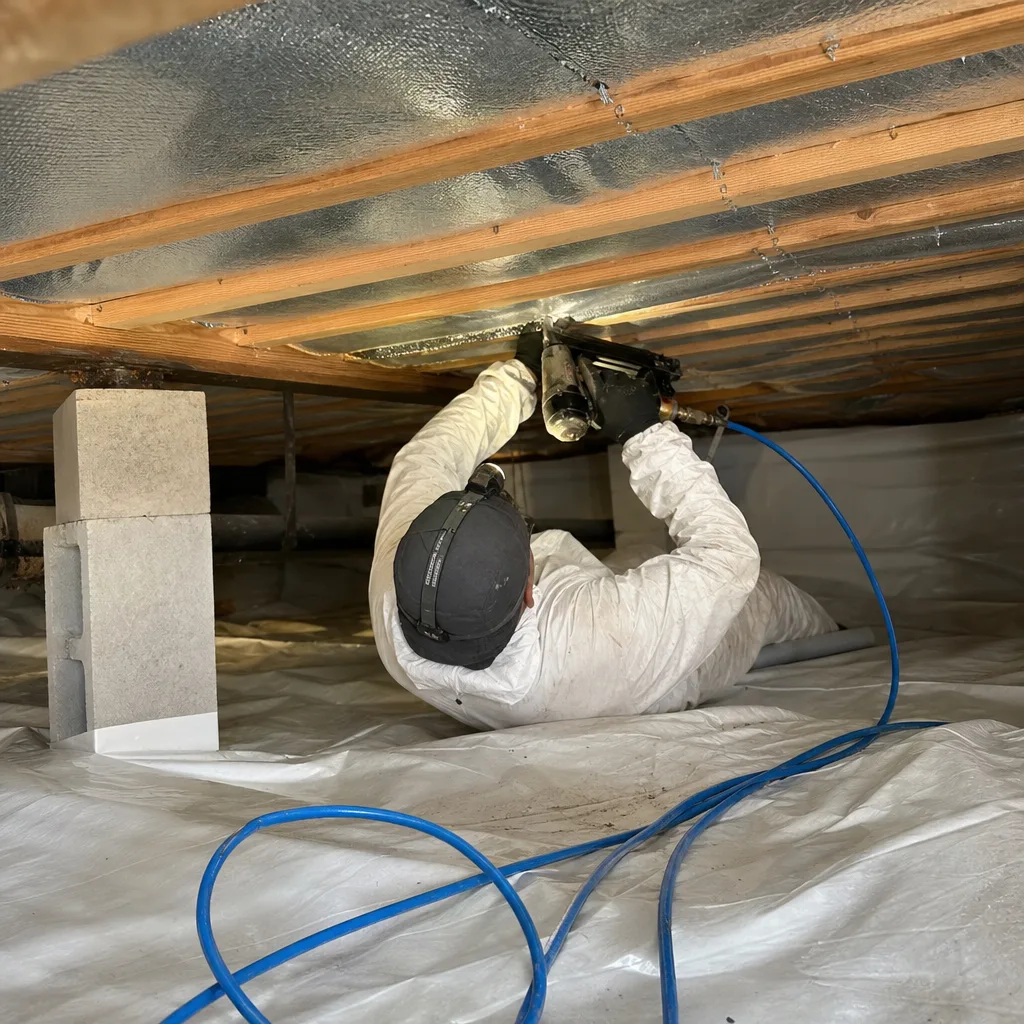
Some of this you can inspect yourself: a tape measure into the blown material, a flashlight into the attic hatch, a look at the ceiling around can lights for gaps. But air sealing the top plates and can lights, testing with a blower door, spraying foam at the deck, and reclaiming contaminated insulation all belong to a trained crew. The tasks that we’d call for a licensed local professional immediately: an attic reading over 130°F on a summer afternoon with a hot second floor, visible gaps around can lights and top plates, an attic hatch you can see daylight around, existing insulation that’s visibly settled or wet, and any plan to spray foam at the roof deck. Falling through a ceiling or breathing disturbed fiberglass in a 150°F attic isn’t a weekend project. Envelope Insulation North Las Vegas offers free estimates in North Las Vegas and connects you with a licensed, insured local professional who documents the work. Call (833) 630-4008.
Frequently Asked Questions
Most attic insulation jobs in North Las Vegas run between $2,000 and $5,500 for a full attic-floor retrofit, depending on square footage, material and how much air sealing is required. Blown fiberglass and cellulose sit at the low end, closed-cell spray foam at the deck sits at the high end, and complex attics or removal of old material push the number up. Call (833) 630-4008 for a written estimate before any work starts; the price is on paper first.
R-38 is the DOE minimum for Climate Zone 3, and R-49 to R-60 is what we recommend for most North Las Vegas attics under tile or flat roofs, paired with a radiant barrier at the deck. The higher target costs relatively little at install and pays back faster in our long cooling season. Depth has to match: roughly 16 to 18 inches of blown fiberglass for R-49.
Yes, on a North Las Vegas attic under a tile or flat roof, because our dominant summer heat load is radiant, not conductive. The barrier reflects heat at the deck while the mass insulation slows heat crossing the ceiling; you need both, and neither replaces the other. Foil-faced decking, a spray-applied reflective coating or a correctly installed foil barrier all work.
A typical pre-retrofit reading for a 1,990 sq ft North Las Vegas tract home built before 2000 runs about 8 to 14 ACH50, and a well-executed air-sealing and insulation job can cut that by a third or more. What matters most is the before-and-after pair, taken on the same equipment. Ask for both readings in writing.
Seal the attic floor if you have a vented attic with ducts at the ceiling and no HVAC equipment in the attic; that’s most older North Las Vegas homes and it’s the least expensive path. Seal the roof deck (closed-cell spray foam) when HVAC equipment and ducts live in the attic or the roof line is complex. Don’t mix the two in one attic.
Only if the existing material is dry, pest-free and still at useful density, and only after the attic floor is air-sealed. In many North Las Vegas homes, the old insulation is settled, contaminated or damaged, and the right first step is removal and replacement. Adding new material over a problem hides it rather than fixing it.
The Bottom Line
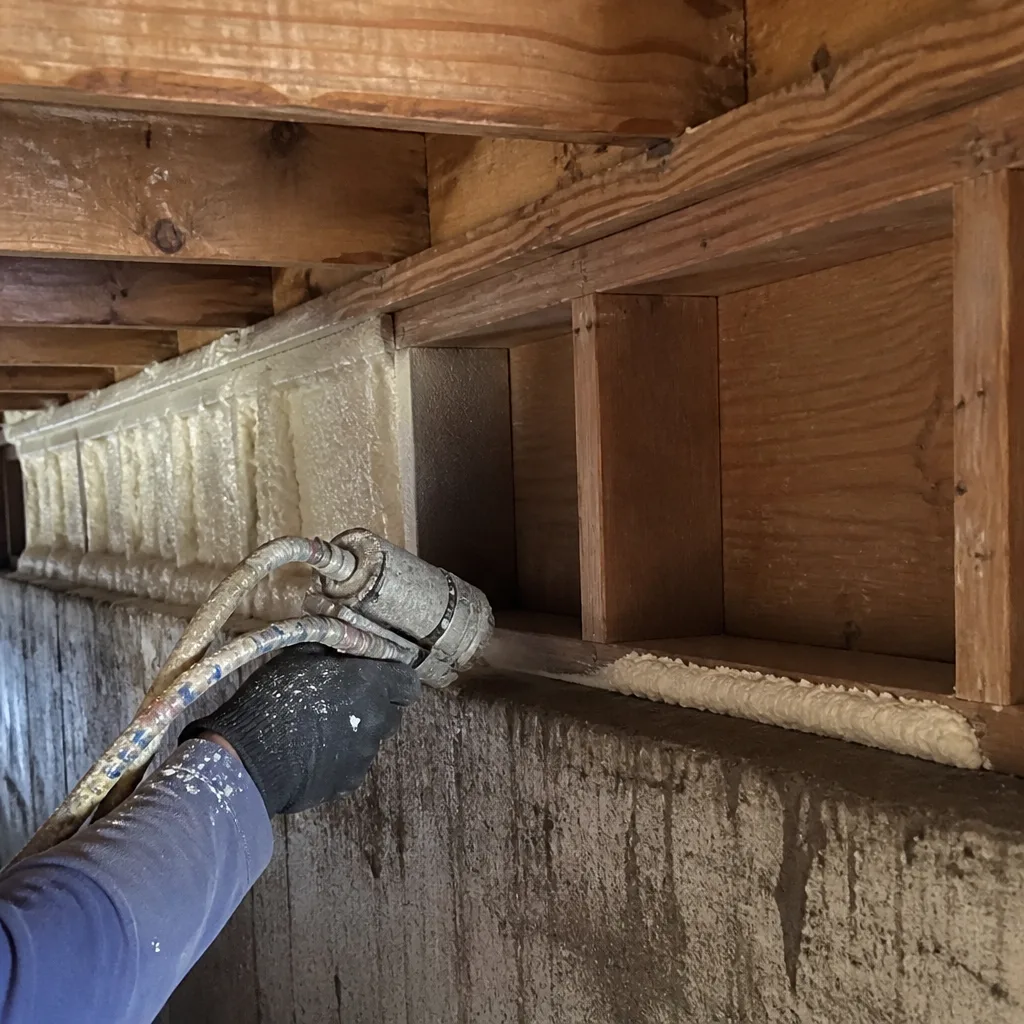
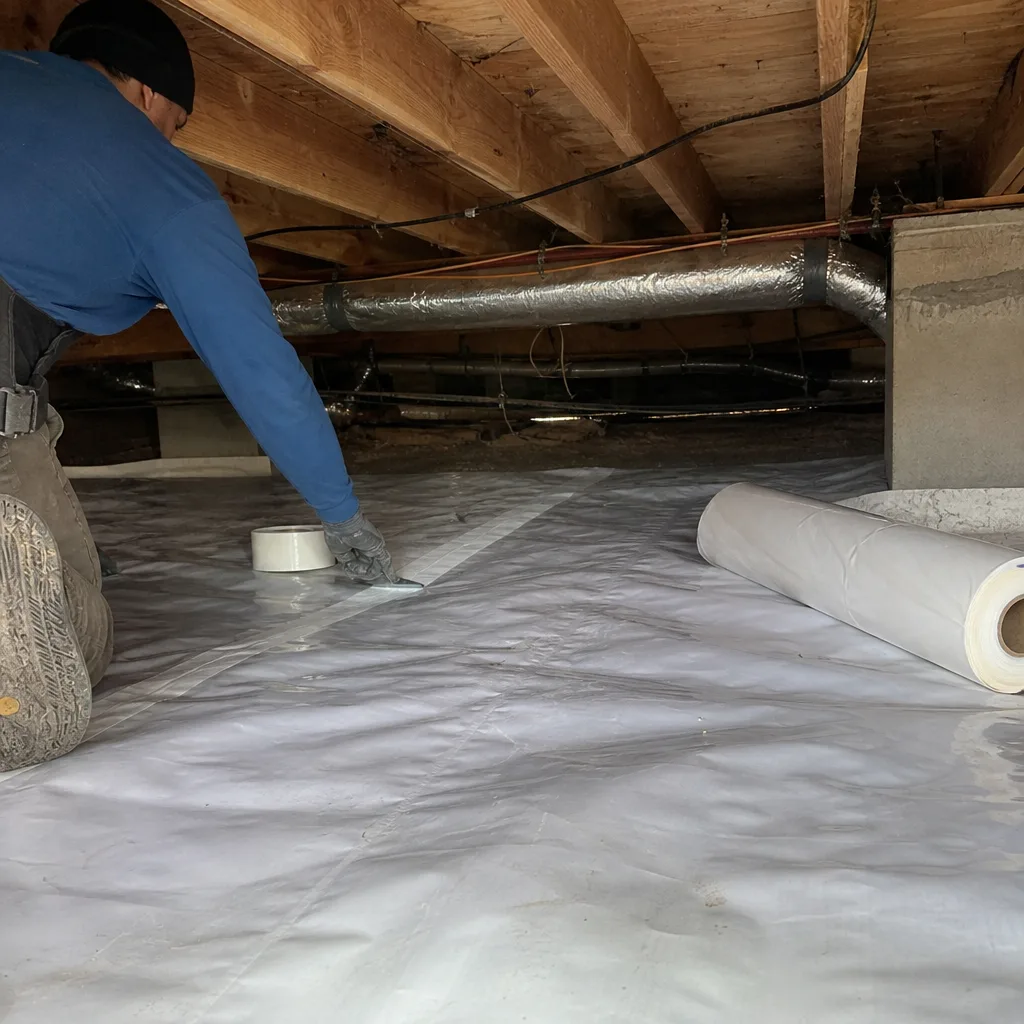
North Las Vegas attics fail for reasons specific to this climate: a radiant heat load that overwhelms R-value built for milder markets, and a stack effect in leaky two-story homes that moves more cooled air out than insulation ever holds in. The winning combination is consistent: seal the attic floor first, verify it with a before-and-after blower-door reading, insulate to R-49 or better with a material suited to heat cycling, and add a radiant barrier at the deck. Then demand the documentation that proves it: the blower-door pair, the thermal scan, the depth photos, the written scope and written warranty. If a contractor can’t produce those, that tells you something. Envelope Insulation North Las Vegas does this work under The Haven Standard, and we connect you with a licensed local professional who documents every job. If you’re also dealing with ground-level moisture, our crawl space encapsulation and vapor barrier work in North Las Vegas pairs well with an attic retrofit. Start with a look at how we handle the whole envelope and build the job from the ground up.
Written by the team at Envelope Insulation North Las Vegas.