
Last updated November 18, 2026
Choosing the Right Insulation Brand: A Buyer’s Guide for North Las Vegas
Fiberglass insulation is tested for R-value at 75°F mean temperature per ASTM C518. North Las Vegas attic mean temperatures in July can exceed 110°F. Some fiberglass products lose 4-7% of their labeled R-value at that temperature; others hold within 1-2%. The brand label doesn’t tell you which is which – the product data sheet does. This guide covers the two brand-level decisions that genuinely affect performance in a North Las Vegas home: whether a blown product holds its R-value at real desert attic temperatures, and whether a spray foam’s blowing agent keeps its R-value through a Las Vegas summer. Everything else is marketing, and we’ll say so.
Quick Answer
The right insulation brand for a North Las Vegas home is the one whose product data sheet shows installed performance at 110°F, not the one with the slickest brochure. For blown attic work, compare settled R-value and temperature-dependent R-value between fiberglass and cellulose; for spray foam, an HFO-blown closed-cell product holds R-value longer in summer heat than older HFC-blown foam, at roughly 8-12% more per board foot. Which manufacturer’s name is on the bag matters far less than the specification written into your contract, and the airtightness of the envelope underneath the insulation matters more than both.
Table of Contents
- How to Read a Product Data Sheet for Temperature-Dependent R-Value
- Blown Fiberglass vs. Blown Cellulose in a North Las Vegas Attic
- Spray Foam Blowing Agents: HFO vs. HFC
- What “Brand Approval” Means for Your Contractor
- Sealed First, Then Insulated: The Specification That Matters
- The One Contract Term That Protects You Regardless of Material
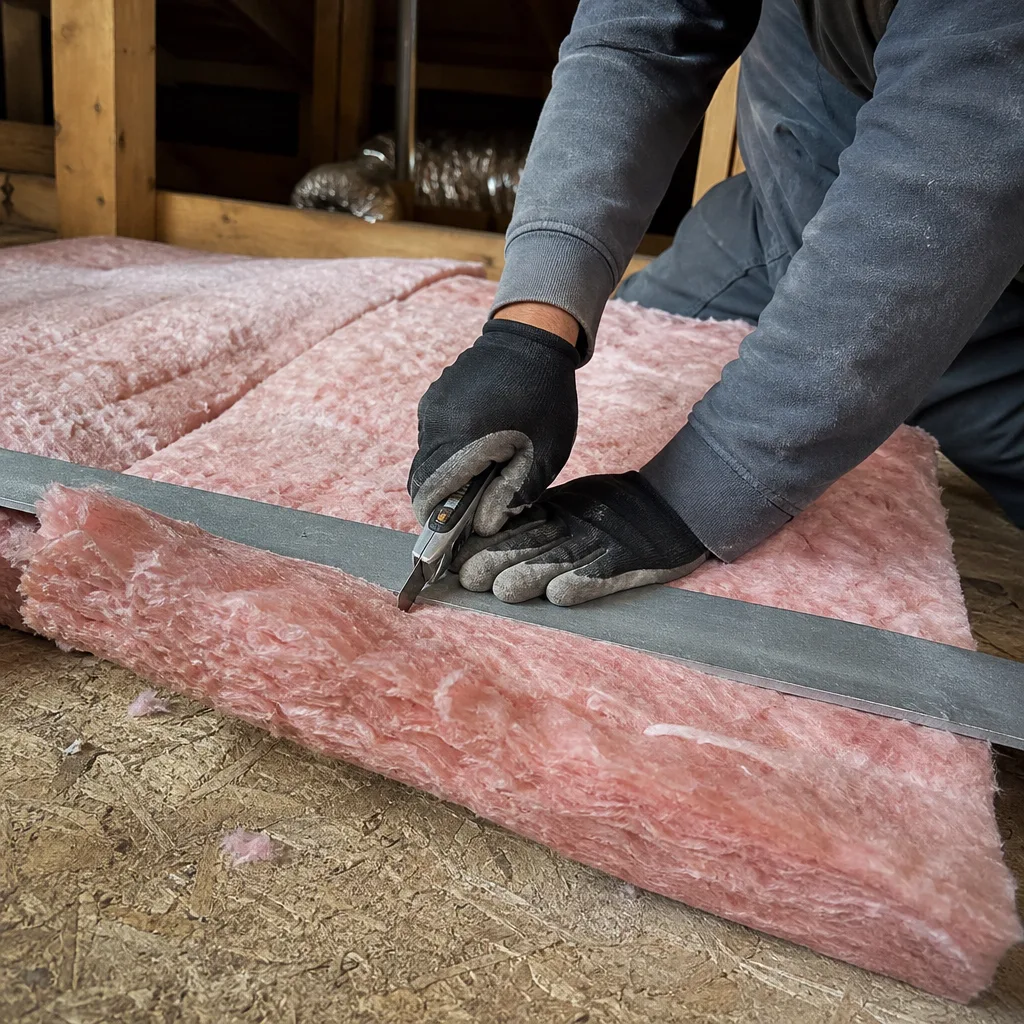
How to Read a Product Data Sheet for Temperature-Dependent R-Value
R-value is not a fixed number. It’s measured at a stated mean temperature – usually 75°F per ASTM C518 – and it drifts as the temperature of the material changes. In a North Las Vegas attic in July, the insulation on the floor of that attic can see mean temperatures well above 110°F. A product that holds its stated R-value at 75°F can drop several percent at 130°F. That difference is the whole ballgame for attic performance.
Here’s how to read a data sheet, in order:
- Find the ASTM C518 line. Confirm the test method and the mean temperature. If the sheet lists only “R-38 at 75°F,” you don’t yet know what you have.
- Look for the hot-side data. Some manufacturers publish a second column or footnote for elevated mean temperature, typically 100°F or 110°F. Others bury it in a technical bulletin available on request.
- Compare the delta. A product that loses 4-7% of its labeled R-value at 110°F and one that holds within 1-2% can look identical on the bag. The data sheet and the technical bulletin are the only places that difference shows up.
- Request the 110°F data point from the manufacturer rep. This is a routine ask. Any reputable manufacturer has the number and will send it. If the rep can’t produce it, that tells you something too.
We ask for this data before we put a North Las Vegas job in writing. It’s why we source from Owens Corning, Johns Manville, Knauf, Rockwool, CertainTeed, Icynene, Demilec, and GreenFiber – we want access to the technical data across lines, not a proprietary lock-in to one product family.
Blown Fiberglass vs. Blown Cellulose in a North Las Vegas Attic
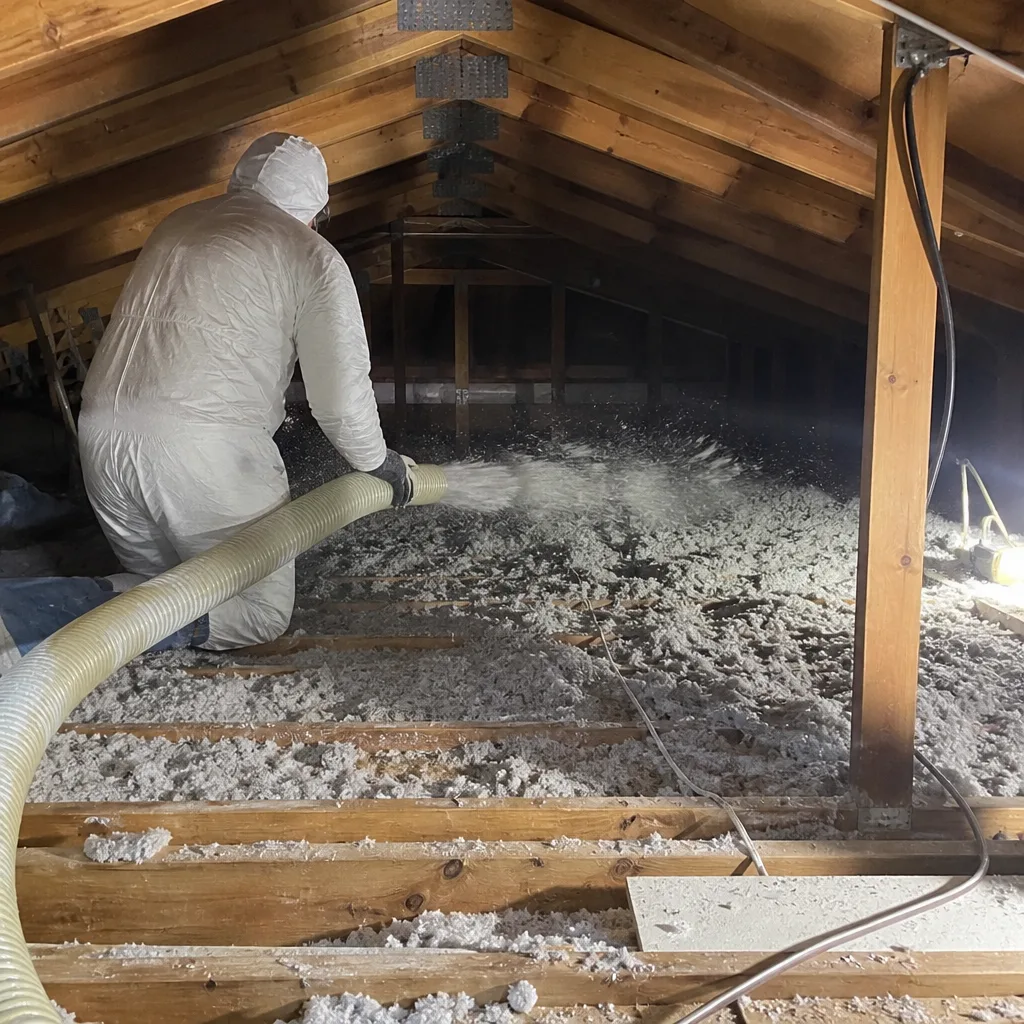
Both are good materials. They behave differently in a low-humidity desert climate, and the difference matters for how you specify your job.
- Settled R-value. Blown fiberglass settles less than blown cellulose. If you specify R-49, confirm the settled depth on the bag after a few weeks rather than trusting the fluffy installed depth at the end of the blower tube.
- Moisture sensitivity. Cellulose is treated with fire retardants and reads moisture more sensitively than fiberglass. North Las Vegas has low ambient humidity – an advantage for both materials – but a roof leak or an evaporative cooler line condensation can locally dampen cellulose and drive it toward clumping. Check the underside of the roof deck and any evaporative cooler penetrations before blowing either.
- Density and depth. Cellulose installs denser and reads as a smoother blanket; fiberglass is loftier and settles less. A North Las Vegas home built in the 2000s often has a shallower rafter bay than a new build, which changes how much either material you can put in before you add depth or use a higher-density product.
- Brands through Clark County distributors. CertainTeed, Johns Manville, GreenFiber, and Owens Corning products are routinely stocked through regional lumber and insulation distributors serving North Las Vegas and Clark County. Substitutions between equivalent products are common on the truck; they’re not equivalent if the temperature-dependent spec differs.
Our position on this material choice is a single sentence: pick fiberglass or cellulose based on the rafter depth, the moisture history, and the temperature-dependent spec, then pick the brand that meets the spec. Read our Attic Insulation in North Las Vegas page for how the depth and settled-R spec works on a real attic floor here.
Spray Foam Blowing Agents: HFO vs. HFC
The blowing agent is the gas that expands the foam and gets trapped in the cells. Older closed-cell foams used HFC blowing agents. Many current systems use HFO blowing agents, which have a different gas-phase thermal conductivity and – the part buyers care about – hold their R-value better at elevated temperatures over time. In a Las Vegas climate, where attic and roof-line temperatures swing hard through the summer, that’s the difference you’re paying for.
The cost premium for HFO-blown closed-cell foam runs roughly 8-12% more per board foot. When does it pay back? In our experience, it pays back in two situations:
- Hot roof lines and unvented attics. When the foam is against the roof deck, it’s sitting on the hottest surface in the house all summer. The temperature-dependent R-value difference is doing real work there.
- Long-hold ownership. If you’re staying in the North Las Vegas home a decade or more, the slower aging of an HFO system accumulates. If you’re flipping in two years, the difference is harder to justify on the spreadsheet.
We stock Icynene and Demilec systems through regional distribution; both publish the blowing-agent data on the technical sheet. Ask for it before you sign. Our Spray Foam Insulation in North Las Vegas page walks through thickness, adhesion, and venting decisions in more detail.
What “Brand Approval” Means for Your Contractor
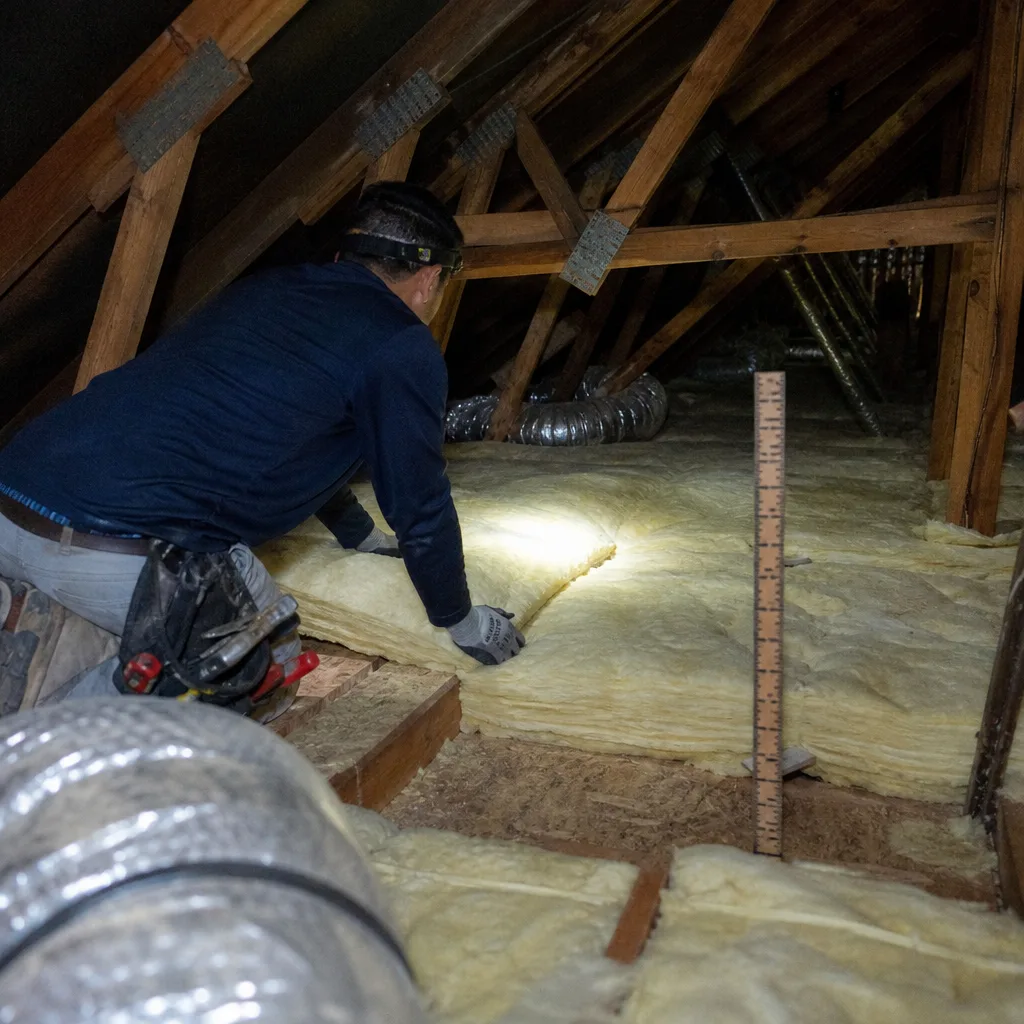
Contractors are typically certified or approved to install specific manufacturers’ lines, and the certificate on the wall usually names the product family – not every product. A crew trained and certified on Brand A’s closed-cell foam who arrives with Brand B on the truck is a documentation problem: the warranty registration may not be valid, and the installed-performance data in your written scope may no longer describe what’s actually in your attic. Prevent it contractually with three clauses:
- Name the product line on the written scope. “Owens Corning AttiCat blown fiberglass, R-49 settled” beats “R-49 blown fiberglass.”
- Write in a substitution clause. If the specified product isn’t available, the contractor must get written approval for an equivalent product and the temperature-dependent spec must match or beat the original. No silent swaps.
- Receive the manufacturer’s installed-performance data before work starts. Not the bag label, not the brochure – the technical sheet with the elevated-temperature R-value and the application instructions.
Industry certification is per-product, not per-crew ego. Ask to see the certification letter for the product line being installed, and the name on it should match the contractor who quoted you. It’s a simple ask and it prevents the most common disappointment. See how we handle Envelope Insulation North Las Vegas scope documents for a full picture of what’s written before the first tool comes out.
Sealed First, Then Insulated: The Specification That Matters
Here’s the thing brand selection can’t fix: blowing R-49 over an unsealed attic floor is putting a down comforter over an open window. The top plates, can lights, plumbing and wiring penetrations, and the attic hatch leak conditioned air up and out no matter which brand of fiberglass sits on top of them. Every North Las Vegas attic we open has these leaks. Air sealing them is a hard prerequisite to insulation in our book – not an upsell.
The sequence, in order:
- Send a blower-door test before any work. This is a pressurization reading – in CFM50, the number of cubic feet per minute of air the envelope leaks at 50 pascals of pressure. It’s a single figure that shows how much conditioned air your home is losing before you spend a dollar on insulation.
- Air-seal the attic floor. Top plates, can lights with airtight covers, plumbing and wiring penetrations, the hatch, and any dropped-soffit cavities.
- Blow insulation to the specified settled R-value.
- Send a blower-door test after. Publish the before-and-after numbers so you, the homeowner, can see the change in a single figure.
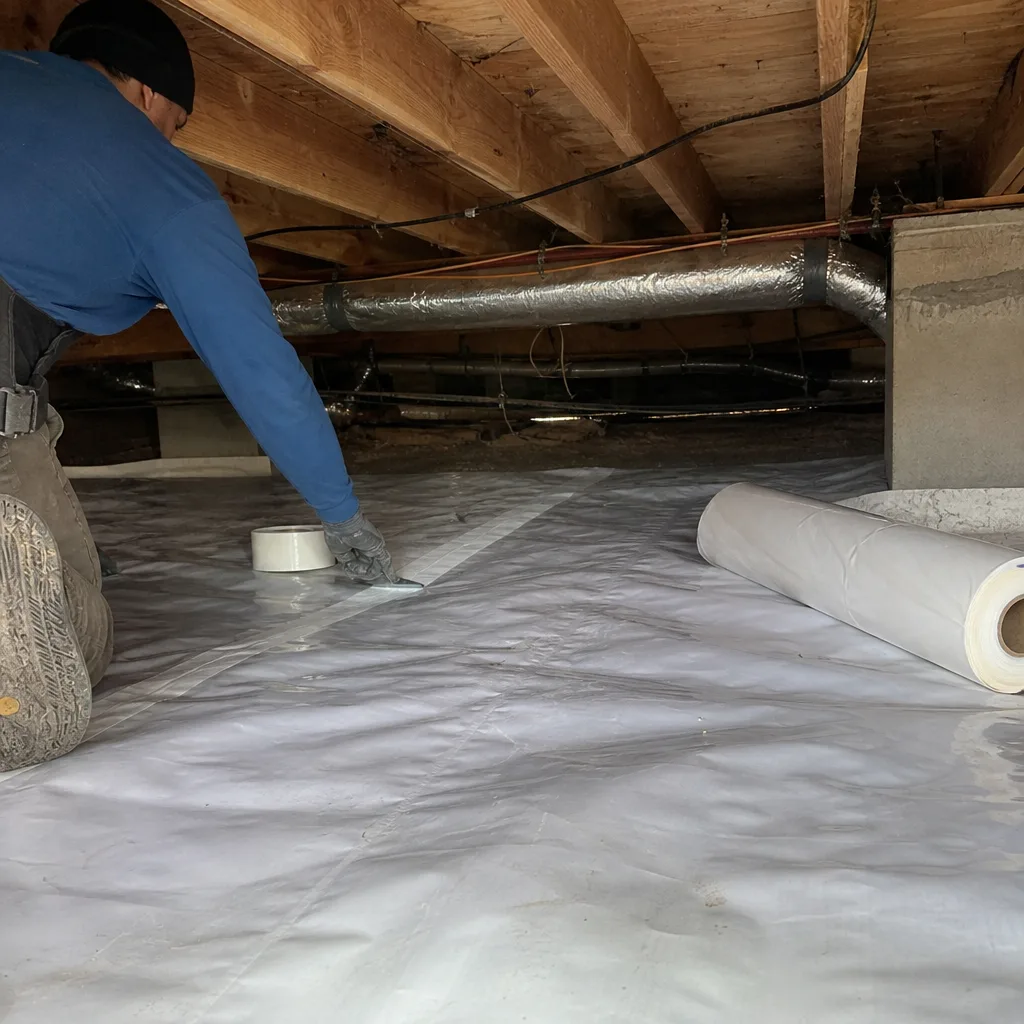
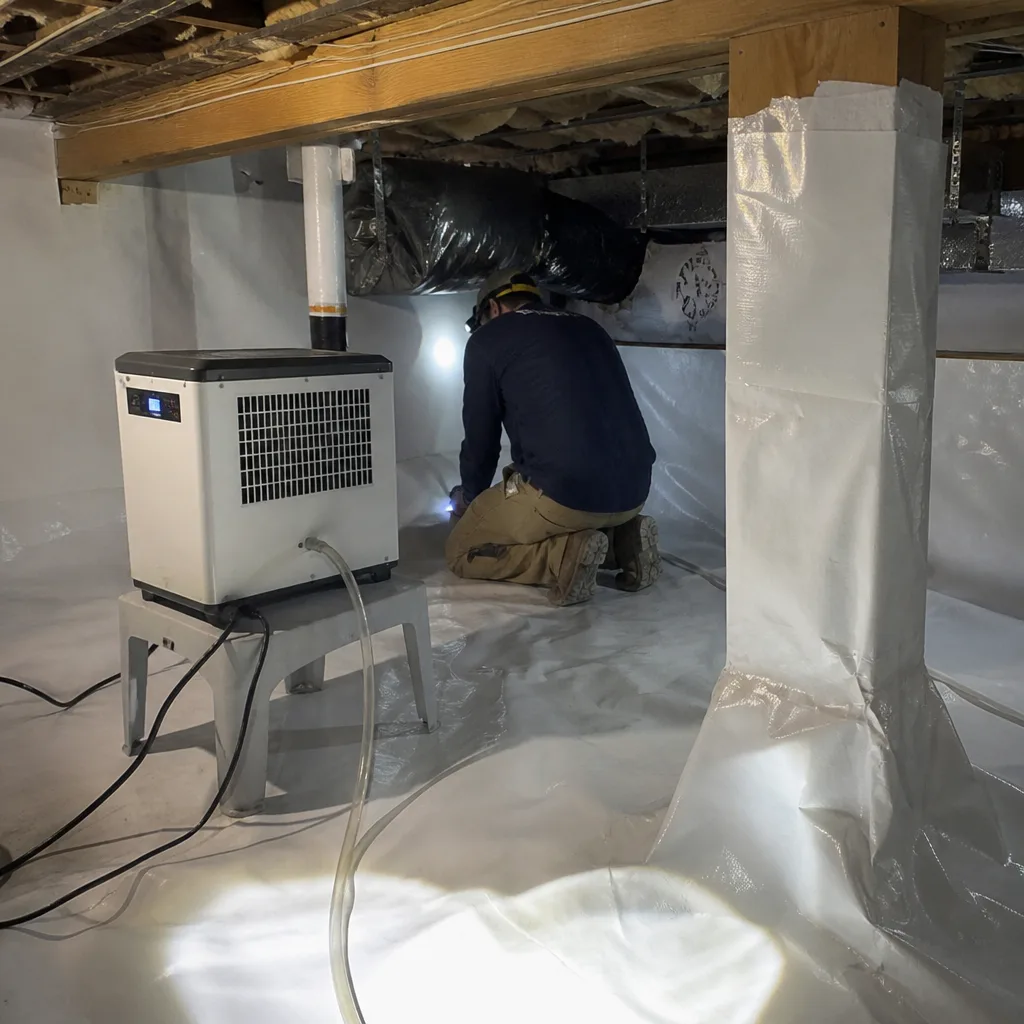
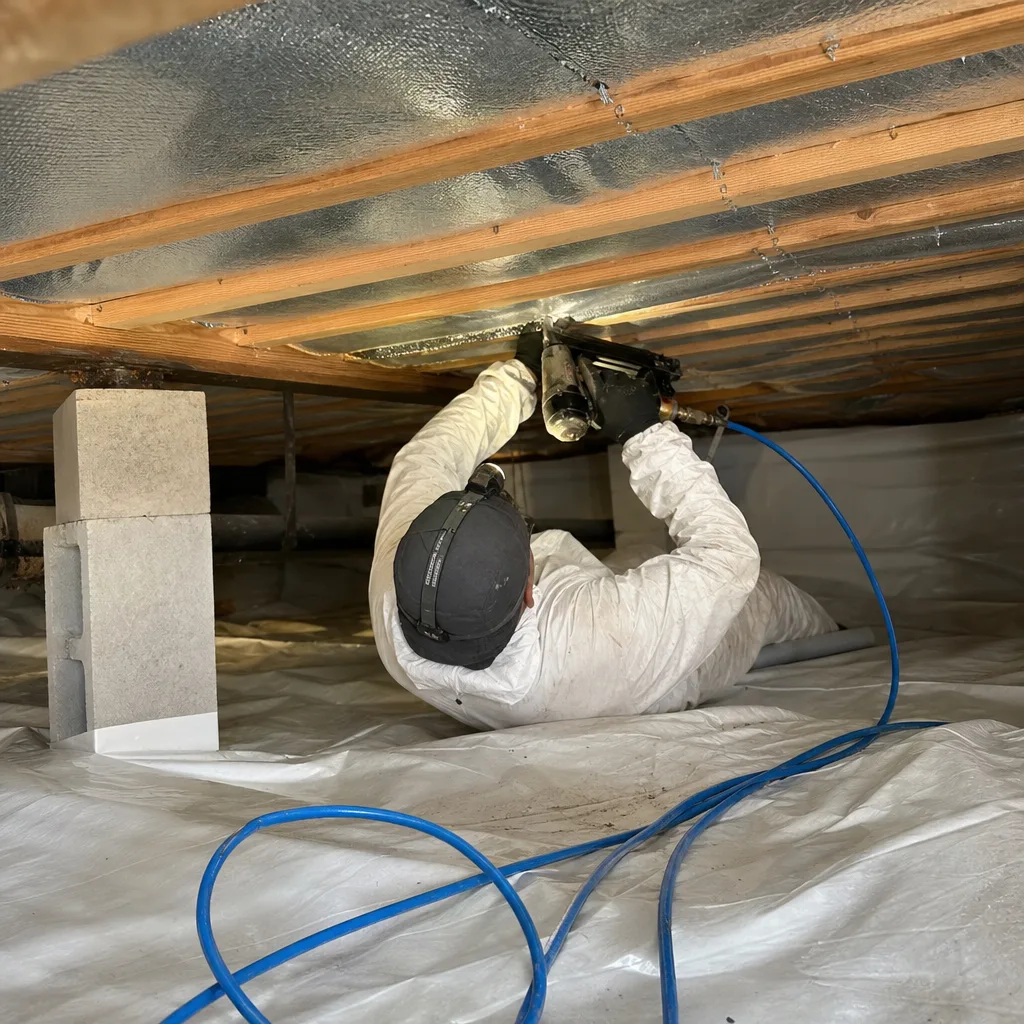
That’s the sequence we run on every applicable job, and the before-and-after numbers are printed on the documentation you walk away with. The Crawl Space Encapsulation & Vapor Barrier in North Las Vegas page covers the same principle at the underside of the house, where the vapor barrier is the seal.
The One Contract Term That Protects You Regardless of Material
The single specification that belongs in every contract no matter which brand you pick: require the manufacturer’s installed-performance data as the basis for the written scope, not the labeled R-value. That clause protects you when the truck rolls up with a substitute. It protects you when the temperature-dependent R-value question comes up. And it protects you from the contractor who quotes “R-49” and installs “R-30 settled because the bags said so.”
Pair it with a flat written price, a written scope, and a written warranty before anyone lifts a tool. That’s what we do – it’s Haven Standard Clause 1. A Free Second Opinion on any written estimate is available for homeowners who want us to read a competing quote with them, line by line, spec by spec. We will also tell you when the cheaper quote is genuinely fine. It usually isn’t, for the reasons above.
Common Mistakes to Avoid
- Buying on the bag label alone. The R-value printed on the bag is measured at 75°F. North Las Vegas attic mean temperatures exceed 110°F in July, and the bag doesn’t show the drift. Ask for the elevated-temperature data point in writing.
- Accepting a substitution without documentation. Brand A specified, Brand B delivered, and the manufacturer’s data sheet no longer matches the written scope. The warranty and the installed performance can both be voided without you knowing it until something goes wrong.
- Insulating before air sealing. Every North Las Vegas attic leaks. If a contractor wants to blow R-49 over an unsealed attic floor, they’re selling you material that can’t perform.
- Skipping the before-and-after blower-door test. Without a CFM50 measurement before and after, neither you nor the contractor knows whether the job actually tightened the envelope. It’s the only verifiable figure in the whole job.
- Assuming cellulose and fiberglass are interchangeable. In a low-humidity desert climate both work, but settled depth, moisture sensitivity, and rafter-bay depth differ. The spec, not the brand, decides.
- Ignoring the roof deck and evaporative cooler penetrations. Water intrusion at these two points is your most common cause of insulation failure in North Las Vegas. Find it first.
- Taking an oral quote. A written scope, a written price, and a written warranty before the crew shows up. Anything that arrives only by phone call is not a contract.
When to Call a Professional
Call a professional insulation contractor in North Las Vegas if any of the following are true: your attic has visible dark staining on the roof deck or wet insulation after a leak; the summer electric bill has climbed without a rate change; you’re buying a North Las Vegas home built before 2010 and the inspection doesn’t include a blower-door test; you have an unsealed attic hatch, can lights, or top plates; or you’ve received a written estimate you want a second set of eyes on. Brand selection is not a do-it-yourself decision when the temperature-dependent R-value question has to be answered in writing against a Las Vegas summer.
Envelope Insulation North Las Vegas offers free estimates in North Las Vegas – call (833) 630-4008 to get a written price before any work starts and a documented photo record when the crew leaves.
Frequently Asked Questions
There isn’t one. The right brand for a North Las Vegas home is whatever brand’s product data sheet shows the installed performance you specified – with elevated-temperature R-value at 110°F for blown products and the correct blowing-agent chemistry for spray foam. We source from Owens Corning, Johns Manville, Knauf, Rockwool, CertainTeed, Icynene, Demilec, and GreenFiber, and the choice comes down to the spec, not the logo.
Yes, for some products more than others. R-value is tested per ASTM C518 at 75°F mean temperature, and attic mean temperatures in North Las Vegas can exceed 110°F in July. Products that lose 4-7% of their labeled R-value at that temperature and products that hold within 1-2% can look identical on the bag; the data sheet is the only place the difference shows. Ask the manufacturer’s rep for the 110°F data point before you sign the contract.
Neither is universally better. Blown fiberglass settles less and reads moisture less sensitively; blown cellulose installs denser with a smoother blanket. In a low-humidity desert climate both materials serve well when properly specified, but the settled R-value, rafter-bay depth, and any evaporative cooler condensation decide the choice. The temperature-dependent spec and the written scope matter more than the material family.
For most roof-line and unvented-attic jobs in Las Vegas, yes – if you’re staying in the home. HFO-blown closed-cell foam holds its R-value better at elevated temperatures than older HFC-blown systems, and it costs roughly 8-12% more per board foot. On a North Las Vegas roof deck that sits at 150°F-plus all summer, that premium pays back through long-hold ownership and slower thermal aging. For a two-year flip, the math is thinner.
Name the product line on the written scope, not just the brand, and add a substitution clause requiring written approval and a matching or better temperature-dependent spec before any change. Ask to see the manufacturer’s certification for the specific product line. If the certificate doesn’t match the product on the truck, the warranty registration may not hold – and the installed-performance data in your scope no longer describes what’s in the attic.
Only if air sealing happens first. Insulation added over an unsealed attic floor can’t stop the conditioned air that’s leaking out through top plates, can lights, and the attic hatch. A before-and-after blower-door test – the CFM50 measurement – shows in a single number whether the envelope actually got tighter. Call (833) 630-4008 for a free blower-door-based estimate if you want to see the number before you commit.
The Bottom Line
Brand selection matters less than product specification and installation conditions, and in North Las Vegas two brand-level decisions are worth your attention: whether the blown product holds R-value at 110°F-plus attic temperatures, and whether the spray foam uses an HFO blowing agent that holds R-value through a Las Vegas summer. Everything else is brochure copy. Require the manufacturer’s installed-performance data – not the labeled R-value – as the basis for your written scope. Seal the envelope first, insulate second, and confirm the result with a before-and-after blower-door test. That, not the name on the bag, is what makes the insulation perform in a North Las Vegas home.
Contact
Envelope Insulation North Las Vegas provides attic insulation, blown-in insulation, spray foam, wall insulation, radiant barriers, crawl space encapsulation and vapor barriers, attic air sealing, insulation removal and replacement, attic cleaning and rodent proofing, and home energy audits across North Las Vegas. Every job starts with a written price and closes with a documented photo record; applicable jobs receive before-and-after blower-door readings so you can verify the air-sealing result. The 365-Day Done Right Promise applies to all completed work, and a live person answers calls 24/7. Call (833) 630-4008 for a free estimate.
Written by the team at Envelope Insulation North Las Vegas.