
Last updated November 18, 2026
Blown-In Insulation Maintenance Schedule: What to Do and When
Cellulose that tests at R-38 on install day can measure R-29 five years later. Not because the material failed. Because a bathroom exhaust fan backdrafted moisture into the attic for 60 months without anyone noticing. In our experience, the insulation almost never quits on its own; the air barrier above it does, and the fill pays for it. This guide gives you a real blown-in insulation maintenance schedule for North Las Vegas homes, built around the three things that actually degrade performance: settlement, moisture, and displaced fill. You’ll get Year 1, 3, and 5 checkpoints, the exact attic conditions to measure, and the documentation to keep on file.
Quick Answer
A blown-in insulation maintenance schedule means inspecting the attic in Year 1, Year 3, and every two to three years after, and re-checking sooner after any roof, HVAC, or exhaust work. At each visit you spot-check depth with a ruler at three attic locations, look for moisture staining and displaced fill, and confirm exhaust ducts vent outside. Settlement alone costs a predictable 5 – 10% of your R-value; moisture and disturbed fill can cost far more.
Table of Contents
- What Actually Degrades Blown-In Performance
- Three Causes, Three Inspection Intervals
- What to Measure at Every Attic Visit
- The Year 1, 3, and 5 Checkpoints
- The North Las Vegas Heat Trigger
- What to Keep on File (Your Baseline)
- Common Mistakes to Avoid
- Frequently Asked Questions
What Actually Degrades Blown-In Performance
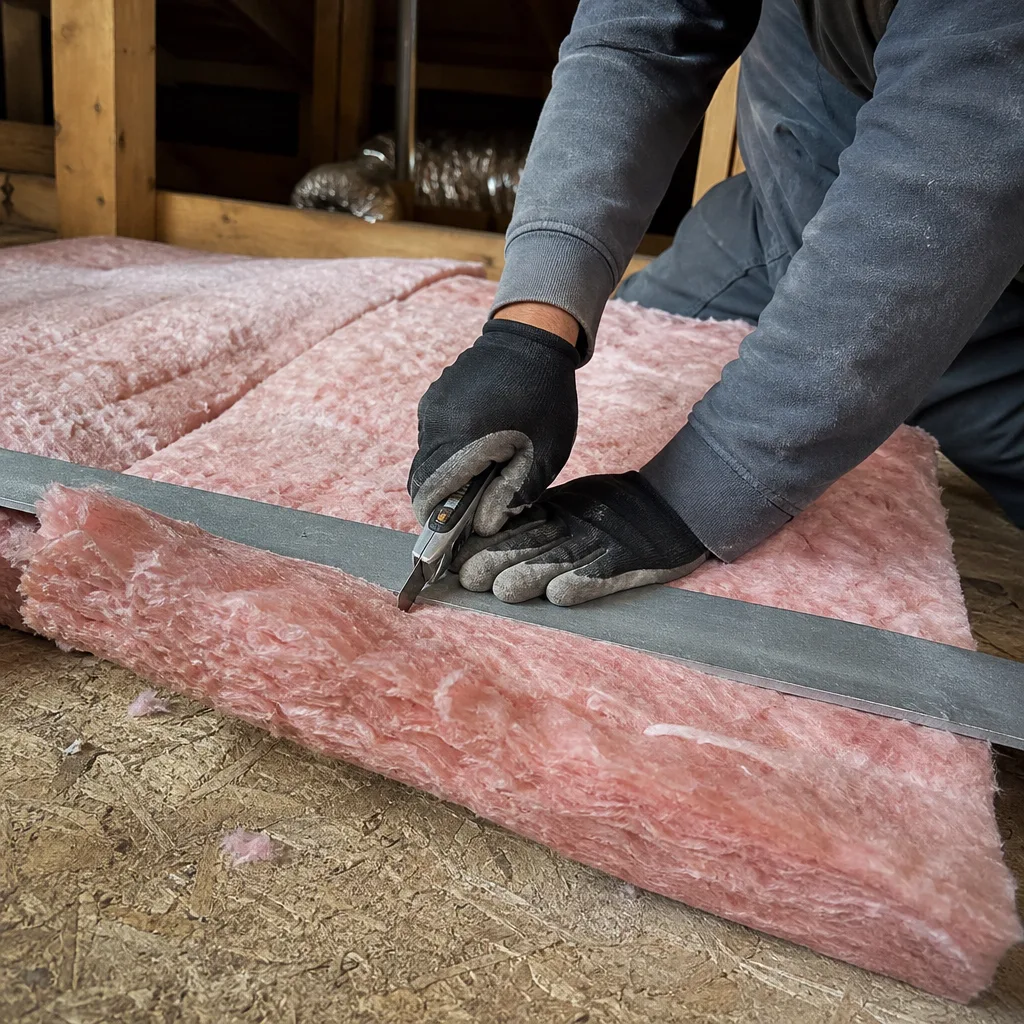
Blown-in insulation is a pile of loose fiber, cellulose or fiberglass, that we blow across an attic floor to a target depth. Its R-value depends on two things: how dense and deep the pile is, and how still the air above it stays. Break either one and the number on your receipt stops being true. In North Las Vegas attics, we see the second failure more than the first.
There are only three ways the fill you paid for stops performing. Everything in a sane maintenance schedule traces back to these:
- Settlement. Loose fill compacts under its own weight, mostly in the first year. It’s predictable, it’s slow, and it usually costs 5 – 10% of installed depth. Cellulose settles more than fiberglass.
- Moisture intrusion. This is the variable one, and it’s catastrophic. A bath fan ducted into the attic, a roof leak, or a sweating duct can wet the fiber, mat it down, and grow mold. Wet cellulose loses R-value fast and can’t be dried back to spec.
- Displaced fill. When an HVAC tech runs new flex duct, or someone walks the joists during a repair, the fill gets pushed aside. You end up with bare drywall above the ceiling and a thermal bridge where the pile was thickest.
Notice what’s missing from that list: the insulation itself. Fiberglass from CertainTeed or Johns Manville doesn’t expire. Rockwool doesn’t wear out. What fails is the attic conditions around it, which is why a maintenance schedule is really an air-barrier and attic-health schedule. That’s the piece most published schedules skip entirely.
Three Causes, Three Inspection Intervals
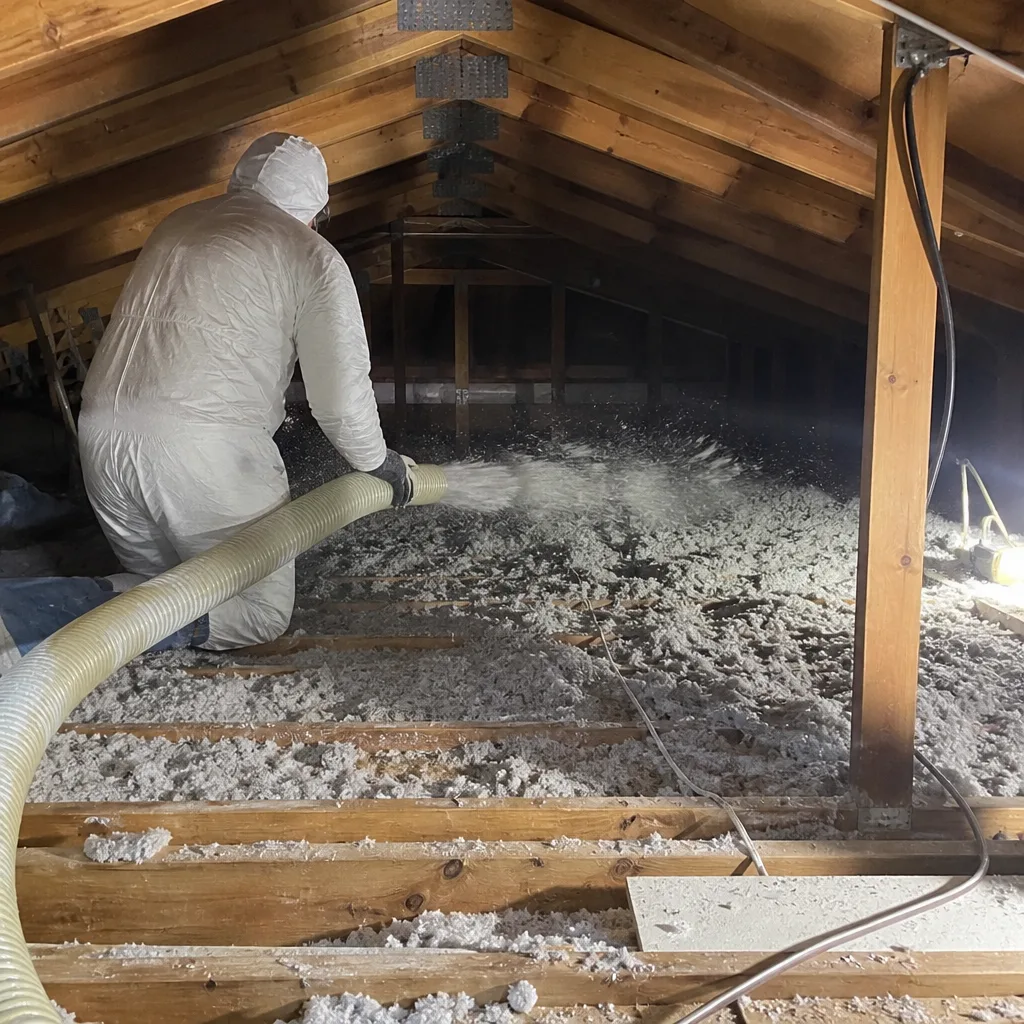
Here’s where a generic schedule goes wrong: it tells you to “check your insulation every year” and stops. But settlement, moisture, and displaced fill don’t run on the same clock. Give each one its own interval.
- Settlement – inspect at Year 1, then every 3 years. Loose fill does most of its settling in the first 12 months, so the Year 1 check catches the bulk of it. After that, a depth reading every three years keeps you honest.
- Moisture – inspect after every wet season and after any roof, plumbing, or exhaust work. North Las Vegas is dry, but monsoon weeks in July and August and any roof repair are the real moisture events. Check within 30 days of either.
- Displaced fill – inspect immediately after anyone works in the attic. New duct, a new can light, a pest treatment, a solar install. Any time a person disturbs the attic floor, the fill moves. This is the most-skipped interval and the one that shows up as a hot room in a North Las Vegas summer.
The logic is simple. Settlement is on a timer. Moisture and displacement are on events. If you only inspect on a fixed calendar, you’ll miss the event-driven damage that does the most harm. In North Las Vegas, that event is usually an HVAC replacement, when a crew pulls new duct through a settled attic and pushes 20% of your cellulose into the corners.
What to Measure at Every Attic Visit
At each visit, you’re measuring three things and looking for two. Bring a tape measure or marked depth ruler, a notepad, and a phone for photos. You don’t need a blower door for routine maintenance, though it’s the surest way to confirm the air barrier is intact.
Measure:
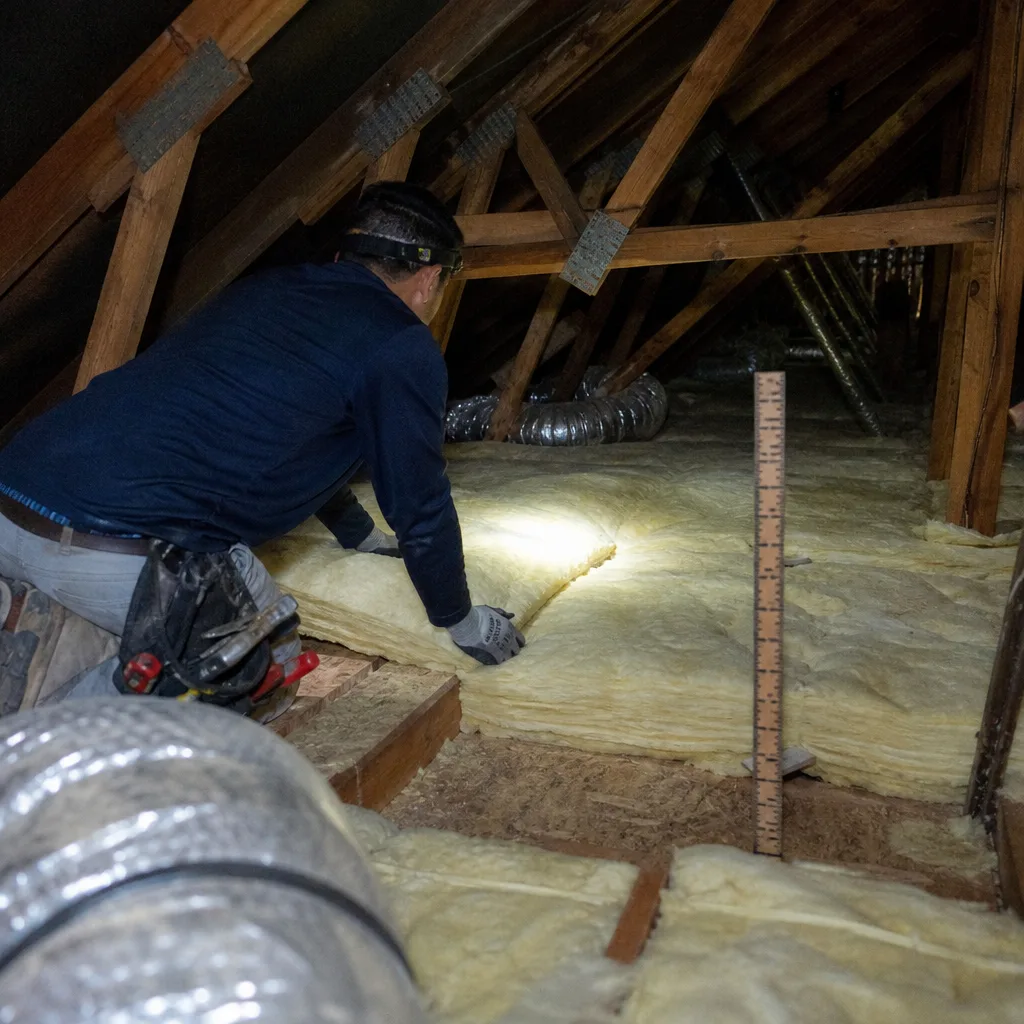
- Depth at three locations. Pick the center of the attic, one area over a living space, and one near the hatch. Push the ruler down to the drywall and read the settled depth. Compare against your install-day depth (more on keeping that baseline below).
- Depth directly above recessed lights and the hatch perimeter. These are the classic compression zones. Fill gets pushed away to clear the fixture, leaving a thin spot.
- Compression on top of ductwork. If the pile drapes over flex duct and presses it flat, you have both an insulation problem and a duct problem.
Look for:
- Dark staining on joists or rafters. Wood that stays wet stains dark and often grows a white or gray fuzz. That’s your moisture flag, and it means wet fiber underneath.
- Exhaust ducts that end in the attic. A bath fan or dryer duct that terminates in the attic, rather than outdoors, dumps warm moist air straight into your insulation. This is one of the most common causes of a wet attic we see in North Las Vegas.
Write down each reading with the date. A depth number with no date is nearly useless later, because you won’t know whether the fill shrank or you’re remembering the install wrong.
The Year 1, 3, and 5 Checkpoints
Here’s the schedule in plain form, with what to document at each stop.
Year 1: The settling check. Measure depth at your three locations and photograph the ruler against the fill at each. Confirm exhaust ducts still vent outside. Note any new dark staining on the joists. This is the visit that tells you whether the install held its target depth.
Year 3: The moisture-and-duct check. Measure the three depths again, add a photo of any compression zone above recessed lights or the hatch. Confirm all ductwork is intact and none of it is crushed. If you replaced the HVAC or added a can light in the last three years, inspect for displaced fill in that spot specifically.
Year 5: The full re-baseline. Repeat the three depth readings, photograph and date them, and check for the settlement that accumulates over half a decade. If depth has dropped below your target R-value, plan to top off rather than re-blow. If you have a blower door reading from install day, this is the year to consider a fresh test to confirm the air barrier still holds.
After Year 5, hold the same pattern every two to three years, plus an immediate check after any attic work. If you’d rather have a documented record than DIY readings, our Envelope Insulation North Las Vegas home page covers how we handle a full envelope inspection and what you walk away with.
The North Las Vegas Heat Trigger
North Las Vegas adds a wrinkle most blow-in schedules ignore: heat. Attics here routinely climb above 160°F in July and August, and sustained high heat stresses the binder in some cellulose products. The fiber doesn’t vanish, but the binder that holds it in a stable pile can break down faster under that cycle, which can show up as more settlement and more dust than a temperate-climate schedule predicts. In our experience, homes near the Nellis Air Force Base side and the newer builds out toward the 215 do enough summer thermal cycling that we treat the Year 1 check as non-negotiable.
What should you look for on the product label? Look for the settled density and any thermal-cycle or moisture-resistance notes, and the R-value-per-inch figure for the settled state, not the blown state. Keep the label. If a future re-inspection needs to know what target depth your product requires, the label is the reference. Fiberglass and mineral wool like Rockwool settle less than cellulose, so the interval can stretch, but heat still dries and stresses whatever you installed.
The heat also makes attic work unsafe. If your attic has been baking all afternoon, do your readings in the early morning, drink water, and don’t crawl across joists you can’t see through the fill. A fall through a ceiling, or heat exhaustion in a 160°F attic, is a real hazard, and it’s why we recommend a trained technician for anything past a quick morning depth check.
What to Keep on File (Your Baseline)
Maintenance is only as good as the baseline you’re comparing against. Without an install-day reference, a Year 3 depth reading is just a number in a notebook. Here’s what belongs in a folder, paper or digital:
- The original install receipt showing installed depth and target R-value. The depth you paid for is the number every future reading gets compared to.
- The blower-door reading at install, if one was performed. Before-and-after blower-door numbers – a pressurization test that shows, in one figure, how much conditioned air the home was losing – are the surest proof the air sealing held. We publish ours on applicable jobs so the homeowner can verify the result years later.
- A dated photo of the depth ruler in the fill at install. This is the single most useful item. It proves the starting depth in a way a receipt can’t, because it shows the actual pile.
Keep the product label too, and note which material went in, whether fiberglass, cellulose, or a foam like Icynene or Demilec in a different part of the envelope. With those four items, any future inspector – or you – can tell within minutes whether the fill is performing at the R-value you paid for. If your home is a North Las Vegas build where the attic floor needs sealing before fill goes down, the record matters even more, because air sealing is where the real performance lives. See our Attic Insulation in North Las Vegas page for how that sequencing works.
Common Mistakes to Avoid
- Re-blow before sealing. Adding insulation over an unsealed attic floor traps the air leaks underneath and wastes the new fill. Seal top plates, can lights, and penetrations first, then insulate.
- Venting a bath fan into the attic. It’s common in North Las Vegas and it’s the fastest way to ruin a good install. A duct must terminate outdoors, full stop.
- Walking the joists without marking them. You can’t see joists under fill, and one missed step crushes the pile and your ceiling. Mark a path before anyone goes up.
- Treating a depth reading as R-value. Depth converts to R-value only when you know the product and its settled R-per-inch. Read the label, not just the ruler.
- Skipping the inspection after HVAC work. A new duct install displaces fill every time. Check the disturbed area within 30 days.
- Assuming “dry climate” means “no moisture problem.” The moisture in a North Las Vegas attic usually comes from the house, from exhaust fans and ducts, not the sky.
- Throwing out the install photos. Without a dated baseline photo, you can’t prove the fill was ever there at full depth.
When to Call a Professional
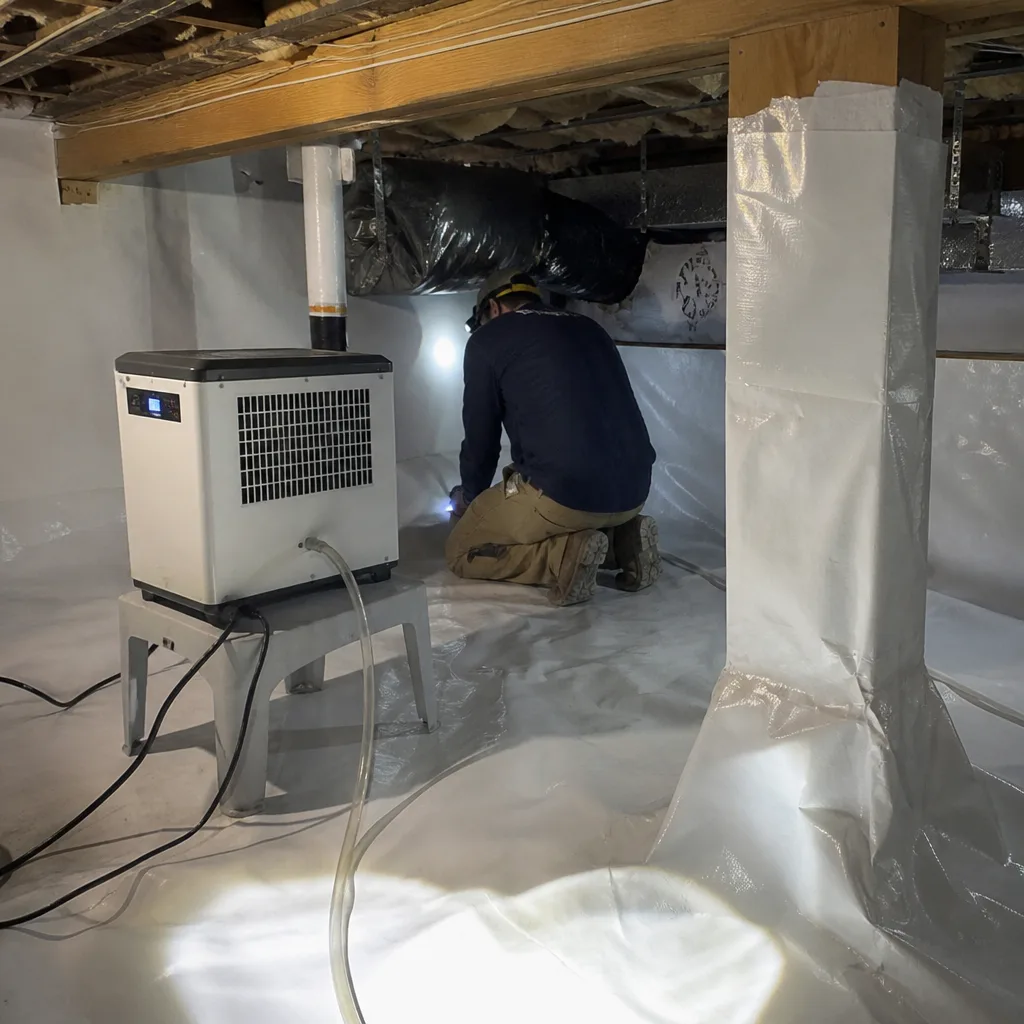
Call a professional when the problem is bigger than a depth reading – specifically when you find dark staining on joists, a wet or matted pile, an exhaust duct ending in the attic, mold, or fill that has clearly collapsed below your target. Those need air sealing and often removal, not a top-off. Same for any attic you can’t safely enter in the heat, and for any plan to remove old insulation before re-blowing. A blower-door test is the tool that confirms whether your air barrier is still doing its job, and it’s worth having on file before you spend money on new fill. Our Spray Foam Insulation in North Las Vegas page covers when foam is the better call than a top-off, and Crawl Space Encapsulation & Vapor Barrier in North Las Vegas matters if the moisture is climbing from below rather than falling from above. Envelope Insulation North Las Vegas offers free estimates in North Las Vegas – call (833) 630-4008. Every job starts with a written price and closes with a Documented Photo Record, so your baseline is documented from day one.
Frequently Asked Questions
Inspect at Year 1, Year 3, and every two to three years after. Add an immediate check after any roof, HVAC, or exhaust work, since displaced fill and moisture are event-driven rather than on a calendar.
Yes. Loose fill typically settles 5 – 10% in its first year, mostly in the first 12 months. That’s why the Year 1 depth check matters most; after that, settlement slows and a reading every three years is enough.
Use a depth ruler at three attic locations, then match the settled depth against your product’s R-value-per-inch from the label. The depth is the direct reading; R-value is what the label converts it to. A blower door is the only way to confirm the air barrier itself.
Usually the house, not the weather. A bath fan or dryer duct venting into the attic, or a duct that sweats, dumps moisture into the fill. It’s one of the most common failures we see in North Las Vegas, and it’s why exhaust ducts must terminate outdoors.
Only after the attic floor is sealed. Blowing new fill over unsealed leaks traps the air loss under fresh material and wastes your money. Seal top plates, can lights, and penetrations first, then top off.
The install receipt showing depth and target R-value, the install-day blower-door reading if one was performed, a dated photo of the depth ruler, and the product label. Those four items give any future inspection a real baseline. Call (833) 630-4008 if you need help reading what you have – estimates are free.
The Bottom Line
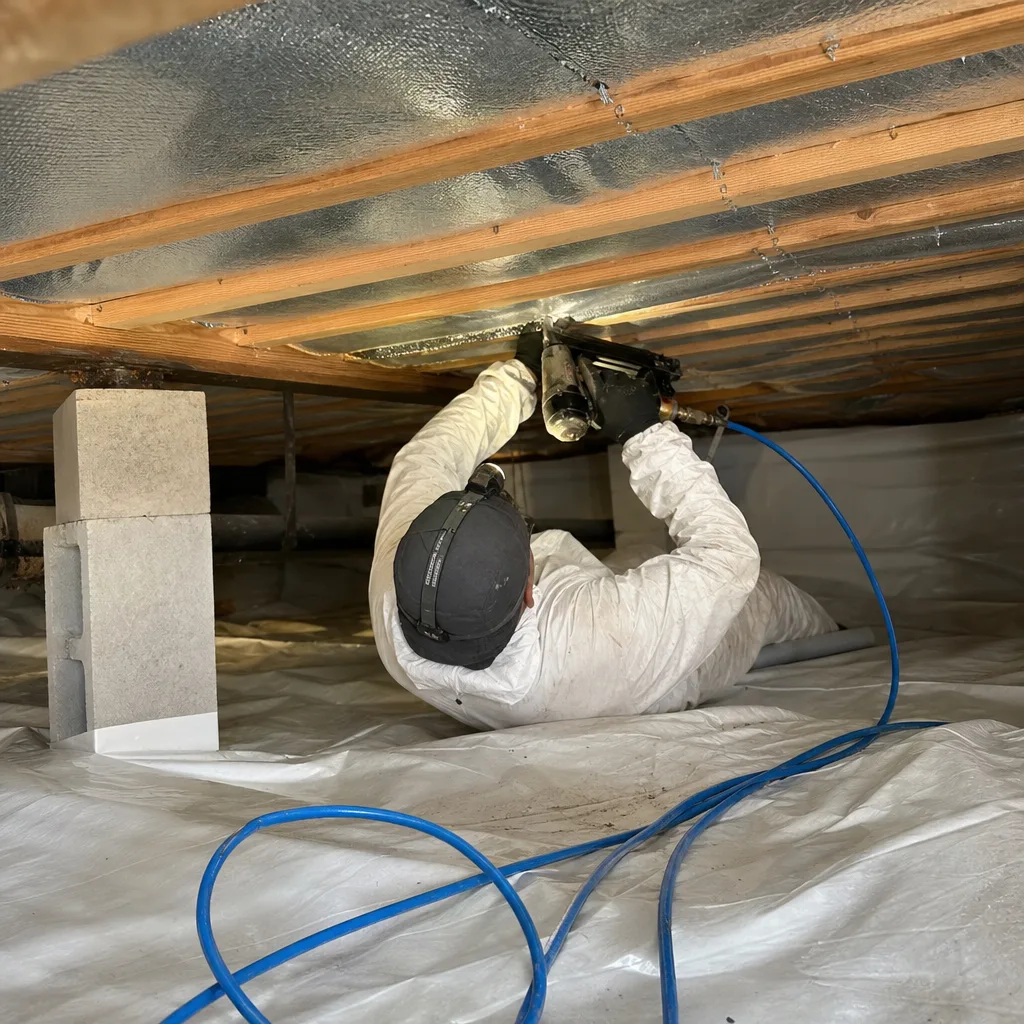
A blown-in insulation maintenance schedule isn’t really about the insulation. It’s about the air barrier and the attic conditions that decide whether your fill keeps performing at the R-value you paid for. Check at Year 1 for settlement, at Year 3 and 5 for moisture and displaced fill, and after every attic event. Measure depth at three spots, look for dark staining and attic-vented exhaust ducts, and keep your install receipt, blower-door reading, and dated depth photo. In North Las Vegas, treat the summer heat and any HVAC change as triggers. Seal first, then insulate, and document the result.
If you want a documented baseline instead of a guess, get a written price before any work starts. Call (833) 630-4008 for a free estimate.
Written by the team at Envelope Insulation North Las Vegas.