
Last updated November 18, 2026
Insulation Permits, Codes & Inspections in NV: What You Need to Know
Spray foam applied to the underside of roof decking – a common North Las Vegas “hot roof” installation – converts an attic from vented to unvented and triggers a mechanical ventilation requirement under the 2018 International Residential Code as adopted by Nevada. The foam contractor who doesn’t mention this isn’t cutting corners; they may simply not know. That gap between what the code requires and what gets installed is where homeowners get hurt: coverage denied after a claim, a correction order at sale, a rebate clawed back. This guide maps exactly when Clark County requires a permit for insulation work, what the inspection actually checks, how Nevada’s code adoption sets your R-values, and how to document work that was done without a permit.
Quick Answer
In Nevada, blown-in attic insulation usually needs a permit when you’re adding or replacing insulation as part of a covered alteration or new construction, while spray foam almost always triggers plan review because it changes how the attic vents and can affect combustion air. Clark County inspections verify R-values against Climate Zone 3B minimums, confirm air sealing and vent clearance, and check that the installed product matches the submitted scope. Unpermitted insulation can void insurance coverage and stall a home sale in North Las Vegas, so the paperwork matters as much as the install.
Table of Contents
- When does insulation work need a permit in Clark County?
- What Nevada’s 2018 IRC adoption means for R-values in Climate Zone 3B
- Why spray foam always triggers review
- New construction vs. retrofit: what the inspector checks
- How to document permitted-but-uninspected work
- NV Energy rebates and the permit cross-reference
- Common mistakes to avoid
- Frequently asked questions
When does insulation work need a permit in Clark County?
The short answer most homeowners get is wrong. Blown-in attic insulation isn’t automatically permit-free just because no walls come down. The Clark County Building Department looks at scope, not square footage. Here’s how the threshold actually breaks down in practice:
- Adding loose-fill over existing insulation in a single-family attic – often no permit required if you’re not altering the structure, moving venting, or touching combustion appliances. Ask before you assume. Requirements shift, and the answer depends on what else the job touches.
- Removing and replacing insulation as part of a covered alteration (a reroof, a remodel, a mechanical change) – permit required, because the insulation is now part of a permitted scope.
- Spray foam of any kind – plan review, essentially always. Foam changes the building envelope’s air and vapor behavior, and closed-cell foam against a roof deck can change venting and combustion air. See Spray Foam Insulation in North Las Vegas for the full picture.
- Crawl space encapsulation and vapor barriers – usually permitted when it involves grading, drainage change, or mechanical work. See Crawl Space Encapsulation & Vapor Barrier in North Las Vegas.
- Wall insulation added during a remodel – permitted as part of the remodel scope, never as a standalone permit.
In our experience across North Las Vegas, the permit question comes up most often in homes built between 2000 and 2010 in the Aliante and Eldorado corridors, where original attic insulation has flattened out and homeowners are adding loose-fill. Those are the easy cases. The hard cases are the ones where someone sealed bypasses and foamed a roof deck without telling anyone – and we covered why that matters below.
What Nevada’s 2018 IRC adoption means for R-values in Climate Zone 3B
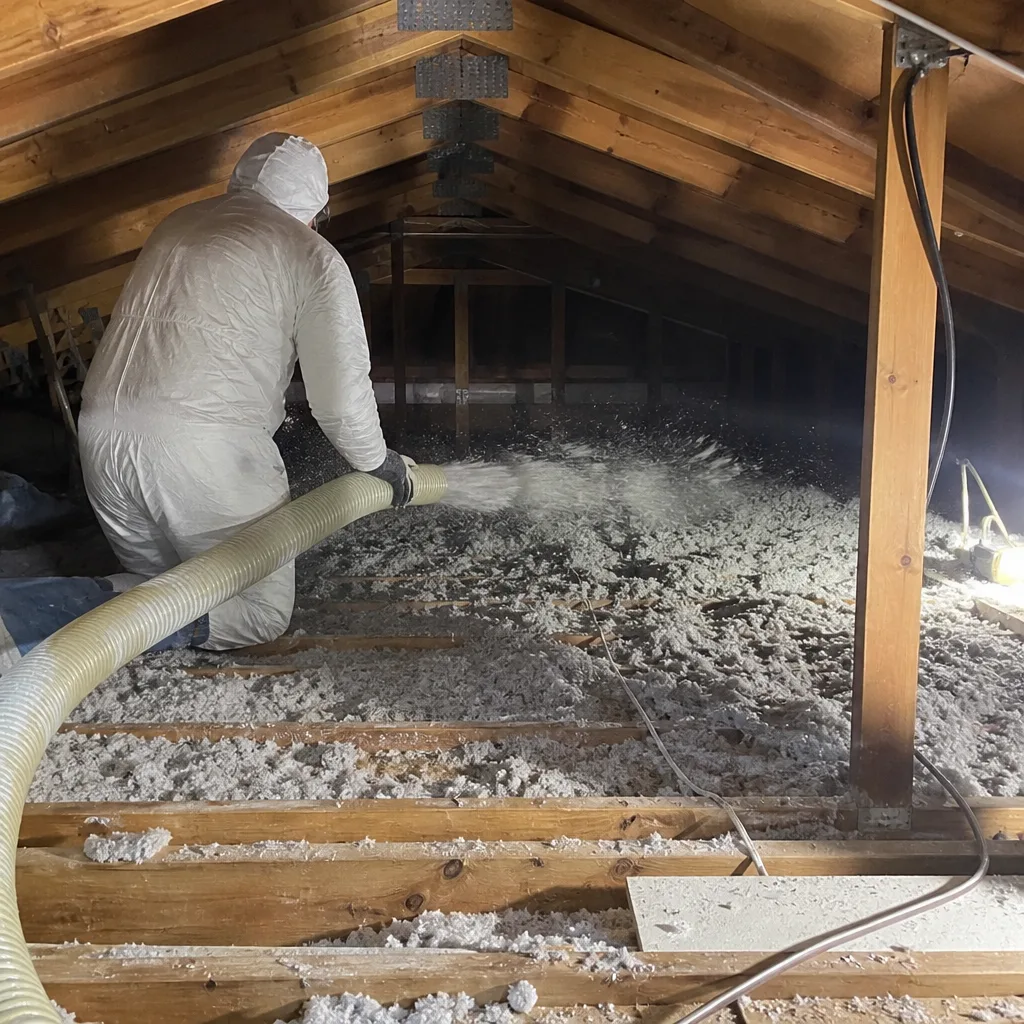
Nevada adopted the 2018 International Residential Code, and that adoption sets minimum R-values by climate zone. North Las Vegas sits in Climate Zone 3B – hot-dry. That’s a specific designation, not a generic “hot climate” label, and it carries specific ceiling, wall, and floor minimums that your insulation contractor should be able to state without checking a table.
The 2018 IRC Table N1102.1.2 minimums that apply to a Zone 3B home:
- Ceilings: R-38 minimum, with R-49 commonly specified for above-attic installations in practice.
- Wood-frame walls: R-13 plus R-5 continuous insulation, or R-20 in the cavity depending on the assembly.
- Floors over unconditioned space: R-19 minimum.
- Ducts in attics: R-8 minimum.
Those are code floors, not performance targets. A North Las Vegas attic that hits R-38 but has an unsealed top plate and eight unsealed can lights is still leaking conditioned air at a rate no amount of loose-fill fixes. That’s why we seal first – top plates, penetrations, can lights – and insulate second. Blowing loose-fill over an unsealed attic floor in a Zone 3B home hides the air leak rather than fixing it, and the inspector can’t see what’s under the insulation any more than you can.
For the full attic picture in this climate, see Attic Insulation in North Las Vegas.
Why spray foam always triggers review
This is the part of the guide that matters most, and it’s the part most homeowners learn last. Spray foam applied to the underside of roof decking – the “hot roof” or unvented attic assembly – changes how the attic vents. Under the 2018 IRC as adopted by Nevada, an unvented attic assembly has specific requirements: the foam has to meet ignition-barrier and thermal-barrier provisions (typically a 15-minute thermal barrier unless a specific exception applies), and the assembly has to account for moisture and combustion air. When the foam is closed-cell and applied thick enough, the attic no longer needs soffit and ridge venting – but the rest of the house has to be evaluated for combustion air if there’s a gas furnace or water heater up there.
What does that mean for you, practically? A foam contractor who foams a North Las Vegas roof deck and says “you’re all set” without asking about the furnace is either cutting a corner or working from a playbook they haven’t updated. The permit inspection is where the gap gets caught – if there’s a permit. Without one, the gap sits there until a home inspector or an insurance adjuster finds it.
Closed-cell products like Icynene and Demilec are common in this market and both carry the thermal-barrier question. The brand choice is less important than whether the installer walked the venting and combustion-air question before pulling a trigger. For more on the installation side, our Envelope Insulation North Las Vegas home page lays out the envelope service line and the order of operations.
New construction vs. retrofit: what the inspector checks
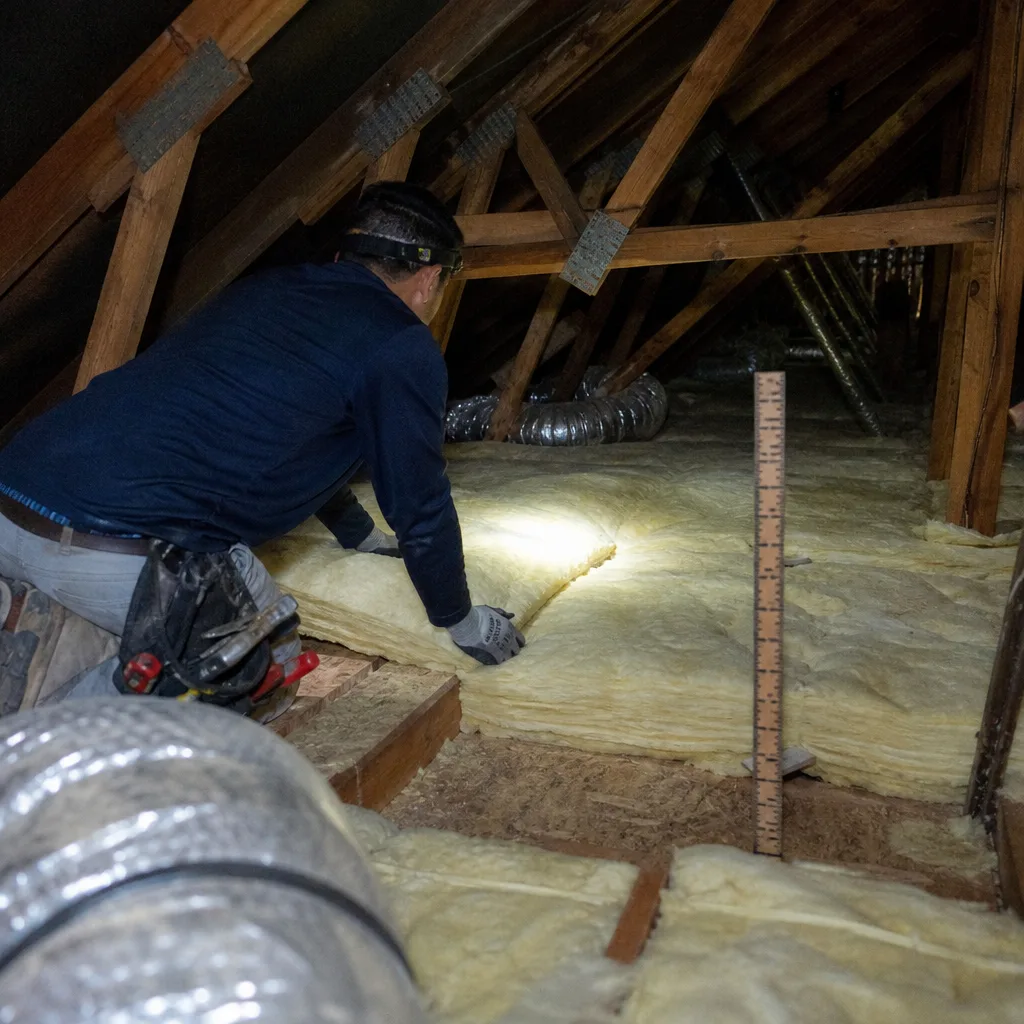
The inspection sequence for insulation work is different depending on whether the home is new construction or a retrofit, and the documentation the inspector wants on-site is different too. This is where a lot of well-intentioned jobs fail – not on the install, but on the paperwork.
New construction sequence
- Rough-in inspection before insulation – framing, electrical, plumbing, and mechanical are checked before any insulation goes in.
- Insulation inspection – the inspector confirms R-values against the submitted plans and Climate Zone 3B minimums, checks that insulation is installed to full thickness without voids, checks attic vent clearance at the eaves, and confirms air sealing at top plates, penetrations, and can lights.
- Blower-door and duct-leakage testing – in many jurisdictions the energy code compliance path requires a blower-door test – a pressurization measurement that shows, in one number, how much air the building envelope is losing – and a duct-leakage test. The result has to meet the target written into the permit.
Retrofit sequence
- Scope review – the inspector needs a written scope that names the product, the R-value, and the areas covered. A one-line invoice is not a scope.
- Installation inspection – what gets physically checked: final R-value at depth, coverage across the full attic floor, no insulation blocking eave vents, no insulation in contact with a heat source, and, if foam, the thermal barrier and venting change.
- Documentation on-site – manufacturer spec sheets, the permit card, and photos of the pre-insulation sealing work. The inspector can’t verify air sealing once loose-fill is over it. Photos are the only way to prove the work was done in the right order.
That last point is why we publish before-and-after blower-door readings on every applicable job and hand over a Documented Photo Record on every visit. The record isn’t a marketing nicety; it’s the artifact that answers the inspector’s question, the buyer’s question, and the adjuster’s question three years later.
How to document permitted-but-uninspected work
This is the scenario we hear most often in North Las Vegas: a permit was pulled by a prior contractor, the work was done, but the inspection never happened – the contractor moved on, the homeowner didn’t know to schedule it, the card went unsigned. Now the home is going on the market and the title company wants a finaled permit.
Here’s the playbook, in order:
- Pull the permit history first. The Clark County Building Department can give you the permit number, the scope as filed, and the inspection status. Do this before you call anyone.
- Request a re-inspection under the existing permit. Most permits remain open and can be revived. The inspector will come out and check the work against the filed scope. This is the cheapest and fastest path.
- If the work doesn’t match the scope – the wrong R-value went in, the foam isn’t where the plan put it – you’ll be given a correction notice. That’s not a death sentence. It’s a written list of what has to change.
- If the permit is expired and can’t be revived, some jurisdictions allow an as-built review or a new permit covering the existing work. This is where a contractor who has walked the process helps, because the documentation you submit is the difference between a correction order and a sign-off.
- Disclose on sale either way. A disclosure that says “insulation installed 2021, permit #X, finaled 2024” is a clean disclosure. Silence about unpermitted work is where lawsuits come from.
One specific warning: don’t try to close an open permit by simply pulling a new one over the top, and don’t let a contractor tell you the old permit “doesn’t matter.” Open permits follow the property, and the next buyer’s lender will find them.
NV Energy rebates and the permit cross-reference
NV Energy’s residential insulation rebate program requires code-compliant installation. Read that again, because the practical effect is this: a failed permit inspection can void a submitted rebate claim, and an unpermitted installation can void the rebate retroactively. The rebate application asks for the permit number and the contractor’s documentation. If the inspection doesn’t final, the rebate file is incomplete.
What the rebate also requires, in practice, is a documented improvement – not just “we added insulation.” That means an R-value before and an R-value after, and in many programs a blower-door reading. A homeowner who calls us about the rebate is often calling because the first contractor’s numbers didn’t hold up. This is one place where a Free Second Opinion on any written estimate pays for itself: bring us the quote and the rebate paperwork, and we’ll read both with you and tell you where the documentation is thin.
In our experience, the North Las Vegas jobs that move cleanly through the rebate process have three things in common: a sealed-then-insulated order of operations, photo documentation of the sealing, and blower-door numbers taken before and after. Materials matter too – Owens Corning, GreenFiber, and Knauf all produce products that meet code, and no one brand is required. What’s required is that the installed product matches the submitted scope.
Common Mistakes to Avoid
- Assuming no permit means no paperwork. Even when a permit isn’t required, the written scope, product data sheets, and photos are what you’ll need at sale. Skipping them is the mistake, not the missing permit.
- Foaming a North Las Vegas roof deck without the venting review. Converting a vented attic to unvented is legal and often smart, but only when the combustion-air and thermal-barrier questions are answered in writing first.
- Insulating before sealing. Blowing loose-fill over an unsealed top plate hides the air leak and makes the inspector’s job impossible. Sealed first, then insulated – in that order.
- Hitting the code R-value but not the performance target. R-38 in the attic with a thermal bypass at every can light reads well on a permit and poorly on a blower door.
- Submitting a rebate before the inspection finals. NV Energy’s program wants code-compliant installation, and an open permit is a red flag on the application.
- Letting an open permit sit through a home sale. Open permits are found by title and lender searches, and a correction order at that stage is the most expensive version of the problem.
- Accepting a one-line invoice as a scope. A written scope names the product, the R-value by zone, and the areas covered. If it doesn’t, you don’t have one.
When to Call a Professional
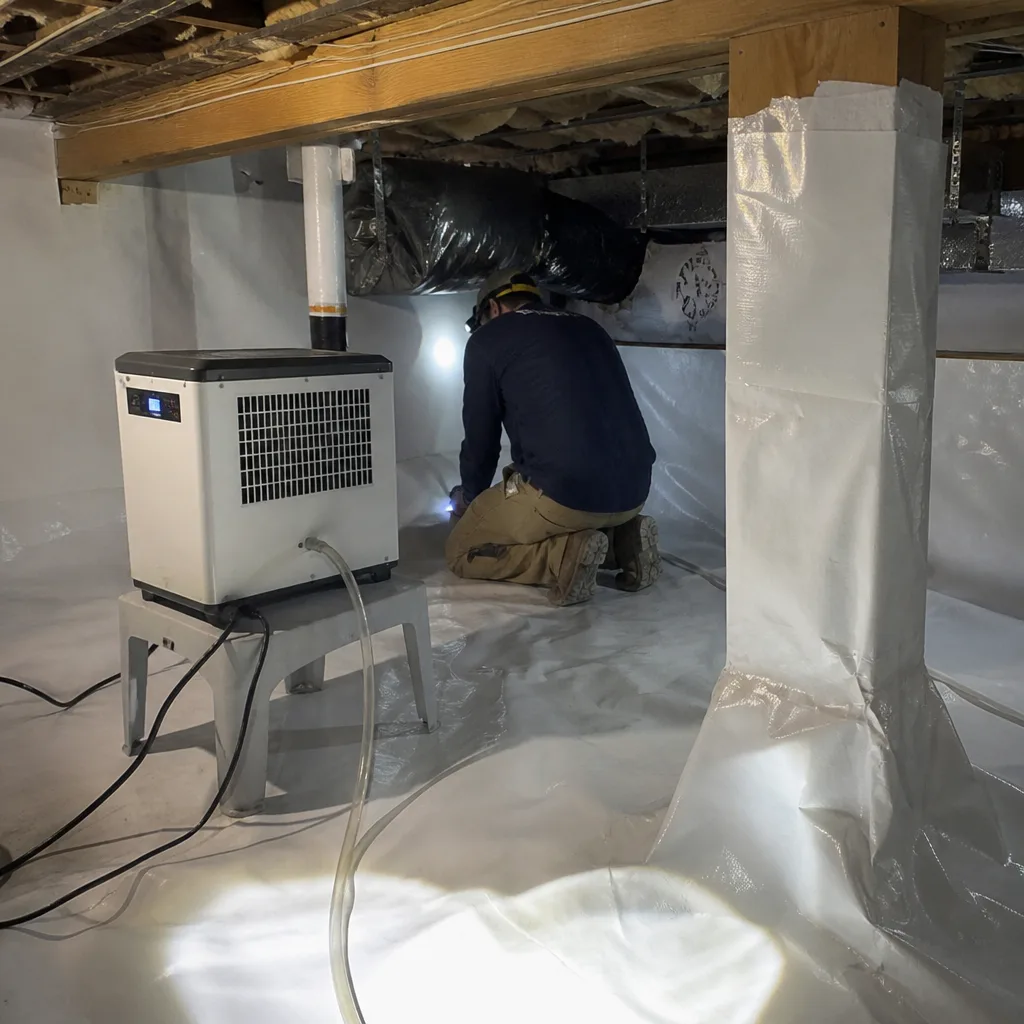
Call a professional when the scope involves spray foam, an unvented attic conversion, combustion appliances in the attic, a crawl space with moisture issues, or any plan to add insulation as part of a remodel. Call also when you’re buying or selling a North Las Vegas home with unpermitted insulation in the record, or when a prior contractor left an open permit behind. The correction order is the expensive version of the conversation you could be having now.
Envelope Insulation North Las Vegas offers free estimates in North Las Vegas – call (833) 630-4008. Every job begins with a written price before any work starts, ends with a Documented Photo Record, and is backed by the 365-Day Done Right Promise. Our technicians have up to 10 years of experience, and a live person answers the phone.
Frequently Asked Questions
It depends on scope. Adding loose-fill over existing insulation without structural or venting changes often doesn’t require a permit, but any spray foam application, any insulation installed as part of a covered remodel, and any change to attic venting almost always does. Call the Clark County Building Department with the address and the scope before you assume, and get the answer in writing.
In practice, yes – spray foam triggers plan review because it changes how the building envelope vents and can affect combustion air. Nevada’s adoption of the 2018 IRC sets the requirements for unvented attic assemblies, and the inspector will want to see the thermal barrier and the venting change addressed in the submitted scope. Call (833) 630-4008 for a free estimate and we’ll walk your specific attic through the review.
North Las Vegas sits in Climate Zone 3B, which sets minimums under the 2018 IRC of roughly R-38 in the ceiling, R-13 plus R-5 continuous on wood-frame walls, and R-19 in floors over unconditioned space. Those are code floors, not performance targets, and a well-sealed attic at R-38 will outperform an unsealed attic at R-49. Call (833) 630-4008 for an exact quote on your home.
It can. Insurers care about whether the work was done to code and whether the assembly meets current requirements – especially with spray foam, where an unvented assembly done wrong can trap moisture. An adjuster who finds unpermitted foam on a roof deck has grounds to deny a related claim. Documentation is the defense: photos, written scope, and a finaled permit.
Yes, but disclose it. Pull the permit history, request a re-inspection under the existing permit if one was pulled, and either final the permit or document the correction. A clean disclosure with a permit number and status is a much better position than silence. In North Las Vegas, open permits are found during title search, and a correction order at that stage delays closings.
It can void the claim. NV Energy’s residential insulation rebate requires code-compliant installation and asks for permit documentation, so an open permit or a correction notice makes the rebate file incomplete. Call (833) 630-4008 – we’ll read your rebate paperwork and your written estimate together and tell you where the documentation stands before you submit.
The Bottom Line
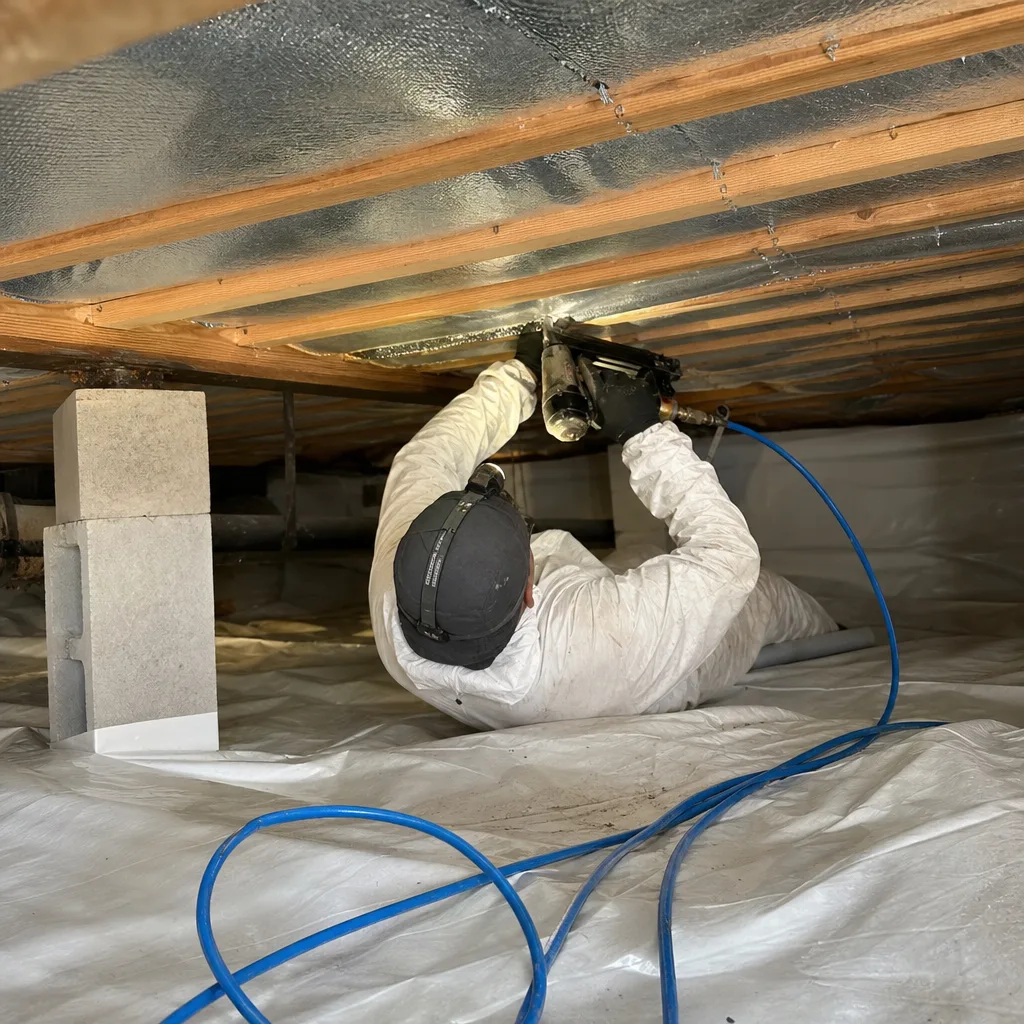
Insulation permits in Nevada aren’t a formality, and the homeowners who get hurt are the ones who assumed they didn’t apply. Blown-in attic work sometimes escapes the permit requirement; spray foam essentially never does; and the 2018 IRC adoption sets specific Climate Zone 3B minimums that a North Las Vegas inspector will check. The three things that make a job defensible years later are a written scope, photo documentation of the sealing before the insulation, and a finaled permit. Sealed first, then insulated. Have it in writing.
Written by the team at Envelope Insulation North Las Vegas.