
Last updated November 18, 2026
Seasonal Insulation Care for North Las Vegas: Year-Round Homeowner’s Guide
In July, a North Las Vegas attic with inadequate soffit-to-ridge airflow can reach 160°F at the roof deck. That’s hot enough to break down the binder holding fiberglass batts together and to push loose-fill insulation toward the cooler eave edge, away from the ridge where the heat load is highest. Most homeowners never see it happen. They just notice the upstairs bedroom that won’t cool down. This guide walks through the two thermal stress seasons that actually shape a North Las Vegas home – the punishing summer and the short, condensation-prone winter – and gives you a separate checklist for each, with the numbers, timings, and visible signs to look for.
Quick Answer
North Las Vegas insulation needs two distinct care windows each year: an April pre-summer check (baffles, soffit vents, duct boots) and an October pre-winter check (attic hatch weatherstripping, exhaust termination, roof-deck staining). Skipping either window leaves your attic vulnerable to a specific failure mode – summer binder degradation and insulation displacement, or winter dew-point condensation at air-leaky top plates. One dated photo set and a depth measurement at each window is enough documentation to catch most problems before they cost you a re-insulation.
Table of Contents
- Why North Las Vegas Has Two Insulation Seasons, Not One
- The April Pre-Summer Checklist
- The Mid-Summer Thermal Bypass Test
- The October Pre-Winter Checklist
- Why 25°F Winter Nights Create a Dew-Point Problem
- The Annual Documentation Habit
- Sealed First, Then Insulated: The Order That Matters
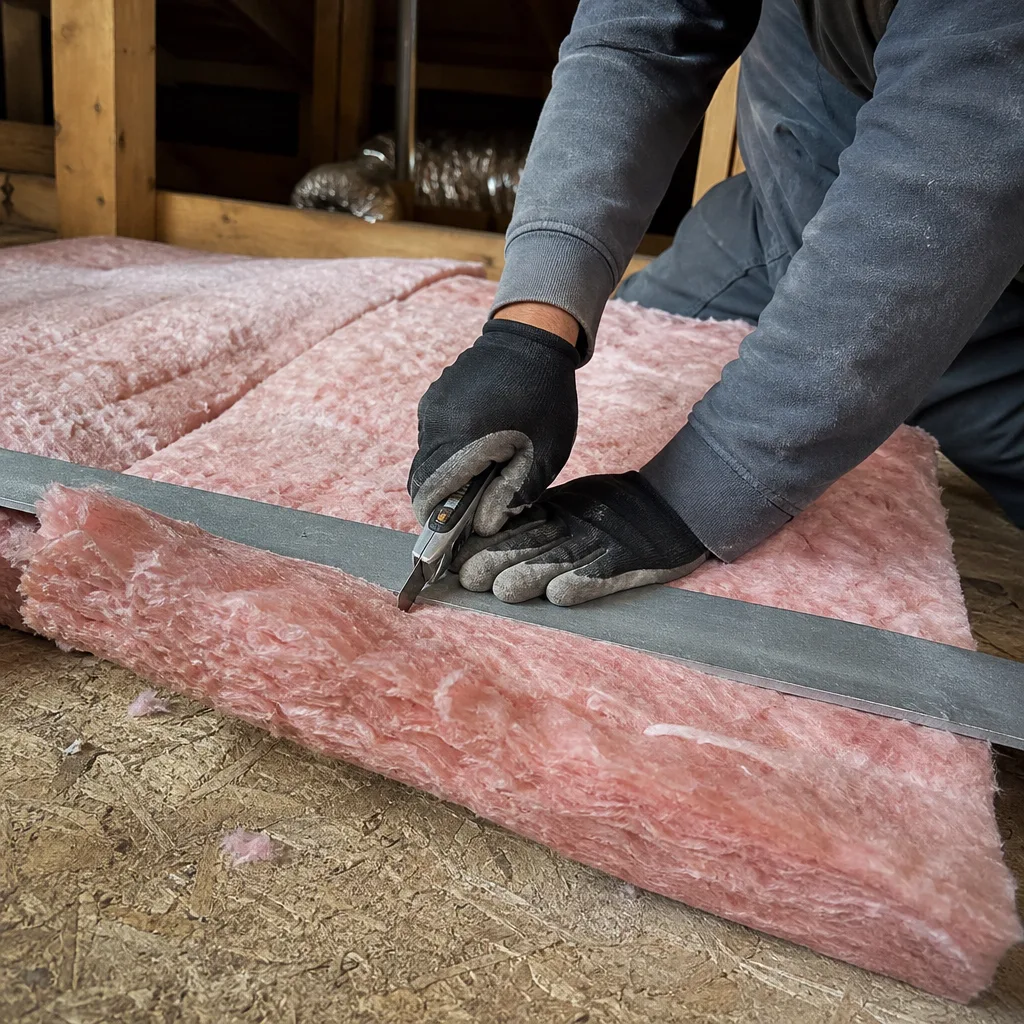
Why North Las Vegas Has Two Insulation Seasons, Not One
Most insulation advice you’ll read online was written for a climate that has one dominant stress – either a cold winter or a hot summer. North Las Vegas has both, and they’re roughly equal in how they attack your building envelope. Summer pushes the attic into the 140 – 160°F range and drives radiant heat down through the ceiling assembly. Winter drops to 20 – 30°F on clear nights and pulls moisture-laden interior air up through every unsealed top plate and can light, where it can condense on a cold roof deck.
Those two conditions demand opposite vigilance. In summer, you’re watching for heat gain and material degradation. In winter, you’re watching for moisture. A product that performs brilliantly in one season can fail at the other if the air sealing underneath it is wrong. That’s the entire reason we treat these as separate diagnostic windows on every job we do under The Haven Standard.
Homes built between 2015 and 2025 in the master-planned communities around North Las Vegas – the newer tracts off the 215 and the 5-year-old construction in the Aliante and Tule Springs areas – usually start with code-minimum R-values and builder-grade air sealing. That’s not a defect. It’s just a baseline that reveals its weak points in year two or three, once the framing has settled and the caulk lines have started to fail. Knowing which season exposes which weakness is the whole point of a two-window care routine.
If you want the deeper product-level comparison first, our attic insulation in North Las Vegas guide covers the material choices. This page is about what you do with the attic you already have.
The April Pre-Summer Checklist
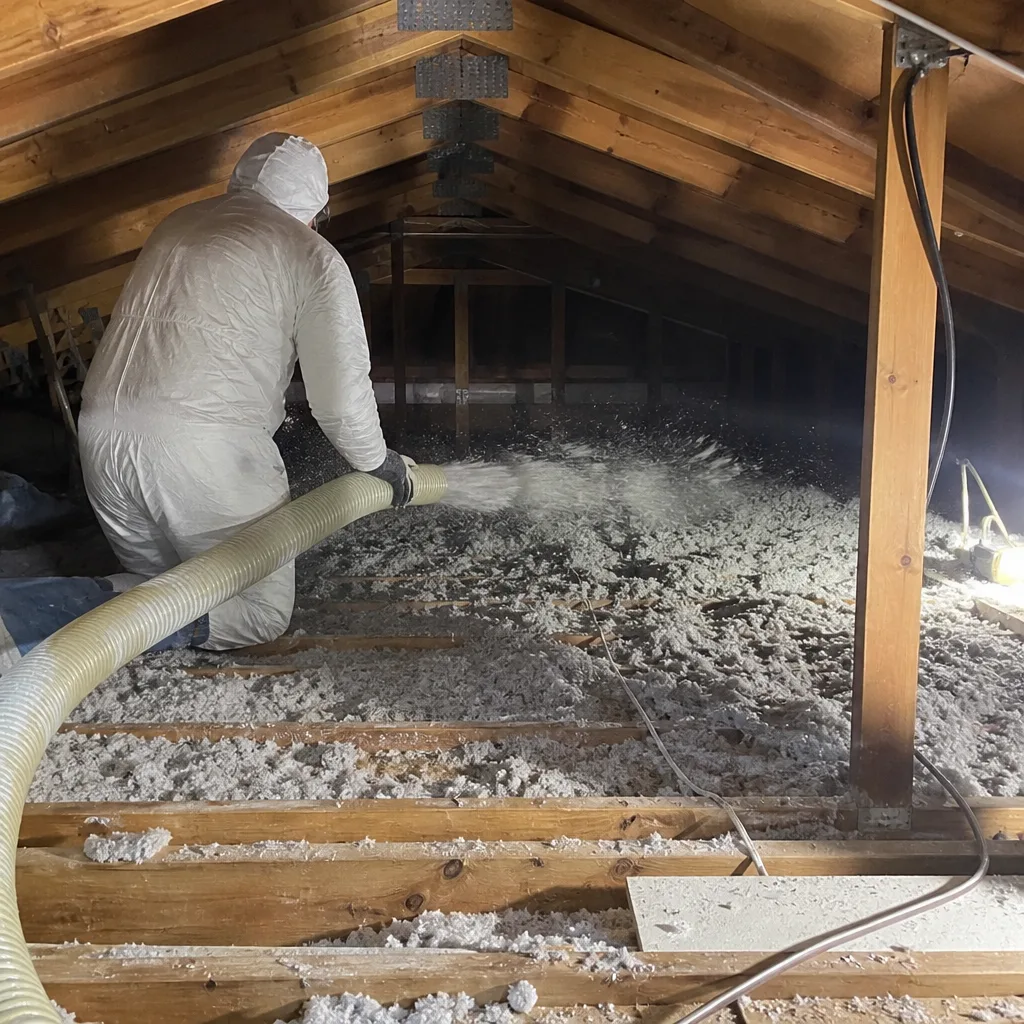
April is the last comfortable month to be in a North Las Vegas attic, and it’s also the month when the problems that will cost you money in July are still cheap to fix. Run this list before the first 100°F day. Fifteen minutes with a flashlight and a phone camera is enough to catch most of them.
- Verify baffle continuity at the eaves. Baffles (the rigid channels that hold insulation away from the soffit vents) matter only if they run uninterrupted from the vent opening up to the ridge. A single gap in the run means the soffit vent is effectively dead, which starves the whole roof of intake air.
- Check that blown insulation hasn’t blocked the soffit vents. Loose-fill migrates. Wind washing from a ridge vent or a sloppy top-off by a previous crew can pile insulation against the eave and plug the vent slots. Look along the eave for any spot where the loose-fill has drifted up against the baffle lip.
- Confirm HVAC duct boots are still sealed at the drywall plane. This is the one most homeowners miss. A duct boot that’s 1/8″ off the drywall pulls conditioned air straight into the attic all summer. Run a hand along each boot and look for gaps, cracked mastic, or a boot that’s pulled loose from the ceiling.
- Measure insulation depth at three points. One measurement near the hatch is not a depth reading. Take one at the center of the attic and two more at opposite corners, mark the date, and photograph the tape measure. That’s your annual baseline.
- Look for nesting material or droppings in the corners. Rodent activity in spring is the leading cause of compressed and displaced insulation in the newer North Las Vegas tracts, where a walk-in attic space with open soffits is an easy entry point.
If you find loose-fill that’s been displaced or compressed, don’t just top it off. Under The Haven Standard, we won’t blow new insulation over an unsealed or contaminated attic floor – the air leaks need to be sealed first, or the new product inherits every leak the old one had.
The Mid-Summer Thermal Bypass Test
Here’s a test you can do from your living room in five minutes. Set your thermostat to a fixed setpoint and let the system run for a full cycle. Then point an inexpensive infrared thermometer (or a meat thermometer laid on the ceiling, in a pinch) at the ceiling of your hottest room. If any interior ceiling zone reads more than 3°F above the thermostat setpoint while the equipment is running, you’re looking at a thermal bypass – not an HVAC problem.
That distinction is where a lot of North Las Vegas homeowners waste money. They call an HVAC company, pay for a tune-up, and get told the system is fine. The equipment really is fine. What’s happening is that a bypass – a continuous channel of open framing between the attic and your conditioned ceiling – is pumping 140°F attic air directly into the living space. No amount of refrigeration capacity can outrun it.
The most common bypass locations we find in North Las Vegas homes:
- Can lights set into the ceiling with no air-tight housing and no dam around them
- Top plates that meet the gable wall without a bead of sealant
- Recessed chase ways for plumbing stacks and furnace flues
- Attic hatches with no weatherstripping and a 1/4″ gap all the way around
- Dropped soffits over kitchen and bathroom areas, open to the attic plenum
If the 3°F test shows a bypass, the fix is air sealing, not more insulation. We’ve seen homes in North Las Vegas where adding R-19 of new blown-in made the bypass worse – because the added product just trapped the leaking conditioned air in a hotter layer. Sealed first, insulated second. Always in that order. Spray foam at the top plate and around the penetration is the right material for those leaks; our spray foam insulation in North Las Vegas page explains why that’s different from blanket-batt air sealing.
The October Pre-Winter Checklist
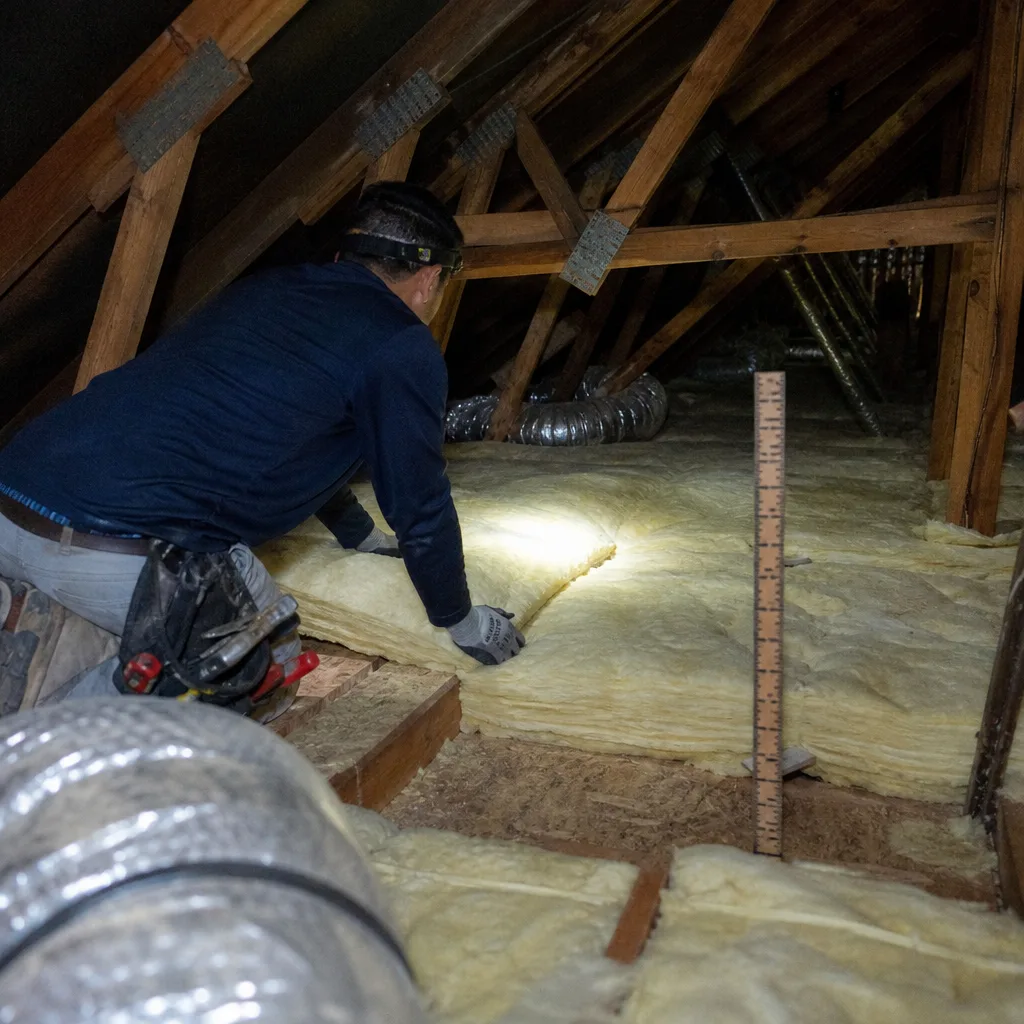
October in North Las Vegas is when the winter dew-point problem gets set up – quietly, and without any obvious symptom. Run this list before the first 40°F night.
- Inspect the attic hatch weatherstripping. Look at the gasket around the whole perimeter. If it’s flattened, missing a section, or has a visible gap with the attic lit up behind it, that hatch is leaking conditioned air into the attic every hour you run the heat or the AC.
- Confirm bathroom exhaust fans terminate outside the attic. A fan duct that dumps warm, humid air into the attic instead of through the roof is the single most reliable way to create a winter condensation problem in a North Las Vegas home. Trace each duct downstream until you see the exterior termination.
- Note any moisture staining on the north-facing roof deck. Look at the underside of the roof sheathing on the north slope specifically. Dark staining, white frost-like residue, or sagging plywood all point to condensation, and the north slope shows it first because it stays coldest.
- Check the depth of any pre-existing condensation before winter. If you saw staining last winter and didn’t act, winter number two will accelerate it. Plywood delamination in the desert is uncommon – but moisture-driven delamination over a leaking top plate really does happen, and it’s harder to catch once it’s progressed.
- Re-confirm soffit baffles after any roof or exterior work. A roofer who did fascia work in August may have disturbed a baffle without knowing it. It’s cheap to verify and expensive to ignore.
Attic hatch weatherstripping is an easy one to spot from below: on a sunny October afternoon, go up into the attic with the lights off and shut the hatch. If you see a bright ring around the opening, that’s the extent of the leak. Replace the gasket or add a rigid cover with foam edge.
Why 25°F Winter Nights Create a Dew-Point Problem
Here’s the physics that makes a North Las Vegas winter so different from what a homeowner coming from a wet climate expects. Interior air in a heated North Las Vegas home in January is usually 68 – 72°F with about 35 – 45% relative humidity. A clear December night drops the roof deck below freezing. Warm, moist air rising through a leaky top plate or a can light hits that cold deck, and its dew point is right there at the sheathing surface.
The result is condensation, and it happens every single winter. The visible sign by February is a pattern of staining – small dark spots or a diffuse brownish shadow on the underside of the roof sheathing, usually starting on the north slope and creeping south. It’s not a roof leak. The roof is fine. The attic is breathing conditioned air out through the top plates and can lights and letting it condense at the coldest surface it can find.
In our experience, homes most prone to this in North Las Vegas:
- Homes with an open walk-in attic and no sealed hatch
- Homes where a bathroom exhaust duct dumps into the attic instead of terminating outside
- Homes with a kitchen range hood that exhausts into the attic space
- Homes with no top-plate sealant at the gable end of a vaulted or cathedral ceiling
You cannot fix winter condensation with more insulation. Fiberglass doesn’t stop air movement – it only slows conductive heat. The moisture is riding on air, not on heat. Sealed first, insulated second. If a February walk-up to your attic shows staining on the north deck, the fix is air sealing at the top plates, the can lights, the hatch, and every penetration in the ceiling plane. Icynene and Demilec spray foam at those boundaries will seal the air path; batt or loose-fill alone will not.
The Annual Documentation Habit
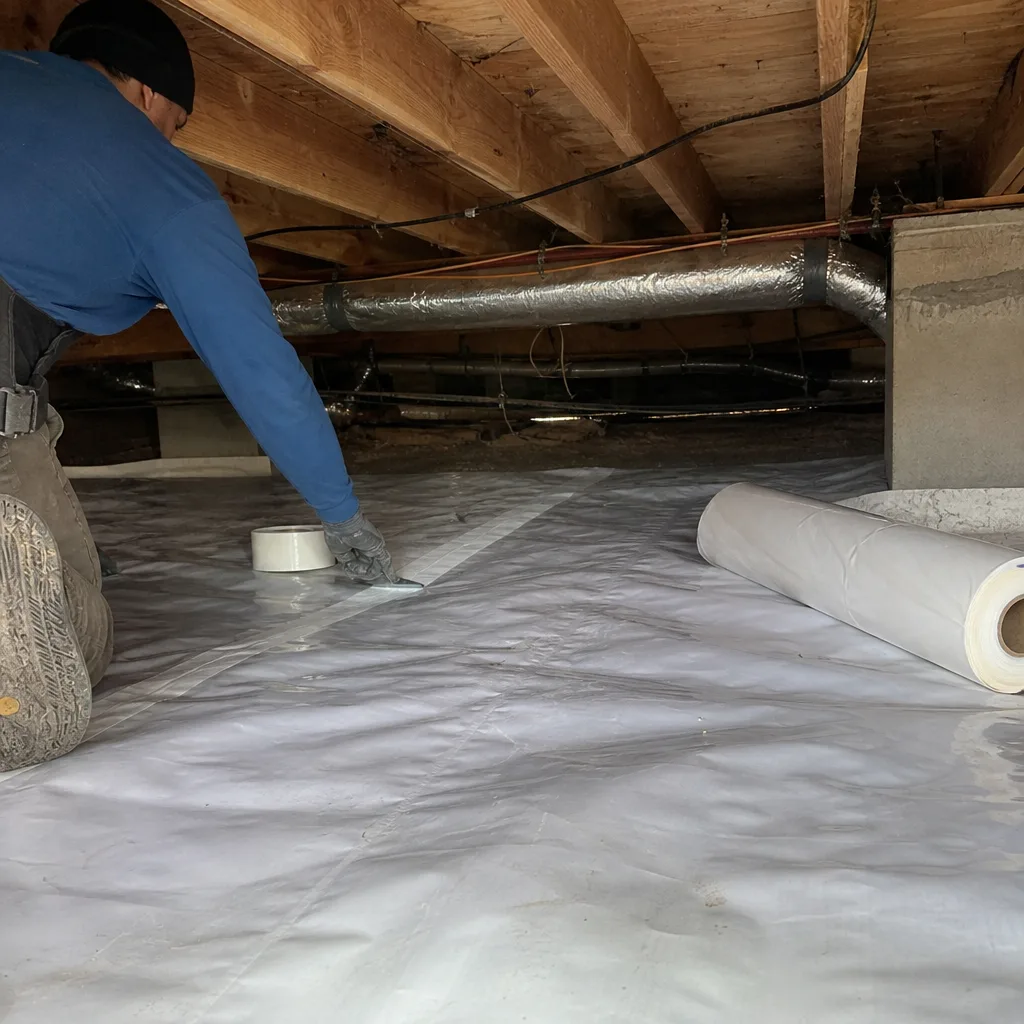
The single best thing you can do for your North Las Vegas attic is build a dated record of it and keep that record from year to year. The reason is simple: attic problems are almost never visible in a single inspection. They’re visible as change over time. Once you have two years of photos, you can see whether your insulation has settled, whether a stain has grown, and whether a soffit vent is quietly dead.
Build the record with three things:
- One dated photo set of insulation depth. Tape measure at the surface of the loose-fill, three locations, one date stamp. Five minutes. Keep the photos in the same folder as the paperwork from installation.
- One exterior infrared scan of your ceiling plane if it’s in the budget. A $25 appliance won’t do it, but a $400 infrared camera from any big-box store will. On a cold January night with the heat running, an exterior scan will show warm bands where conditioned air is escaping through the attic floor. That’s not a diagnostic you get from a paper checklist.
- One written record of any change you made or work that was done. New can lights, a roof repair, a new bathroom fan – all of it. If you had work done by a contractor, keep the written scope and the dated completion record in the same folder as the photos. Under Haven Standard Clause 1, we will not start a job without a written price, written scope and written warranty in the customer’s hands. Your own annual record needs the same discipline.
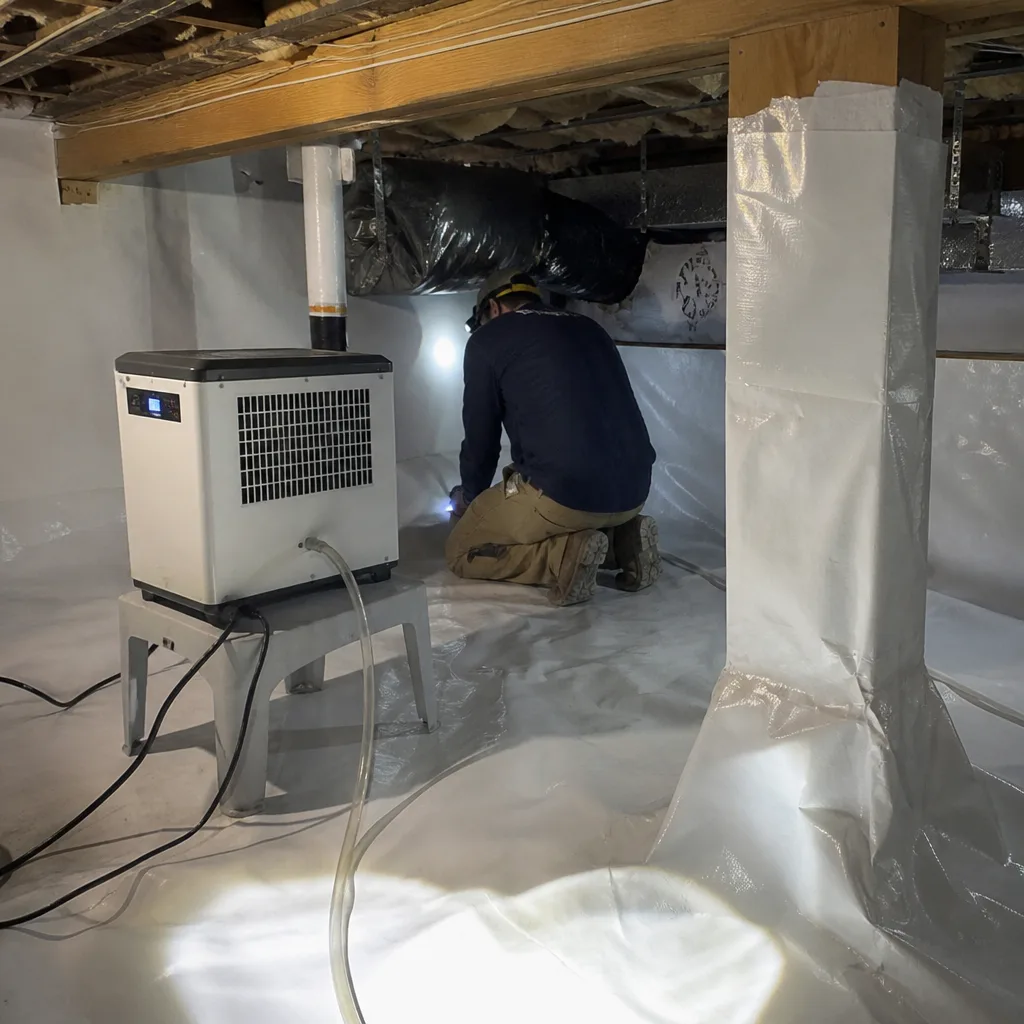
Our crawl space encapsulation and vapor barrier in North Las Vegas page covers the same habit for the crawl space below the house – and it’s the same habit that saves you money: dated photos, measured numbers, filed with the job record.
Sealed First, Then Insulated: The Order That Matters
If you take one idea from this guide, take this one. Every insulation failure we look at in North Las Vegas has two possible causes: the material or the air sealing underneath it. In about eight of ten cases, it’s the air sealing. Insulation slows heat movement. It does not stop air movement. An attic floor at R-49 with a 3/8″ gap at the top plate is still leaking 140°F attic air all summer and dumping moist interior air onto the cold roof deck all winter.
That’s why every Envelope Insulation Co. job starts with air sealing – of top plates, can lights, and every penetration through the ceiling plane – before any insulation is added. And it’s why we publish before-and-after blower-door numbers on every applicable job. A blower-door test is a pressurization reading that shows, in a single figure, how much air your building envelope is losing. A reading of 4,200 CFM50 before sealing and 2,100 after is a documented performance change. A reading of 4,200 before and 4,100 after is a job that didn’t actually do what it claimed. You should see that number on your own house, in writing, before you sign anything at completion.
If you’re comparing written estimates from other contractors, we’ll read yours with you. Our Envelope Insulation North Las Vegas home page has the full scope of what we do – the envelope service line, the documentation standards, the material brands we source from. Bring a competing quote and we’ll go line by line with it. That’s a Free Second Opinion on any written estimate, and it’s a standing offer, not an upsell.
Common Mistakes to Avoid
- Topping off loose-fill without air sealing first. Adding a layer of new insulation over an unsealed attic floor doesn’t fix the leak – it just buys you a more expensive attic with the same leak. The leak has to be sealed first, every time.
- Trusting a single depth reading near the hatch. That’s usually the spot where the last contractor was standing. Take readings at opposite corners of the attic at minimum, and record them with a date.
- Skipping the pre-summer check because “we just had it done.” Fiberglass in a North Las Vegas attic can lose binder or settle in a single summer. A 15-minute April check costs nothing.
- Mistaking a thermal bypass for an HVAC problem. If one ceiling zone is more than 3°F above the thermostat setpoint with the equipment running, you’re chasing a leak in the building envelope, not a refrigerant charge.
- Letting a bathroom exhaust duct dump into the attic. This is the most common serious mistake we see in North Las Vegas homes. Warm moist air on a 25°F December roof deck means condensation; condensation means staining; staining means structural damage if it goes on long enough.
- Using bathroom fans with no backdraft damper or a fan rated well below the duct length. A fan that can’t move enough air to overcome the duct run pushes moisture into the attic anyway.
- Hiring on an unwritten verbal estimate. Insulation work spans multiple inspections, a crew, and a warranty period. Anything short of a written price, written scope, and written warranty before work starts leaves you with no record to enforce.
When to Call a Professional
If you find staining on the roof deck that’s new since last winter, call. If your attic has insulation that’s been compressed or displaced – especially by rodents – call. If a mid-summer thermal bypass test shows more than 3°F of ceiling-to-setpoint differential with the equipment running, call. If you’re considering a top-off but aren’t sure whether the attic floor is already sealed, call. If your crawl space shows condensation on the vapor barrier or the joists, call.
Envelope Insulation North Las Vegas offers free estimates in North Las Vegas – call (833) 630-4008. A live person answers 24/7, and every visit ends with a Documented Photo Record, whether or not you hire us. Our technicians have up to 10 years of experience with every North Las Vegas assembly type – from 1990s stucco tract homes to the newest 2024 construction in the master-planned communities.
Frequently Asked Questions
Twice a year – once in April before the summer, once in October before the winter. Those are the two climate windows that stress a Nevada attic in opposite ways. A 15-minute check at each window, plus a dated photo of insulation depth, is enough to catch most problems before they cost you a re-insulation. Call (833) 630-4008 if you want a professional version of that check – free estimate, documented photo record.
Because a North Las Vegas attic with inadequate soffit-to-ridge airflow can hit 160°F at the roof deck in July. That heat comes from two sources: radiant heat from the roof itself and a lack of continuous intake at the soffit vents. If a single baffle is missing or a soffit vent is blocked by drifted insulation, the whole attic runs hotter than it should. The fix is verifying airflow before you add product. Call (833) 630-4008 for a free estimate.
It depends on what’s wrong. If a section has been displaced or the air sealing is intact, a repair is almost always cheaper. If the insulation has lost binder (look for insulation that sifts into dust when you press it less than two years old) or has been contaminated by rodents, removal and replacement is usually the better spend. Call (833) 630-4008 and we’ll give you a written price either way – and a free second opinion if you already have a quote in hand.
Air-leaky top plates and under-terminated bathroom exhausts. Those are the two causes we see on almost every North Las Vegas attic with winter staining. Warm, moist interior air rises through the leak, hits a 25°F roof deck on a clear night, and condenses. The visible sign by February is a diffuse stain or small dark spots on the underside of the sheathing, most often on the north slope. The fix is air sealing, not more insulation. Call (833) 630-4008.
Yes – that’s the entire way we operate. Under Haven Standard Clause 1, every job starts with a flat price, a written scope, and a written warranty before anyone lifts a tool. On applicable jobs, we also publish before-and-after blower-door numbers so you can verify the performance change. Call (833) 630-4008 to schedule a free estimate.
We source from Owens Corning, Johns Manville, Knauf, Rockwool, CertainTeed, Icynene, Demilec, and GreenFiber. No proprietary product lock-in. The material choice depends on the assembly: spray foam at the top plates and can lights, loose-fill in the open attic floor, and fiberglass batts only where the air sealing underneath is already verified. Call (833) 630-4008 for a material recommendation on your specific attic.
The Bottom Line
North Las Vegas insulation is not a once-and-done purchase. It’s a building envelope that gets tested twice a year against two opposite stresses: 115°F summer heat that degrades and displaces materials, and 25°F winter nights that turn air leaks into condensation on the roof deck. The annual routine is short – one April check for baffles, soffit vents, and duct boots; one October check for hatch weatherstripping, exhaust termination, and roof-deck staining; one dated photo set at each window. If you find a problem, seal first and insulate second. Always in that order, because insulation doesn’t stop air – it only slows heat. If the work needs doing, get a written price before anyone starts and a documented record when the crew leaves.
To schedule your free estimate in North Las Vegas, call (833) 630-4008. A live person answers 24/7, and every visit – estimate or job – ends with a Documented Photo Record.
Written by the team at Envelope Insulation North Las Vegas.