
Last updated November 18, 2026
Insulation Emergency Preparedness Guide for North Las Vegas Homes
Insulation emergencies in North Las Vegas rarely announce themselves. They build quietly over years of deferred air sealing and compressed attic batts, then surface all at once on the afternoon the compressor quits at 114°F. During the July 2023 heat dome, NV Energy logged record valley demand and rolling peak-pressure strain across the grid. A home with continuous air sealing and R-49 attic insulation loses roughly 1°F per hour indoors when cooling fails at 80°F. A home with R-19 and open bypasses loses closer to 3°F per hour. That gap is the difference between a long afternoon and a medical emergency. This guide covers how to measure your own home’s thermal decay rate, rank upgrades by cost-to-impact, identify the room that overheats first, and keep documentation so an insurance claim isn’t disputed.
Quick Answer
Thermal resilience in North Las Vegas comes down to two numbers: how fast your home heats up when the air conditioner stops, and how much air your building envelope leaks. Measure your decay rate with a thermometer and two hours without cooling, then close the air-sealing gaps above living spaces before adding insulation. A sealed, well-insulated North Las Vegas home holds a survivable interior temperature for hours longer than an unsealed one during a summer outage.
Table of Contents
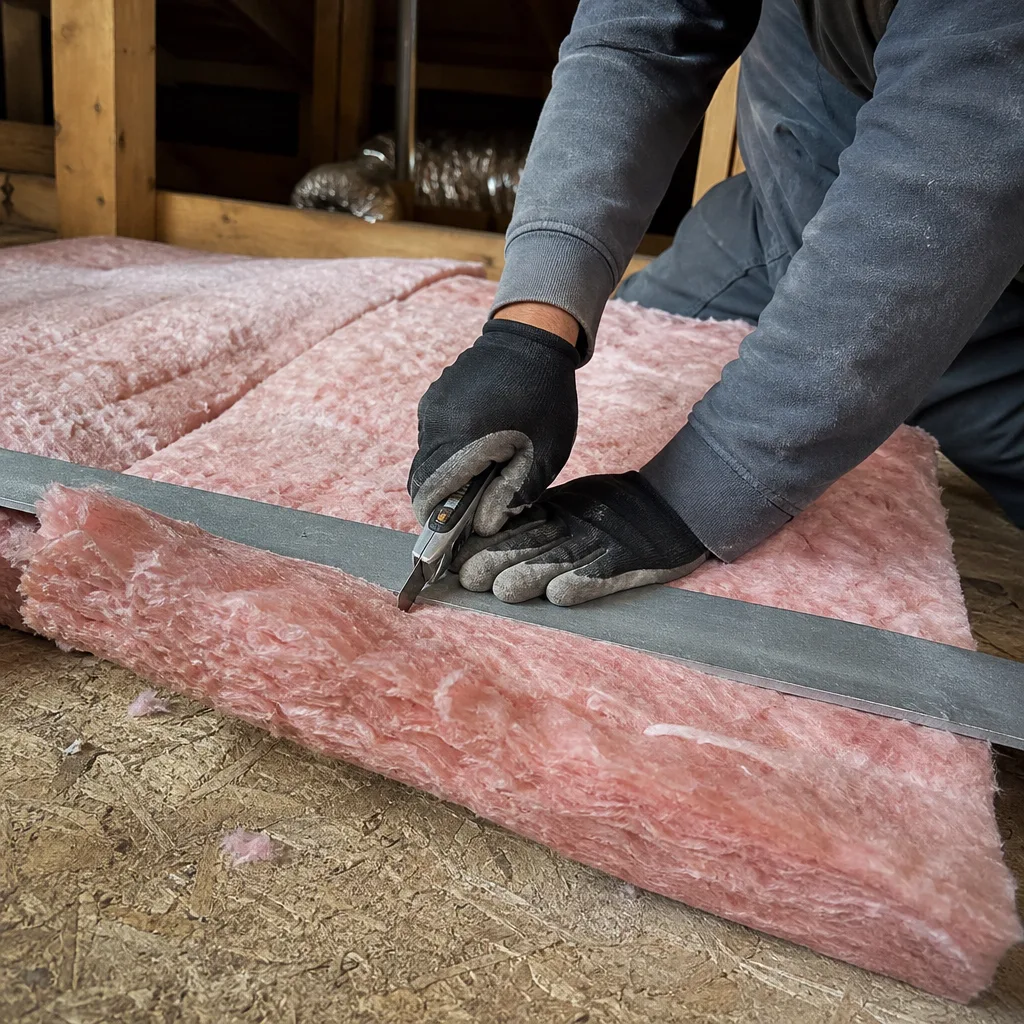
- How to calculate your home’s thermal decay rate
- The insulation upgrades that matter most for thermal resilience
- Finding your worst room with a $15 thermometer
- Documentation to keep on file for insurance and disaster recovery
- NV Energy versus the building envelope: knowing which problem you have
- Why air sealing comes before insulation in a desert climate
- A seasonal preparedness checklist for North Las Vegas homes
How to calculate your home’s thermal decay rate
A thermal decay rate is the number of degrees your interior temperature rises per hour once mechanical cooling stops. It’s the single most useful figure for understanding how much margin your North Las Vegas home gives you during a summer outage, and you can measure it yourself in an afternoon with a digital thermometer and a stopwatch. No contractor needed for this step.
Here’s the procedure:
- Pick a hot test day. Choose a forecast day of 105°F or higher with no cloud cover. Test during the hottest window, roughly 1 p.m. to 5 p.m.
- Cool the house to 78°F. Run the air conditioner until the interior stabilizes at 78°F. Close every window and exterior door.
- Shut the system off. Turn off the AC at the thermostat. Note the exact time and the starting temperature.
- Log the temperature every 30 minutes in your main living area, away from direct sun and at least four feet off the floor. Use a digital thermometer, not a phone app.
- Run the test for two hours. The rise over two hours, divided by two, gives you degrees per hour.
In our experience across North Las Vegas, a home with continuous air sealing and R-49 attic insulation climbs about 1°F per hour. A 1990s build with R-19 and unaddressed top-plate and can-light bypasses climbs close to 3°F per hour. On a 115°F day that difference is enormous: at 3°F per hour, a house starting at 78°F reaches 90°F in four hours. At 1°F per hour, it takes twelve. For households with infants, elderly residents, or anyone on heat-sensitive medication, that gap is the whole ballgame. Write your number down and repeat the test after any envelope work so you have a before-and-after you can actually trust. A blower-door test – a pressurization reading that shows, in one number, how much air your building envelope is losing – pairs well with this measurement because it isolates the leakage piece from the insulation piece.
The insulation upgrades that matter most for thermal resilience
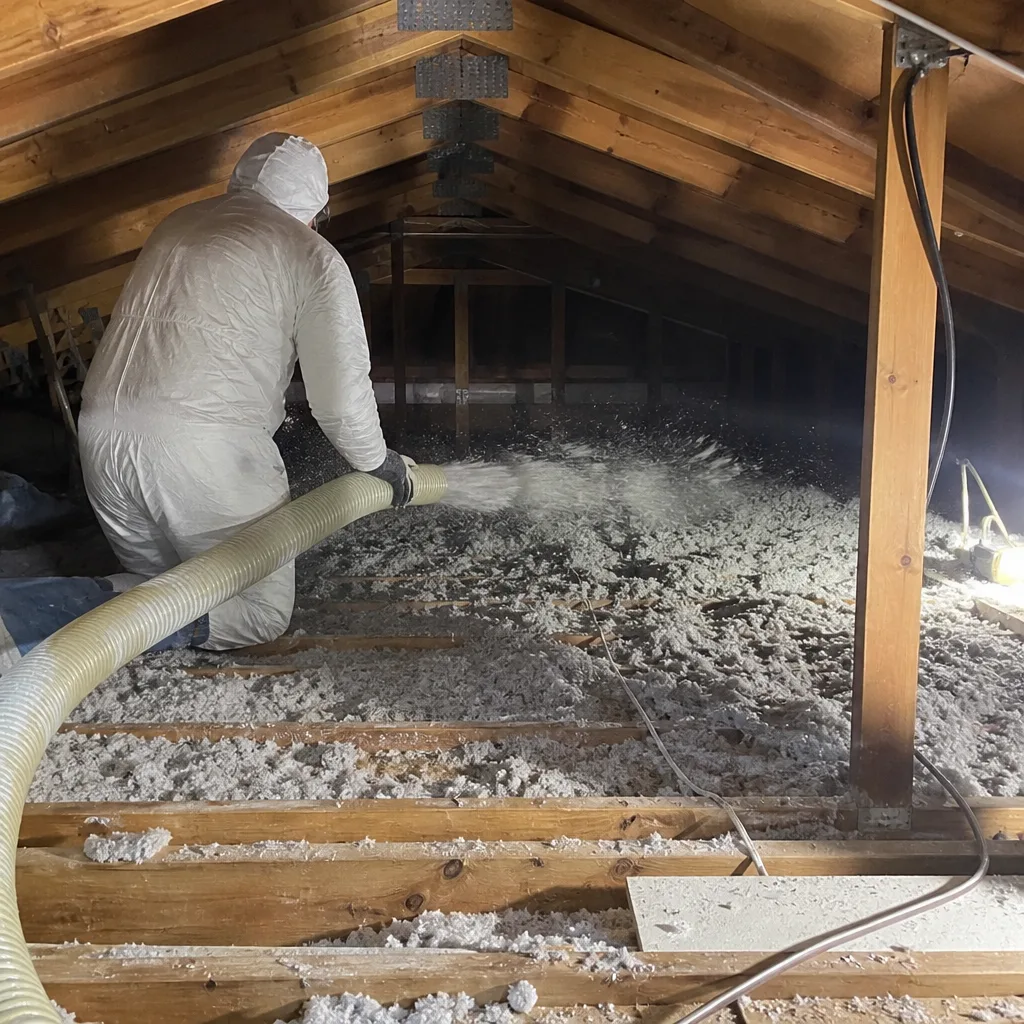
Not all insulation work improves your odds equally during a heat event. Ranked by cost-to-impact ratio for thermal resilience in the North Las Vegas climate, three upgrades carry most of the weight. Everything else is secondary.
- 1. Attic air sealing above living spaces. Top plates, can lights, plumbing penetrations, and the chase around the furnace flue. This is the highest-impact, lowest-cost work on a typical North Las Vegas home. Sealing stops the hot attic air from pouring into the conditioned box through the ceiling, and it’s what makes the next upgrade work properly.
- 2. Radiant barrier in unshaded west-facing attic cavities. West and southwest roof planes take the longest solar load of the day and radiate it straight down into the attic deck. A radiant barrier – a reflective sheet stapled under the roof deck – cuts that radiant heat transfer before it reaches your insulation. Homes in Aliante and the older west-side North Las Vegas tracts with low-slope west roofs see the clearest benefit.
- 3. Door and window weatherstripping. Cheap, fast, and the easiest weekend item on this list. A dollar of weatherstripping closes gaps that a hundred dollars of insulation can’t fix. Check exterior door sweeps, sliding-glass-door tracks, and the seals on any window you can rattle.
Adding attic insulation on top of unsealed bypasses is the single most common wasted dollar we see. Blowing R-49 over an attic floor that still leaks is like wearing a heavier coat with the zipper open. That’s why attic insulation in North Las Vegas starts, for us, with air sealing – the seal goes in first, then the insulation. If you’re already planning an upgrade, look at Envelope Insulation North Las Vegas home for the full building-envelope service line, since resilience work overlaps attic, wall, and crawl space all at once. When you’re ready to price it, most attic air sealing plus R-49 jobs on a typical North Las Vegas home run between $2,400 and $4,800 depending on square footage and existing conditions.
Finding your worst room with a $15 thermometer
Every home has a worst room – the zone that overheats first when the cooling fails. Finding it tells you where your envelope is weakest, and often the room’s location and ceiling condition point straight at the fix.
The procedure takes three days and costs about $15 in hardware:
- Buy one digital indoor thermometer with a min/max memory function.
- Place it in the room you suspect is worst – a west-facing bedroom, a bonus room over the garage, or anything with a cathedral ceiling. Leave it at occupant height.
- Note the peak and low temperature for three consecutive days. Record time of day.
- Repeat in your main living area for the same three days.
- Compare the peak difference between the two rooms. Anything above 4°F tells you the worst room has an envelope problem, not just a thermostat problem.
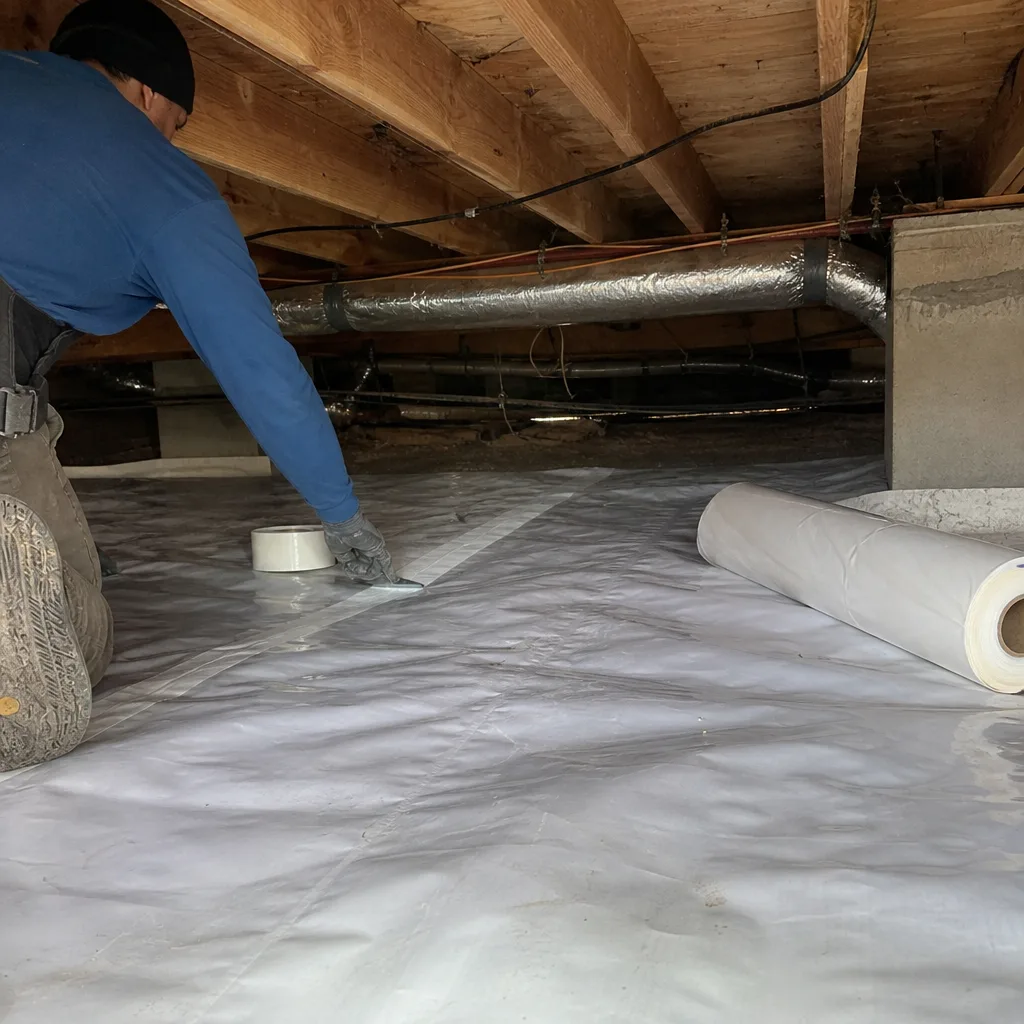
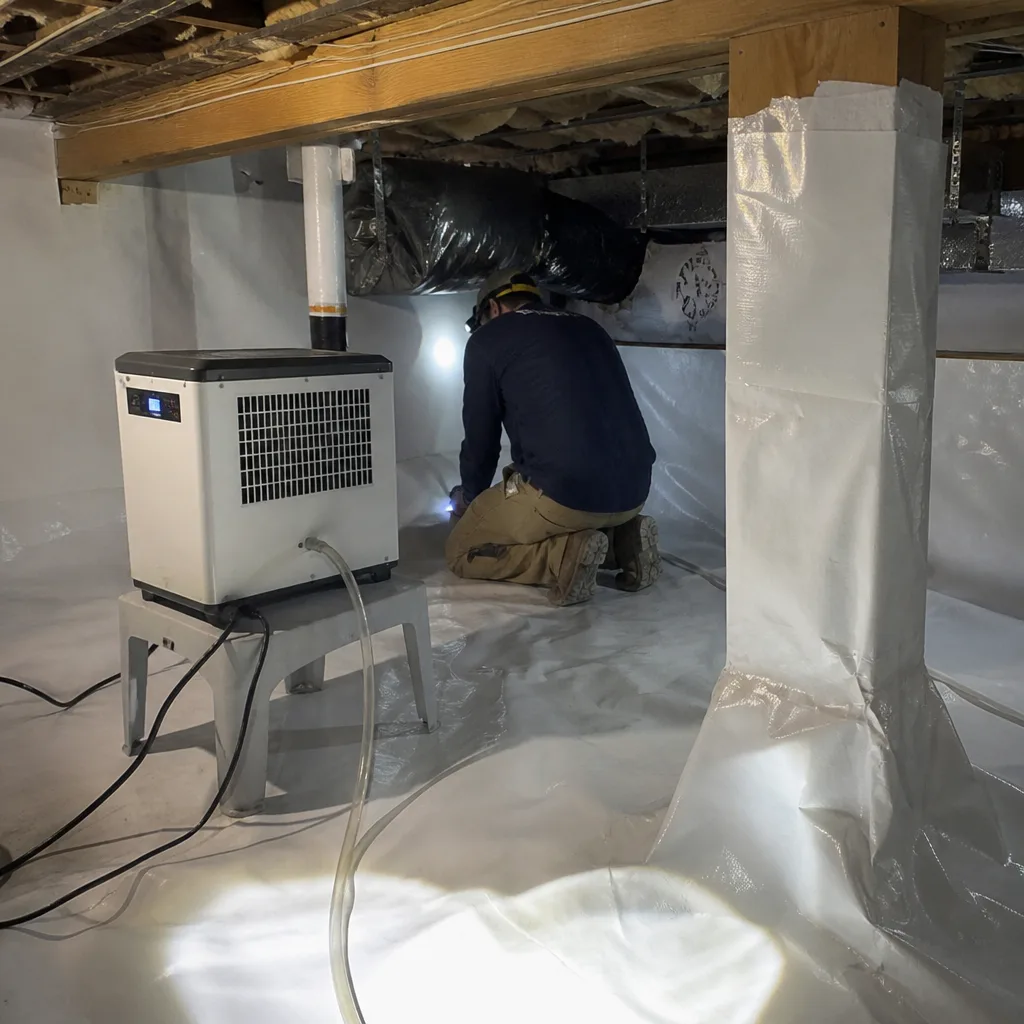
What the location tells you matters. A bonus room over the garage overheats because the garage ceiling below it is rarely insulated and the knee walls often have no insulation at all. A west-facing bedroom overheats because of solar gain through the wall and roof plane. A room with a cathedral ceiling overheats because the ceiling assembly may be missing insulation or the can lights punch straight through to the attic. Each of these is fixable. A spray foam insulation in North Las Vegas approach works well for sloped ceilings and knee walls where batt insulation won’t stay put, and it air-seals while it insulates – which is exactly what the worst room needs. If you have a crawl space under the affected room, crawl space encapsulation and vapor barrier in North Las Vegas stops the summer humidity from migrating up and slowing your system further.
Documentation to keep on file for insurance and disaster recovery
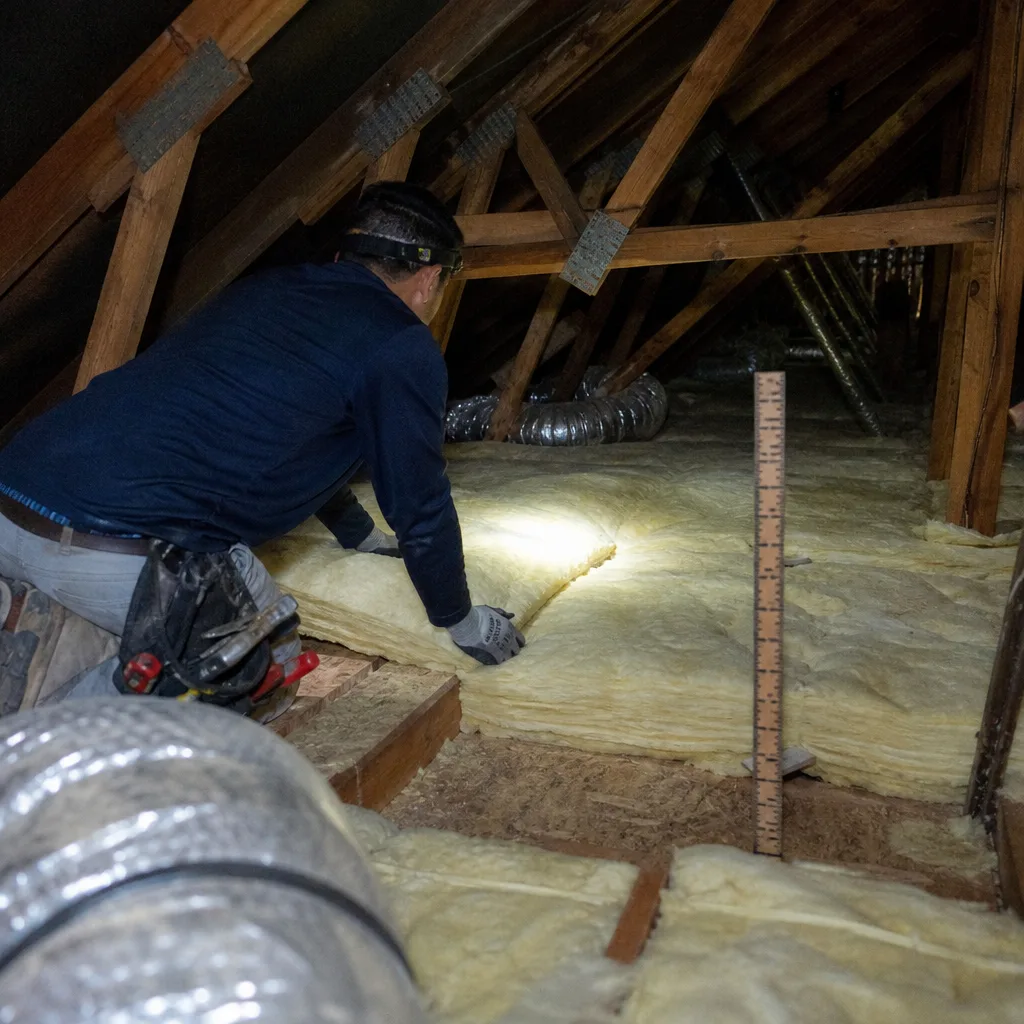
When a heat event damages a home – warped flooring, failed drywall, HVAC casualty, or moisture intrusion from a vapor barrier that gave out – insurers increasingly want to see evidence that the home was maintained. Gaps in your thermal envelope are the kind of thing a claims adjuster may treat as deferred maintenance. Keeping the right paperwork on file protects you.
Assemble a resilience folder for your North Las Vegas home that includes:
- Installed R-values for attic, walls, and any crawl space floor – the actual number installed, with the invoice date.
- Air-sealing scope – which penetrations were sealed and when. A written scope is worth more than a verbal promise.
- Blower-door results – the before-and-after CFM50 numbers from any envelope work. This is the one figure that proves the work was done and shows the performance change.
- Photographs of the work in place before the attic was closed up or the crawl space lined.
- Vapor barrier and encapsulation documentation if you have a crawl space.
If you’ve had envelope work done, make sure you received a documented photo record and, where applicable, the blower-door readings in writing. If a contractor can’t produce those, the work becomes very hard to defend in a claim. Under our own Haven Standard, before-and-after blower-door numbers are published on every applicable job and the photo record is included on every visit, not available on request. That’s the paperwork standard to ask any North Las Vegas contractor for.
NV Energy versus the building envelope: knowing which problem you have
During a heat emergency in North Las Vegas, calls go two directions: to NV Energy, and to a contractor. Knowing which problem belongs where saves time and prevents wasted trips.
Call NV Energy’s emergency line when the outage is grid-side – a downed line, a transformer failure, a neighborhood-wide blackout, or a voltage problem affecting your block. If your neighbors are dark and yours is too, that’s a utility issue. Track restoration updates with NV Energy directly.
The problem is a building envelope issue when the power is on and the AC is running but the house still won’t hold temperature, or when you’re without cooling and need to know how long you can shelter in place safely. NV Energy can’t fix a leaking attic floor or missing weatherstripping, and no utility program will pay for it. That’s where a thermal assessment and envelope repair come in. In our experience the two problems get confused during peak summer: homeowners call the utility helplessly when the real issue is that their 2005-era home has R-11 in the attic and open can lights above the bedroom.
Clark County’s extreme heat emergency resources – cooling centers, heat-safety alerts, and outreach teams – help when shelter itself is the problem. But the longer-term fix, the one that keeps you out of a cooling center when the next outage lands, is building envelope performance. Those two responses work together; they don’t substitute for one another.
Why air sealing comes before insulation in a desert climate
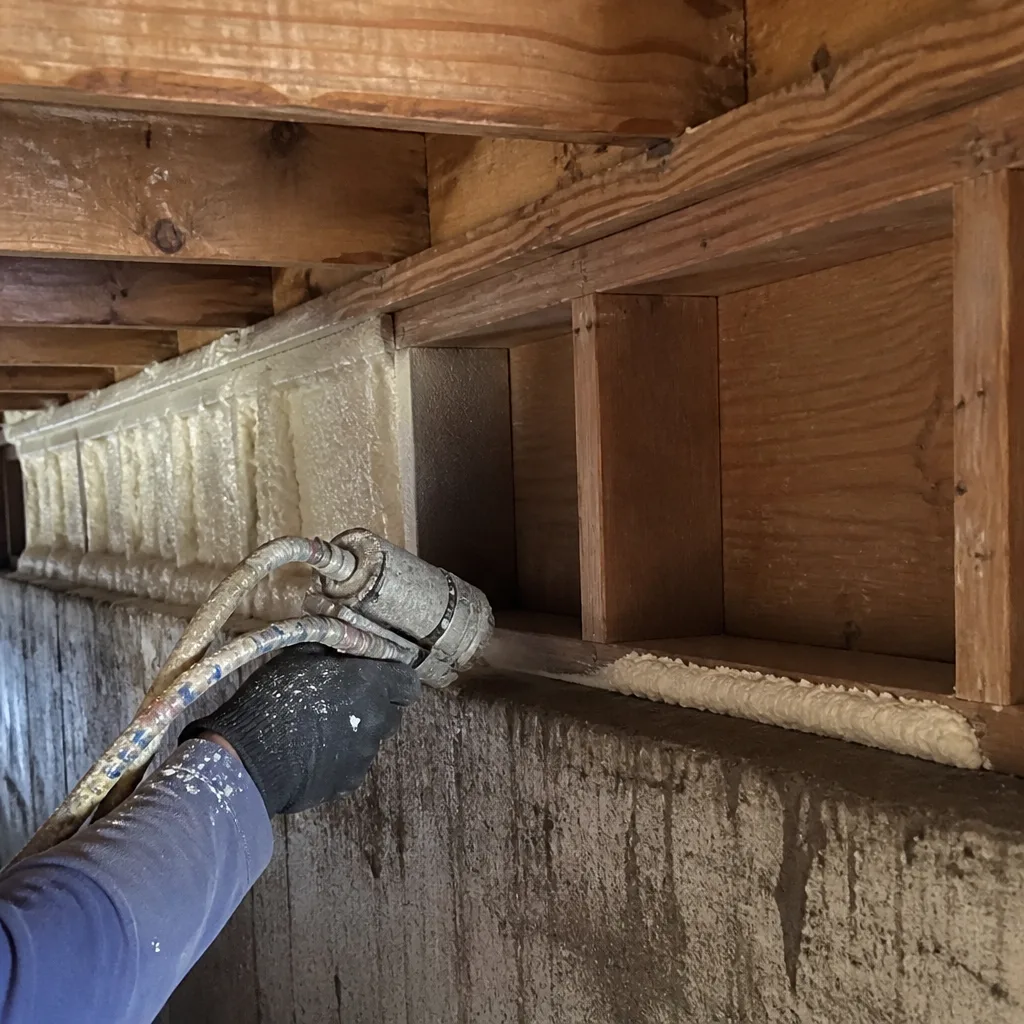
The North Las Vegas climate does something to a house that gets underestimated: it drives hot attic air into the conditioned space through every gap on the attic floor. In a humid climate, insulation loses a little performance. In a desert, unsealed bypasses turn your attic into an oven that pushes heat down into your ceiling, and no amount of added insulation fixes it if the air still flows.
That’s why the sequence matters. Seal the top plates, the can lights, the plumbing penetrations, and the furnace chase first. Then insulate. Then measure the result with a blower-door test so you know what you actually bought.
On materials, there’s no one right product. We source from Owens Corning, Johns Manville, Knauf, Rockwool, CertainTeed, Icynene, Demilec, and GreenFiber, and we match the material to the assembly. Rockwool and CertainTeed batts work well in standard joist bays. Icynene and Demilec spray foams are the right call for sloped ceilings and knee walls where nothing else stays put. A radiant barrier is the right pickup for a west-facing roof plane taking all-day sun. The product is a detail; the sequence is the strategy.
A seasonal preparedness checklist for North Las Vegas homes
Run this checklist before June in North Las Vegas each year. It’s the low-cost version of insulation preparedness, and it catches the failures that turn a heat event into an emergency.
- Every spring: Replace the HVAC filter and get the system serviced. A clean system buys you real time.
- Every spring: Walk the attic and look for compressed or displaced insulation, water stains, or daylight. Compressed insulation is a sign of air movement underneath.
- Every spring: Check weatherstripping on exterior doors and sliding doors. Replace what’s torn or flat.
- Every summer: Run the two-hour thermal decay test once, ideally in July or August, and log the number.
- Every summer: Identify your worst room with a three-day thermometer test and note which walls and ceilings face the afternoon sun.
- Every fall: Update your resilience folder with any contractor invoices, blower-door results, and photos from the past year.
Common Mistakes to Avoid
- Adding insulation over unsealed bypasses. This is the most common wasted dollar in North Las Vegas attics. Insulation slows conductive heat; it doesn’t stop air movement, and the air movement is what cooks the ceiling.
- Assuming a utility program will fix envelope problems. NV Energy can restore power. It cannot seal your top plates or weatherstrip your sliding door.
- Skipping the thermal decay test. Without a measured number, you don’t know whether your home buys you four hours or twelve during an outage. The test is free and takes an afternoon.
- Ignoring the worst room. If a bonus room or west bedroom is consistently 5°F hotter than the rest of the house, that’s an envelope diagnosis, not a thermostat quirk. Treat the room before the AC coil fails on it.
- Not keeping the paperwork. A claim without installed R-values, air-sealing scope, and blower-door results is a claim adjusters can question. Keep the record.
- Choosing a contractor who won’t show blower-door numbers. Any North Las Vegas insulation contractor should be able to demonstrate the before-and-after leak rate in a single figure. If they can’t, the work isn’t measurable.
- Buying a portable AC instead of fixing the envelope. A window unit is a fine emergency backup. It’s a poor substitute for air sealing and attic insulation, which fix the daily load, not just the outage scenario.
When to Call a Professional
Some of this guide is DIY-friendly: the thermal decay test, the three-day thermometer check, weatherstripping, and the seasonal walkthrough. The rest is not. Call a professional when the diagnosis points at the attic floor, sloped ceilings, knee walls, or a crawl space; when insulation is missing, compressed, or wet; when you can’t reach your attic safely; or when you need before-and-after blower-door numbers for insurance or resale. Envelope Insulation North Las Vegas offers free estimates in North Las Vegas – call (833) 630-4008. The local pro is licensed and insured as the state requires, and we answer calls with a live person around the clock. Background-checked, uniformed technicians, a written price before any work starts, and a documented photo record on every visit.
Frequently Asked Questions
Your thermal decay rate is how many degrees your interior temperature rises per hour once cooling stops. Measure it on a 105°F+ day by cooling the house to 78°F, shutting the system off, and logging temperature every 30 minutes for two hours. That rise, divided by two, is your number. A sealed R-49 home typically gains 1°F per hour; an unsealed R-19 home gains closer to 3°F per hour. Call (833) 630-4008 for an estimate if the number worries you.
Air sealing above living spaces helps most, followed by a radiant barrier on unshaded west-facing roof planes, then door and window weatherstripping. Air sealing is the cheapest per degree-hour and it’s what makes the insulation above it work. Most North Las Vegas attic sealing plus R-49 jobs run $2,400 to $4,800. Call (833) 630-4008 for an exact quote – estimates are free.
Place a $15 digital thermometer with min/max memory in the room you suspect is worst and compare its three-day peak to your living area. A gap of more than 4°F means the room has an envelope problem. Bonus rooms over garages, west-facing bedrooms, and cathedral-ceiling rooms are the usual suspects in North Las Vegas.
Repair and re-seal is usually cheaper than full replacement when the existing insulation is dry, uncompressed, and in place. Full removal and replacement makes sense when insulation is wet, contaminated, or so compressed that it no longer holds R-value. A blower-door test tells you which you need. Call (833) 630-4008 for a free second opinion on any written estimate.
Yes, typically by reducing the hours your air conditioner has to run to hold temperature in a 110°F+ summer. The exact savings depend on how leaky your home started and how much you upgrade. Blower-door before-and-after numbers – the CFM50 change – are the most reliable way to see the performance change you paid for. Call (833) 630-4008 for a free estimate.
Keep installed R-values, the air-sealing scope, blower-door before-and-after results, photographs of the work in place, and any vapor barrier or crawl space documentation. These records show your envelope was maintained and prevent a claim from being classified as deferred maintenance. Ask any North Las Vegas contractor for a documented photo record in writing; it should be standard, not extra.
The Bottom Line
Insulation emergencies in North Las Vegas are almost never sudden. They’re the cumulative result of unsealed bypasses and missing insulation that only become obvious when the cooling fails. Measure your thermal decay rate – that single number tells you how many hours of margin your home has. Seal before you insulate, always. Find your worst room and treat it. Keep the documentation so an insurance claim has evidence behind it. Know the difference between a utility outage and a building-envelope problem, because only one of them is fixable. Then do the work before the next July heat dome arrives, not after.
Ready to know your home’s actual performance number? Call (833) 630-4008 for a free estimate. We’ll give you a written price, a written scope, and a blower-door test on the day so you can see the change in a single figure. The 365-Day Done Right Promise backs every job. A live person answers, around the clock.
Written by the team at Envelope Insulation North Las Vegas.