
Last updated November 18, 2026
How Long Does Blown-In Insulation Take? Timelines and What to Expect
A crew can blow 1,500 square feet of attic in under two hours. The question is what happened in the three hours before that, because if it was just “set up the blower,” you didn’t get air sealing. In our experience across North Las Vegas, the insulation itself is never the long part of the day. The prep, the sealing, and the verification are. This guide breaks the actual timeline into its real phases with realistic durations, so you can read a quote and tell whether a one-day promise is honest or a sign that the most important steps were quietly dropped from the schedule.
Quick Answer
Most blown-in insulation jobs take 4 to 7 hours from arrival to departure: about 45 to 90 minutes for inspection and a blower-door baseline, 1 to 3 hours for air sealing, 1 to 2 hours to blow a standard 1,500 square foot attic, and 30 to 45 minutes for post-install verification. A larger North Las Vegas home with complex penetrations can split across two days, and summer heat above 130°F in the attic pushes most of that work into an early-morning window.
Table of Contents
- The Four Phases of a Real Blown-In Insulation Day
- What a Two-Hour Quote Actually Tells You
- Why Air Sealing Comes Before the Blower
- The North Las Vegas Variable: Heat and Start Windows
- What Happens After the Crew Leaves
- The Honest Variables That Extend a Job
- What Your Day Actually Looks Like, Step by Step
The Four Phases of a Real Blown-In Insulation Day
Every job we run follows the same sequence, and each phase has a duration you can hold us to. The blowing is only one of four.
- Pre-install inspection and blower-door baseline (45 to 90 minutes). We measure existing depth, map penetrations, check for moisture or rodent damage, and run a blower-door test. That’s a pressurization reading that shows, in one number, how much air the building envelope is losing before we touch anything.
- Air sealing (1 to 3 hours). Top plates, can lights, plumbing and wiring penetrations, and the attic hatch get sealed before any insulation goes down. The exact time depends on how many holes your home has, which is why a 1970s build in North Las Vegas takes longer here than a house from 2018.
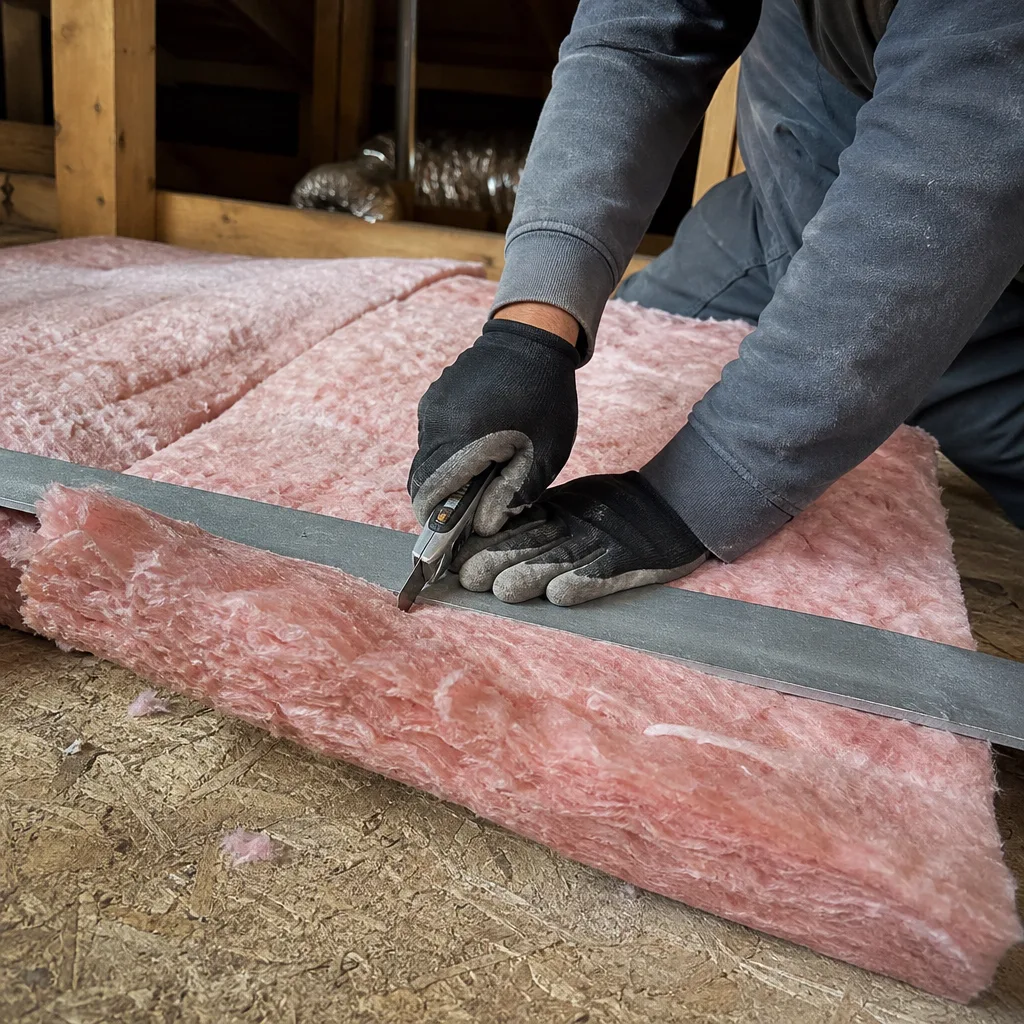
- Blowing insulation (1 to 2 hours). A standard 1,500 square foot attic reaches its target R-value in roughly 90 minutes with a two-person crew. Bigger attics and deeper targets push it toward two hours.
- Post-install blower-door confirmation (30 to 45 minutes). We re-run the test and compare readings. The difference is the number you paid for, and it goes in your file.
Add those up and you get the 4 to 7 hour range. If a schedule doesn’t account for phases one, two, and four, the total shrinks fast.
What a Two-Hour Quote Actually Tells You
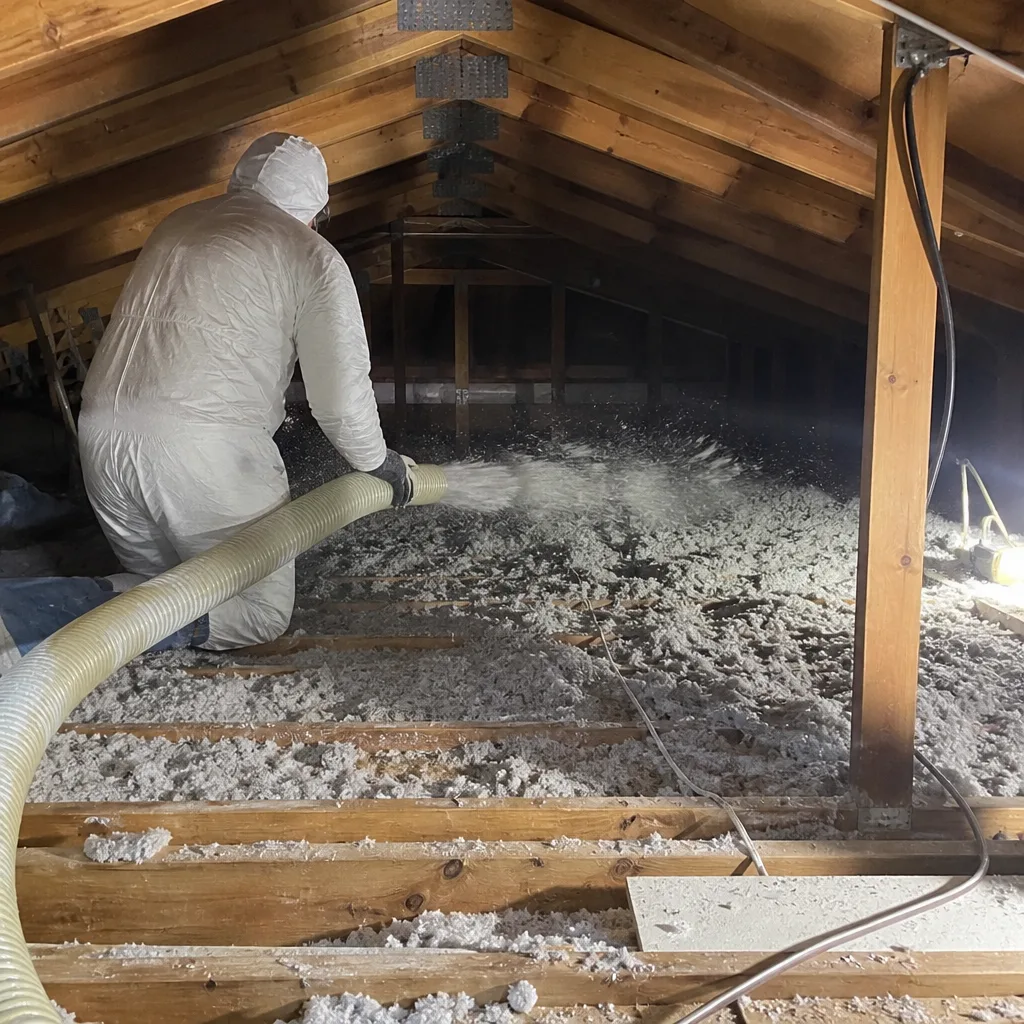
A two-hour job start-to-finish is physically possible. It just means the air sealing was omitted, and often the verification too. If a North Las Vegas homeowner tells us the last crew finished in two hours, we already know what we’ll find: insulation blown over an unsealed attic floor, and every top plate and can light still leaking conditioned air into the attic.
That matters because insulation doesn’t stop air. Fiberglass and mineral wool resist heat flow. Air moves through them freely, so an unsealed penetration keeps leaking after the pink stuff lands on top. The homeowner pays for R-value and gets a number that barely moves on a blower door.
- Two hours with no blower-door reading on file usually means no baseline was taken.
- Two hours with no detailed scope in writing usually means air sealing was listed as optional, then skipped.
- Two hours combined with “we don’t need to test” is a crew that can’t show you what changed.
The honest version of a fast job exists. A clean, recently built North Las Vegas home with few penetrations can seal in about an hour and finish the whole visit near four hours. Under our Attic Insulation in North Las Vegas process, that short timeline still includes a documented air-sealing pass and a second blower-door reading. Speed is fine. Skipping steps is not.
Why Air Sealing Comes Before the Blower
Air sealing is the phase that changes the outcome, and it’s the reason our jobs start with a blower door rather than a hose. When we seal top plates, can lights, and penetrations first, the insulation reaches its rated performance and the reading drops by a measurable amount. The result is a second number on paper, and that’s what we publish: a blower-door report that shows 4,200 CFM50 before and something far lower after. That’s the change you actually paid for.
It also explains why we won’t blow insulation over an unsealed attic floor, under any circumstance. Doing so hides the problem under a layer of material and makes it harder and dirtier to fix later. It’s a policy, not an upsell, and it’s why you get a written scope before anyone lifts a tool under the Haven Standard. When it’s not done right, the 365-Day Done Right Promise backs the work, and that promise only means something if we can show what was sealed and what the reading was before and after.
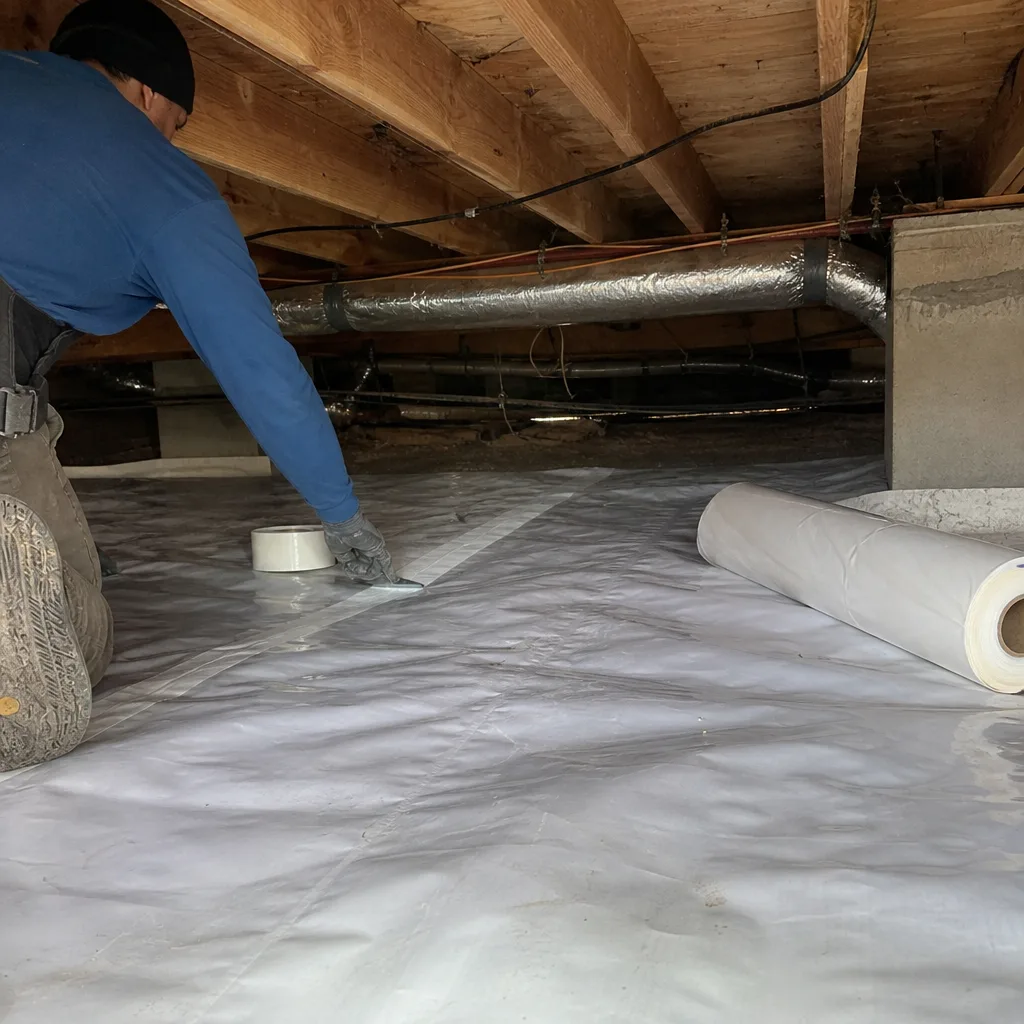
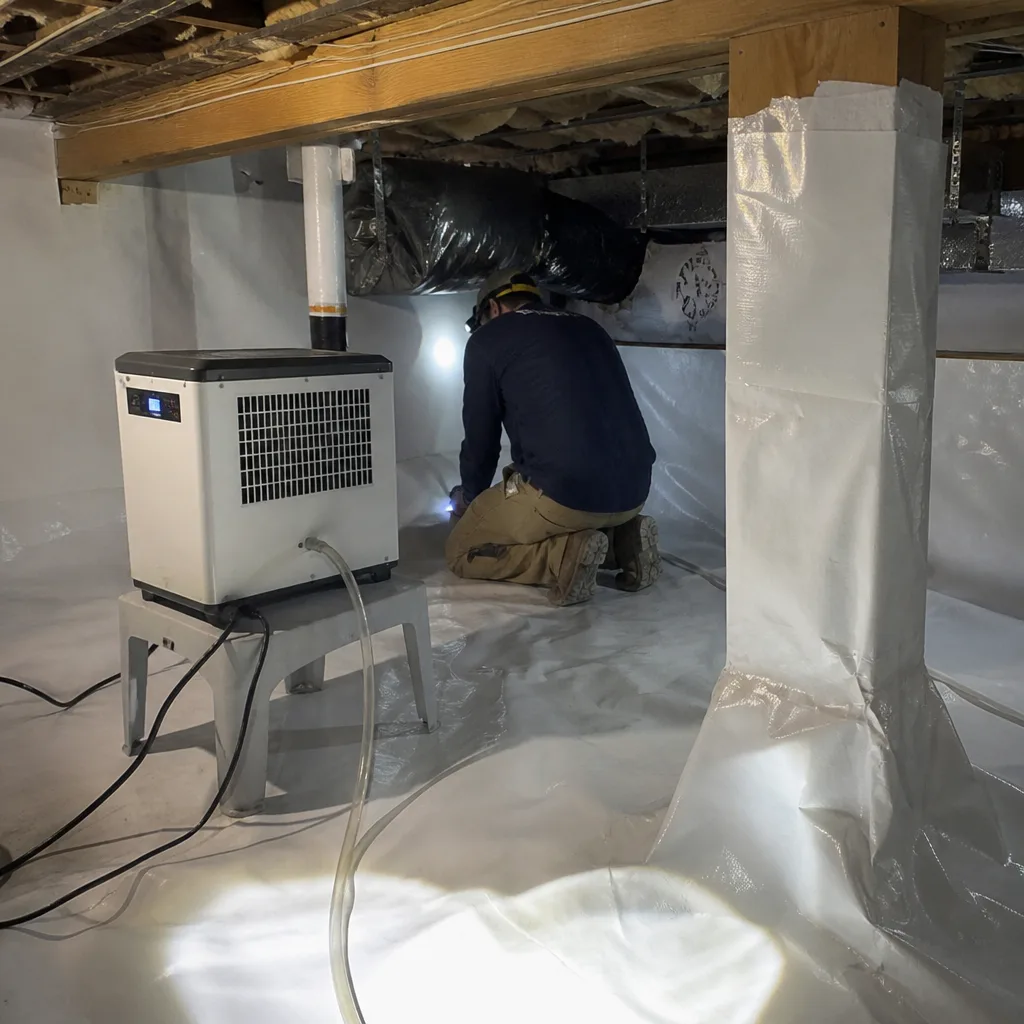
If your project involves more than the attic, sealing combines well with other envelope work. Crawl space vapor barriers and encapsulation belong in a separate visit, and we handle both through Crawl Space Encapsulation & Vapor Barrier in North Las Vegas. Spray foam applications for rim joists and tricky cavities are covered under Spray Foam Insulation in North Las Vegas. We don’t stack those on the same day as blown-in attic work, and the timeline above assumes a single-scope attic job.
The North Las Vegas Variable: Heat and Start Windows
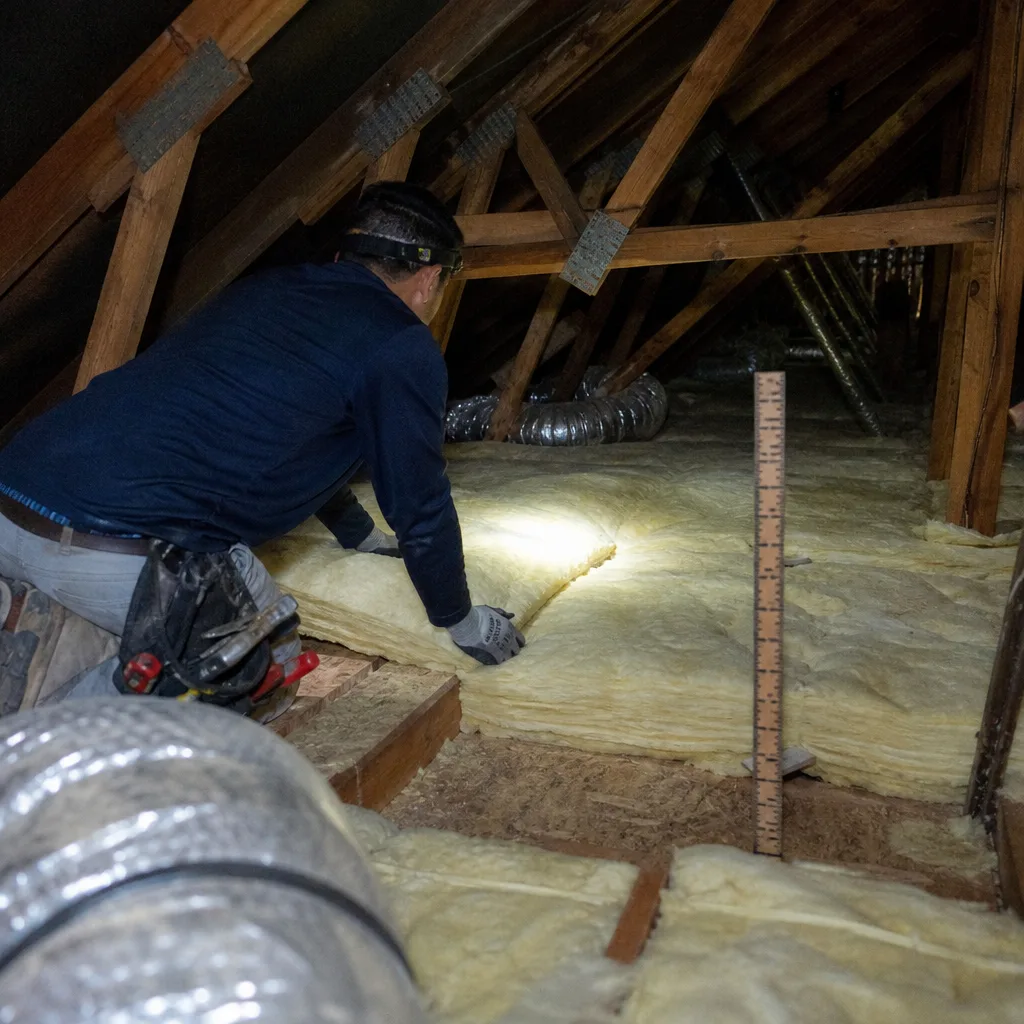
Attic temperatures in North Las Vegas cross 130°F on summer afternoons without much argument. No crew should be blowing insulation in that. It’s a safety issue first and a quality issue second, since materials handle better and sealants cure properly in the cooler morning air.
That’s why most June through September jobs here start at first light. We schedule the inspection and blower door for the earliest slot, work the air sealing fast, and aim to have the blower running before the attic climbs past its safe working range. Larger homes with 2,500 square feet of attic or deep R-value targets sometimes split into two mornings for the same reason. It’s a scheduling choice, not a delay.
If you’re comparing quotes in July, ask where the work falls on the calendar and whether the company adjusts its start time for heat. A crew that offers a comfortable 11 a.m. arrival in August is either working dangerously fast or skipping steps. Neither serves you.
What Happens After the Crew Leaves
The visit ends, but a few things still need to settle. Here’s what to expect and when.
- Attic re-entry: give the freshly blown material 24 hours to settle before walking the attic for storage or inspections. Plan not to store anything up there the same day.
- Blower-door report: you should have those before-and-after numbers same-day or next-day. Weeks later is not acceptable and usually means the test was never run.
- Documented Photo Record: every visit includes one. You get photos of the sealed penetrations, the depth gauge, and the final blown depth. It’s included on every job, not on request.
- Second-opinion review: if you have a competing written estimate, we’ll read it with you and flag anything missing before you commit. That’s a free service, and it applies whether or not you hire us.
If you live in an older neighborhood like Highland Hills or the tracts off Ann Road, expect a couple more photos in that record. Roof-line penetrations and older wiring styles take more sealing to cover. The documentation follows the job, so more sealing means more evidence in the file.
The Honest Variables That Extend a Job
The 4 to 7 hour estimate is real for a standard North Las Vegas attic. Several things move it, and every honest contractor will name them upfront.
- Homes built before 1990 often have more penetration points, older wiring, and recessed fixtures that need careful sealing. Budget the top of the air-sealing range.
- Vaulted ceilings add 30 to 60 minutes, since the slope complicates access and depth control.
- Knee walls add another 30 to 60 minutes for the same reason, plus baffling to keep insulation off the ventilation path.
- HVAC equipment in the attic requires careful baffling around the unit and any ducting, and we may ask you to have it serviced or checked before install.
- Deep R-value targets mean more material to blow, which can add 30 to 60 minutes on larger attics.
- Attic access issues like a small hatch or a tight turn can slow every phase slightly. We’ll flag it during the inspection.
We don’t hide any of these behind a vague estimate. If your home has all six, the day may push toward nine hours and split into two visits. You’ll know before we start, in writing, under the Haven Standard.
What Your Day Actually Looks Like, Step by Step
Here’s the shape of a standard North Las Vegas attic job, so you know what to expect at each stage.
- Arrival and walkthrough. We confirm the scope, check access, and lay drop cloths to protect your floors. You get a text when the crew is on the way.
- Blower-door baseline. We seal the house, set up the blower door, and take the first reading. This takes 30 to 60 minutes depending on layout.
- Air sealing. Top plates, can lights, penetrations, and the hatch get sealed. This is the longest chunk of the day, up to 3 hours on an older home.
- Baffle installation. Baffles around soffits and ventilation paths go in to keep the airflow intact.
- Blowing insulation. We blow to the target depth and check with a depth gauge. Roughly 1 to 2 hours for a standard attic.
- Second blower-door test. We re-run the test and record the new number. Compare it to the baseline and you have your performance change.
- Cleanup and documentation. We clean the work area, review photos with you, and send the report the same day or next day.
Materials on the day come from Johns Manville, Knauf, or Rockwool. We name those because there’s no proprietary lock-in. You get the same product standard on every job. Take a look at the Envelope Insulation North Las Vegas home page for the full service line, or read more on how the process flows across all our work.
Common Mistakes to Avoid
- Accepting a two-hour quote in summer. A crew that says they can seal and blow a North Las Vegas attic in two hours in July is skipping steps. Confirm what’s included before you sign.
- Blowing over an unsealed attic floor. Insulation does not stop air. Every penetration keeps leaking unless it’s sealed first, and you can’t see it under the insulation.
- Skipping the blower-door baseline. Without a “before” reading, there’s no way to prove your reading changed. Ask for the pre-work number.
- Not asking for the report in writing. A verbal “it went great” isn’t a record. Numbers and photos should land same-day or next-day.
- Planning afternoon work in the summer months. Attic temps in North Las Vegas regularly cross 130°F. Early-morning starts matter for safety and material performance.
- Storing boxes in the attic right after install. Give the blown material 24 hours to settle before walking or storing.
- Assuming a bigger R-value fixes a leaky house. More material on an unsealed floor just moves the number a little. Sealing first moves it a lot.
When to Call a Professional
Blown-in insulation looks simple, and that’s the trap. Blowing into an attic is straightforward. Sealing top plates, can lights, and HVAC penetrations safely, then verifying the result on a blower door, isn’t, and it’s the part most homeowners can’t do themselves. If you have an attic with recessed lighting, wiring or plumbing penetrations, HVAC equipment in the attic, or a home built before 1990, call a professional before you touch anything. Same if you’re unsure how much insulation you already have or you suspect moisture, pest, or duct problems that need solving first. Envelope Insulation North Las Vegas offers free estimates in North Las Vegas, with a written price before any work starts. Call (833) 630-4008 to schedule yours.
Frequently Asked Questions
Most blown-in insulation jobs take 4 to 7 hours, and the insulation blowing itself only accounts for 1 to 2 hours of that. The rest goes to inspection, a blower-door baseline, air sealing, and post-install verification. Call (833) 630-4008 to schedule a free estimate for your specific attic.
Yes, for most attics under 2,500 square feet with average complexity. Larger homes, or those with vaulted ceilings and knee walls, may split across two mornings, especially in summer when attic temperatures above 130°F push work into an early-morning window. Call (833) 630-4008 and we’ll give you a realistic day count with your written price.
You can, but you’ll pay for R-value you won’t feel. Without air sealing at top plates, can lights, and penetrations, conditioned air keeps leaking into the attic, and the blower-door reading barely moves. We won’t blow insulation over an unsealed attic floor. Call (833) 630-4008 to see what a sealed-first job looks like on your home.
Plan on 24 hours before you walk on the newly blown insulation. That gives it time to settle and lets you see the depth without disturbing it. Same-day storage or box-moving in the attic isn’t recommended. Call (833) 630-4008 if you’re unsure about depth or access after your install.
The blower-door test is a pressurization reading that shows, in one number, how much air your envelope is losing before and after the job. It takes 30 to 45 minutes to run the second test, but it’s what proves the air-sealing work actually improved performance. Without it, there’s no way to show what changed. Call (833) 630-4008 for a free second opinion on any written estimate you have.
It changes the start time, and sometimes the day count. Attic temperatures cross 130°F on summer afternoons, so crews work early mornings here. On a large attic that means splitting across two mornings rather than pushing a crew through unsafe heat. Call (833) 630-4008 to plan your date.
The Bottom Line
Blown-in insulation takes 4 to 7 hours for a standard North Las Vegas attic, and the blowing itself is the shortest part. The timeline an experienced crew holds to includes inspection, a blower-door baseline, air sealing at top plates and penetrations, the blow, and a confirming blower-door reading. A one-day quote is realistic. A two-hour quote usually means the most important step was skipped. When you’re ready to schedule early-morning work with a written price, documented photos, and before-and-after readings, call (833) 630-4008 for a free estimate.
Written by the team at Envelope Insulation North Las Vegas.