
Last updated November 18, 2026
Crawl Space Encapsulation & Vapor Barrier Warning Signs Every Homeowner Should Know
A musty smell that only shows up when the heat or AC kicks on is not a duct problem. It’s your air handler pulling unconditioned crawl space air up through the system, and it usually means the vapor barrier under your floor either failed or was never installed correctly in the first place. Here’s the part most homeowners miss: the crawl space almost never tells you it’s in trouble first. Your floors, your HVAC, and your indoor humidity readings do. This guide maps those interior warning signs to the specific moisture failure causing each one, so you know when a $30 hygrometer reading means call someone, and when it doesn’t. We do this work across North Las Vegas, where the swings between dry heat and monsoon humidity put vapor barriers through a particular kind of stress.
Quick Answer
The core warning signs that a crawl space needs encapsulation or a new vapor barrier are: a musty smell that appears only when the HVAC runs, cupped or buckling hardwood floors, indoor relative humidity that stays above 60% even with the AC on, rising allergy symptoms with no other explanation, and visible condensation or liner problems at the crawl space access hatch. If two or more of these are present, the moisture source is almost always a failed or missing vapor barrier, and it needs assessment before any barrier work begins.
Table of Contents
- The Interior Signals That Point to Crawl Space Trouble
- What a Failing Vapor Barrier Actually Looks Like
- The Stack Effect: Why Crawl Space Problems Show Up on the Second Floor
- Humidity Thresholds: When a Hygrometer Reading Means Call Someone
- The HVAC Connection: Why the Smell Only Appears When the System Runs
- DIY Liner Replacement vs. Structural Moisture Damage
- Why North Las Vegas Crawl Spaces Fail Differently
- The 10-Point Homeowner Inspection Checklist
The Interior Signals That Point to Crawl Space Trouble
Most homeowners discover a crawl space problem backward. They call about the floor, or the smell, or the allergies, and the crawl space is the last place anyone thinks to look. That’s because the moisture damage happens out of sight, under the floor system, and the evidence surfaces in the living space weeks or months later. Here’s how to read that evidence.
Cupped hardwood floors are one of the clearest interior signals. Cupping means the edges of each board are higher than the center, giving the floor a rippled look you can feel with a bare foot. That happens when the underside of the flooring absorbs moisture from below and swells while the top surface stays dry. In our experience in North Las Vegas, cupping on a ground-floor hardwood floor is a reliable pointer to a vapor barrier that has pulled away from the perimeter or was never continuous in the first place.
High indoor humidity readings are the second signal, and they’re the cheapest one to check. A basic hygrometer, the kind sold at any hardware store for around $30, will tell you what the AC is fighting. If your indoor relative humidity sits above 60% while the cooling system is running normally, the moisture isn’t coming from the air outside, it’s coming up through the floor assembly.
Musty odor that tracks with HVAC operation and allergy symptoms that worsen indoors, especially in the morning, round out the interior picture. Each of these signals maps to a specific cause, and the section below breaks down what each one is telling you about the barrier underneath.
What a Failing Vapor Barrier Actually Looks Like
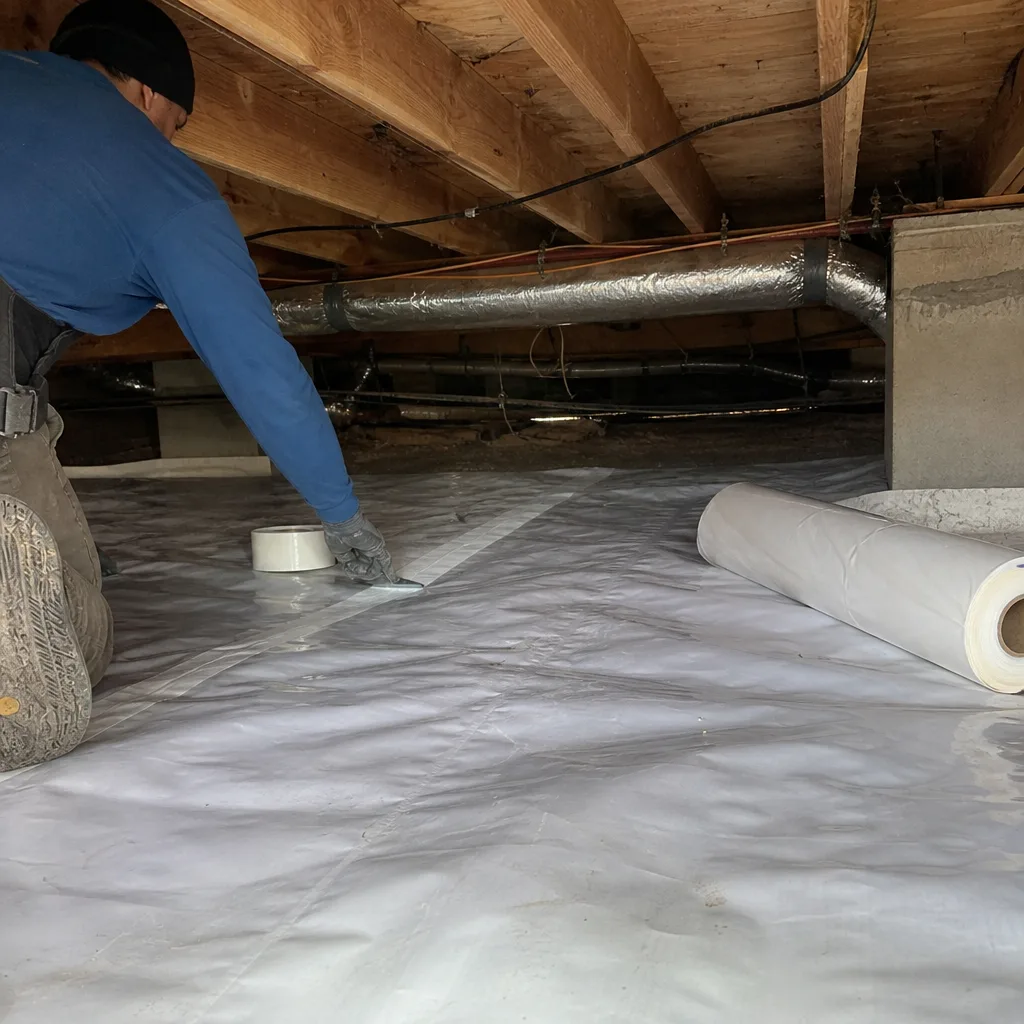
When a trained technician inspects a crawl space under a North Las Vegas home, the question isn’t whether there’s a vapor barrier. It’s whether the barrier that’s there is doing its job. A failing or absent barrier shows up in a handful of recognizable ways.
- Liner pooling: water collecting on top of the vapor barrier instead of draining. Pooling means ground moisture is being trapped rather than stopped, which points to a barrier laid flat on the soil with no slope or drainage path.
- Unsealed seams: overlapping sheets that were never taped or sealed with the proper primer and mastic. Every unsealed seam is a moisture path, and in the humid months in North Las Vegas those seams pass more water vapor than most homeowners expect.
- Missing coverage at piers and perimeter walls: the barrier stops short of the foundation wall and pier footings rather than running up and being mechanically fastened. Gaps at the perimeter are one of the most common failures we see.
- Tears, punctures, and displaced sections: barrier pulled back from the walls by settling, rodent activity, or a contractor who disturbed it during later work.
- No barrier at all: bare soil under the floor assembly. This is more common in North Las Vegas homes than people assume, especially in older neighborhoods.
Two things matter in a proper encapsulation: coverage and continuous sealing. An effective vapor barrier runs uninterrupted across the entire floor of the crawl space and up the walls and piers, with every seam sealed. Even a barrier that covers 90% of the floor leaves a moisture path the whole system can feed through.
The Stack Effect: Why Crawl Space Problems Show Up on the Second Floor
This is the part of the picture that catches most homeowners off guard. Common humidity and moisture problems connected to an unsealed foundation or crawl space can cause issues on second floors and in upper living areas. That seems backward, until you understand the stack effect.
Warm air rises. In a building, that rising air creates a slight negative pressure down low and a slight positive pressure up high. As warm conditioned air escapes through leaks at the top of the house (attic bypasses, recessed lights, top plates), replacement air gets pulled in from the bottom. If your crawl space is open to the soil with a failing vapor barrier, that replacement air comes up through the floor assembly, carrying ground moisture with it. The moisture doesn’t stay in the crawl space. It travels through the house.
- Warm air leaks out through the top of the building envelope.
- A pressure imbalance pulls replacement air up from the crawl space.
- That air picks up moisture from bare soil or a compromised barrier.
- The moisture travels up through the walls and floor assembly.
- It shows up as high humidity in upstairs rooms, condensation on upper-floor windows, and a musty odor on the second floor.
This is why a homeowner in a North Las Vegas subdivision who’s dealing with upstairs humidity often doesn’t think to look down. The fix belongs at the bottom. Sealing and encapsulating the crawl space cuts off the source, and the upper-floor symptoms subside. This is also the reason our Envelope Insulation North Las Vegas home approach puts air sealing first and insulation second on every applicable job: stopping the movement of air, and the moisture it carries, comes before anything else.
Humidity Thresholds: When a Hygrometer Reading Means Call Someone
A relative humidity reading above 60% in the crawl space is the threshold that matters most. Above 60% RH, mold growth can begin within days, and wood framing is actively taking on moisture. Above 70% is a faster timeline and higher risk for rot in the joists and subfloor.
Indoors, the numbers work similarly. The EPA and most building scientists recommend keeping indoor relative humidity between 30% and 50%. If your indoor hygrometer is pegged above 60% while the AC is running well, the system is telling you something is bringing in moisture it can’t keep up with.
- Under 50% RH: healthy range, no moisture action needed.
- 50-60% RH: watch it, especially in the humid months. A failing but still present barrier often lands here.
- 60-70% RH: the danger zone, where mold can start within days and wood begins to swell. Time to inspect the crawl space.
- Above 70% RH: active moisture problem. Call a professional for assessment before doing anything else.
A $30 hygrometer placed in a central room gives you a reading that turns a feeling (“the house feels damp”) into a number you can act on. Take a reading once a week during the humid season. A number climbing toward 60% is your early warning.
The HVAC Connection: Why the Smell Only Appears When the System Runs
If the musty smell only shows up when the heat or AC comes on, that’s diagnostic. The air handler is drawing air from inside the return system, and if the return ducts or the air handler itself sit inside a cavity connected to the crawl space, that smell is crawl space air being pulled into the living space every time the system runs.
This is a duct and air sealing problem as much as a vapor barrier problem. In our experience, the fix has two parts: seal the HVAC penetrations and return cavities so the system pulls from the living space instead of the crawl, and encapsulate the crawl space so the air available to the system is clean and dry. One without the other leaves the smell coming back.
If the smell tracks with HVAC operation, don’t treat it as a duct cleaning issue. Duct cleaning won’t fix a moisture source. The air handler is doing exactly what it’s supposed to do, moving air. The question is where that air came from, and in a lot of North Las Vegas homes it came up through the floor.
DIY Liner Replacement vs. Structural Moisture Damage
Some vapor barrier work is manageable for a homeowner who’s comfortable in a crawl space and willing to do the sealing properly. Some isn’t. The distinction matters because barrier work installed over structural moisture damage traps the problem instead of solving it.
Signs a DIY liner replacement may be feasible:
- The crawl space is accessible, dry, and free of standing water.
- The existing barrier is missing, displaced, or torn, but the framing under the floor is sound.
- There’s no visible mold on joints, no softwood, and no sagging subfloor.
- The soil surface is dry to the touch at inspection.
Signs that point to professional assessment first:
- Standing water, liner pooling, or visibly wet soil anywhere in the crawl space.
- Soft or crumbling wood at floor joists or subfloor.
- Visible mold or a strong musty odor inside the crawl space itself.
- Any evidence of rodent activity under the floor, which is common in parts of North Las Vegas and usually requires a combined barrier and exclusion approach.
- High indoor humidity that persists even with a barrier in place, which suggests a source beyond the barrier.
The rule of thumb: DIY if it’s a coverage and sealing job. Call a professional if there’s any structural or biological moisture damage present. Encapsulation installed over active rot or mold traps the moisture and makes the damage worse. Our Crawl Space Encapsulation & Vapor Barrier in North Las Vegas page walks through the assessment process in more detail.
Why North Las Vegas Crawl Spaces Fail Differently
North Las Vegas crawl spaces deal with a moisture pattern that’s different from a wet climate. The desert air is dry for most of the year, then the summer monsoon pattern brings sudden humidity and rain the soil doesn’t absorb well because the ground has baked hard. That swing is worse for a vapor barrier than a steady wet climate would be.
In neighborhoods around Aliante and the older parts of North Las Vegas, we regularly see barriers that held up fine for years then failed in a single humid stretch. The dry heat had already aged the liner material and pulled seams apart, and the first humid week pushed moisture through. Older homes near downtown North Las Vegas are also more likely to have bare soil under the floor from the start, and newer homes are more likely to have a barrier that was installed but not sealed at the seams or the perimeter.
The dry months matter too. When the AC runs hard from June through September, the pressure differential between conditioned space and a hot, unsealed crawl space pulls unconditioned air up through the floor system constantly. The stack effect doesn’t take a break in a North Las Vegas summer. It runs at full strength for months.
The 10-Point Homeowner Inspection Checklist
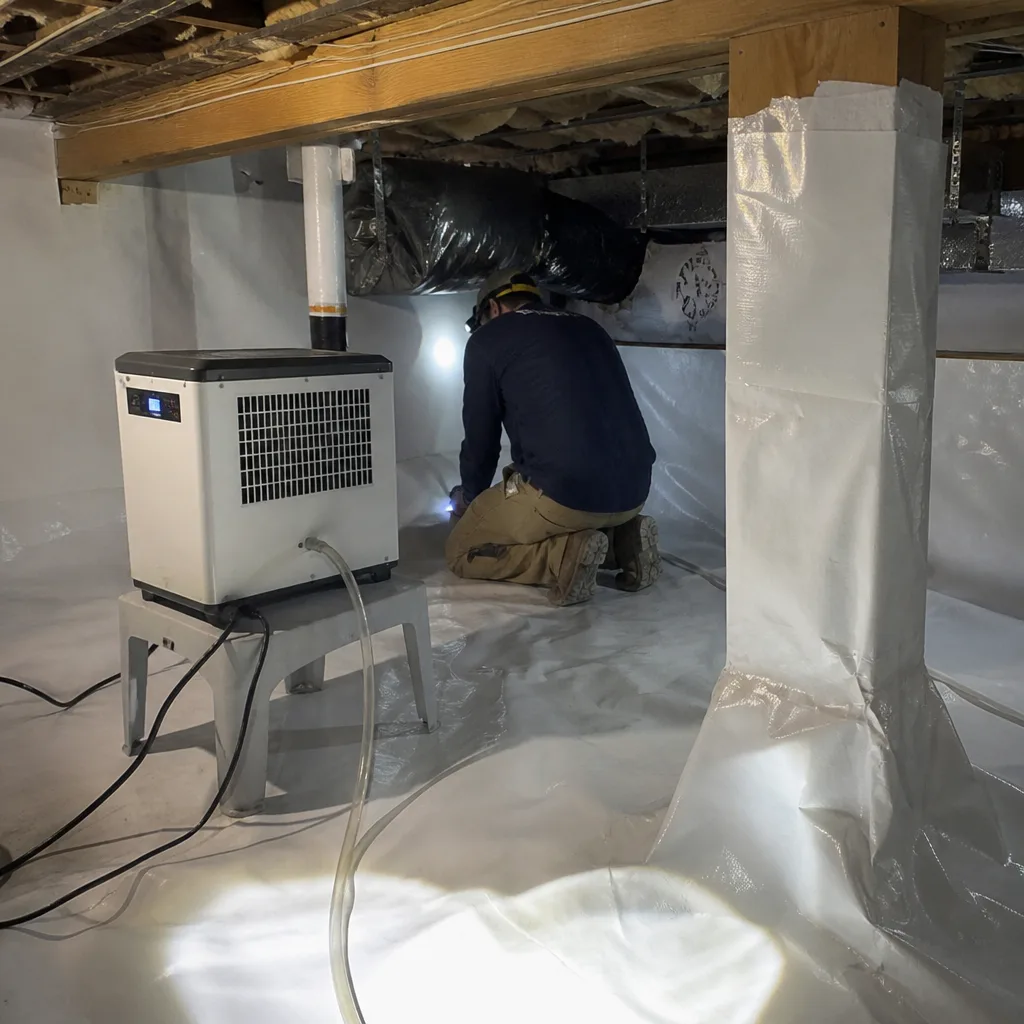
You don’t need to crawl under the house to know whether it needs attention. Here are ten checks a homeowner can do from inside the living space, in order of how quickly they point to a decision.
- Run the HVAC and check for a musty smell. If the smell tracks with system operation, the air is coming from below.
- Take an indoor humidity reading. A hygrometer above 60% while the AC is running means moisture is entering faster than the system can handle.
- Walk the ground-floor floors barefoot. Feel for cupping, ridges, or soft spots in hardwood and laminate.
- Look at the base of the walls. Cracked paint and dark staining at the baseboards can signal rising moisture.
- Check upper-floor windows for condensation. Condensation on the inside of upstairs windows in a North Las Vegas home usually means moisture is rising through the envelope.
- Note allergy symptoms that don’t respond to the usual treatment. Indoor allergens from mold or damp conditions don’t resolve until the moisture source does.
- Look at the crawl space access hatch from outside. A rusted hatch or a musty smell at the opening is a direct pointer to the crawl space.
- Ask how old the vapor barrier is. A barrier installed before the current owner moved in may have settled, torn, or been disturbed by later work.
- Get a written estimate before authorizing any work. A proper assessment arrives as a written scope, not a verbal guess.
- Compare at least two assessments. The problems a qualified contractor identifies should match between two assessments. If they don’t, ask why.
Common Mistakes to Avoid
- Blaming the ducts when the smell comes from the crawl. A duct cleaning doesn’t fix a moisture source. The air handler is moving air, not making it musty. The musty air comes from below.
- Installing a new barrier over wet soil. A barrier laid over wet soil traps the moisture under the liner, which is worse than no barrier. Dry the soil first, then encapsulate.
- Skipping the perimeter. A barrier that doesn’t run up and seal to the foundation wall leaves a moisture path that the rest of the system feeds through. Coverage at the walls matters as much as coverage on the floor.
- Treating a humidity reading as a mold inspection. A hygrometer tells you the moisture level, not the extent of any growth. If the reading is above 60% and holding, get an inspection before assuming the worst or the best.
- Assuming a crawl space problem stays in the crawl space. The stack effect moves moisture up through the house. Second-floor humidity in a North Las Vegas home is a first-floor problem.
- Ignoring rodent evidence. Rodents tear barrier material, and barrier tears in a North Las Vegas crawl space undo the sealing work. Exclude first, then seal.
- Authorizing work without a written price. Under Attic Insulation in North Las Vegas and crawl space work alike, you should have a flat written price, a written scope, and a written warranty before anyone lifts a tool. That’s the standard we hold ourselves to, and you should hold anyone else to it too.
When to Call a Professional
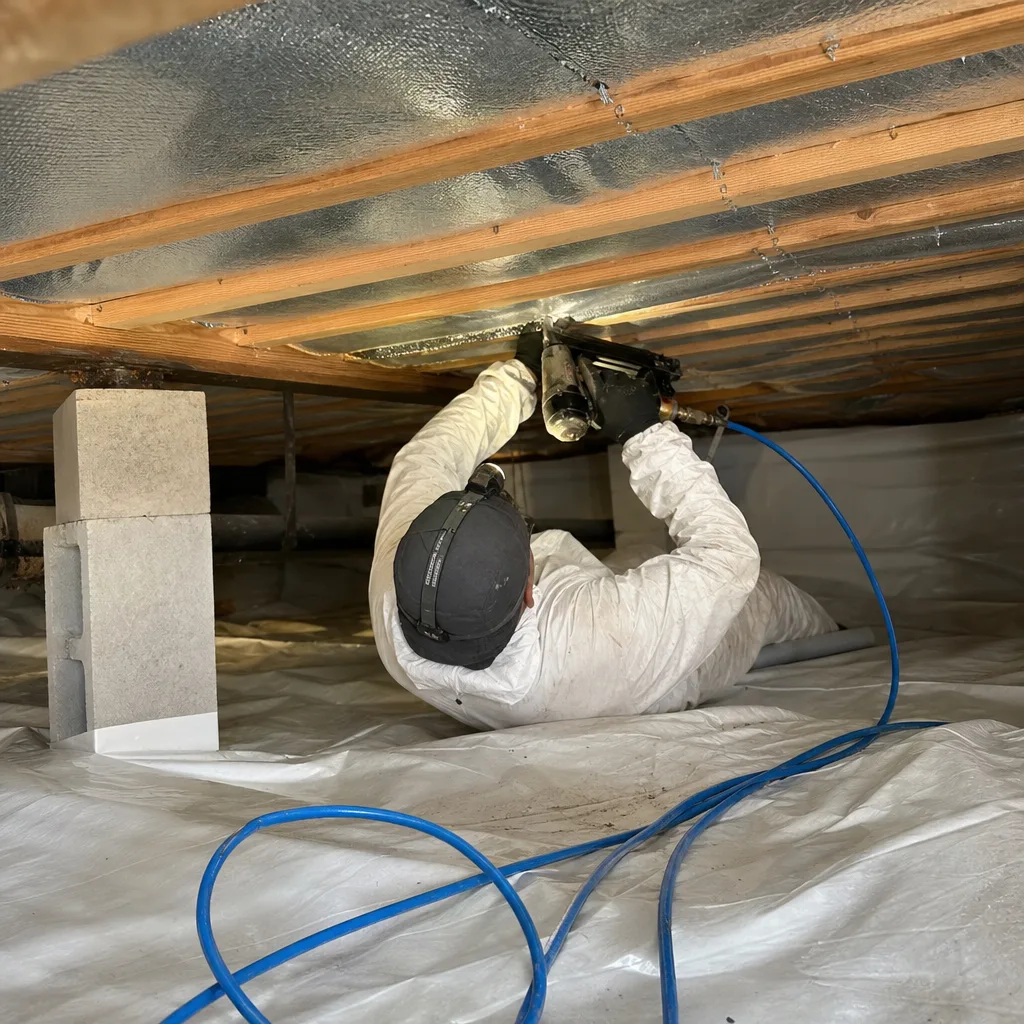
Call a professional if any of these are true: standing water or liner pooling in the crawl space, softwood at the joists or subfloor, visible mold or a strong musty odor in the crawl itself, indoor humidity that stays above 60% even with a barrier in place, or rodent damage to the barrier. Also call if the crawl space hasn’t been inspected in several years and you’re seeing two or more of the interior signals in this guide, because those signals usually mean the barrier has failed and the damage is already underway. Structural moisture damage is not a DIY problem, and barrier work installed over it traps the problem. If you’re not sure, our Spray Foam Insulation in North Las Vegas line includes crawl space sealing and air sealing work, and a proper assessment starts with a written scope and a free estimate. Envelope Insulation North Las Vegas offers free estimates in North Las Vegas. Call (833) 630-4008 to schedule an inspection.
Frequently Asked Questions
The first signs usually show up inside the house, not in the crawl space: a musty smell that appears only when the HVAC runs, cupped hardwood floors, indoor humidity above 60% even with the AC on, and allergy symptoms that don’t respond to treatment. Two or more of these together almost always point to a failing vapor barrier. Call (833) 630-4008 for a free estimate in North Las Vegas if you’re seeing them.
Above 60% relative humidity, mold growth can begin within days and wood framing starts taking on moisture. Above 70% is a faster timeline and a higher risk of rot. An indoor hygrometer above 60% while the AC is running is the equivalent warning sign from inside the living space. Call us for an assessment if your readings are there.
Because of the stack effect. Warm air rises through the house, creating a pressure imbalance that pulls replacement air up from the crawl space. That air carries ground moisture with it, which travels up through the walls and floors and shows up as upstairs humidity and musty odor. The fix belongs at the bottom. Call (833) 630-4008 to walk through what we find.
Sometimes. If the crawl space is dry, no soil is wet, no wood is soft, and no mold is visible, a homeowner comfortable in tight spaces may be able to install and seal a new liner properly. If there’s standing water, softwood, visible mold, or rodent damage, stop and get a professional assessment first. A barrier over active damage traps the problem. Call us if you’re not sure which situation you’re in.
Cost depends on crawl space size, the condition of the existing barrier, and whether any structural moisture damage needs repair before the new liner goes in. What matters is the written scope and the flat written price before any work begins. Call (833) 630-4008 for a free estimate with a written price before anyone starts.
Encapsulation is the moisture source fix. Once the crawl space is sealed against ground moisture, indoor humidity usually drops on its own, because the biggest moisture path is closed. A dehumidifier is sometimes added in high-humidity climates, but the barrier comes first. If your indoor humidity stays high after the assessment, we’ll tell you what we found before recommending anything else. Call (833) 630-4008 with your readings.
The Bottom Line
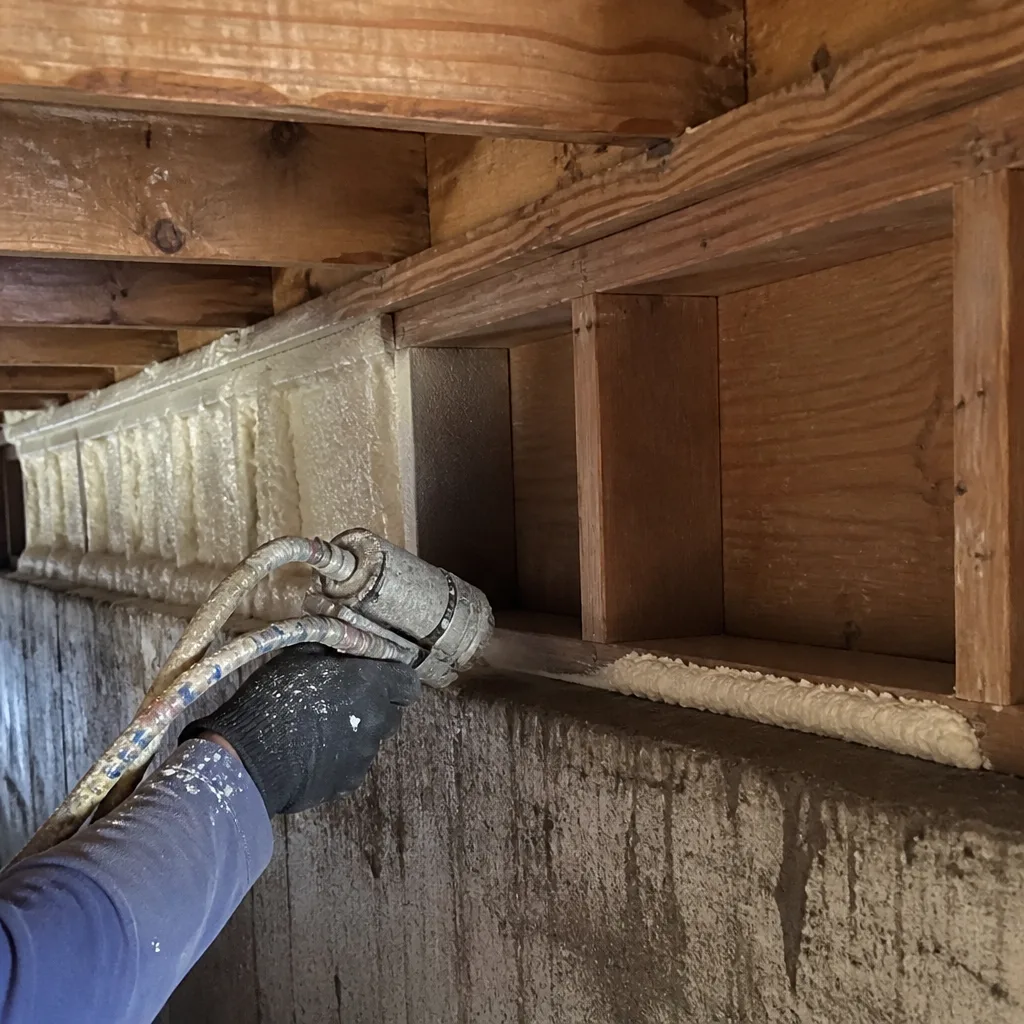
Crawl space moisture problems announce themselves inside the living space long before anyone opens the access hatch. A musty smell that tracks with the HVAC, cupped floors, indoor humidity above 60%, rising allergies, and upstairs condensation are the early warning signs, and each one points to a specific cause: a failed or missing vapor barrier underneath. The stack effect explains why the problem shows up on the second floor. The humidity thresholds in this guide tell you when a cheap hygrometer reading means call someone. And the checklist for DIY versus structural damage tells you which jobs you can take on and which need professional assessment. Read the signals from inside, then act on them. Encapsulation is a source fix, and the source is under the floor. Envelope Insulation North Las Vegas offers free estimates in North Las Vegas. Call (833) 630-4008 for a free estimate and a written scope before any work starts, and thank you for reading this guide from our Envelope Insulation North Las Vegas team.
Written by the team at Envelope Insulation North Las Vegas.