
Last updated November 18, 2026
DIY vs Professional Crawl Space Encapsulation & Vapor Barrier: What’s Safe to Do Yourself
A 6-mil poly sheet from a hardware store runs about $0.08 per square foot. A 20-mil reinforced liner with sealed seams, mechanically fastened to the walls and connected to the footer, runs $3.00 to $5.00 per square foot installed. That price gap is real. So is the gap in performance, and understanding exactly what you’re paying for is the difference between a crawl space that stays dry for 15 years and one that fails inside 18 months. This guide draws a precise line between the parts of crawl space encapsulation a motivated North Las Vegas homeowner can reasonably handle and the parts where a single error has structural or code consequences. You’ll get the material differences, the permit picture in Clark County, and a checklist for reading a professional bid so you know what a complete scope actually contains.
Quick Answer
Ground cover placement in a dry, accessible crawl space with no standing water or active pest problem is a reasonable DIY project. Everything that makes encapsulation a system rather than a plastic sheet – rim joist air sealing, wall liner fastened to the footer, dehumidifier sizing based on cubic footage and infiltration rate, and permit compliance in Clark County – is professional work. Get those wrong and the liner traps moisture against your floor joists instead of keeping it out.
Table of Contents
- What a DIY Homeowner Can Reasonably Do
- What Requires Professional Execution
- The Real Difference Between Store Poly and Contractor Liner
- Nevada Permit Requirements for Crawl Space Encapsulation
- Why North Las Vegas Crawl Spaces Behave Differently
- How to Evaluate a Professional Bid
- What Post-Installation Documentation Should Prove
- Common Mistakes to Avoid
What a DIY Homeowner Can Reasonably Do
Ground cover is the one piece of encapsulation that rewards patience more than skill. In a North Las Vegas crawl space that’s accessible through a hatch or hatch-and-door, stays dry year-round, and has no active termite or rodent activity, a homeowner can lay a vapor barrier across the floor and make a measurable difference in how much moisture reaches the wood above.
Here’s what qualifies as DIY-appropriate:
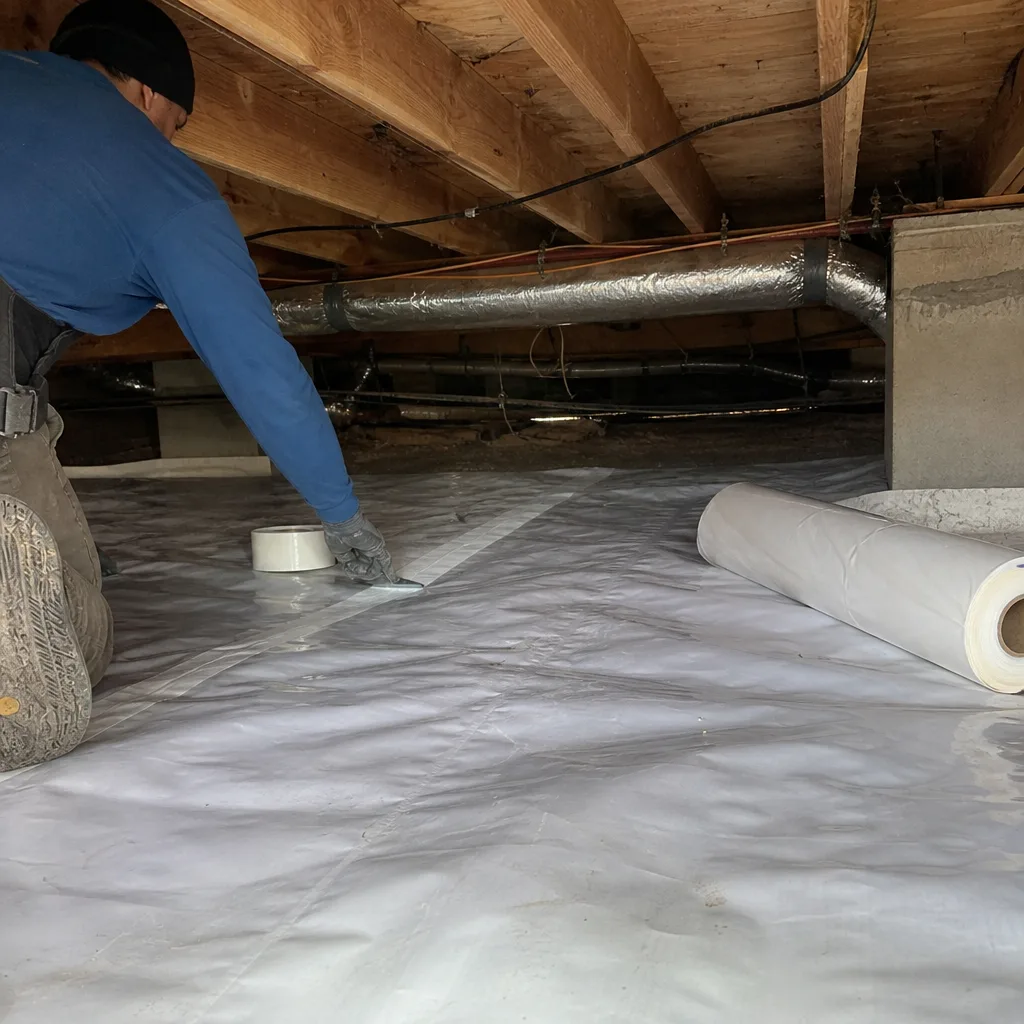
- Ground cover in a dry crawl. If the soil is dry to the touch and there’s no evidence of ponding after a monsoon, you can cover the floor. The barrier needs to overlap seams by at least 12 inches and extend up the foundation wall 6 to 8 inches, held with adhesive or mechanical fasteners.
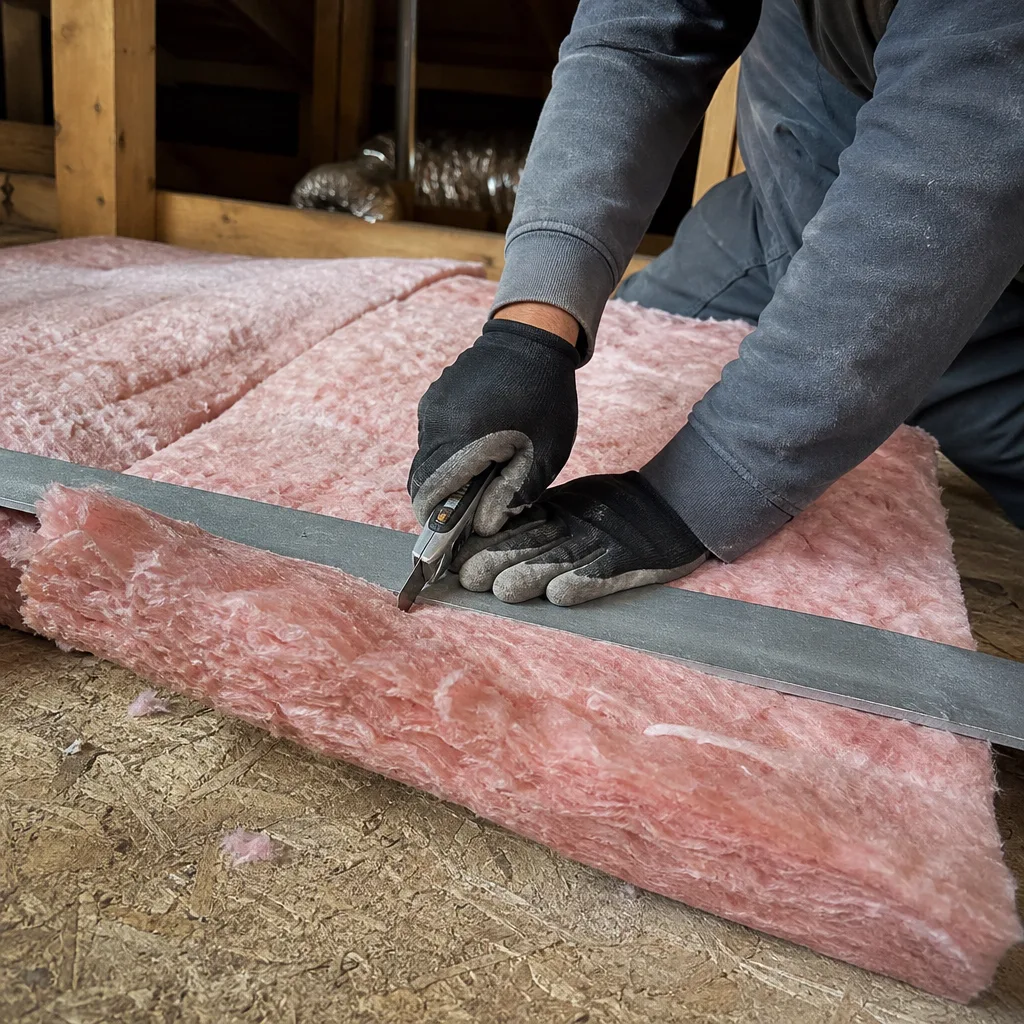
- Cutting and fitting around piers. Wrapping the barrier around pier blocks and columns is slow work but not technical. It’s the kind of task where a sharp utility knife and an extra afternoon get you a clean result.
- Debris removal before the install. Hauling out old wood scraps, construction debris, and abandoned duct runs is unskilled labor and makes the crawl easier for anyone who follows.
- Cracked or missing foundation vent covers. Replacing vent covers you can reach is straightforward.
The honest gate here is time and physical access. A 1,500-square-foot crawl space means 1,500 square feet of cutting, dragging, and kneeling in 18 inches of clearance. If the access is a 24-inch hatch at the far end of the house, factor in a full weekend. And if the crawl space is damp, has standing water, or shows signs of rodents, none of this is DIY territory – moisture and pests have to be resolved first.
What Requires Professional Execution
The work that determines whether encapsulation performs for 15 years or fails in 18 months is the work that connects the components into a sealed assembly. We’ve opened up North Las Vegas crawl spaces where the homeowner did the ground cover well and the rest of the system was never finished – and the floor joists read wet because the liner wasn’t tied to anything.
Three tasks in particular need trade knowledge:
- Rim joist air sealing. The rim joist is where the floor frame meets the foundation, and it’s the single biggest air-leak path between a crawl space and the living space above. Sealing it means fire-rated materials (typically 2-inch foil-faced polyiso or approved sealant and insulation combinations) applied to building code requirements, with attention to combustion air clearances around any gas appliance. In Clark County this falls under energy code compliance, and the materials matter for fire safety – spray foam alone in the rim area without the right fire-rated cover is a common mistake.
- Wall liner installed to the footer. A liner isn’t draped; it’s mechanically fastened to the foundation wall, sealed at seams, and connected to the footer in a way that creates a continuous envelope from floor to sill. The bottom termination is where most DIY installations fail. Moisture migrates up behind a loosely hung liner, condenses on the cooler foundation wall, and drips onto the barrier below.
- Dehumidifier sizing based on cubic footage and infiltration rate. A dehumidifier sized by square footage alone will run continuously and still can’t keep up. Sizing accounts for the crawl’s cubic volume, the leakage area, the outdoor dew point in North Las Vegas summers, and whether the space is vented or sealed. Undersized units run constantly and burn out; oversized units short-cycle and never pull humidity down.
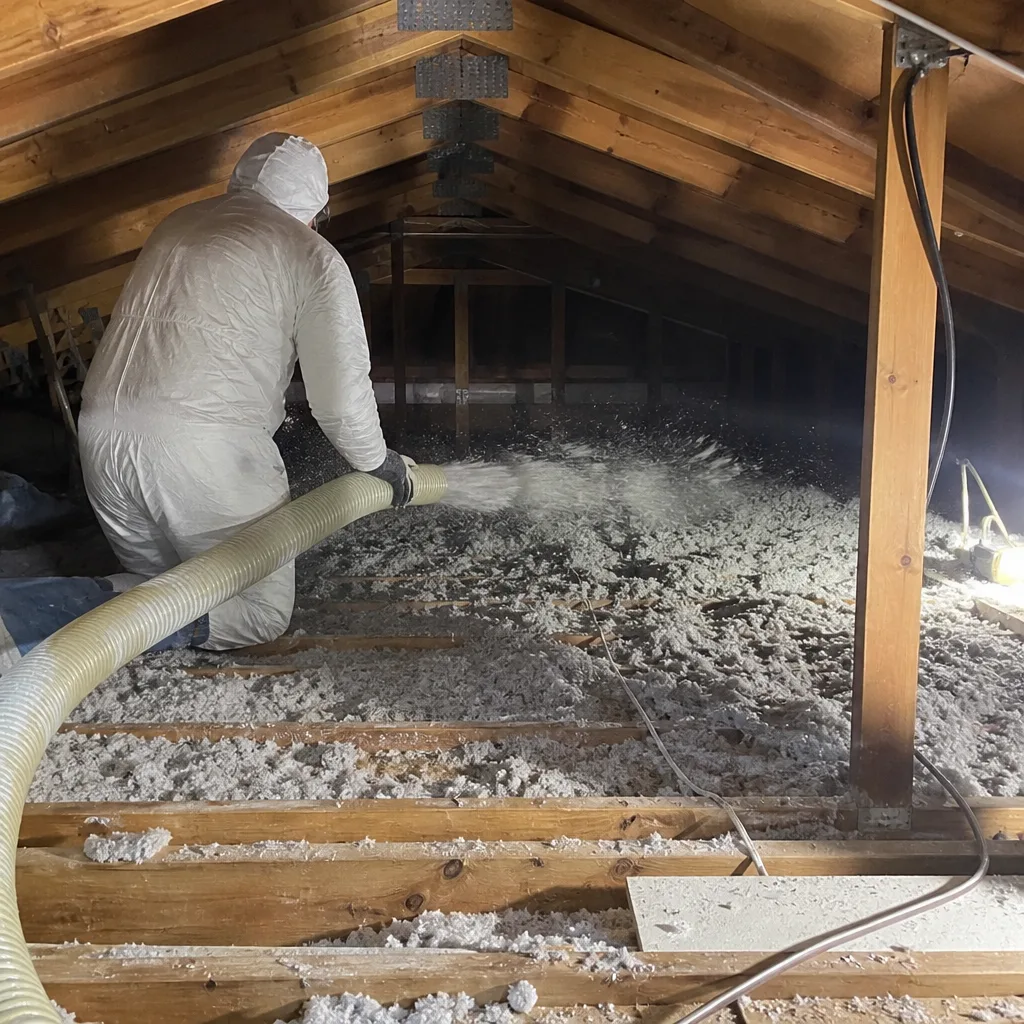
Rim joist sealing also intersects with a related task: sealing the top plates and every penetration that opens into the attic above. If you’re going to the trouble of encapsulating, the crawl and attic are the same air story. Our page on Attic Insulation in North Las Vegas covers how that upper half of the envelope gets sealed first.
The Real Difference Between Store Poly and Contractor Liner
The mil thickness label on a roll of poly tells you less than you’d think. A 6-mil sheet from a hardware store isn’t rated for foot traffic, doesn’t resist punctures from the occasional dropped tool or a technician crawling to a condensate drain, and will begin to degrade under UV from a nearby vent opening. Contractor-grade liner isn’t just thicker – it’s a different product designed for the crawl space environment.
The differences that matter:
- Mil thickness. 6 to 10 mil is a barrier on the floor. 20-mil reinforced liner is specified for floor-to-wall encapsulation where the material has to hold fasteners, resist tears at the footer, and withstand foot traffic.
- Tear and puncture resistance. Reinforced liners have a woven or fiber-mesh layer that stops a puncture from propagating into a rip. Store poly doesn’t, so a small puncture becomes a foot-long split as the material gets dragged across gravel.
- Anti-microbial treatment. Poly alone is a food source for mold once moisture and dust collect on it. Crawl liners are typically treated to resist microbial growth on the surface, which matters in a space that stays at or above 60 degrees with below-grade humidity.
There’s also the question of what goes on the insulation side. Some encapsulation scopes use spray foam at the rim joist, others use rigid board and sealant. Our team sources materials from Owens Corning, Johns Manville, and other major manufacturers – so you’re not locked into a proprietary product that makes the next repair expensive and hard to match.
Nevada Permit Requirements for Crawl Space Encapsulation
Crawl space encapsulation in North Las Vegas may require a building permit, and the deciding factor is whether the work changes the moisture management system of the home. Simple ground cover often falls under maintenance. A full encapsulation that seals foundation vents, changes how the space is ventilated, or includes mechanical equipment routes usually triggers a permit through the City of North Las Vegas Building Division and an energy code inspection.
Whether a permit is required for your specific scope is worth a call to the city before work starts. Here’s what to know about why it matters:
- Unpermitted work shows up on a home sale. During a buyer’s inspection, a sealed and encapsulated crawl space without a permit record is flagged. The buyer’s lender may require it be brought to code, and that cost lands on the seller – or the deal gets renegotiated in the buyer’s favor.
- Insurance claims hinge on code compliance. If a moisture-related failure leads to a claim – mold remediation, joist rot, a flooded crawl – an adjuster reviewing a sealed crawl space installed without permit or inspection has grounds to dispute coverage.
- Inspection isn’t bureaucracy. An inspector verifying that the vapor barrier is properly terminated, that the dehumidifier is correctly wired, and that the space is safe to enter is checking the things that separate a working system from a liability.
If you’re already chasing envelope improvements in North Las Vegas, Crawl Space Encapsulation & Vapor Barrier in North Las Vegas walks through the permit-aware install scopes we see on local jobs.
Why North Las Vegas Crawl Spaces Behave Differently
Desert climate doesn’t mean crawl spaces are dry. It means they’re dry most of the year and then take on water in a two-week window. North Las Vegas receives most of its precipitation in brief, intense monsoon events from July through September, and the soil around a foundation can go from powder-dry to saturated in an hour. In the days after a monsoon, crawl spaces in older neighborhoods near the downtown core take on moisture faster than a homeowner expects.
The local pattern we see:
- Thermal cycling stresses the barrier. North Las Vegas swings from 45°F winter mornings to 110°F summer afternoons. A liner that’s loosely draped will buckle and pull away from fasteners over a handful of years; a properly fastened 20-mil liner absorbs the movement.
- Hard water and alkaline soil. North Las Vegas soil runs alkaline, and slab or foundation edges see mineral-laden moisture. The barrier has to be resistant to a slightly corrosive environment along the footer.
- Dust loading. Crawl spaces here collect fine desert dust that settles on the liner. A textured or reinforced liner handles this; smooth poly gets slick and dusty and becomes a slip hazard for anyone doing future maintenance.
- Older housing stock. North Las Vegas has a mix of mid-century ranches and newer construction from the 2010s onward. Older homes often have pier-and-beam foundations with minimal original vapor protection, while newer builds may have a partial barrier under the slab edge that a full encapsulation has to tie into.
If you live in one of the neighborhoods where the soil drains poorly after heavy rain, the encapsulation scope has to start with drainage, not with plastic. There’s no product worth buying that keeps a crawl space dry when the groundwater table is sitting against the footer.
How to Evaluate a Professional Bid
A complete encapsulation bid is a written scope, not a number. Under Haven Standard Clause 1, our jobs don’t start until the price is written down, the scope is written down, and the warranty is written down – and you should hold any contractor to that standard. Here’s how to read a bid so you can tell a complete scope from a partial one.
A full scope should include:
- Ground cover and wall liner materials by mil thickness and manufacturer, with seam sealing method specified.
- Rim joist air sealing listed as a separate line with the material and fire-rating noted.
- All penetrations – plumbing, electrical, HVAC, radon (if applicable) – called out individually or by count.
- Dehumidifier model, capacity in pints per day, and the cubic footage the unit is sized for.
- Permit responsibility, stated clearly. If the contractor is pulling the permit, say so in the bid.
- Post-installation moisture documentation – what readings they’ll take and what you’ll receive.
- A written warranty that states duration, coverage, exclusions, and how to make a claim.
Bring the bid to us and we will read it with you, free, no obligation. A Free Second Opinion on Any Written Estimate is a standing offer and it’s not a sales tactic – comparing two written scopes side by side is how homeowners learn what a complete job looks like.
While the crawl is being sealed, the attic side usually needs the same attention. Our Spray Foam Insulation in North Las Vegas page covers the rim and cavity options, and the broader Envelope Insulation North Las Vegas home page lists the full envelope service line.
What Post-Installation Documentation Should Prove
Encapsulation is a moisture-control system, and the only way to know it’s working is a measurement taken after the job, not an assurance given before it. A professional installation closes with a documented record – photographs of every wall liner seam, every rim joist seal, and a set of moisture readings taken once the dehumidifier has run.
What a trustworthy record includes:
- Dated photographs of the completed liner at each wall, each pier, and the access hatch, with the footer termination visible.
- Pre- and post-installation moisture readings taken with a pin-type or pinless meter at specific joists. The post reading should show the wood under 15%, or document a drying plan if it isn’t.
- Relative humidity and temperature readings from the crawl space after the dehumidifier has had time to run. A sealed North Las Vegas crawl under 55% relative humidity is performing; 65% and climbing means the system is undersized or has an unsealed penetration.
- The written warranty and the written scope, both delivered before work started and preserved after.
On jobs where attic air sealing is also performed, we publish before-and-after blower-door readings – a pressurization measurement that shows, in one number, how much air the home was losing before and after the work. It’s the single figure that verifies the air-sealing half of the envelope, and it’s what we hold our jobs to. A crawl space encapsulation doesn’t lend itself to a blower-door number the same way, but the principle – document the result – still applies.
Common Mistakes to Avoid
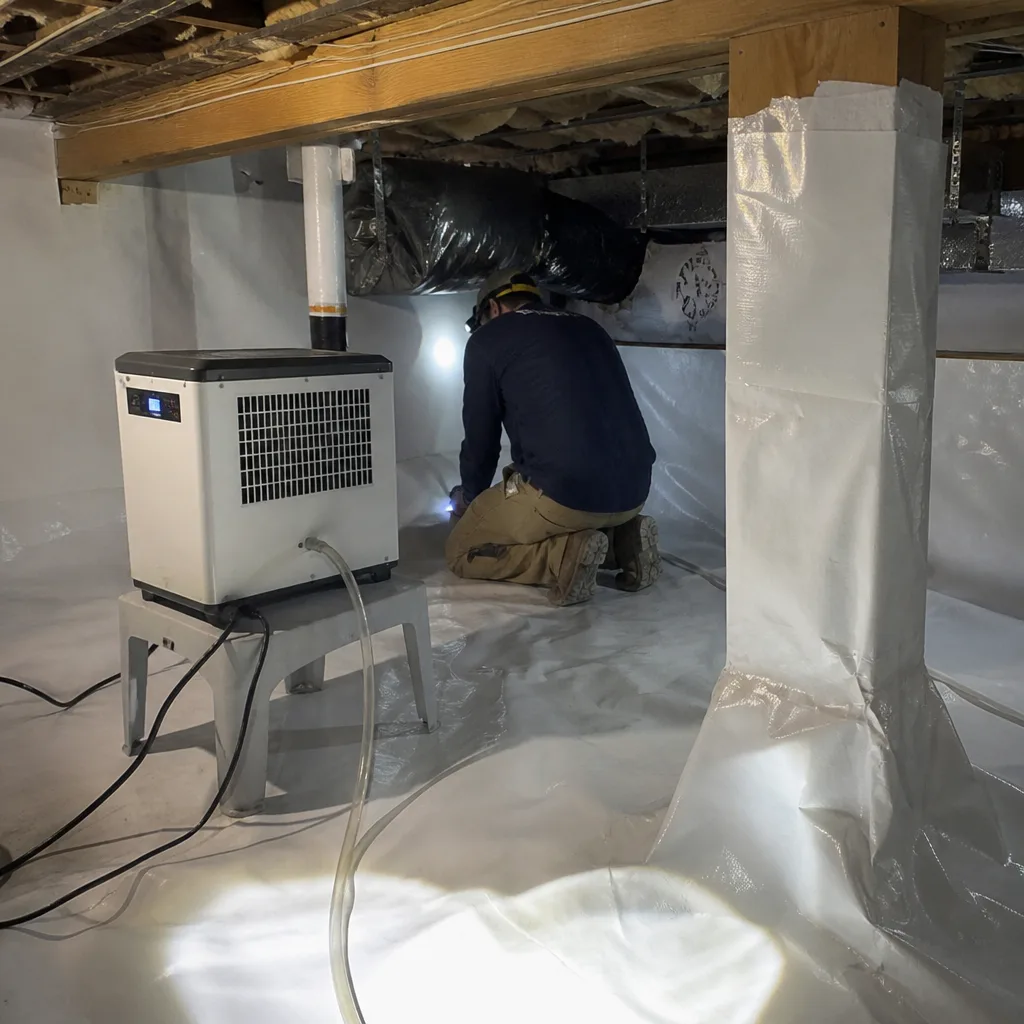
- Laying plastic over wet wood. If the joists read above 20% moisture before the install, the barrier traps that moisture against the framing. Dry first, then encapsulate.
- Sealing vents without a dehumidifier. Sealing foundation vents in a North Las Vegas crawl space without sizing and installing mechanical drying means the space becomes a sealed box that holds humidity. It has to be conditioned.
- Stopping the liner at the top of the foundation. The liner must connect to the rim joist to form a continuous envelope. A liner that ends at the sill plate leaves the biggest leak path unsealed.
- Skipping the permit. North Las Vegas homeowners who skip the permit to save a few hundred dollars create a home-sale and insurance exposure that runs into thousands. Check with the city before work starts, not after.
- Ignoring pest activity. A crawl space with active rodent or termite activity has to be treated and proofed before encapsulation. Encapsulating over an active infestation seals the problem in.
- Using a dehumidifier sized by square footage alone. Crawl spaces are sized by cubic footage and infiltration rate, not floor area. A unit that’s too small runs continuously and never catches up.
- Buying a bid on price alone. The lowest bid usually has the thinnest liner, the smallest dehumidifier, and no post-installation readings. Compare scopes, not totals.
When to Call a Professional
Call a professional if the crawl space has any standing water, visible mold, active rodent or termite activity, or wood moisture readings over 20%. Call if there’s a gas appliance inside the crawl – combustion air and venting have to be recalculated before any sealing happens, and that’s a life-safety issue, not a DIY decision. Call if the rim joist needs sealing to energy code, if you’re changing the venting, or if a permit is required. And call if you’re going to sell the home within a few years – documented installation and permitted work protect your sale price. Envelope Insulation North Las Vegas offers free estimates across North Las Vegas – call (833) 630-4008.
Frequently Asked Questions
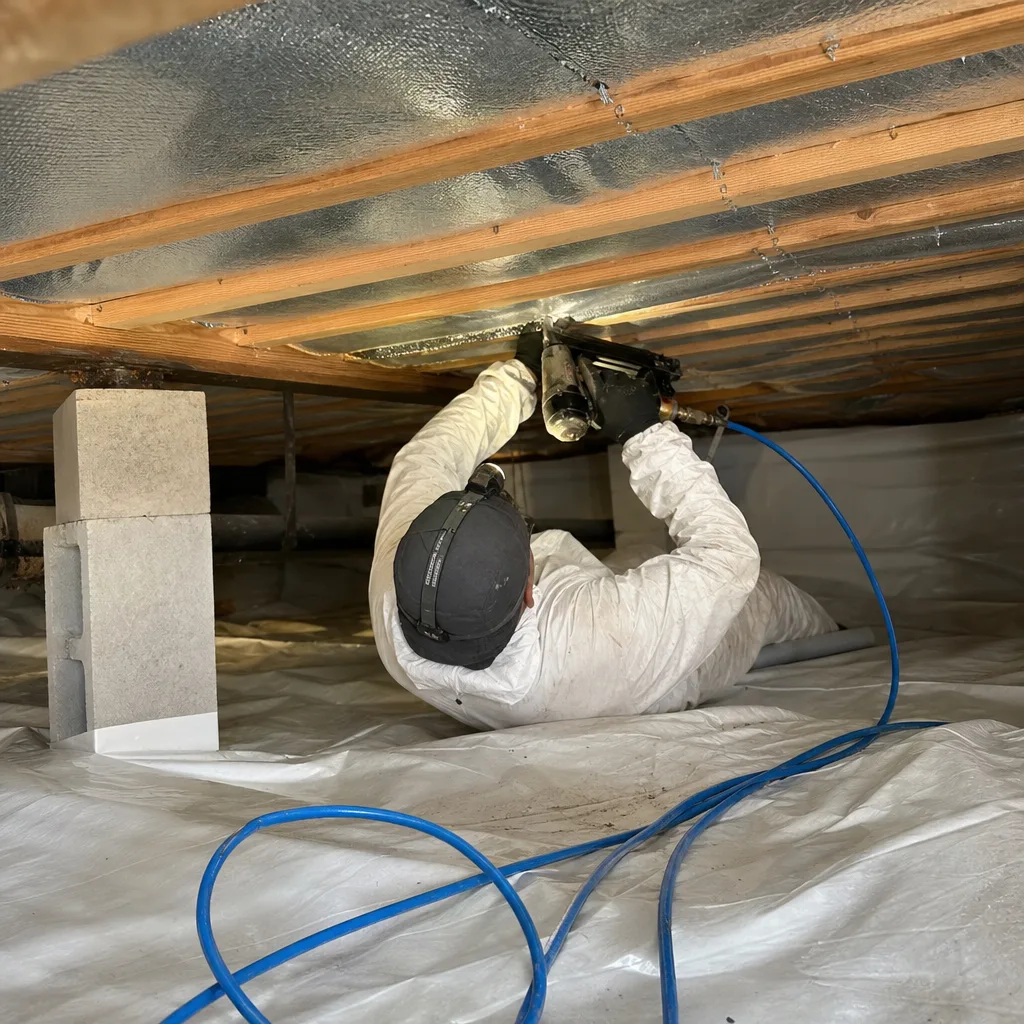
Yes, if the crawl space is dry, accessible, and free of pests, you can install a ground cover vapor barrier yourself. Ground cover placement – overlapping seams by at least 12 inches and running the material 6 to 8 inches up the foundation wall – is a reasonable DIY task. The wall liner, rim joist sealing, and dehumidifier sizing are where professional execution matters. Call (833) 630-4008 if you want a free estimate on the full scope.
Often yes, especially if the work seals foundation vents or changes ventilation. Permits run through the City of North Las Vegas Building Division, and the deciding factor is whether the encapsulation changes the home’s moisture management system. Verify before work starts: unpermitted work surfaces during a home sale and can affect insurance claims. Call us for help understanding what your specific scope requires.
Thickness, tear resistance, and service life. 6-mil poly is a barrier material with no reinforcement, no anti-microbial treatment, and no puncture resistance under foot traffic. A 20-mil reinforced liner is built for floor-to-wall encapsulation, holds mechanical fasteners at the footer, and resists the thermal cycling that a North Las Vegas crawl space sees between winter and summer. The material cost difference is real and so is the longevity difference.
Installed contractor-grade encapsulation typically runs $3.00 to $5.00 per square foot for a full floor-to-wall system with sealed seams and mechanical fastening. Ground cover alone is cheaper, and the price scales with crawl space square footage, the number of penetrations, and whether a dehumidifier is included. That’s a range, not a quote – an exact written price before work starts is the standard. Call (833) 630-4008 for a free estimate.
It can if the space is sealed without mechanical drying. Sealing foundation vents changes how the crawl is ventilated, and in a North Las Vegas summer that means humidity has to be controlled with a properly sized dehumidifier. Encapsulation without a dehumidifier sized to cubic footage and infiltration rate is a common shortcut that fails. Get the dehumidifier sized right and the space stays under 55% relative humidity.
Documentation. You should receive dated photographs of the completed liner at each wall and pier, pre- and post-installation moisture readings from the joists, and relative humidity and temperature readings after the dehumidifier ran. A written warranty and written scope delivered before work started are the baseline. If the contractor can’t produce the record, ask why. At Envelope Insulation North Las Vegas, our Documented Photo Record and 365-Day Done Right Promise come standard – call (833) 630-4008 to see what a complete scope looks like.
The Bottom Line
The DIY vs professional question for crawl space encapsulation comes down to this: ground cover is a material-handling job a motivated homeowner can do, and everything that converts that cover into a sealed system is trade work. Rim joist air sealing involves fire-rated materials and energy code compliance in Clark County. Wall liner has to be mechanically fastened and connected to the footer. Dehumidifier sizing depends on cubic footage and infiltration rate, not square footage. And in North Las Vegas, permit compliance protects your sale price and your insurance coverage. The gap between a $0.08 poly sheet and a $3.00 to $5.00 installed liner is a gap in performance and longevity – and it’s a gap you can close by knowing exactly which side of it each part of the job belongs on.
Call (833) 630-4008 for a free estimate on crawl space encapsulation and vapor barrier in North Las Vegas. You’ll receive a written price before any work starts and a Documented Photo Record when we’re done. Our technicians have up to 10 years of experience, and a live person answers the phone 24/7.
Written by the team at Envelope Insulation North Las Vegas.