
Last updated November 18, 2026
How Long Does Attic Insulation Take? Timelines and What to Expect
A straightforward 2,000 sq ft attic air-seal-and-blow job takes three to five hours of crew time. The catch is that “straightforward” is doing a lot of work in that sentence – it means no recessed lights to box out, no open wall cavities at the top plates, and no ductwork repairs. In North Las Vegas homes built between 1985 and 2005, at least one of those conditions is almost always present. This guide breaks down clock time phase by phase, explains why a proper estimate visit requires an attic entry, and shows you what legitimate scope changes look like versus a contractor who simply guessed wrong.
Quick Answer
Most attic insulation installation projects take anywhere from four hours to a full day of on-site work, with the air sealing phase usually consuming the largest share of that time. For a typical North Las Vegas home, plan on a crew arriving in the morning and wrapping up by mid-afternoon, with a short buffer for discovered conditions like duct repairs or old batt removal. The insulation blowing itself is fast – often just one to two hours – but the air sealing that must precede it is where the schedule is actually made or broken.
Table of Contents
- The Phase-by-Phase Timeline
- Why an Estimate Without an Attic Entry Can’t Give You a Real Timeline
- Common North Las Vegas Conditions That Add Time
- What “One Day” Actually Means for the Homeowner
- Why the Blower-Door Test Comes First (and Last)
- The Documentation Package You Should Receive
- How Material Choice Affects Timing
- Frequently Asked Questions
The Phase-by-Phase Timeline
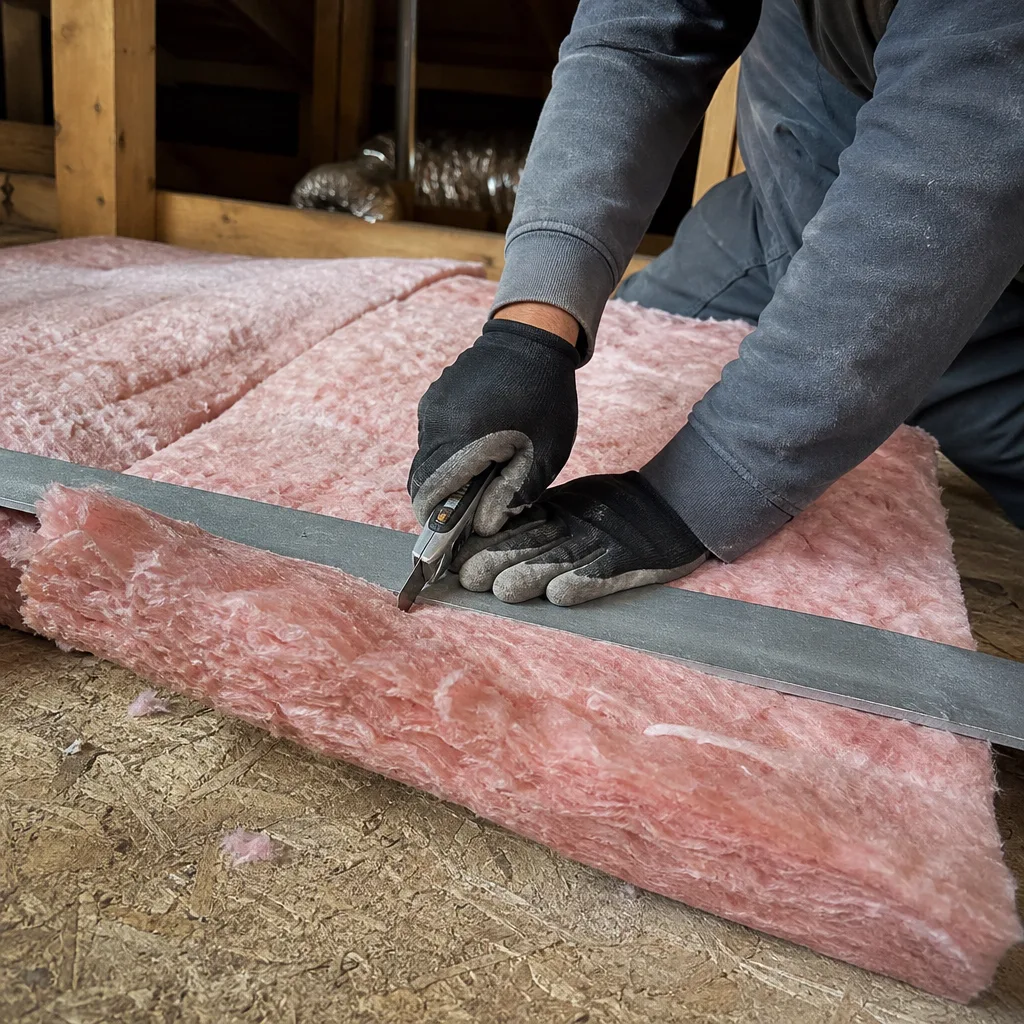
Attic insulation isn’t a single task – it’s a sequence of phases, each with its own time budget. Here’s how the hours typically break down on a home in North Las Vegas before any surprises are discovered.
- Pre-job blower-door test – 45 to 60 minutes. A blower door is a calibrated fan that pressurizes the house so we can measure, in cubic feet per minute at 50 pascals (CFM50), how much air the building envelope is losing. This reading is the baseline number every later decision hangs on.
- Air sealing – 1 to 3 hours. Top plates, can lights, plumbing and wiring penetrations, and open wall cavities at the ceiling line all get sealed before any insulation goes down. The count of bypasses (leak paths) drives the variance here.
- Insulation installation – 1 to 2 hours for blown-in. Blown fiberglass or cellulose goes in fast once the attic floor is sealed and baffled. Spray foam in a small area can add another hour or two depending on application depth.
- Post-job blower-door test – 45 to 60 minutes. The same test reruns after sealing and insulation. The delta between the two readings is the number you actually paid for.
- Cleanup and documentation – 30 to 45 minutes. Photos are taken, depth verifications recorded, and the written report assembled.
On a clean, well-understood attic in a newer North Las Vegas neighborhood like Aliante, that adds up to a four-to-five-hour job. On a 1990s build in the older parts of the city, it can stretch to six or seven hours before the crew leaves.
If you want the full picture of how these phases fit into the broader service, our attic insulation in North Las Vegas page walks through the scope in more detail.
Why an Estimate Without an Attic Entry Can’t Give You a Real Timeline
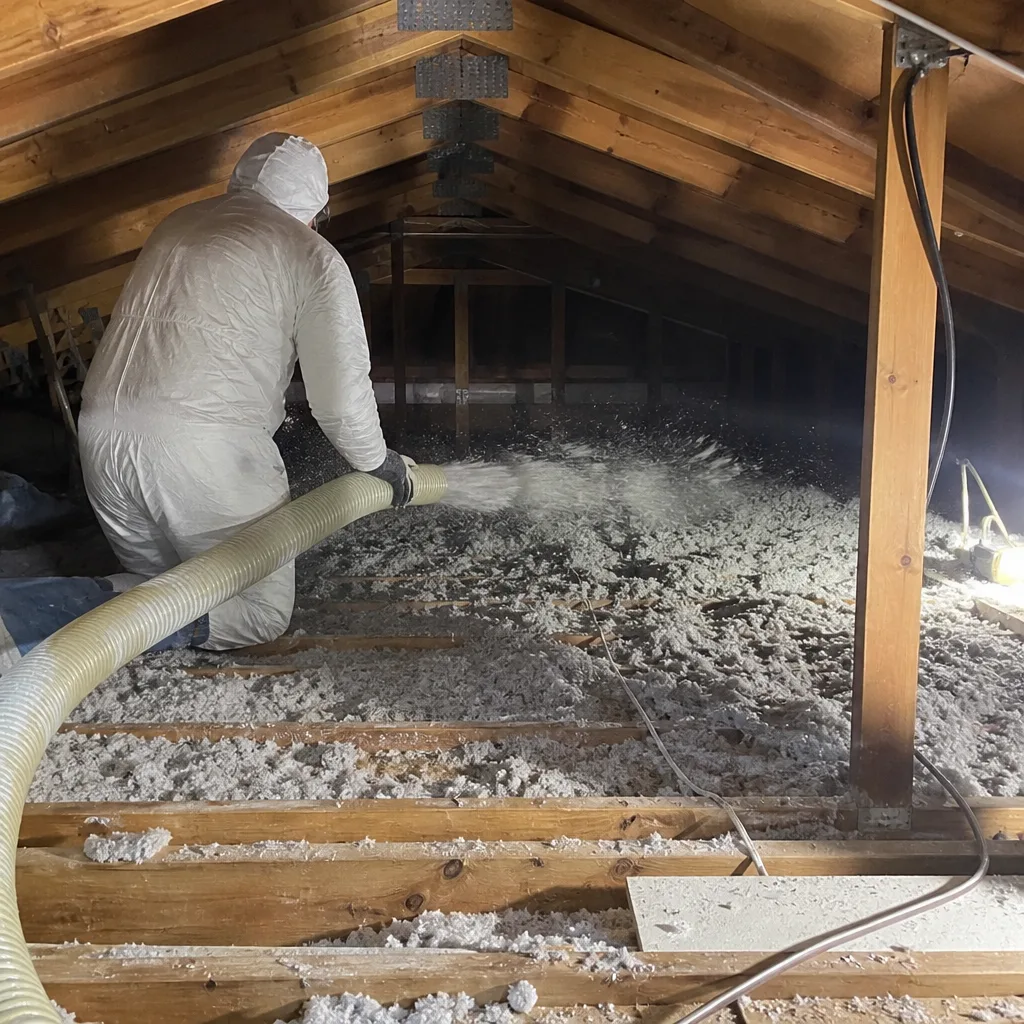
Any contractor who quotes you a hard time estimate without physically entering the attic is guessing. The variables that dictate duration – bypass count, existing insulation condition, duct configuration, decking integrity – live inside the attic, not on a clipboard in the driveway.
We’ve seen estimates written on the hood of a truck from a photograph of the access hatch. That’s not a scope; that’s a hope. A real estimate visit in North Las Vegas includes:
- An actual attic entry, with a headlamp and a moisture meter
- A count of recessed light fixtures and their distances from the top plates
- A check on bath fan ducting to confirm where it terminates
- A look at the existing insulation depth against a tape measure, not eyeballed
- A blower-door test or an agreed plan for one at job start
When a written scope names a realistic time window and a price range, it tells you the person writing it actually looked. Under Haven Standard Clause 1, every job we quote starts with a written price and written scope before anyone lifts a tool, and the time window in that scope is derived from the walk-through, not a template.
Common North Las Vegas Conditions That Add Time
Several conditions show up so reliably in North Las Vegas construction that we now budget for them on the front end rather than treating them as surprises. Here are the ones that most often extend a project:
- Bath fan ducts venting directly into the attic. A bath fan that exhausts into the attic instead of through the roof dumps warm, humid air into the insulation cavity – a mold and rot risk. Rerouting the duct into a proper roof termination can add 30 to 60 minutes.
- Old fiberglass batts that must be bagged before blowing over. Compressed, displaced, or contaminated batts need to come out before new insulation goes in. On a 1,500 sq ft attic, removal and bagging adds one to two hours.
- Vermiculite in pre-1990 homes. Vermiculite from certain sources may contain asbestos; it must be sampled and, if confirmed, handled under proper protocol. That stops the job and restarts it after testing – a scheduling reality, not a sales tactic.
- HVAC ductwork that runs below the insulation line. Ducts buried under blown insulation need to be lifted onto supports before the new material goes down, or they’ll be crushed and lose efficiency.
- Compromised decking or roof sheathing. Soft decking means surface prep or replacement before any material gets installed.
- Open wall cavities at the top plate. In some North Las Vegas builds, the wall cavity is open to the attic – each cavity gets sealed, and each seal adds a few minutes.
Under Haven Standard, when one of these conditions turns up mid-job and legitimately changes the scope, the crew stops, takes photographs, and puts the change in writing before continuing. If you’ve already received a written estimate from another contractor, we offer a free second opinion on any written estimate – bring it in and we’ll read it with you.
What “One Day” Actually Means for the Homeowner
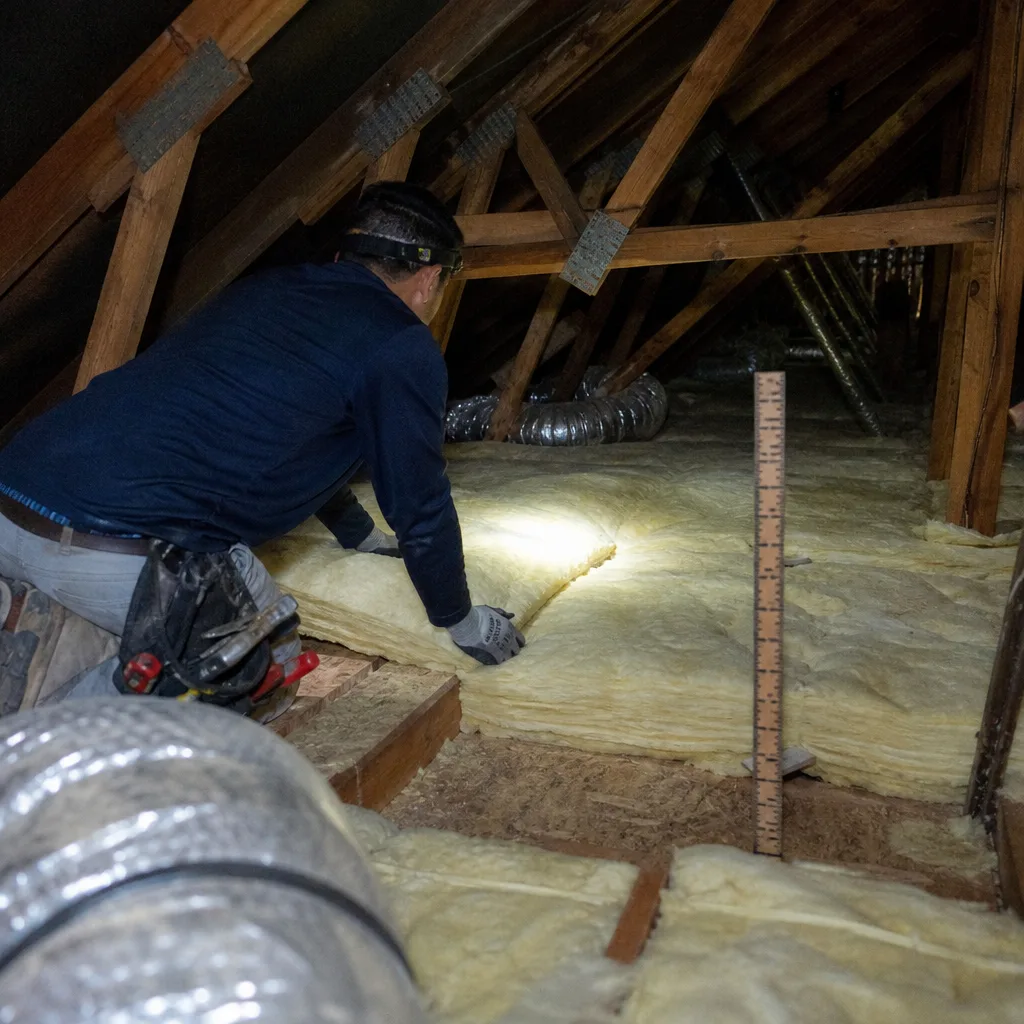
When a contractor says “one day,” what most homeowners hear is “one day of disruption.” Those are different things. Here’s the realistic shape of a job day in North Las Vegas.
Crew Arrival
Plan on a morning arrival window – typically 7 to 9 a.m. – with a text message when the crew is on the way. Under Haven Standard, you get a named technician and a text when they’re en route, not a callback window measured in business days. Our technicians have up to 10 years of experience, and they’ve done enough North Las Vegas attics to know what a 1980s build in the northern part of the city tends to hide.
When the Attic Is Off-Limits
During the pre-job blower-door test and throughout air sealing, the attic is a working zone and shouldn’t be entered without the crew’s OK. Once the blower door is running, doors and windows need to stay closed with the house under pressure – that’s the whole point of the test. Post-sealing and blowing, the attic gets one final walk-through with the crew before cleanup.
Thermostat Settings During the Job
Set the thermostat to “off” or “fan only” during installation. Blowing insulation is a dusty process, and you don’t want the HVAC pulling that dust into the supply plenum or the filter. Once the crew wipes down surfaces and packs out, you can restore normal settings. Expect some dust even with drop cloths and plastic barriers – that’s a sign of a real job, not a problem.
When You Get Your House Back
For most North Las Vegas jobs, the house is yours again by early evening. The crew will leave the work area swept and the access hatch closed. If you’ve been dealing with a hot summer attic, you’ll notice the temperature difference in the rooms below within a few days, once the envelope is actually sealed.
Why the Blower-Door Test Comes First (and Last)
The blower-door test is a pressurization reading that shows, in a single number, how much air your building envelope is losing. It runs before air sealing to establish a baseline and after, so the change is measurable rather than claimed. Every job we complete publishes both readings, and you walk away with a printout – not a promise.
This is where insulation work separates from insulation guessing. Blowing insulation over an unsealed attic floor leaves the bypasses in place, and the home continues to lose conditioned air in the exact places it did before. In North Las Vegas summer conditions, where attic temperatures regularly exceed 140°F, that air loss runs the AC longer and harder than it should. Sealing first and insulating second in that order – is not an upsell; it’s the only order that produces a measurable result.
Two readings. One number per reading. That’s the entire accountability loop.
The Documentation Package You Should Receive
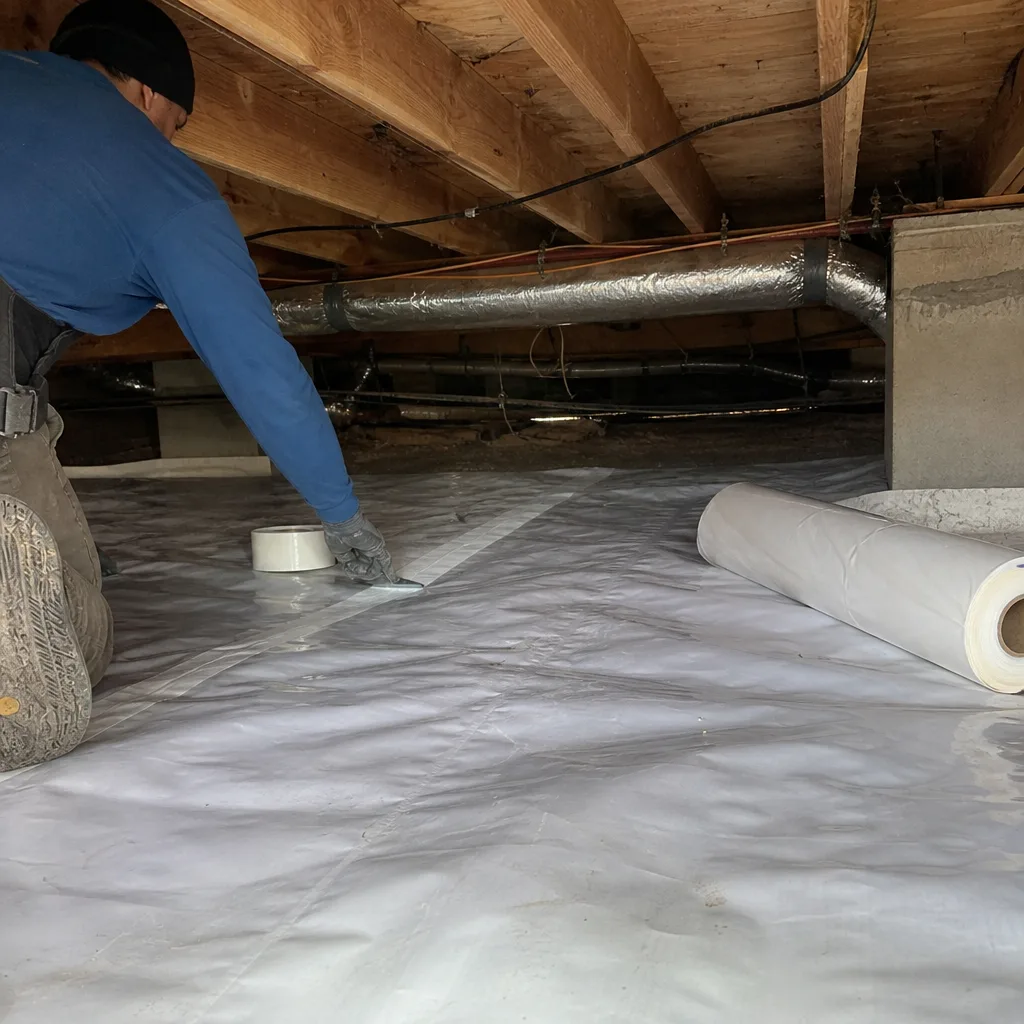
If you receive nothing after the crew leaves, you have no way to check that what you paid for happened. Any contractor worth hiring hands you a package at completion. Here’s what ours includes, and what to expect from any contractor you’re considering.
- A written report of what was sealed, what was insulated, and what product was used – so you know the material brand (Knauf, CertainTeed, or one of the others we source from) and the R-value achieved.
- Before-and-after blower-door printouts showing the CFM50 readings, labeled with date and technician ID.
- Depth-verification photographs of the insulation at multiple sample points, tape measure in frame.
- A written warranty covering the work, separate from the manufacturer’s product warranty.
Turnaround for the report is same-day to next-business-day for most North Las Vegas jobs. Photography is included on every visit – it’s not something you have to request. If you ever move or sell the house, that package is the proof the work was done properly.
How Material Choice Affects Timing
The material you choose changes both the clock time and the sequencing. Here’s how the common options compare on a North Las Vegas attic.
- Blown-in fiberglass is the fastest installation – usually one to two hours for a typical 1,500 sq ft attic. Good performance in our climate and the most cost-effective.
- Blown-in cellulose runs a bit slower than fiberglass but is still within the same window. Slightly higher density, similar time.
- Spray foam takes longer per square foot because of application rate, cure time, and prep (masking, ventilation). A full attic spray-foam job can take a full day on its own. If your goal is also to control air leakage at the roof line, our spray foam insulation in North Las Vegas page covers the trade-offs.
- Mineral wool (Rockwool, for example) is nearly always installed as batts in specific areas rather than the whole attic – it runs slower per square foot than blowing but gets used where fire rating or moisture resistance matter.
Material sourcing comes from familiar names – Owens Corning, Johns Manville, Knauf, Rockwool, CertainTeed, Icynene, Demilec, and GreenFiber – so there’s no proprietary product lock-in. You’re getting the material that fits your attic, not the material someone is contractually obligated to push.
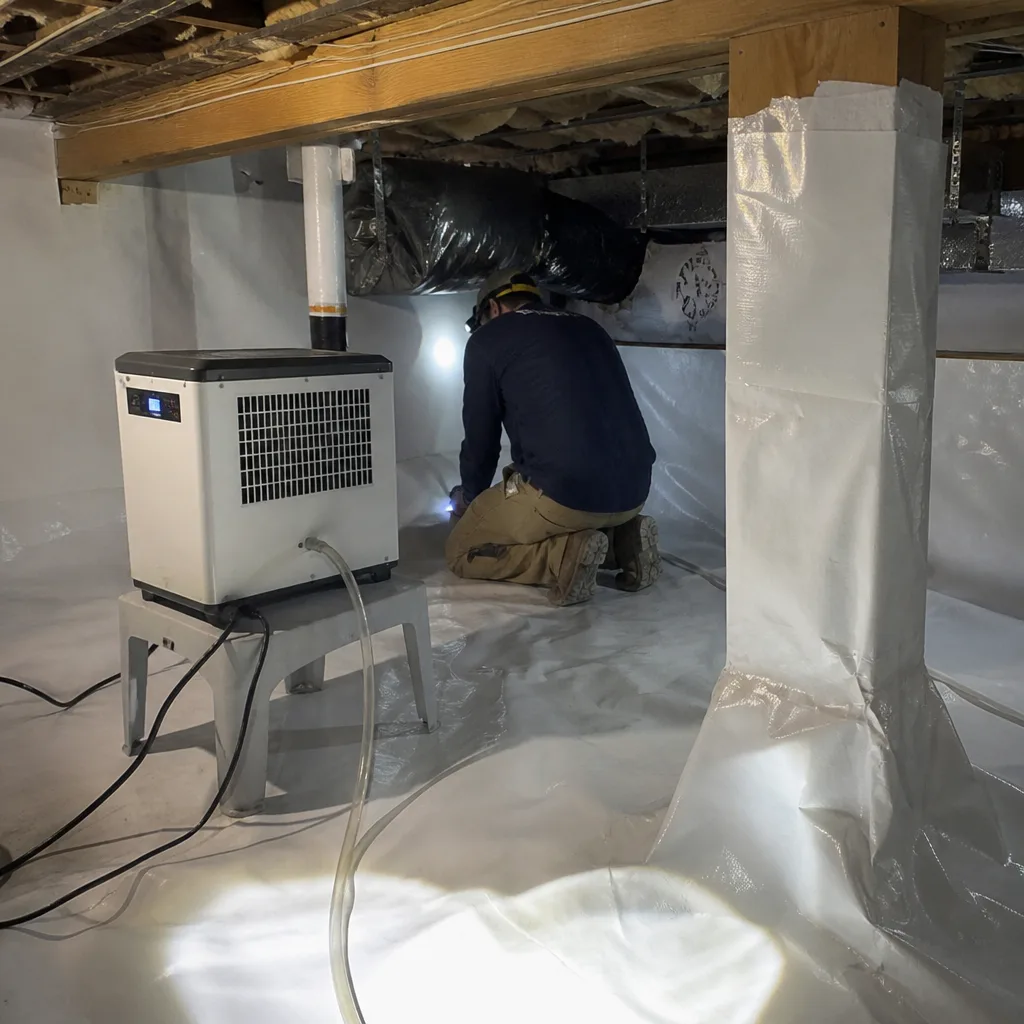
For a related scope item that often runs alongside attic work, see crawl space encapsulation and vapor barrier in North Las Vegas.
Common Mistakes to Avoid
- Accepting an estimate without an attic entry. If the contractor never climbed in, the time estimate is fiction. In a North Las Vegas 1990s build, that fiction can cost you a full extra day of rescheduling.
- Letting insulation go in over an unsealed floor. Blowing over open bypasses locks the air leaks in place. You pay for insulation and still feel the heat.
- Assuming the crew can work around clutter. An attic packed with stored boxes slows every phase. Clear storage before the crew arrives.
- Choosing a quote with no written scope. A verbal “we’ll blow in some insulation” hides the bypass count, the depth target, and the R-value. Per Haven Standard, price, scope, and warranty in writing before anyone starts.
- Ignoring bath fan ducting. A fan venting into the attic is a moisture problem that undermines the whole job. It should be addressed in the scope, not skipped.
- Skipping the post-job blower-door test. Without a “before and after” reading, you have no evidence of what changed.
- Assuming all insulation products perform the same. R-value matters, but so does installation depth. Tape-measure verification is the only proof – not a marketing brochure.
When to Call a Professional
Attic work in North Las Vegas runs into two hazards homeowners should never handle directly: high-temperature working conditions in summer attic environments and the possibility of asbestos-containing vermiculite in pre-1990 homes. Both demand trained professionals with the proper equipment and protocols. Air sealing around can lights, top plates, and duct penetrations requires an understanding of how a building envelope actually behaves under pressure – not a can of spray foam and a Saturday afternoon. If you’ve received an estimate that lacks a written scope, a written price, or a blower-door baseline, get a second opinion before you sign anything. The Envelope Insulation North Las Vegas home page lays out the full service line if you want to see how the pieces fit together. We offer free estimates in North Las Vegas – call (833) 630-4008 and a live person will answer, 24/7.
Frequently Asked Questions
Yes – most straightforward North Las Vegas jobs finish in one day, typically four to seven hours on site. Projects stretch past a single day when discovered conditions (old batt removal, duct repairs, vermiculite handling) require additional scope, and those are handled in writing before continuing. Call (833) 630-4008 for an exact time window based on your attic.
Air sealing typically runs one to three hours and is the single largest scheduling variable in the whole job. The count of bypasses – recessed lights, plumbing penetrations, open top plates – is what drives the duration, and that count can only be measured with an attic entry. If your contractor quotes a hard number without the walk-through, ask how they know.
No – access is primarily to the attic, plus a path to the electrical panel and the interior doorways near the attic hatch. The blower-door test requires closing exterior doors and windows during the reading, but you don’t need to vacate the house. Call (833) 630-4008 to walk through the specifics on your home.
Vermiculite in older attics is treated as a potential asbestos-containing material and must be sampled before any insulation work proceeds. We stop, sample, and proceed according to test results – never over the top of untested material. Homes built before 1990 in North Las Vegas should expect this check.
Same-day to next-business-day for most jobs. The package includes the written scope and warranty, the before-and-after blower-door printouts, and depth-verification photographs with a tape measure in frame. If a contractor doesn’t provide this package, ask what documentation you’ll get in writing before signing.
It depends entirely on the condition – displaced batts can sometimes be supplemented, but contaminated or compressed insulation has to come out. In North Las Vegas, we often find old fiberglass batts that are compressed, moisture-compromised, or missing in sections, and blowing over the top of them wastes the new material. Call (833) 630-4008 for a written price on both approaches so you can compare.
The Bottom Line
The clock time for attic insulation installation is usually less than a day – but only when the job isn’t pretending the discovered conditions away. A 2,000 sq ft North Las Vegas attic air-seal-and-blow runs three to five hours when nothing surprises us, and stretches to a full day when batts need removal, ducts need repositioning, or a bath fan is dumping moist air into the insulation. The important number isn’t the hours worked; it’s the blower-door delta between the before and after readings. Demand a written scope, an attic walk-through, and a documented record. If you get all three, the timeline takes care of itself. Call (833) 630-4008 for a free estimate in North Las Vegas.
Written by the team at Envelope Insulation North Las Vegas.