
Last updated November 18, 2026
DIY vs Professional Spray Foam Insulation: What’s Safe to Do Yourself
Here’s what most spray foam guides leave out: the disposable two-component kits sold at hardware stores contain the same isocyanates as a professional rig. Isocyanates are a Class B carcinogen, and they’re listed right there on the SDS sheet. The respirator that’s actually rated for them – a supplied-air unit, not the N95 you have in your garage – costs more than the kit itself. So the DIY question isn’t mostly about skill. It’s about exposure risk, off-ratio failures you can’t see until months later, and the fact that no one can tell you whether the foam sealed anything without a blower-door test. Below, we draw the line on what’s actually safe to do yourself, and what isn’t, with North Las Vegas conditions in mind.
Quick Answer
Small jobs under about 1 square foot – sealing a pipe penetration, filling a gap around a rim joist in a ventilated basement, closing a non-critical hole in a conditioned wall – are genuinely doable with a can of one-component foam and basic precautions. Anything larger, anything in an enclosed space, and anything that requires a two-component kit is a job for a trained professional with proper respiratory protection and a blower-door test to verify the result. In our experience across North Las Vegas, the failures we get called to fix almost always started as a “small” DIY project that grew.
Table of Contents
- What’s actually safe to spray yourself
- The chemical exposure problem nobody mentions
- Off-ratio foam: the failure you can’t see
- Why North Las Vegas temperatures break disposable kits
- What PPE you actually need (and why a dust mask isn’t it)
- How you verify the job was done right
- Warranty, permits, and resale inspection
- When to DIY and when to call a pro
What’s Actually Safe to Spray Yourself
We’re not here to tell you every can of foam is dangerous. It isn’t. One-component “gap filler” foam in a pressurized can is the standard tool for small seals, and it’s appropriate for jobs at this scale:
- Pipe and wire penetrations under 1 square foot – the gap where a plumbing line or electrical conduit passes through a top plate or exterior wall.
- Rim joist spot repairs in a well-ventilated basement or crawl space – a few inches of gap where the band joist meets the foundation sill, provided you have open air movement and can step away quickly.
- Non-critical gaps in conditioned spaces – around a receptacle box, a window frame, or a door jamb where you’re not trying to establish the primary air barrier.
- Filling existing holes before patching – a small can of foam behind drywall before you mud and paint.
Notice what’s not on the list. Rim joist runs longer than a few feet. Attic floor penetrations. Any junction between conditioned and unconditioned space where you need a continuous seal. And anything requiring the two-part chemistry of a professional system. Those aren’t skill tests – they’re exposure and verification tests.
The distinction matters in a place like North Las Vegas, where the temperature swing between a 110°F attic and an air-conditioned hallway is real, and where a small unsealed penetration into an attic can pull conditioned air out of the house 12 months a year. If you’re going to touch your attic envelope at all, we’d rather see the job done on our attic insulation in North Las Vegas page than see you attempt it with a can and a shop vac.
The Chemical Exposure Problem Nobody Mentions
Walk into any hardware store and the two-component spray foam kits are on the shelf next to the paint. That placement gives them a friendly, consumer-grade feel. Read the label. Both the A-side and B-side canisters contain isocyanates – typically polymeric MDI and related compounds – and the SDS sheet spells out the hazard class in plain language. The same chemistry is in a professional rig. The difference is the scale, the ventilation, and the PPE.
In our experience, homeowners read the “low VOC” or “GREENGUARD” line on the front and stop there. Here’s what they miss:
- Isocyanate sensitization is cumulative. A single low exposure may not cause a reaction. Repeated exposure, even to small amounts, can trigger asthma-like symptoms that don’t go away.
- Isocyanates are heavier than air. They pool in the bottom of a crawl space or basement, in exactly the spot where you’ll be kneeling while you spray.
- Curing foam still off-gasses. The “it’s cured in an hour” claim on the can refers to hardness, not chemical safety. Full off-gassing takes longer.
- Sealed rooms concentrate exposure. A 900-square-foot garage with the door closed is not a ventilated space, even with a box fan running.
The recommendation from every manufacturer’s SDS is the same: use a NIOSH-approved respirator with an organic vapor cartridge at minimum, and a supplied-air respirator in enclosed or poorly ventilated spaces. An N95 is designed to filter particulates, not gases. A dust mask, a bandana, or a “fashion mask” does nothing for isocyanate vapor. We’ve seen the aftermath of DIY jobs in North Las Vegas where someone sprayed for 40 minutes in an unventilated garage and ended up at urgent care. The cost of doing it right – a supplied-air respirator setup – is several hundred dollars, which is more than most of these kits cost.
Off-Ratio Foam: The Failure You Can’t See
Two-component spray foam works because the A-side and B-side chemicals mix at a precise ratio in the gun. Get the ratio right and you get a rigid, closed-cell or open-cell foam that bonds to the substrate. Get it wrong and you get a sticky, brittle, or crumbly material that looks fine from the surface and fails inside the wall cavity six months later.
Disposable kits have a hard time holding ratio. The reasons are mechanical:
- Canister temperature sensitivity. Both canisters are supposed to be at 75°F to 85°F for proper flow. Below 60°F the B-side thickens and the mix skews rich. Above 90°F the A-side pressure can spike.
- Pressure drop. As the canisters empty, the pressure differential between A and B can change, and the mixing chamber doesn’t compensate.
- Partial-use waste. A kit that’s been sitting on a shelf for a week after a partial spray has different chemical behavior than a fresh one.
- Pot life limits. Once mixed, the foam has a working window measured in seconds. The trigger technique matters, and most DIY users don’t get enough practice to find it consistently.
What off-ratio foam looks like: soft spots in an otherwise firm panel, a sticky tack on the surface that never cures, or foam that fails to bond to the substrate and comes away with a pull. What it does over time: it stops insulating, it can trap moisture, and it can leave an air barrier with holes you can’t see. That last part is the biggest issue – because the whole point of foam is the air-seal, not the R-value sitting in the cavity.
Why North Las Vegas Temperatures Break Disposable Kits
Here in North Las Vegas, we have a climate that’s specifically hard on two-component disposable foam. Summer garage temperatures routinely top 100°F, sometimes 110°F, and attic decking hits 140°F. Winter mornings in the north valley can drop into the 30s. Both ends of that range are outside the manufacturer’s recommended application window.
We’ve walked into garages in the Aliante and Centennial corridor where a homeowner tried to spray foam in June, with the doors open for airflow but the outside air at 108°F. The foam cured with visible bubbles and would not bond to the sheathing. Below 60°F – January mornings in parts of North Las Vegas – the B-side thickens and the foam comes out sticky and slow. The home isn’t the problem. The temperature is. That’s why we schedule spray foam work in North Las Vegas for shoulder-season mornings when the substrate is in the 70s, and we use heated hoses and a proportioner that compensates for ambient conditions rather than fighting them.
You can see the difference in performance on our spray foam insulation in North Las Vegas page, where we’ve documented jobs across the temperature range. The short version: the crew has tools that hold ratio through the swings. A disposable kit doesn’t.
What PPE You Actually Need (and Why a Dust Mask Isn’t It)
If you’re going to spray any two-component foam, here’s the minimum PPE that the trade actually uses. We’re listing it so you can see how much it is – not so you can shortcut it.
- Supplied-air respirator (SAR) with a full facepiece, or a NIOSH-approved half-mask with organic vapor cartridges and P100 particulate pre-filters if the space is large and well-ventilated. In a crawl space or basement, the SAR is the only correct choice.
- Chemical splash goggles, not safety glasses. Liquid isocyanate in the eye is an emergency.
- Nitrile gloves rated for isocyanate resistance. Latex isn’t sufficient. Change them the moment they contact the chemical.
- Tyvek coveralls with taped seams, or a similar impenetrable suit. Foam overspray on clothing is a contact hazard all day.
- No exposed skin on the forearms or neck. Isocyanate sensitization can start with a single splash.
A dust mask, an N95, and a kitchen towel do not filter isocyanate vapor. Full stop. The OSHA standard for methylene diphenyl diisocyanate exposure sets an 8-hour limit and a 15-minute short-term limit; the disposable cartridge respirator at Home Depot does not meet that standard in a confined space. The right answer on the professional side is that the crew wears supplied-air and the space is ventilated and monitored. In our experience, when a homeowner asks “can I do this in my attic?”, the honest answer is no – and that’s true in every North Las Vegas house we’ve walked.
If you’re thinking through the whole envelope, the Envelope Insulation North Las Vegas home page lays out how we sequence air sealing, insulation, and ventilation together. It’s a useful map before you buy a single can.
How You Verify the Job Was Done Right
Here’s the piece almost no DIY guide mentions. There’s no way to know if your spray foam actually sealed anything without a blower-door test – a pressurization measurement that shows, in a single figure, how much air your building envelope is losing. Before-and-after CFM50 (cubic feet per minute at 50 pascals of pressure) is the number.
When we test a North Las Vegas home before we start, the reading is often between 3,500 and 5,500 CFM50. That’s the amount of conditioned air escaping through every unsealed gap in the envelope. After sealing and insulation, that number typically drops by half or more. Without the test, you have no idea whether your foam went in right, whether it bonded to the substrate, or whether the air barrier is continuous. Gaps that look sealed – foam pressed into a hole and cured around the edges – are invisible failures if the foam didn’t bond to the substrate. Blower door finds them. The eye doesn’t.
This is why we publish before-and-after blower-door numbers on every applicable job. Not because the numbers are flattering – sometimes they reveal a problem we need to fix – but because they’re the only evidence the customer can actually verify. The photo record we deliver shows where the foam went. The blower-door reading shows what it did.
If your goal is to stop air leaks before you insulate – which under our Haven Standard is the only correct order – the attic insulation in North Las Vegas page covers the air-sealing-first sequence. Foam over an unsealed attic floor traps the same air leaks under a blanket of insulation. The blower door tells the truth about whether that happened.
Warranty, Permits, and Resale Inspection
Two things follow you after the job is done: the manufacturer’s warranty and the home’s resale record.
Manufacturer warranties on spray foam – Icynene, Demilec, and similar formulations – typically require installation by a licensed applicator with documented material batch numbers, ambient conditions, and application thickness. A homeowner’s self-applied kit is outside that coverage. If the foam fails in four years, you’re on your own. We source our foam from those manufacturers because the warranty chain is intact when a trained crew installs it.
Permits are the other side. In North Las Vegas, spray foam applied in a conditioned attic assembly – which we do frequently, because it moves the thermal boundary to the roof deck – often requires a permit under current building code, and inspection may include a check that the foam’s ignition barrier is correct and that no unsealed penetrations remain. An unpermitted foam job shows up during a resale inspection and can become a repair bill before closing. The buyer’s inspector doesn’t care that the foam looks fine. They care that there’s no paper trail.
Under our Haven Standard, every job includes a written scope, a written warranty, and a Documented Photo Record – the paperwork the next seller, buyer, or inspector will want. The 365-Day Done Right Promise applies whether we did the work today or as part of a larger envelope project.
When to DIY and When to Call a Pro
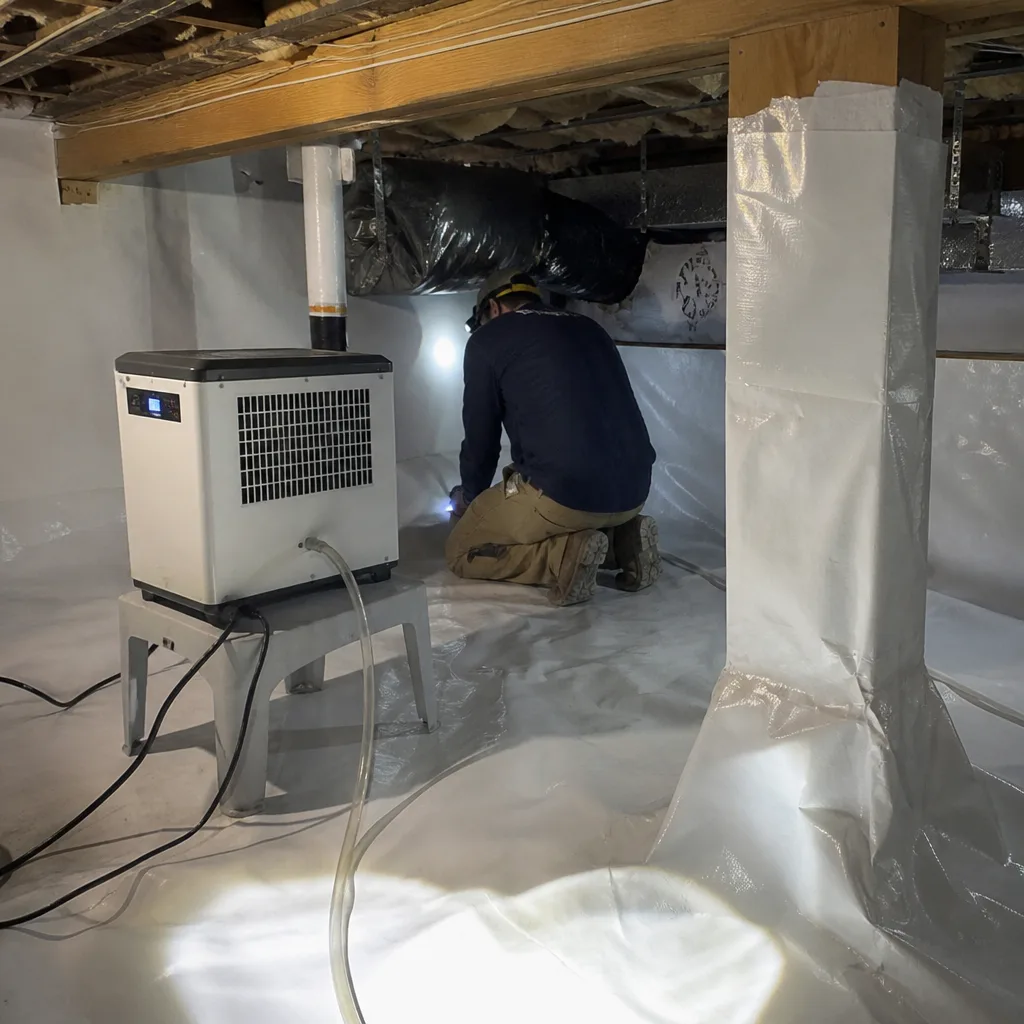
Here’s how we’d actually draw the line, and we say this in North Las Vegas homes regularly:
DIY is a fine choice when:
- The job is a single penetration, under 1 square foot, in a well-ventilated space.
- You’re sealing a non-critical gap and the foam is one-component, cured by moisture in the air, with no isocyanate hazard.
- You’re treating a rim joist area of a few feet in a basement that already has open airflow, and you’re not trying to establish a primary air barrier.
- The job doesn’t affect a conditioned attic assembly, doesn’t need a permit, and doesn’t touch the continuous air barrier of the house.
Call a professional when:
- The job requires a two-component kit – rim joist runs, attic floor sealing, wall cavity injection, or any open-cell application over 20 square feet.
- You’re working in an enclosed space without mechanical ventilation.
- You want to know whether the job worked – a blower-door test is the only way to verify, and it requires calibrated equipment.
- You’re touching a conditioned attic assembly, anywhere near a combustion appliance, or a wall that will be closed up.
- You need the manufacturer warranty to hold, or the resale inspection to pass cleanly.
Most homeowners we meet in North Las Vegas start with “just the small stuff.” About half of them end up calling us after the second trip to the hardware store. The math usually flips when you add the respirator, the goggles, the coveralls, and the canisters that didn’t come out right. If you want a straight read on what your house actually needs, the crawl space encapsulation and vapor barrier in North Las Vegas page is the place to start if your project begins below the floor.
Common Mistakes to Avoid
- Spraying over an unsealed attic floor. Foam over unsealed top plates traps the air leak under the blanket. Blower-door numbers barely move, and you’ve spent real money for very little.
- Buying a two-component kit and treating it like a spray can. The canister temperature, pressure balance, and pot life matter. A kit sprayed cold in a January North Las Vegas garage will not cure right, and the failure shows up six months later.
- Wearing a dust mask in a crawl space. Isocyanate vapor passes straight through the pleats. The respirator is the job, not the accessory.
- Applying foam in a 100°F+ garage or attic. Summer heat in North Las Vegas pushes both canisters and substrate outside the manufacturer’s window. The foam looks fine until you press on it.
- Not pulling a permit on a conditioned attic assembly. The foam is visible during resale inspection and the paper trail protects you more than the foam itself.
- Skipping the blower-door test because “it looks sealed.” Visible foam and continuous seal are not the same thing. Only the test tells you which one you have.
- Mixing foam brands on a single job. Icynene and Demilec formulations are not interchangeable when the air barrier needs to be continuous. Pick one and stay with it.
When to Call a Professional
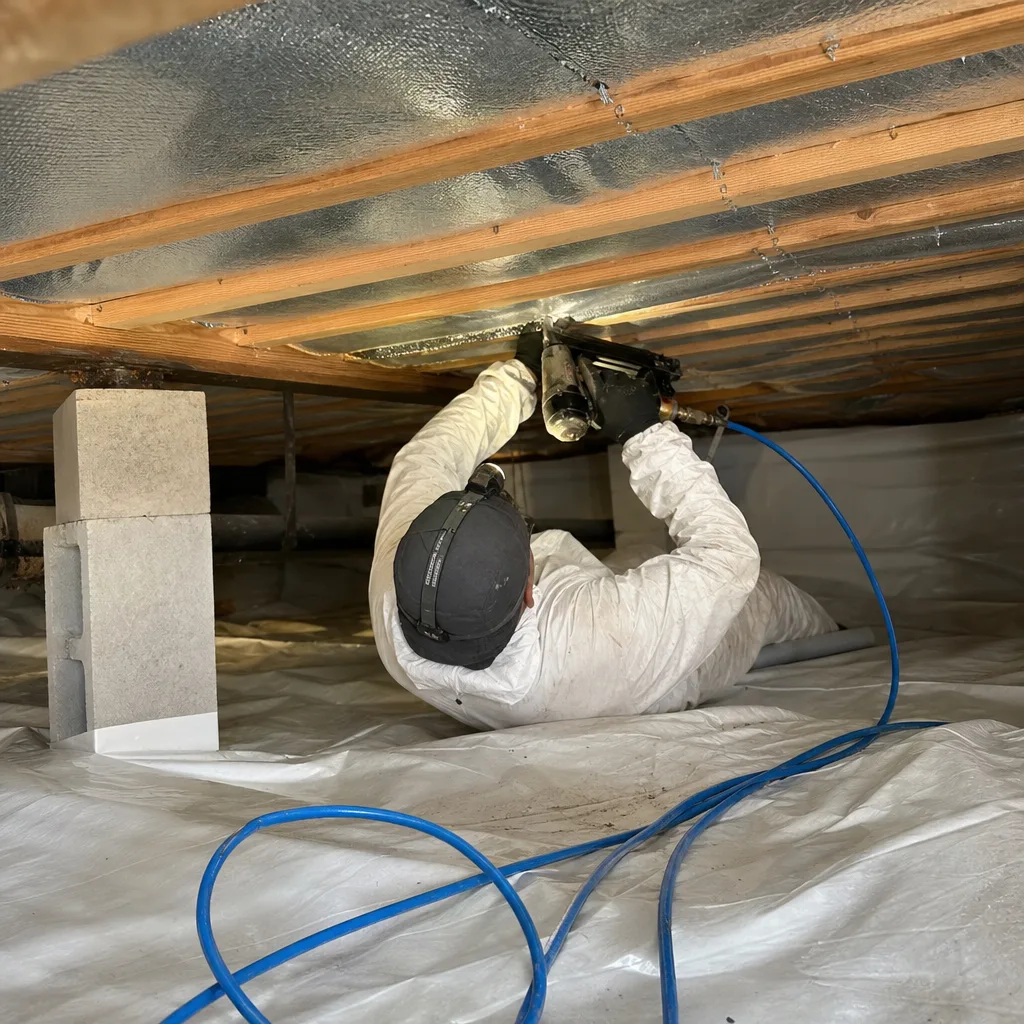
Call a professional when the foam matters to the envelope as a whole – which in North Las Vegas is most of the time. If the job involves a conditioned attic, a rim joist run longer than a few feet, a wall cavity, or a space without mechanical ventilation, the correct answer is a trained, background-checked crew using a proportioner and supplied-air respirators, followed by a blower-door test that shows what actually changed. The same holds if you need the manufacturer warranty to survive contact with the installer, or the resale inspection to pass without a follow-up visit from the buyer’s inspector. Envelope Insulation North Las Vegas offers free estimates in North Las Vegas – call (833) 630-4008.
Frequently Asked Questions
No. Two-component spray foam at that scale requires a proportioner, heated hoses, supplied-air respirators, and a post-install blower-door test to verify the air barrier. Disposable kits cannot hold ratio through a 200-square-foot application, and the isocyanate exposure in an enclosed attic is above what any cartridge respirator is rated for. Call (833) 630-4008 for an estimate – we’ll tell you the blower-door number before and after.
The active chemistry is the same class – two-component polyurethane with isocyanates on both sides. The professional rig differs in the proportioner, which holds the A/B mix ratio under temperature and pressure changes, and in the safety equipment the crew wears. The kit and the rig are related; the safety envelope around them is not.
For a typical attic floor in a North Las Vegas single-family home, most spray foam jobs where we’re sealing and insulating run in the low thousands, and the range depends on square footage, foam type (open-cell vs. closed-cell), and whether air sealing is being done first. We publish a written price before any work starts – no call-for-pricing. Call (833) 630-4008 and we’ll give you the number for your house.
An N95 filters particulates – sawdust, drywall dust, spray droplets. It does not filter isocyanate vapor, which is a gas at room temperature and passes through the filter media. Proper respiratory protection for two-component foam is at minimum a NIOSH-approved cartridge respirator and, in any enclosed space, a supplied-air unit.
In most cases, yes. Icynene, Demilec, and similar manufacturer warranties require documented installation by a licensed applicator with batch numbers, ambient conditions, and application thickness on file. A homeowner’s self-applied kit falls outside that documentation chain, which means the warranty is not enforceable if the foam fails.
No. Visible foam that appears continuous can still have hidden gaps where the material didn’t bond to the substrate, and only a blower-door test – which measures CFM50 before and after – confirms the air barrier is continuous. The photo record shows where the foam went. The blower-door reading shows what it actually did.
The Bottom Line
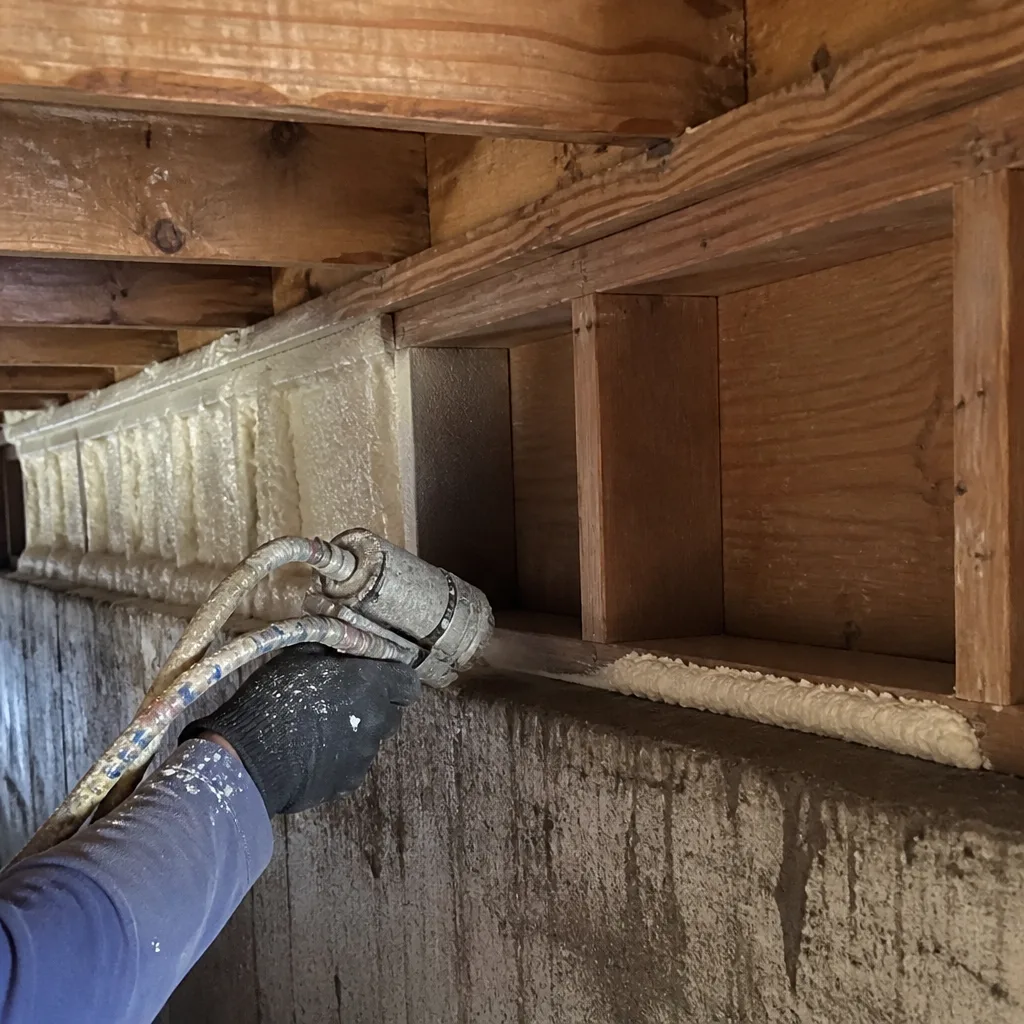
Spray foam is not a “figure it out in the garage” product. The chemical exposure is real, the off-ratio failures are invisible until they aren’t, and the only way to verify the job worked is a blower-door test. Small penetrations under about 1 square foot, in a ventilated space, with a can of one-component foam and basic precautions – fine, do those yourself. Anything that involves two-component kits, conditioned attics, wall cavities, and enclosed spaces – that’s a trained professional with proper PPE and a measurement at the end. In our experience, the homes in North Las Vegas where the foam actually delivers the performance are the ones where the sealing came first, the install was documented, and the blower-door reading changed. If you want to know what your house would read before and after, call Envelope Insulation North Las Vegas at (833) 630-4008 for a free estimate.
Written by the team at Envelope Insulation North Las Vegas.