
Last updated November 18, 2026
How to Hire an Insulation Contractor in North Las Vegas: A Step-by-Step Guide
Nevada contractor license NV C-2 covers insulation work, but it verifies legal standing, not building science competency. A contractor can hold that license and have no blower-door equipment, no thermal camera, and no process for measuring what they installed. In North Las Vegas, that gap matters more than anywhere else in the valley. Summer attic temperatures routinely climb past 150°F, the desert swings 30 degrees between afternoon and midnight, and a poorly sealed attic floor leaks conditioned air year-round. This guide will walk you through how to hire an insulation contractor in North Las Vegas who can prove the work performed – not just show up with a hose and a pickup truck.
Quick Answer
To hire an insulation contractor in North Las Vegas, verify the NV C-2 license through the Nevada State Contractors Board, then filter the remaining candidates by one question: do you test before and after with a blower door, and will you put the post-job number in the written scope? A contractor who can’t answer that with a documented sample job file is a material-delivery contractor, not a performance contractor – and that distinction is what determines whether your North Las Vegas home actually gets tighter or just looks fuller in the attic.
Table of Contents
- Step 1: Verify the License Before Anything Else
- Step 2: Ask the Five Interview Questions
- Step 3: Read the Written Scope Line by Line
- Step 4: Spot Red Flags in the Quote
- Step 5: Get the Payment Schedule Right
- Step 6: Require Before-and-After Performance Data
- What’s Specific to North Las Vegas Attics
- Common Mistakes to Avoid
Step 1: Verify the License Before Anything Else
The Nevada State Contractors Board maintains a public license lookup at nscb.nv.gov. Search the company’s legal name – not the marketing name on the truck – and confirm four things.
- License classification. NV C-2 covers insulation and weatherstripping. A general contractor holding a B license can legally subcontract insulation work, but if the company bidding your job doesn’t hold C-2, they’re subcontracting the actual install. Ask who will be on the ladder.
- License status. Active, not suspended, expired, or in a pending disciplinary state.
- Complaint history. The NSCB site lists disciplinary actions and complaint dispositions. A single resolved complaint is not disqualifying. A pattern of complaints about incomplete work or failure to honor warranties is.
- Proof of insurance. Ask for a certificate of insurance naming the property, and call the carrier to confirm the policy is active. A certificate is a photograph of an insurance policy on the day it was printed – the phone call is what verifies it’s still live.
Once the license checks out, ask for the contractor’s current bond information. Nevada requires residential contractors to carry a contractor’s bond, and while bond amounts are modest, the bond is what you claim against when a contractor walks off a North Las Vegas job mid-install. That happens in the valley more than most homeowners realize, especially in the northern parts of the city where speculative flips from 2019 – 2022 left attics with partially finished insulation jobs that were never closed out.
Step 2: Ask the Five Interview Questions
These are the questions we’ve watched separate performance-based contractors from the ones who just deliver material. Ask all five. The answers matter less than whether the contractor can answer without deflecting.
- “Can you walk me through a completed job file – not a reference list, an actual file?” A performance contractor keeps a job file with a written scope, pre-job blower-door reading, post-job reading, and photos of the air-sealing work. If they can’t produce one on request, they don’t have one.
- “What was your last job’s pre- and post-blower-door numbers?” Any contractor running a blower door remembers the last reading within a few hundred CFM50. If they say “we don’t track that,” you’ve found the answer.
- “Who does the air sealing, and when does it happen?” The correct answer is “before the insulation goes in, and by the same crew or a crew trained on air sealing.” Incorrect: “our insulation crews do it along the way.” You can’t seal after you’ve blown.
- “What’s your wall and floor insulation spec for a North Las Vegas home built in 1998?” The answer should name a specific R-value, a specific material, and a specific install method. Vague answers here usually indicate the contractor installs whatever the supplier had on the truck.
- “What happens if the post-job blower-door target isn’t met?” Under a documented warranty, they come back and fix it. Under a generic warranty, you call and leave a voicemail.
If you want a reference point, our Envelope Insulation North Las Vegas home page describes exactly what we hand every customer: a written scope, a written price, and before-and-after blower-door readings on the address. That’s the standard, and it’s the standard to hold every North Las Vegas contractor to.
Step 3: Read the Written Scope Line by Line
A written scope is not a one-line invoice. It’s a document that specifies enough detail that a third party could inspect the job afterward and determine whether it was done correctly. Here’s what a proper scope contains for a typical North Las Vegas attic job.
- Material type and manufacturer. “Blown-in fiberglass” is not enough. “Blown-in fiberglass, Johns Manville Climate Pro, or equivalent” tells you what was specified and gives you leverage if something different was installed.
- Installed thickness and settled density. R-value depends on settled thickness, and settled thickness depends on installed density. A scope that says “R-38” without a post-install depth check is a scope you can’t verify. Ask for the target depth in inches.
- Coverage area. Square footage of the attic floor to be covered, and whether existing insulation is being removed first or being topped up.
- Air-sealing locations, itemized. Top plates, can lights, plumbing penetrations, electrical boxes, soffit intersections, and the attic hatch. Each is a line item. “Air sealing included” with no itemization means it’s not specified, and unspecified work doesn’t get done.
- Post-job blower-door target. A CFM50 target the contractor commits to in writing. This is the single most important line in the document, and the one most quotes leave out.
- Written warranty terms. What’s covered, for how long, and what the remedy is when it’s not met.
Every Envelope Insulation job begins with this document, and it’s why a written price comes before any work starts – under our 365-Day Done Right Promise, if it’s not done right, we make it right, and that promise only holds weight because the scope is in writing. Ask every contractor for the same.
Step 4: Spot Red Flags in the Quote
Most bad quotes look clean on the surface. These are the patterns that should make you slow down.
- Square-footage pricing with no depth specification. “$2.40 per square foot” tells you nothing about R-value, thickness, or whether air sealing is included. It’s a price without a spec.
- “Air sealing included” with no itemized list. If you can’t point to the exact penetrations being sealed, it’s not specified work.
- R-value claims without a thickness spec. R-value follows installed depth. If the contractor won’t commit to a depth and a settled density, the R-value is aspirational.
- No mention of thermal imagery or blower-door testing. A quote that mentions neither is a quote from a contractor who doesn’t measure.
- A quote thrown together during the walkthrough. A proper site assessment takes 30 – 45 minutes and involves measuring the attic depth, inspecting the thermal boundary, and checking the electrical penetrations. Fifteen minutes and a handshake isn’t a site assessment.
- Cash discounts, “sign today” pricing, or pressure to pay before visiting. None of those are performance-based sales techniques.
One more: any quote that offers to “top off” existing insulation without an air-sealing line item is telling you what they plan to skip. Blowing insulation over an unsealed attic floor in a North Las Vegas home is how you end up with a thicker attic and the same energy bill.
Step 5: Get the Payment Schedule Right
Residential insulation work has a material and labor cost profile that doesn’t justify a large upfront payment. Material is typically picked up the morning of install, and the crew is on site for one day on most single-family homes.
- Reasonable structure: a small deposit at contract signing (10 – 20%), material delivery payment the morning of install, and final payment after the post-job walkthrough and blower-door reading.
- Question heavily: any request for more than 50% upfront on a residential insulation job. There’s no material cost justification, and if the contractor needs that cash to buy supplies for your job, they’re funding the previous job with your money.
- Walk away: any request for full payment before install, or a request for cash with no receipt.
Final payment should always be tied to a post-job walkthrough. That walkthrough is when you see the photo record, the pre- and post-blower-door numbers, and the settled-depth measurement. If a contractor won’t tie final payment to that walkthrough, they’re telling you what to expect from the follow-up visit.
Step 6: Require Before-and-After Performance Data
A blower-door test – a pressurization reading that shows, in a single number, how much air your building envelope is losing – is the only objective measure of whether the air-sealing work actually happened. It’s also the number most North Las Vegas homeowners are never shown. That’s the problem worth fixing.
The reading is expressed in CFM50: cubic feet per minute of air leakage at 50 pascals of pressure differential. A pre-job reading tells you what you’re losing. A post-job reading tells you what the air sealing changed. On a typical North Las Vegas single-story home built in the mid-1990s, we regularly see pre-job readings in the 4,000 – 5,000 CFM50 range; a completed air-sealing scope on a home that size can drop that to 2,000 – 2,800 CFM50. On homes built after 2015, the pre-job readings are lower because the builder’s envelope is tighter, but the delta still matters – and the pre-job number is the only way to know whether a top-off is even worth doing.
Ask for the number in the contract. Ask for it in writing on the invoice. If a contractor can’t produce it, they can’t prove the work performed, and you’re buying insulation on faith. That’s the line we hold on every applicable job, and it’s the line we’d suggest holding on any North Las Vegas contractor bidding your project – air sealing happens before insulation, and it gets measured, or it doesn’t count.
What’s Specific to North Las Vegas Attics
North Las Vegas attics are not Las Vegas attics, and they’re not Henderson attics. The specific challenges are worth knowing before you sign.
Heat load. Summer attic temperatures in the northern valley routinely exceed 150°F, and in homes with radiant barrier foil installed over the rafters, the surface temperatures can be higher. That heat stress is why insulation degradation in North Las Vegas runs faster than in milder climates, and it’s why the settled depth in an attic built in 2002 is often significantly less than what was originally installed.
Ductwork. Many mid-2000s North Las Vegas homes have flex duct running through the attic with minimal sealing at the boots. When we seal an attic floor, we find duct leakage that wasn’t visible from the living space. Ducts aren’t insulation, but they interact with the envelope, and any contractor who ignores them during a top-off is missing half the problem.
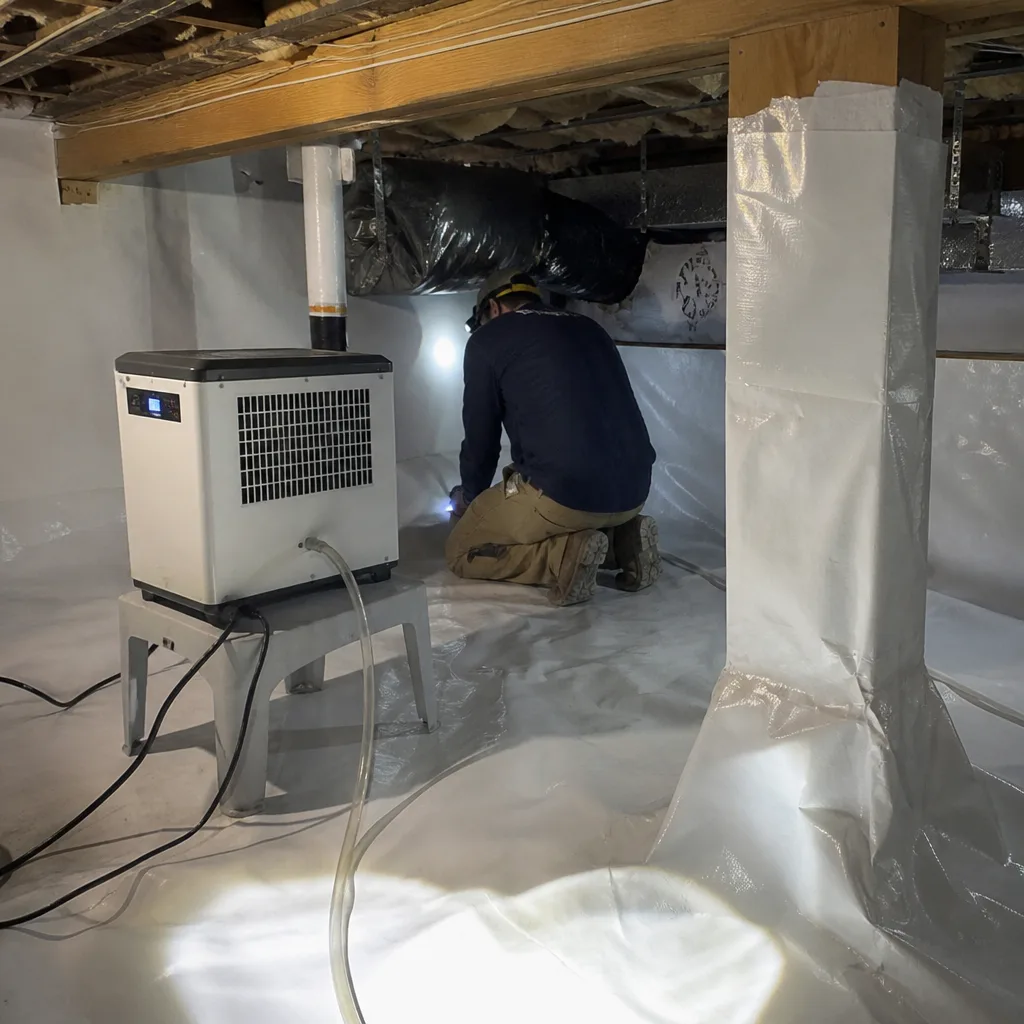
Stucco and vapor behavior. Dry desert air and stucco walls mean vapor barriers matter less on walls but matter a lot in crawl spaces. If the contractor proposes wall insulation without a vapor assessment, ask why. Our Crawl Space Encapsulation & Vapor Barrier in North Las Vegas page explains how vapor behavior works here in more detail.
Older neighborhoods. Homes in the older parts of town – much of the housing stock from the 1970s and 1980s – often have knob-and-tube-era penetrations, dropped soffits, and original batt insulation compressed to a fraction of its rated R-value. These homes are the highest-value targets for a proper air-seal-and-blow, and they’re also where generic “attic insulation” quotes fall the furthest short. Our Attic Insulation in North Las Vegas page covers how the work changes by vintage.
Common Mistakes to Avoid
- Hiring on price alone. The cheapest per-square-foot bid in North Las Vegas is almost always the one that skips air sealing entirely. You’ll pay for the square footage twice, once now and once when the energy bill doesn’t move.
- Skipping the license lookup. The NSCB lookup takes two minutes. Not running it before signing a contract on a $3,500+ job is the single most common failure we hear about.
- Letting the contractor seal after the blow. Once insulation is in the attic, you can’t effectively find the penetrations. Sealing first is the whole point.
- Accepting a quote with no blower-door target. If the number isn’t in writing, you have no way to hold the contractor to a result. That’s not a warranty, it’s a hope.
- Paying final before the walkthrough. The photo record and blower-door reading are your evidence. Get them before you hand over the last check.
- Assuming newer homes are exempt. North Las Vegas homes built between 2015 and 2023 often have insulation specs that met code at the time but left significant envelope leakage at the top plates and penetrations. Testing reveals it; assuming doesn’t.
- Forgetting spray foam on rim joists and knee walls. If the contractor proposes only blown-in attic floor work, ask what they’d do about the rim joist and knee-wall assembly. Our Spray Foam Insulation in North Las Vegas page covers where spray foam earns its cost and where it doesn’t.
When to Call a Professional
Some insulation work is a professional’s call, and it’s worth naming the situations plainly. Call a contractor when the attic has no visible insulation depth to measure, when the energy bill spiked after a specific change (new HVAC, new windows, or a nearby construction project), when you’ve found rodent activity in the insulation, when the attic hatch is hot to the touch on a summer afternoon, or when you’re selling and the inspection report flagged the attic. Any of those warrant a site assessment with a measurement. Spray foam work, permanent vapor barriers, and any insulation removal should always be done by a licensed and insured professional – the material handling and the technical judgment matter too much to attempt otherwise.
Envelope Insulation North Las Vegas offers free estimates in North Las Vegas – call (833) 630-4008. A live person answers, and the visit includes a written scope with a written price before anyone lifts a tool.
Frequently Asked Questions
Most attic insulation jobs in a North Las Vegas single-family home run between $2,800 and $6,500 depending on square footage, existing insulation (whether it’s removed or topped off), air-sealing scope, and whether spray foam is involved. Jobs on older homes with full air-sealing and removal can run higher. Call (833) 630-4008 for an exact quote – estimates are free.
Use the Nevada State Contractors Board public lookup at nscb.nv.gov and search the company’s legal name, not the marketing name. Confirm the NV C-2 classification is active, check for any disciplinary actions, and verify the contractor’s insurance with a live call to the carrier. The lookup takes two minutes and is the single highest-value step in the entire hiring process.
A blower-door test is a pressurization measurement – a calibrated fan in a doorway – that reads total air leakage through the building envelope, expressed in CFM50. You should care because it’s the only number that proves whether the air-sealing work was actually performed. A contractor who tests before and after can show you a delta. A contractor who doesn’t can only tell you a story.
Topping off existing insulation is cheaper than full removal and replacement when the existing material is intact, dry, and free of contamination or rodent damage. Replacement is warranted when the insulation has been wet, has rodent activity, or is a material the new spec can’t safely sit against. An inspection with a measurement determines which applies. Call (833) 630-4008 and we’ll give you a written recommendation on which route is appropriate for your attic.
A reasonable schedule is a small deposit at contract signing, a material delivery payment on install morning, and final payment after the post-job walkthrough and blower-door reading. Any request for more than 50% upfront on a residential insulation job warrants a question, and any request for full payment before install should be a walk-away.
Same-day site assessments are often available in North Las Vegas, and a live person answers the phone whenever you call, day or night. Call (833) 630-4008 to schedule – the visit is free, and you’ll get a written scope and written price before any work is scheduled.
The Bottom Line
The standard advice – check the license, read reviews, get three quotes – filters out the contractors who can’t legally operate, but it doesn’t filter out the ones who are licensed, well-reviewed, and still won’t measure what they installed. In North Las Vegas, that gap is expensive. The filter that matters is narrower: does the contractor test before and after with a blower door, and will they put the post-job number in the written scope? A contractor who passes that test and publishes the results is a performance contractor. A contractor who doesn’t is delivering material. Ask for a completed job file, not a reference list, and hold every bidder in North Las Vegas to that standard.
Have a written estimate from another contractor and want a second read on it? Envelope Insulation North Las Vegas offers a free second opinion on any written estimate – bring us the quote and we’ll read it with you, line by line. Call (833) 630-4008 for a free estimate, or to schedule a site assessment with a written scope and a written price before any work begins.
Written by the team at Envelope Insulation North Las Vegas.