
What R-Value Do You Need for Attic Insulation in North Las Vegas, NV?
For a North Las Vegas attic that’s been air sealed first, target R-49. The DOE’s Climate Zone 3B minimum is R-38, and that number assumes a reasonably tight attic floor. Most North Las Vegas homes don’t have one. Sealed first, then insulated to R-49, is the sequence that actually performs in this climate. Call (833) 630-4008 for a written price before any work starts.
The recommendation on the DOE map is a starting point, not a finish line. Here’s why the gap between R-38 and R-49 matters more in North Las Vegas than the map suggests.
Why R-38 Isn’t Enough in a 2003 Aliante Attic
Drive through Aliante or Eldorado and you’ll pass hundreds of homes built between roughly 1998 and 2008, when the local code floor for attic insulation sat at R-19 or R-30. Twenty summers later, that material has settled and compressed under the weight of dust and heat cycling. What the homeowner paid for as R-19 often measures somewhere between R-9 and R-15 in place.
Then there’s the attic itself. On a July afternoon, deck temperatures in a North Las Vegas attic routinely hit 150°F and above. West- and south-facing roof planes take the worst of it. That heat load compounds the problem of thin, settled insulation, and it makes every air leak in the ceiling plane work harder against the air conditioner.
The pattern our technicians see most often in Aliante and the northern belt is specific: original builder batts that have fallen off the sloped ceiling plane, or blown flat, leaving bare drywall. The homeowner’s tell is a second-story bonus room that hits 90°F by 4pm even with the AC running full. It’s such a reliable marker of that subdivision build era that the fix is predictable once you’re in the attic.
Downtown, the Nellis corridor, and the older single-story blocks are a different job. Those homes often have R-11 batts at best, or bare joists with no blow-in at all. Same city, two completely different starting points, and neither one is served by a generic R-38 recommendation.
R-Value vs. ACH50: Why the Number on the Bag Isn’t the Number You Get
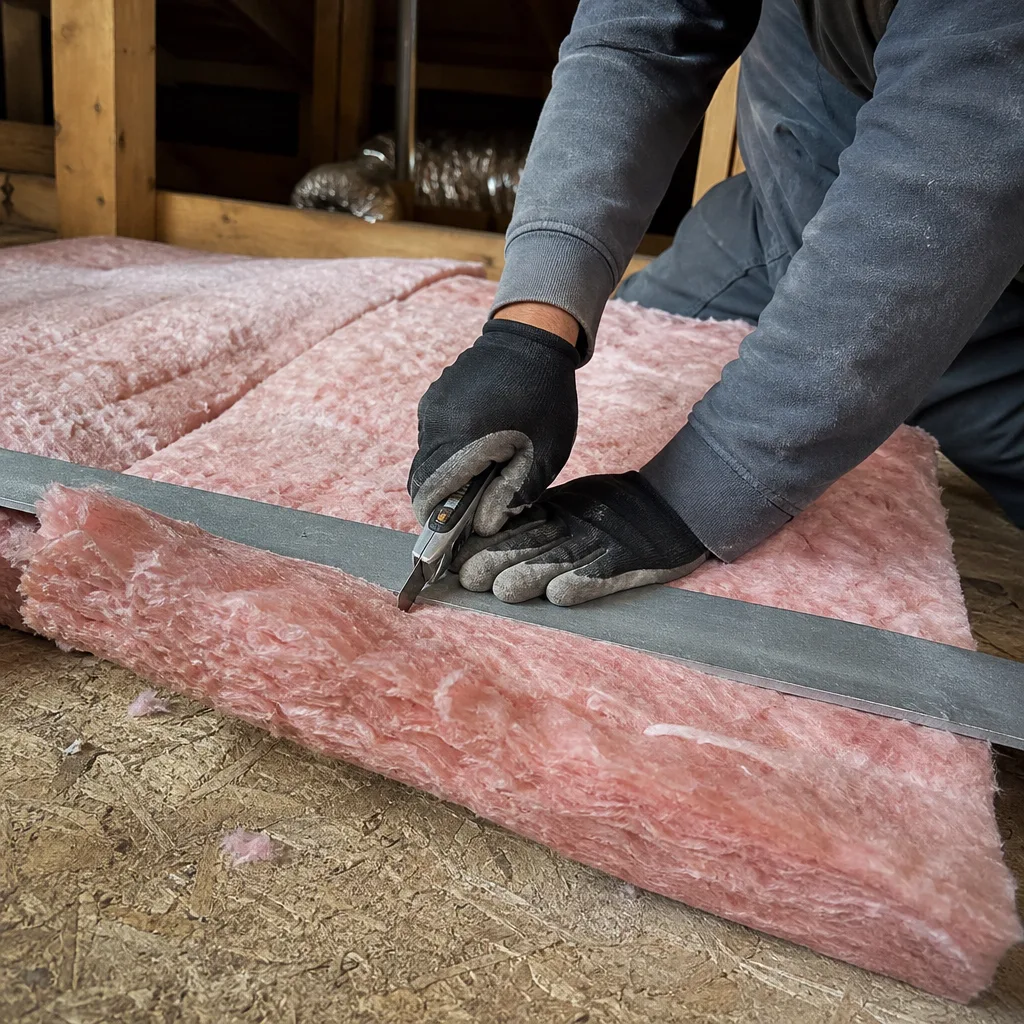
R-value measures resistance to conducted heat. It tells you how well a material slows heat moving through it. ACH50 measures something else entirely: air changes per hour at 50 pascals, taken with a blower-door test. That’s a pressurization reading that shows, in a single number, how much conditioned air your building envelope is losing through gaps.
In a leaky North Las Vegas attic, air movement carries more BTUs out of the house than conduction does. Insulation slows conduction. It does almost nothing to stop air from moving through it. Adding R-value to a leaky attic is like adding a thicker blanket to a tent with open seams.
This is the number that matters most, and it’s the one most quotes leave out: an R-60 attic with a 10 ACH50 blower-door score will underperform an R-38 attic at 4 ACH50. The R-value looks better on paper. The house performs worse.
That’s why the sequence is seal first, then insulate. Air sealing of top plates, can lights, and every penetration gets completed before any insulation goes down. Blowing insulation over an unsealed attic floor hides the leaks and locks in the problem. A 2004 tract home with 30 unboxed can lights and open top plates isn’t a reasonably sealed attic. It’s a chimney with insulation on the floor.
The Two-Step Sequence That Sets Your Actual R-Value Target
The right target depends on what the blower-door test reads after air sealing, before new insulation goes in. That reading is the data point that tells you whether an R-49 target will actually perform at R-49.
- Seal all attic penetrations. Top plates, can lights (boxed or rated for insulation contact), plumbing and wiring chases, bath fans, and the attic hatch. This step drops the ACH50 number and makes the insulation you add afterward do real work.
- Insulate to R-49. That’s the current NV Energy rebate-eligible level for Zone 3B. Blown-in fiberglass or cellulose gets you there; Icynene and Demilec spray foam is the choice where a sloped ceiling plane needs both insulation and an air barrier in one step.
What does this run in North Las Vegas? Most attic jobs in a typical 1,800-2,400 sq ft tract home land somewhere in these ranges:
| Scope | Typical Range |
|---|---|
| Attic air sealing only | $600 - $1,400 |
| Blown-in upgrade to R-49 (existing insulation in place) | $1,800 - $3,200 |
| Insulation removal and full replacement to R-49 | $3,000 - $5,500 |
| Radiant barrier (perforated foil) addition | $1,200 - $2,400 |
| Blower-door test before and after | Included on applicable jobs |
These are ranges, not quotes. A home with 30 can lights costs more to seal than one with six, and an older Nellis-corridor ranch with bare joists needs a different scope than an Aliante two-story. A written price before any work starts is the only number that means anything.
The Radiant Heat Piece R-Value Doesn’t Cover
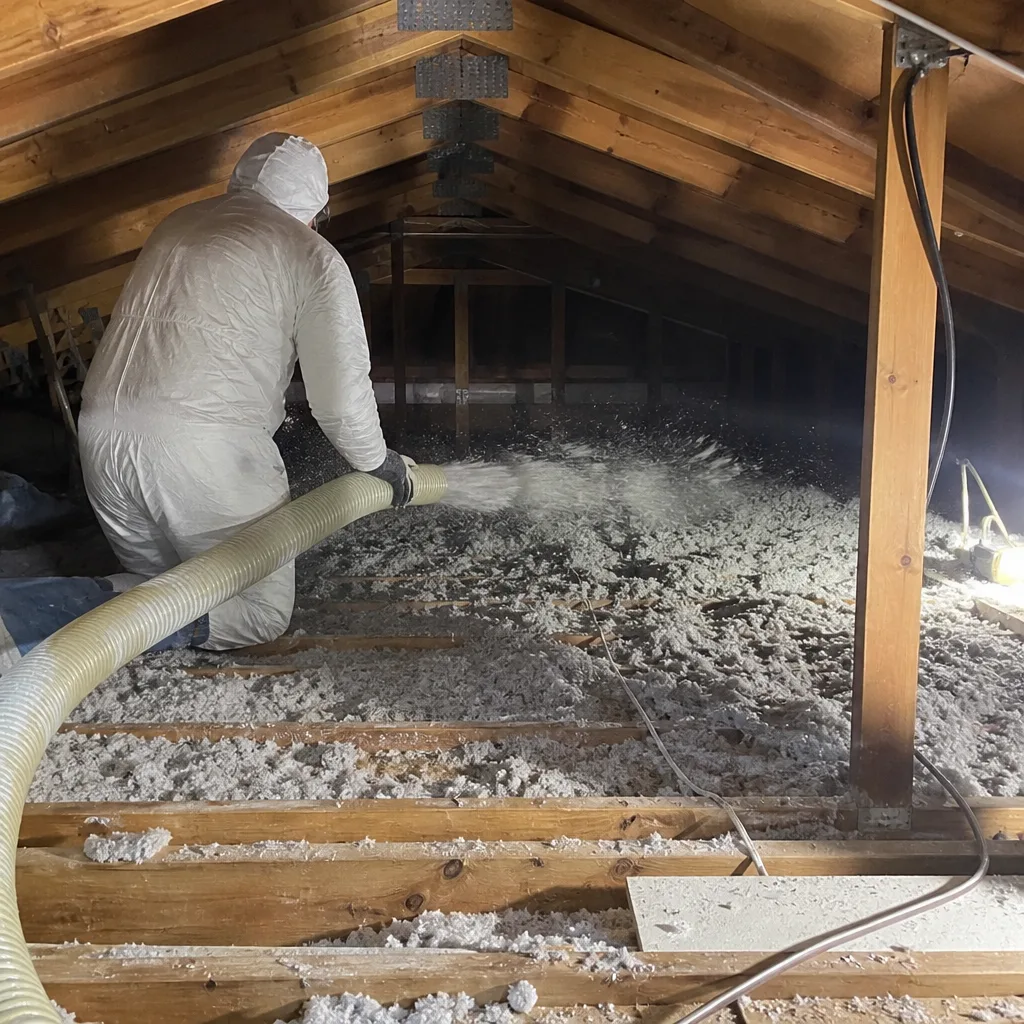
R-value handles conduction. It does not stop radiant heat, and radiant heat is a big part of the North Las Vegas summer problem. When a roof deck hits 150°F, it radiates heat down onto the attic floor regardless of how well the floor resists conduction.
Blown-in insulation reduces that transfer. It doesn’t eliminate it. That’s the specific case for adding a perforated foil radiant barrier as a companion to R-49 blown-in here. This isn’t a general recommendation pulled from a national guide. It’s a desert-climate argument. Intense solar load on west- and south-facing attics is exactly the condition a radiant barrier is built for, and it’s why the combination of sealing, R-49, and a radiant barrier delivers more in North Las Vegas than any one of the three alone.
One note on radiant barriers in this climate: the dry desert air means little moisture-driven failure, but wind-blown dust and grit infiltrate attics constantly, and monotone sun exposure degrades the foil and weatherstripping over time. That’s a maintenance reality, not a reason to skip it.
How You Verify Your R-49 Is Performing at R-49
After the insulation is installed, you can’t see the effective R-value. You can’t see the air-leakage penalty factor either. It’s invisible once the material is down.
The only way to confirm the work did what it was supposed to do is a before-and-after blower-door reading. Under The Haven Standard, Envelope Insulation North Las Vegas publishes those numbers on every applicable job so the homeowner can see, in a single figure, how much conditioned air the home was losing before and after. Have it in writing, with the documented photo record and the written warranty delivered before anyone lifts a tool. The 365-Day Done Right Promise sits behind all completed work. Our technicians have up to 10 years of experience, and we source materials from Owens Corning, Johns Manville, Knauf, Rockwool, CertainTeed, Icynene, Demilec, and GreenFiber with no proprietary product lock-in.
If you want the full picture of how this fits into a broader attic upgrade, see our page on Insulation Installation in North Las Vegas, or start at the home page.
Key Takeaways
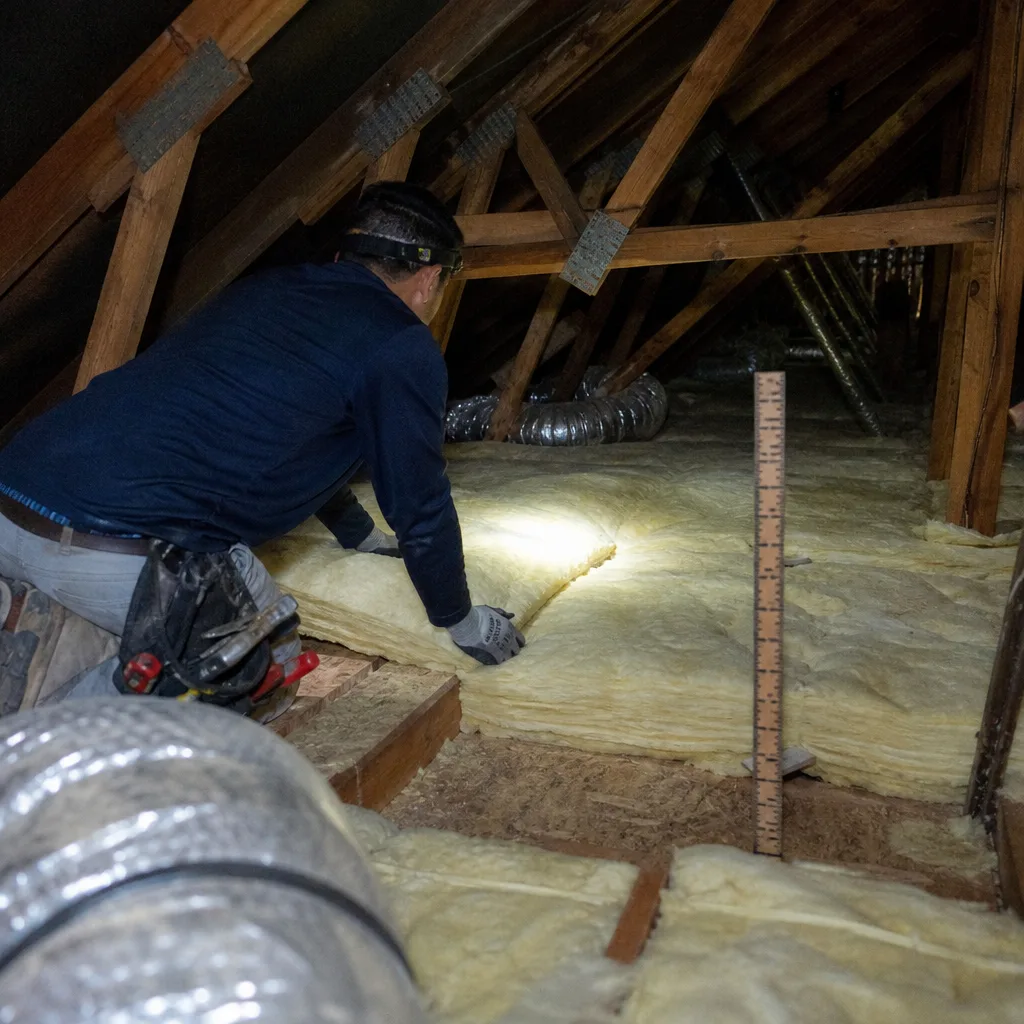
- Target R-49 in North Las Vegas, not the DOE’s R-38 minimum. The gap matters in a 150°F attic.
- Air sealing comes first, always. Blowing insulation over an unsealed attic floor wastes the money.
- An R-60 attic at 10 ACH50 underperforms an R-38 attic at 4 ACH50. Air leakage beats R-value in a leaky house.
- 1990s-2000s Aliante and Eldorado homes likely have settled R-9 to R-15 in place, not the original R-19.
- A blower-door reading before and after is the only way to verify your R-49 is performing at R-49.
FAQs
R-49 is the right target for a North Las Vegas attic in Climate Zone 3B, after the attic floor has been air sealed. The DOE’s R-38 minimum assumes a reasonably tight attic, and most North Las Vegas tract homes built in the 1990s and 2000s aren’t there. Call (833) 630-4008 for a written price on your specific attic.
Because air movement through gaps carries more heat out of a North Las Vegas house than conduction does, so sealing first makes every dollar of insulation do its job. Insulation slows conducted heat; it doesn’t stop air from moving through it. Blowing R-49 over an unsealed attic floor with 30 can lights hides the leaks. Call (833) 630-4008 and we’ll walk you through what your attic needs.
Adding insulation over existing material is cheaper when the original is still in good condition and just thin. Full removal and replacement is the right call when the original has settled to R-9 to R-15, is contaminated with rodent debris, or has fallen off the sloped ceiling plane. In Aliante and Eldorado, we often find the second case. Call (833) 630-4008 for an assessment on which one your attic is.
Yes, in North Las Vegas specifically. R-value handles conduction but doesn’t stop radiant heat from a 150°F roof deck, and the intense solar load on west- and south-facing attics is a real, measurable load. A perforated foil radiant barrier paired with R-49 blown-in delivers more here than R-49 alone. Call (833) 630-4008 to talk through whether yours is a candidate.
If you’d rather have it looked at than figure it out from a search result, Envelope Insulation North Las Vegas offers a no-pressure assessment in North Las Vegas. We’ll read your attic, run a blower-door test, and put a written price in front of you before any work starts. Call (833) 630-4008.
Written by the team at Envelope Insulation North Las Vegas, serving North Las Vegas, NV.