
GreenFiber Attic Insulation in North Las Vegas: A Homeowner’s Guide
Cellulose insulation absorbs moisture and releases it without permanent damage, up to a point. That point is roughly 25 to 30 percent moisture content by weight. Above it, the borate fire retardant can migrate and the material begins to compact permanently. In a climate where a North Las Vegas attic hits 160°F in July and takes on occasional August monsoon humidity, knowing where that threshold sits is the whole ballgame.
GreenFiber is a blown-in cellulose product made from roughly 85 percent recycled newsprint treated with borate-based fire and pest retardants. It performs well in North Las Vegas attics when it’s installed to the right settled density over a sealed and confirmed-dry substrate. Get any of those three conditions wrong and it underperforms quietly for years.
If you’d rather not climb into a 160-degree attic to sort this out yourself, call (833) 630-4008 for a free estimate. Otherwise, read on. This guide covers what the product actually is, how it behaves in desert monsoon conditions, and the verification steps that separate a documented installation from a hopeful one.
Key Takeaways
- GreenFiber cellulose settles to roughly R-3.2 to R-3.7 per inch, so installers must overshoot target depth by about 20 to 25 percent to hit the R-value on the label.
- Cellulose tolerates moisture up to about 25 to 30 percent by weight before the borate treatment migrates and the material compacts permanently.
- Any residual moisture from a past roof event must be confirmed gone before cellulose goes down, because the insulation layer above locks it in.
- Depth rulers photographed after install and a blower-door test are the two verification steps that prove the job was done to spec.
- After any roof leak, affected cellulose needs a moisture-meter probe. Compacted wet cellulose looks identical to properly settled dry cellulose from a stepladder.
What Is GreenFiber Blown-In Cellulose, Exactly?
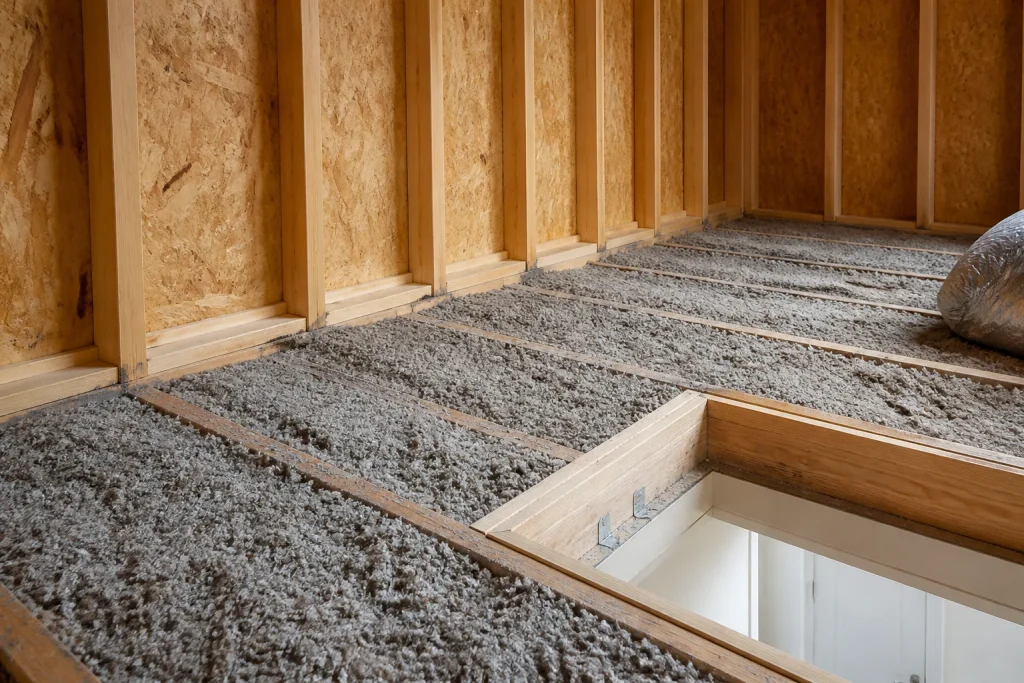
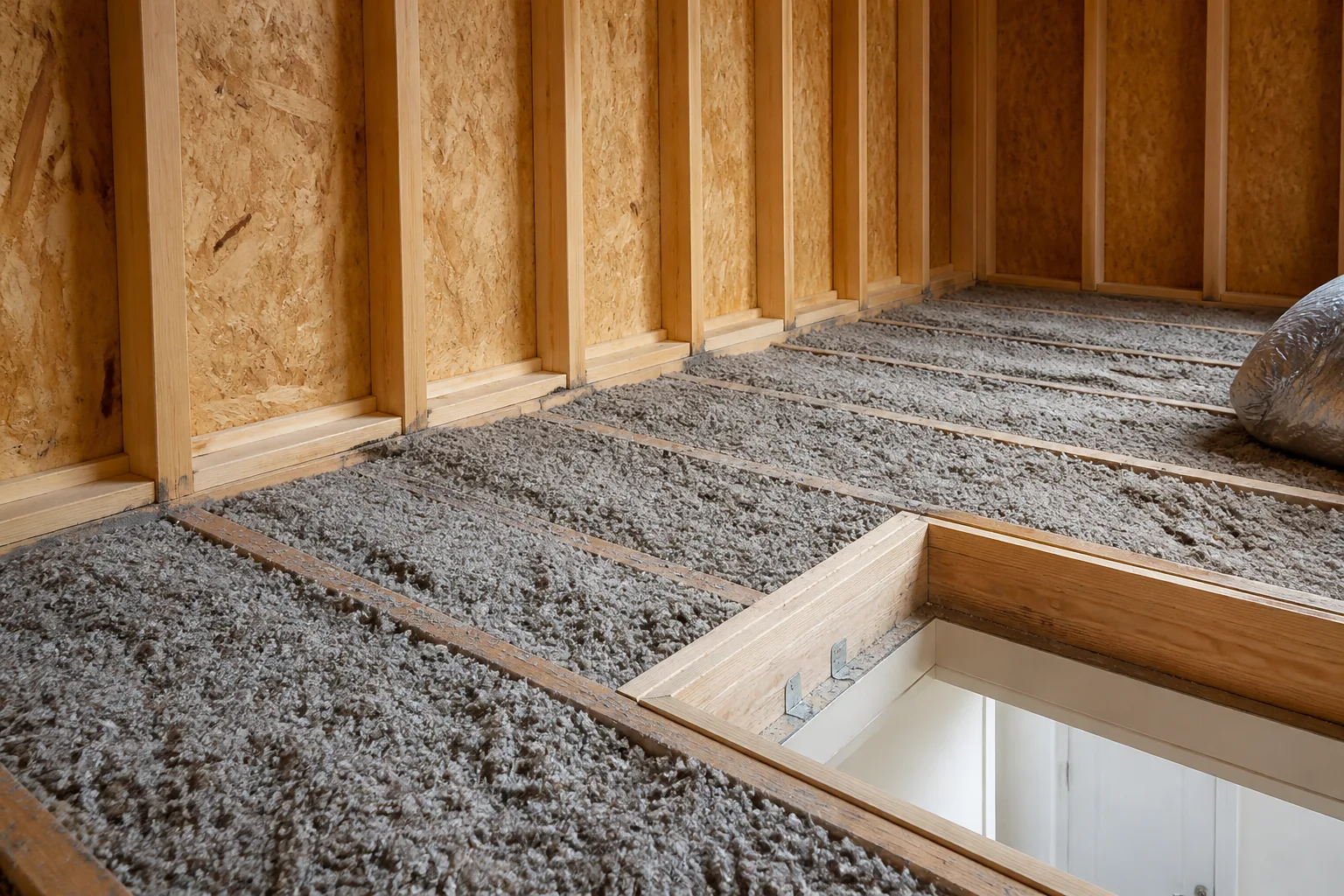
GreenFiber blown-in cellulose is a loose-fill insulation made from recycled newsprint, treated with borate-based fire and pest retardants, and blown into an attic through a hose at a controlled density. The composition is about 85 percent recycled paper fiber with the balance being the borate treatment. Those borates do two jobs: they give the material a Class 1 fire-spread rating, and they make the fiber unpalatable to insects and rodents.
The performance number that matters most is settled R-value per inch, which runs roughly R-3.2 to R-3.7 depending on installed density. That’s the value after the material has finished settling, not the fluffy number you’d measure the day it’s blown in. GreenFiber specifies a settled density of 1.5 to 2.0 pounds per cubic foot, and hitting that spec is what produces the rated R-value.
Here’s the part most North Las Vegas homeowners don’t hear from a contractor: because cellulose settles, installers must overshoot the target depth by roughly 20 to 25 percent. If you want R-38 in your North Las Vegas attic, the depth marker gets set for the settled depth, and the material gets blown deeper than that so it can compact down to spec over the first heating season. A crew that blows to the finished depth and walks away will leave you under-insulated by the time August rolls around.
Compare that to fiberglass, which doesn’t settle the same way and doesn’t carry the same moisture interaction. We install both, along with mineral wool and spray foam from suppliers like CertainTeed and Icynene, because the right material depends on the attic. If you want the broader comparison, our page on Attic Insulation in North Las Vegas walks through the material options side by side.
How Does Cellulose Handle North Las Vegas Monsoon Moisture?
Cellulose is hygroscopic, which means it absorbs and releases moisture. In a cold-humid climate that behavior is a feature: the material buffers seasonal humidity and dries out when conditions change. In a North Las Vegas attic the math is different. The attic is dry almost all year, then takes on a pulse of humidity during the August monsoon, then goes back to baking. The material handles that pulse fine as long as it starts dry and has a way to vent.
The event that actually causes trouble is a roof leak, not the monsoon itself. A small leak during a monsoon storm, or a failed flashing that lets water in once and never again, leaves moisture trapped in the cellulose. The layer above locks it in. Without airflow the fiber can’t dry, the moisture content climbs past that 25 to 30 percent threshold, and the borates begin to migrate. Once they migrate, the fire and pest protection is compromised and the material compacts permanently.
That’s why any installation in a North Las Vegas attic has to start with a confirmed dry substrate. We probe the decking and the existing insulation with a moisture meter before a single bag of GreenFiber goes down. We’ve also seen attics where a past roof repair was never documented, and the only way to know is to measure. In our experience across North Las Vegas, a moisture reading takes ten minutes and saves a full re-install.
If a roof event is recent or ongoing, the insulation question waits until the roof is fixed. We’ve pulled saturated cellulose out of attics in the Aliante and Eldorado neighborhoods after a single roof failure, and the difference between a $400 removal and a full deck replacement came down to how fast someone probed the material.
Does GreenFiber Cellulose Actually Resist Fire?
GreenFiber cellulose carries a Class 1 fire-spread rating, which means it meets the standard for low flame spread in building materials. The borate treatment inhibits flame spread and smoldering. It does not make the material non-combustible, and that distinction matters for any North Las Vegas homeowner asking a straight question about fire risk.
In a practical attic fire scenario, the borate treatment slows ignition and limits how fast a flame travels across the material surface. That buys time and limits spread to adjacent framing. It does not eliminate the fuel load, because the paper fiber is still paper fiber. The value of the treatment is in delay and in smolder resistance, not in fireproofing.
A few things that matter more than the fire rating in a real attic:
- Air sealing of top plates, can lights, and plumbing penetrations stops hot air from moving through the assembly, which lowers the temperature the insulation layer sees.
- Keeping combustibles away from recessed can lights and flues is a code requirement, not a finish option.
- Proper depth and settled density keep the material performing as rated, because an under-blown attic has thin spots that behave very differently in a fire.
The fire-spread rating is one input. The installation is what puts that rating to work. We never blow cellulose over an unsealed attic floor for exactly this reason: the air sealing comes first, then the insulation. Sealed first, insulated second, always.
How Do You Verify a GreenFiber Installation Was Done Right?
GreenFiber installation verification comes down to two documented steps: depth rulers photographed in place after the blow, and a blower-door test that confirms the air-sealing layer beneath the cellulose is intact. Both produce a record the homeowner keeps.
Here’s what the verification process looks like on a job we’d stand behind:
- Air sealing completed and photographed. Top plates, can lights, and penetrations get sealed before the blow. Photos document what was sealed and where.
- Substrate moisture confirmed dry. A moisture meter reading on the decking and existing insulation, recorded before install.
- Depth rulers installed in a grid. Marked-inch rulers placed across the attic floor at intervals, giving the crew a visual target for the depth the material must reach before settling.
- Blow to the overshoot depth. The target depth assumes 20 to 25 percent settling. The installers blow to the overshoot depth, not the finished depth.
- Depth rulers photographed in place. After the blow, each ruler is photographed showing the material depth against the mark. That set of photos is the proof of achieved R-value.
- Blower-door test run. A pressurization reading measured in CFM50 (cubic feet per minute at 50 pascals of pressure) shows the air leakage of the envelope in a single number. Reading it before and after the air sealing confirms the sealing layer is intact under the new cellulose.
A blower-door test – a pressurization reading that shows, in one number, how much air your building envelope is losing – is the number that lets a North Las Vegas homeowner see the performance change they paid for. A house that reads 4,200 CFM50 before air sealing and 2,100 after has documented, verifiable improvement. We publish those numbers on every applicable job. It’s part of how we hold the work to Envelope Insulation’s North Las Vegas home performance standard, where the written price comes before any work starts and the documentation comes when the crew leaves.
If you already have a written estimate from another contractor, bring it to us. A free second opinion on any written estimate means we read it with you, line by line, and tell you what’s missing. Sometimes the only thing missing is the depth-ruler photo set.
What Maintenance Does Cellulose Need That Fiberglass Doesn’t?
Cellulose needs a moisture-meter probe after any roof leak. Fiberglass does not. That single maintenance difference is the one most North Las Vegas homeowners miss, and it’s the one that quietly costs them a re-install.
Here’s the problem: compacted wet cellulose looks identical to properly settled dry cellulose from a stepladder. Both read as firm, dense material at the right depth. A homeowner who takes a peek in the attic after a monsoon storm and sees what looks like normal settled insulation will assume it dried out on its own. It didn’t. The material may be holding moisture at 30 or 40 percent by weight, well past where the borates start to migrate, and the only way to know is to probe it.
A moisture meter reading on the affected area tells you whether the fiber is within its dry range or whether the section needs removal and replacement. That’s a five-minute check with the right tool. What it prevents is a North Las Vegas attic that holds onto moisture through a wet season, compacts into a dense mat, and loses both the R-value and the fire and pest treatment.
The other maintenance consideration is simple: keep the roof sound. Cellulose’s moisture tolerance is a real property, but it’s a tolerance, not a shield. A roof that leaks every monsoon season will eventually overwhelm any attic insulation. When it does, the right sequence is roof first, then inspect and replace any saturated insulation, then confirm the air sealing is still intact.
In a North Las Vegas attic, the dry substrate and the sealed air barrier are the two installation preconditions. The moisture-meter maintenance after any roof event is the third condition, the ongoing one. Skip any of the three and the material underperforms.
The Bottom Line
GreenFiber cellulose is a solid choice for a North Las Vegas attic when it’s installed over a sealed, confirmed-dry substrate at the settled density spec of 1.5 to 2.0 pounds per cubic foot, and when the depth markers are set with a 20 to 25 percent settling allowance. It handles monsoon humidity well as long as it starts dry and the roof holds. The Class 1 fire rating is real and worth having, but it’s flame-spread inhibition, not fireproofing. And the one maintenance step it requires is a moisture-meter probe after any roof leak, because wet compacted cellulose is indistinguishable from dry settled cellulose from below.
If you’re in North Las Vegas and want the depth rulers photographed, the blower-door readings recorded, and a written price before anyone starts, Envelope Insulation North Las Vegas offers free estimates, and a live person answers the phone. Call (833) 630-4008.
Frequently Asked Questions
Most blown-in cellulose attic jobs in North Las Vegas run in the range of a few thousand dollars for a typical single-story, depending on the square footage, the R-value you’re targeting, and how much air sealing is required first. The air sealing is where cost varies most, because a 1980s North Las Vegas tract home with unsealed top plates and several open can lights takes more prep than a newer build with a tighter ceiling plane. A written price comes before any work starts, and the depth-ruler photo set and blower-door readings are included in what you get when the crew leaves. Call (833) 630-4008 for a free estimate.
Neither is universally better. Cellulose brings higher settled R-value per inch and better air-blocking density, plus the borate fire and pest treatment. Fiberglass brings lower moisture sensitivity and no settling. In a North Las Vegas attic that’s hot and dry most of the year with one monsoon season, cellulose performs well if it’s installed over a confirmed dry substrate, and fiberglass is a reasonable option when moisture intrusion is a known concern. The right material depends on the attic and the home, and a blower-door test tells you more about performance than either material spec sheet.
GreenFiber cellulose holds its rated R-value for the life of the installation as long as it stays dry and doesn’t compact from a moisture event. The 20 to 25 percent settling happens in the first heating season, which is why installers overshoot the depth. After that, the material is stable. What shortens its life is any roof leak that pushes moisture content past 25 to 30 percent by weight and starts the borates migrating. Probe after any roof event and the material stays in service indefinitely.
Sometimes, and only after a moisture-meter probe confirms the material is still in its dry range. If the affected section reads within spec, it can stay. If it reads above 25 to 30 percent by weight, that section comes out. Compacted wet cellulose won’t recover its R-value or its fire treatment, and it looks identical to dry settled cellulose from a stepladder, so the probe is the only reliable test. Call (833) 630-4008 if you want a North Las Vegas attic checked after a leak.
Related Services in North Las Vegas
If the air sealing layer under the cellulose needs work, or the attic floor needs a vapor barrier, or the diagnosis turns up moisture moving through the crawl space instead of the roof, we cover those too. See our Crawl Space Encapsulation & Vapor Barrier in North Las Vegas page and our Spray Foam Insulation in North Las Vegas page for the related work.
Written by the team at Envelope Insulation North Las Vegas.
What happens when you call
- 1
A real person answersNo phone trees – you reach a local pro.
- 2
You get an upfront price rangeHonest numbers before anyone is dispatched.
- 3
A background-checked tech heads outLicensed & insured, dispatched right away.
- 4
You approve before work beginsNothing starts until you say go.
Need Insulation Help?
Call Envelope Insulation North Las Vegas - the local pro we connect you with is licensed and insured, here with fast after-hours help in North Las Vegas.
(833) 630-4008