
Blown-In Insulation: Repair or Replace? How North Las Vegas Homeowners Decide
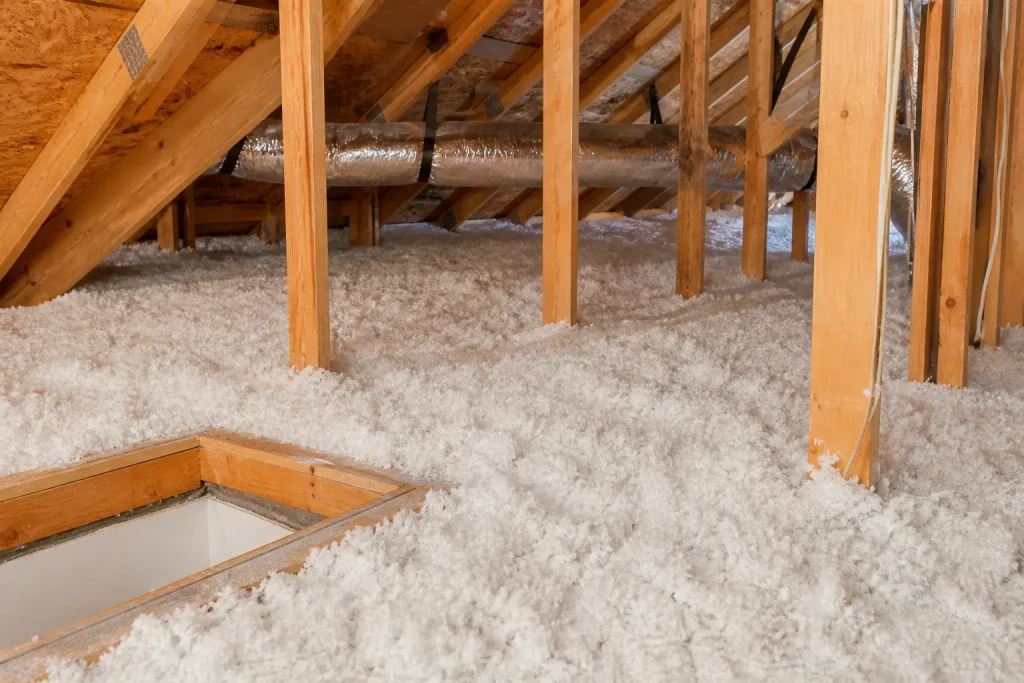
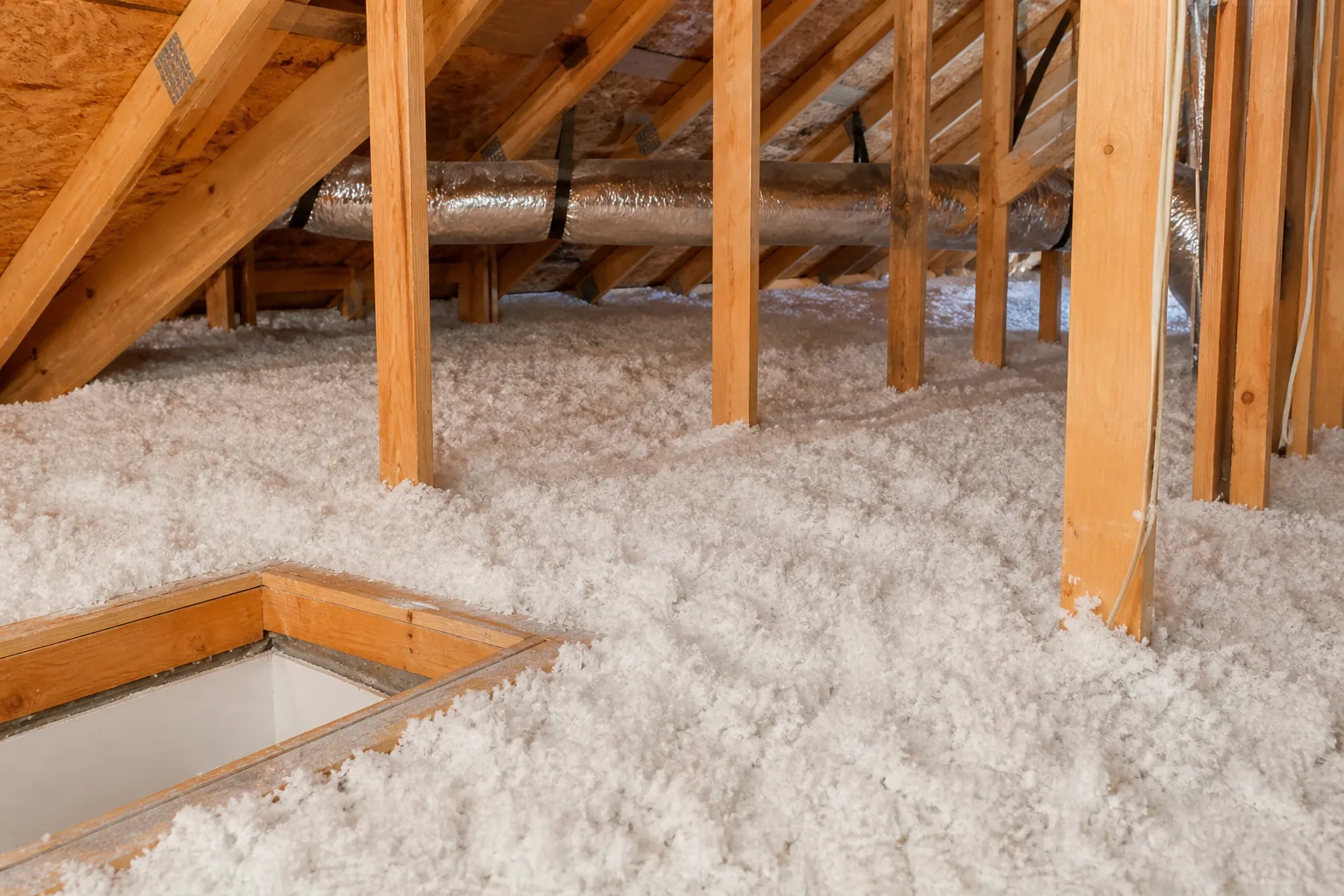
For most North Las Vegas homes built before 2000, the answer is replace the top-off plan before you replace the insulation: the material on the attic floor is usually the second problem, and the first is the unsealed air leaks above it. A house sitting under 4 inches of settled fiberglass has lost R-value and gained air leakage at the same time. Blowing new product over unsealed top plates improves the number on paper and does almost nothing on a blower-door test. If you’d rather have someone read the attic for you, call (833) 630-4008.
Why repairing blown-in insulation in North Las Vegas starts with the attic floor, not the material
Insulation slows heat. It does not stop air. Those are two separate jobs, and in North Las Vegas attics the second one is usually the reason the first one stopped working. A blower-door test – a pressurization reading that shows, in one number, how much air your building envelope is losing – tells you which problem you actually have. We’ve run the test before and after air sealing on hundreds of attics and the pattern holds: sealing gaps at top plates, can lights, and wire and plumbing penetrations drops the number by a wide margin before a single bag of insulation goes in.
That’s the case for our rule that air sealing comes first, every time. Blowing fiberglass over an unsealed attic floor is the most common mistake we’re called in to undo. The homeowner paid for R-value, got it, and still feels the second story bake at 5 p.m. in July because hot attic air is still moving into the living space through a half-inch gap the insulation never covered.
So the repair-or-replace question needs a third option first: diagnose. Find the bypasses. Then decide what to do with the product underneath.
The three conditions that mean replace, not top off
Topping off existing blown-in is often the right call. Three conditions override that and mean the old material comes out.
- Settled depth below 4 inches. Fiberglass blown in at 8 or 9 inches will settle over 15 to 20 years. Some settling is normal. Below 4 inches of settled depth suggests either significant loss or that the attic never had much to begin with, and in either case the remaining material is doing little.
- Vermiculite. Pre-1990 Nevada homes sometimes have vermiculite in the attic. It can contain asbestos, and it has to be identified and handled correctly, which is a separate scope from insulation work and never something to disturb or bury.
- Moisture damage. Clumping, staining, or matted material that stays wet to the touch points to a roof leak, a bath fan venting into the attic, or a condensation problem. New insulation over wet insulation traps the moisture and hides the source.
Outside of those three, most North Las Vegas attics are a seal-and-top-off job. The right answer depends on what the attic actually shows.
How to read a thermal imaging scan before you decide
An infrared scan of a North Las Vegas attic is useful for one thing above all: separating insulation failure from air leakage. They look the same in a photo to an untrained eye. They are not the same problem, and they don’t have the same fix.
- Cold spots running in lines at partition walls: bypass air leakage. The wall cavity is open to the attic and hot air is moving through it. More insulation won’t fix this. Sealing will.
- Cold spots around recessed can lights: leakage at the fixture penetration, plus a fire-rated clearance issue depending on the fixture. Sealing comes before insulation in both cases.
- Broad, even cold across a whole bay: thin or missing insulation. That’s a top-off candidate.
- Cold concentrated over the soffit or a duct run: possibly a duct problem, not an insulation problem. More on that below.
The scan is a map. It tells you where to seal and where to add. Reading it correctly is the difference between a repair that works and a bill for 10 inches of new product sitting on top of the same leaks.
Doing the top-off math (and why R-value per inch is a trap)
Here’s the calculation for a real North Las Vegas attic. Suppose the settled depth is 5 inches of fiberglass, roughly R-19. The target is R-38. The temptation is to divide the difference by a generic R-value-per-inch figure and buy that many inches of new product. Don’t.
The right method uses the new product’s specific coverage chart. Every manufacturer publishes one – CertainTeed, GreenFiber, Johns Manville, Knauf, and the rest all do it differently. The chart tells you the installed depth required to reach a target R-value at a given settled density. You match the invoice bag count to the chart. That’s it. That’s the whole calculation.
If the target is R-38 and the existing material is R-19, the new material has to supply R-19 on its own, at the coverage chart’s stated depth – not at a rule of thumb. On a 1,500-square-foot attic that’s a specific number of bags, and the number is on the chart, not in a salesperson’s head. Ask to see it before the work starts.
What North Las Vegas homes with attic ducts need to know before the blower runs
This is the piece most North Las Vegas homeowners never hear until it’s too late. Plenty of homes built here in the 1980s and 1990s have flex duct running through the attic, and flex duct does not age well in a 150-degree attic. It crushes, it sags, and the joints separate.
A damaged duct lying on the attic floor is accessible. Bury it under 10 or 12 inches of new blown-in insulation and it’s a concealed problem, and accessing it again means removing and replacing that insulation. We pulled a crushed run out of a garage attic over in Aliante last spring where the homeowner had paid for a top-off two years earlier and the back bedroom had never cooled right. The ducts were the reason. They were under 11 inches of new product by the time we found them.
Before any insulation goes in, walk the duct runs. Look for disconnected joints, crushed sections, and sagging runs. Repair or replace them first. This is a hard prerequisite, not an upsell.
When to call a pro
Reading depth, identifying vermiculite, interpreting a thermal scan, and diagnosing duct runs in a 150-degree attic are not weekend projects. Vermiculite in particular should be left alone and assessed by someone who knows what they’re looking at. If the attic has any of the replace conditions above, or if the thermal scan shows anything you’re not sure how to interpret, it’s time for a pro. The local pro we connect you with is licensed and insured as their state requires, and we recommend you ask for that in writing before anyone touches the attic.
For the wider picture of how the attic fits into your home’s envelope, our Envelope Insulation North Las Vegas home page covers the full service line. For the broader attic scope, see Attic Insulation in North Las Vegas. If the ducts or a vapor issue turn out to be the real problem, Crawl Space Encapsulation & Vapor Barrier in North Las Vegas and Spray Foam Insulation in North Las Vegas are the two most common next calls.
What a documented blown-in repair or replacement looks like
You should walk away with proof, not a pitch. On a completed blown-in job, here’s what the record includes:
- Pre-work blower-door reading, in ACH50 (air changes per hour at 50 pascals of pressure – a single figure for how leaky the envelope was before work).
- Post-air-seal blower-door reading, so you can see what the sealing alone accomplished.
- Post-insulation depth ruler photos at multiple points in the attic.
- Bag count on the invoice, matched line-for-line to the product coverage chart.
- The installed product’s data sheet showing settled R-value per inch.
Under The Haven Standard, every job starts with a written price before anyone lifts a tool and closes with a Documented Photo Record on every visit, not on request. The 365-Day Done Right Promise covers the work. We publish the before-and-after blower-door numbers on applicable jobs because that’s the single figure that shows what you actually paid for. Materials come from suppliers like CertainTeed, GreenFiber, and Icynene, with no proprietary lock-in, so you can compare coverage charts across products.
The Bottom Line
The repair-or-replace call on blown-in insulation in North Las Vegas almost always comes down to the attic floor underneath. Seal the bypasses first. Read the scan. Watch the ducts. Then do the top-off math against the product’s coverage chart, not a rule of thumb. If any of the three replace conditions apply – settled depth under 4 inches, vermiculite, or moisture damage – the old material comes out before anything new goes in. If you’re in North Las Vegas and want a second set of eyes on an attic, Envelope Insulation North Las Vegas offers free estimates. Call (833) 630-4008. We’ll show you the scan, the depth, and the coverage chart before you decide anything.
Frequently Asked Questions
Repair (air seal plus top-off) is usually the lower-cost path when the existing material is dry, depth is above 4 inches, and there’s no vermiculite. Replacement costs more because it involves removal and disposal, but it’s required when those three conditions are present. The only way to know which you’re facing is a scan and a depth check, which is why a free estimate that includes both matters more than a phone quote.
You can, and people do. It also usually fails to deliver the comfort improvement the homeowner expected, because the bypasses are still open. Sealing top plates, can lights, and penetrations before adding product is what makes the added R-value show up on the next blower-door test. We won’t blow over an unsealed attic floor, and that’s a fixed rule, not a preference.
Target settled depth depends on the product and the R-value you’re aiming for – R-38 is a common target in this climate. On fiberglass, that’s typically 10 to 14 inches of settled depth depending on the manufacturer’s coverage chart. Check the chart. Generic R-value-per-inch math overstates or understates by enough to matter.
Vermiculite looks like small, lightweight, gray-brown or gold pebbles with a shiny flake texture. If you see it in a North Las Vegas attic built before 1990, stop – don’t disturb it, don’t blow new product over it, don’t sweep it up. Have it assessed before any insulation work. Call (833) 630-4008 for a free estimate and we’ll tell you what we see.
Written by the team at Envelope Insulation North Las Vegas.
Need Insulation Help?
Call Envelope Insulation North Las Vegas - the local pro we connect you with is licensed and insured, here with fast after-hours help in North Las Vegas.
(833) 630-4008