
5 Mistakes to Avoid With Spray Foam Insulation
The five most consequential spray foam mistakes in North Las Vegas are not applicator errors. They are specification errors made before the gun is ever picked up, and they produce defects that are expensive to find and more expensive to fix because foam encapsulates everything it touches. Spray foam is the only insulation material that permanently bonds to framing, sheathing, and mechanical penetrations on contact. That adhesion is its primary advantage and its primary liability: a spec error that would be a 20-minute fix with batts becomes a full gut-and-replace with foam. If you’d rather not sort through the spec sheet yourself, call (833) 630-4008 and we’ll walk through it with you.
1. Specifying Open-Cell Foam in a Sealed Attic or Crawl Space Without a Vapor Retarder
Open-cell foam is vapor-permeable. It allows moisture to move through it. In a sealed attic or a conditioned crawl space, the foam becomes the boundary between conditioned interior air and whatever is on the other side. During monsoon season, North Las Vegas gets a sharp shift in humidity and temperature, and the vapor drive through the assembly reverses compared with what it does in the dry months. Open-cell foam applied without a Class II vapor retarder on the warm side can accumulate moisture inside the assembly instead of letting it dry. We’ve pulled open-cell foam out of a crawl space in Aliante where the joist bays were damp enough to leave a water stain on the subfloor above.
What to check on your spec:
- Assembly type: Is this a sealed attic, a vented attic, or a conditioned crawl space? Each one has a different moisture profile in North Las Vegas’s climate.
- Foam type vs. vapor retarder: Closed-cell foam is its own Class II vapor retarder at 2 inches. Open-cell is not. If the spec calls for open-cell in a conditioned space, a separate vapor retarder has to be part of the conversation.
- Interior vs. exterior: Conditioning the crawl space means the warm side is the interior, and that’s where the retarder goes.
If you’re considering crawl space encapsulation and a vapor barrier in North Las Vegas, the vapor retarder decision has to come before the foam decision, not after.
2. Skipping the Pre-Foam Blower-Door Test
Foam locks in whatever air leakage exists at the time of install. If nobody measured the leakage before the foam went on, nobody knows what the starting point was, and nobody can tell afterward whether the job improved anything. We regularly see North Las Vegas homes built between 2015 and 2020 with 12 to 18 ACH50 (air changes per hour at 50 pascals of pressure) readings before any work starts. That number is a measurement, not an opinion. If you discover a 12 ACH50 reading after the foam is cured, you’re left with two choices: cut the foam out and start over, or leave the problem in place behind a material that will hide it permanently.
A blower-door test – a pressurization reading that shows, in one number, how much air your building envelope is losing – should happen twice. Once before the foam goes in, once after. The before-and-after readings are the only objective proof the work performed as specified. The pre-test also tells the applicator where the leaks are, which matters with foam because you can’t trivially pull it back out to chase a missed top plate.
Pre-foam sealing of top plates, can lights, and penetrations comes first for exactly this reason. Sealed first, then insulated – in that order. We won’t blow insulation over an unsealed attic floor, and we treat spray foam the same way.
3. Insufficient Lift Thickness Control in Closed-Cell Applications
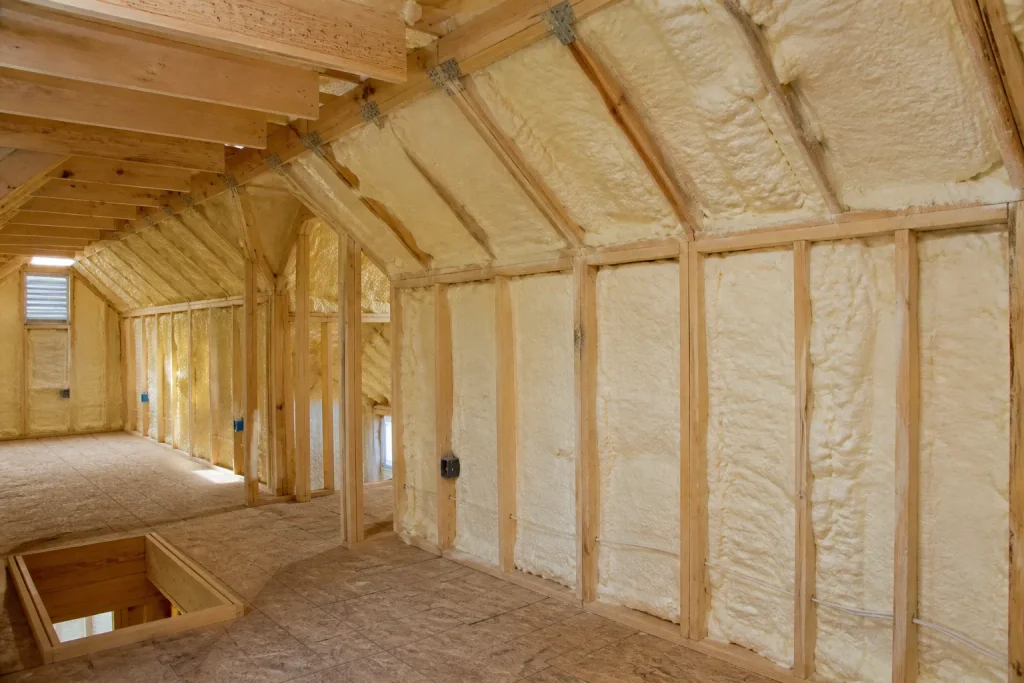
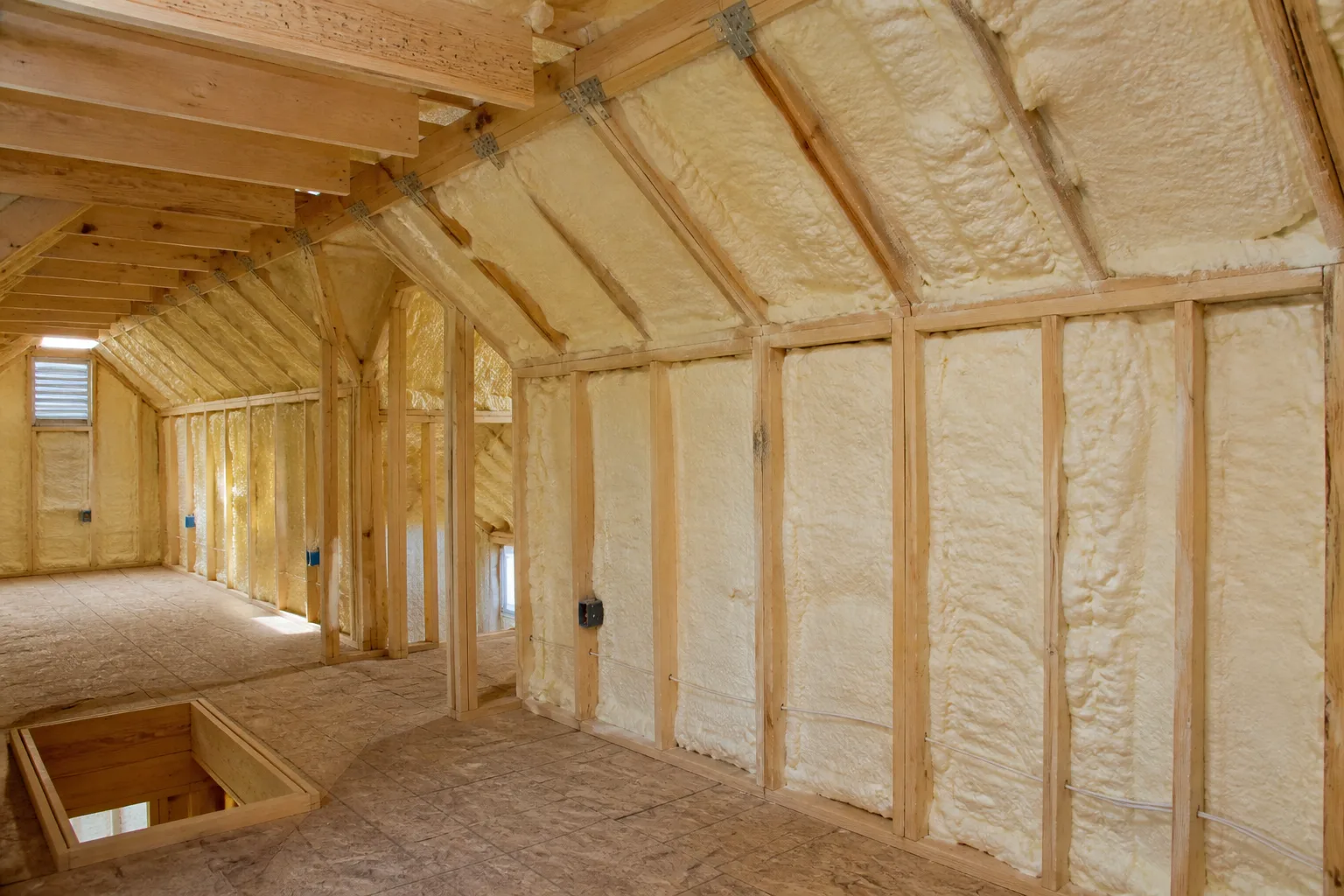
Closed-cell foam generates heat as it cures. That is chemistry, not a defect. The reaction is exothermic, and if the applicator lays down too much at one time, the heat can’t escape fast enough. Most manufacturers specify a maximum lift thickness – typically 2 inches per pass – for exactly this reason. Exceed it, and the interior of the foam layer can char. You won’t see it from the surface. The finished product looks normal. The invisible result is a layer of degraded foam, off-gassing from incomplete cure, and in the worst cases a smoldering interior that is a genuine fire concern.
What a correct closed-cell job looks like on the paperwork and on the walls:
- Lift schedule in the written scope: The spec should state the maximum lift thickness and the number of passes required to reach the target R-value.
- Pause between lifts: Each lift has to cool before the next goes on. A rush job skips this.
- Thickness verification: A depth gauge or probe reading at multiple points, recorded.
This is not a step a homeowner can verify by looking. It’s a step you verify by asking for the application schedule before work starts, then confirming the installer followed it. In our experience, most spray foam failures that reach us in North Las Vegas trace back to this one detail.
4. No Ignition Barrier Specification Before Install
Spray foam is combustible in the way most organic materials are. When it’s installed in an attic or a crawl space, the building code treats it as an exposed combustible material and requires a protective layer. Under the International Residential Code, section R316, foam in those locations typically needs either a 15-minute thermal barrier (usually 1/2-inch drywall) or an approved ignition barrier coating applied at the manufacturer’s listed thickness. Many North Las Vegas homeowners discover this at resale inspection, years after the install, when the buyer’s inspector notes foam in the attic with no ignition barrier and the closing gets held up until it’s resolved.
Ask these questions before signing the estimate:
- Does the spec call for a thermal barrier, an ignition barrier coating, or a specific exemption under R316?
- If a coating is specified, which product, at what thickness, and is the certificate of compliance included in the documentation?
- Is the space being converted to a sealed conditioned attic, and if so, does the IRC exemption apply for that use?
None of that is glamorous. All of it is the difference between a job that passes inspection on the first call and one that delays a sale by three weeks. If you’re working through spray foam insulation in North Las Vegas, the ignition barrier belongs in the written scope.
5. No Post-Install Documentation Package
Without documentation, there is no way to confirm the foam performed as specified, and no basis for a warranty claim if it didn’t. Three records belong in every spray foam job:
- Product R-value per inch: The manufacturer’s published R-value for the specific product used, at the thickness installed. Closed-cell foam from Demilec or Johns Manville, for example, sits in a known R-value range per inch, and the math has to work out to the target R-value of the assembly.
- Installed thickness measurements: Taken at multiple points, recorded, and matched against the spec.
- Post-install blower-door reading: The single number that tells you what your home is now losing compared with where it started.
If any one of those is missing, you’re relying on the installer’s word that the work matches what you paid for. That’s not a knock on installers. It’s just how warranty claims go: they get paid on evidence, not on recollection. When somebody finds char in a closed-cell layer two years later, the first question is what the lift schedule said and what the thickness readings were. If there’s no record, both sides are stuck.
When to Call a Pro
Spray foam is a two-component chemical reaction applied under pressure with heat generating inside the finished material. It’s not a homeowner project, and we don’t pretend otherwise. If any of these comes up, get a trained professional in before work starts:
- Your spec calls for open-cell foam in a conditioned space and doesn’t mention a vapor retarder.
- Nobody has offered a blower-door test before the foam goes on.
- The application schedule doesn’t mention lift thickness.
- The estimate doesn’t specify thermal barrier or ignition barrier under R316.
- The installer can’t tell you what documents you’ll receive when the job closes.
The good news is that all five of those are fixable on paper before anyone picks up a gun. That’s where we spend most of our time on a spray foam job – writing the spec and confirming it matches the assembly, the climate, and the code. You can see the scope of the work and the services that tie into it on our Envelope Insulation North Las Vegas home page, and the specific attic work at Attic Insulation in North Las Vegas.
Related services in North Las Vegas: Spray Foam Insulation in North Las Vegas · Crawl Space Encapsulation & Vapor Barrier in North Las Vegas · Attic Insulation in North Las Vegas
The Bottom Line
The five mistakes that cost North Las Vegas homeowners the most with spray foam all happen before the foam is applied. Wrong foam type for the assembly, no pre-foam blower-door test, no lift thickness control in closed-cell work, no ignition barrier on the spec, no post-install documentation. Fix those five in the written scope and the job will hold up to inspection, to resale, and to the next fifteen summers.
Every job we do starts with a written price before any work starts and closes with a Documented Photo Record. On applicable jobs, we publish the before-and-after blower-door numbers so you can see what changed. Flat price, written scope, written warranty, before anyone lifts a tool. We’ve done this on more than 9,000 homes since 2016, and if the work isn’t done right, the 365-Day Done Right Promise backs it – we make it right. Bring us a competing quote and we’ll read it with you, at no charge.
If you’re in North Las Vegas and want help getting the spec right, Envelope Insulation North Las Vegas offers free estimates. Call (833) 630-4008.
Frequently Asked Questions
Most spray foam jobs in North Las Vegas run between $1.40 and $3.20 per board foot installed, depending on whether the spec calls for open-cell or closed-cell foam and how thick the assembly needs to be. A typical attic or crawl space job in a 2,000-square-foot home lands in the $3,000 to $7,500 range for closed-cell, and less for open-cell. Call (833) 630-4008 for an exact quote on your home – estimates are free.
Yes, but it’s expensive and disruptive. Foam that has fully bonded to framing, sheathing, and penetrations has to be cut out with hand tools or a specialized cutter, and the surfaces have to be cleaned and re-prepped before new foam goes in. Plan on the removal cost roughly matching the original installation cost, sometimes more. That’s why we treat the pre-foam spec as the highest-value part of the job. Call (833) 630-4008 before you get to the removal stage.
Usually, yes. Under IRC R316, spray foam in an attic or crawl space that remains accessible typically requires either a 15-minute thermal barrier (such as 1/2-inch drywall) or an approved ignition barrier coating at the manufacturer’s listed thickness. Some sealed-conditioned-attic assemblies qualify for a different compliance path, but the exemption has to be documented in the spec. If your estimate doesn’t mention it, ask. Call (833) 630-4008 if you want us to look at what you’ve got.
Blown-in insulation (fiberglass or cellulose, such as GreenFiber or Owens Corning) is cheaper up front, usually $1.50 to $3.50 per square foot in a typical North Las Vegas attic. Spray foam runs higher but delivers air sealing as part of the install, which blown-in does not. The right answer depends on what your blower-door test reads. If it reads high, air sealing first, then insulation. If it reads low, blown-in may be the lower-cost path to the same target R-value. Call (833) 630-4008 to see what your number is before you decide.
Written by the team at Envelope Insulation North Las Vegas.
Need Insulation Help?
Call Envelope Insulation North Las Vegas - the local pro we connect you with is licensed and insured, here with fast after-hours help in North Las Vegas.
(833) 630-4008