
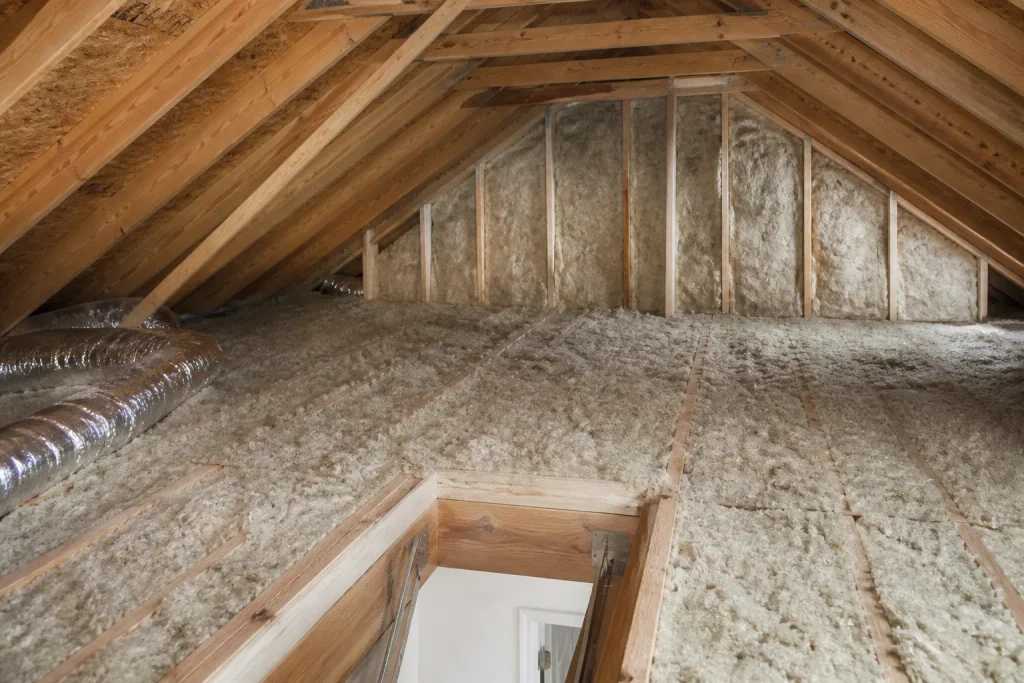
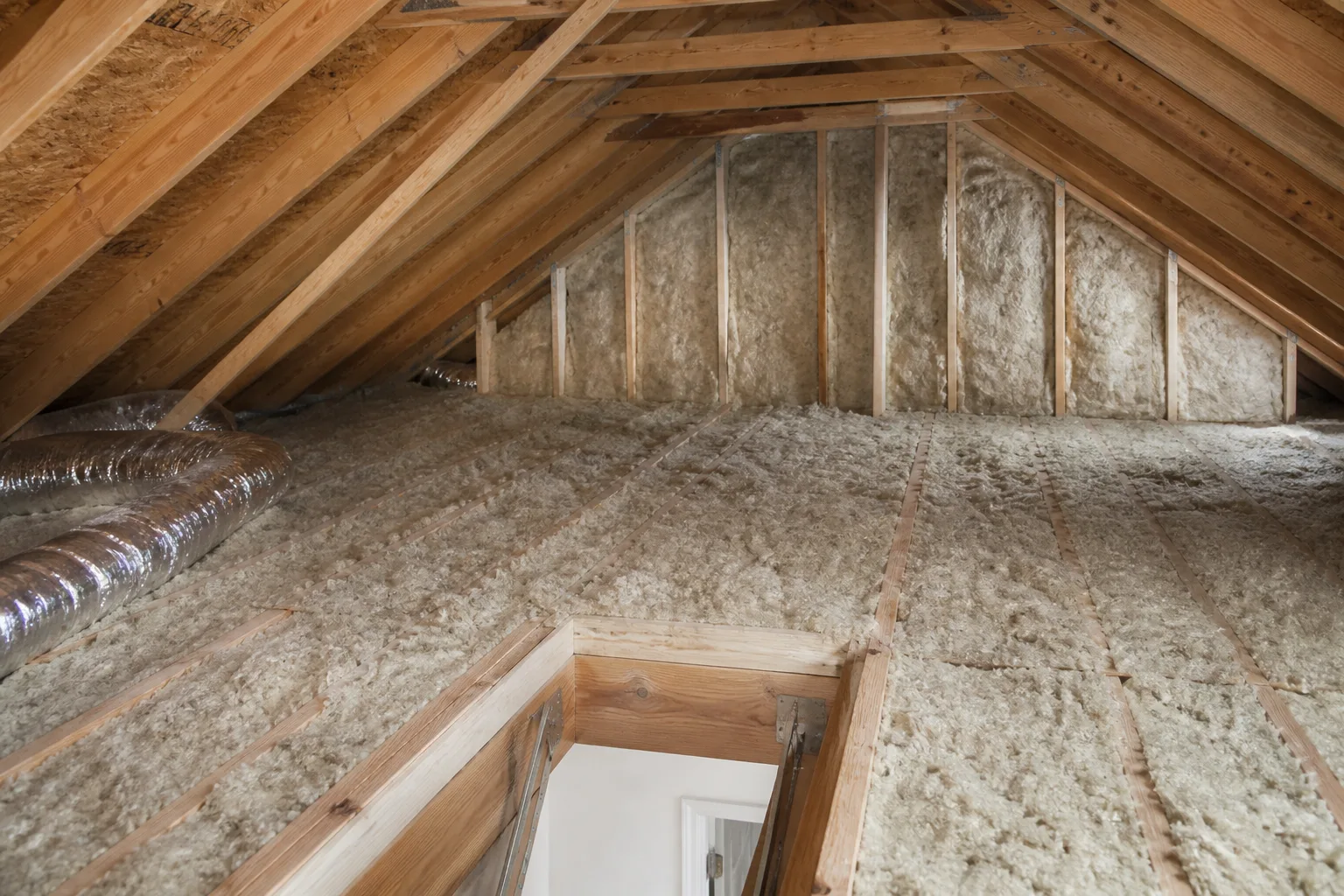
Knauf Attic Insulation in North Las Vegas: A Homeowner’s Guide
Attic air temperatures in North Las Vegas routinely hit 140 – 160°F in July. At those temperatures, the fire-retardant and dust-suppression coatings on some blown-in fiberglass products begin to volatilize, which is why Knauf’s manufacturing approach is worth understanding before you choose a product, not after the blower truck leaves. Knauf Jetstream Ultra is the only major blown-in fiberglass we install that’s made with a borate-based fire retardant blended through the glass rather than applied as a surface coating. That single difference matters more in North Las Vegas than in most markets. If you’d rather not sort through datasheets yourself, call (833) 630-4008 and we’ll walk you through it.
Here’s what we want you to take away: the product choice is half the decision. The depth you install to is the other half, and it has to come from Knauf’s published coverage table, not a competitor’s.
Key Takeaways
- Knauf Jetstream Ultra uses a borate-based fire retardant built into the fiber, not a coating that sits on the surface.
- North Las Vegas falls in Climate Zone 3B, and current energy code calls for attic insulation of R-38 minimum, with R-49 a common target for homeowners planning to stay.
- Knauf’s coverage chart dictates the settled depth you need. Most homes need more depth than the bag count a competitor quotes you.
- Air sealing comes first. Blowing insulation over an unsealed attic floor buries the leaks instead of fixing them.
- Your completed job file should include a depth ruler photo, the coverage chart page, and a blower-door reading that proves the sealing was done.
Why does Knauf’s borate process matter in a North Las Vegas attic?
Blown-in fiberglass gets its fire resistance one of two ways. Some manufacturers spray a fire-retardant coating onto the glass fibers after they’re formed. Others, including Knauf, blend a borate-based retardant into the fiber during production. Borate is a mineral salt that stays put, and it doesn’t depend on a surface layer holding up over time.
In a mild climate, the difference between those two approaches is small. In North Las Vegas, it isn’t. Attic temperatures above 130°F for months at a stretch put steady thermal stress on any coating. We’ve pulled apart attics in older North Las Vegas tract homes where surface-treated fiberglass had visibly thinned and gone dusty after a decade of summer heat. The insulation was still there. The treatment protecting it had degraded.
A borate-based product doesn’t have that failure mode because there’s no separate coating to lose. Knauf also publishes a settled-density and R-value table for Jetstream Ultra that accounts for the settling that happens in the first year, so the R-value you buy is the R-value you keep.
We install Owens Corning and Johns Manville products too, and they’re solid materials. The point isn’t that Knauf is the only good choice. It’s that in a North Las Vegas attic, a product whose fire retardant is built into the fiber has an advantage worth knowing about before you compare quotes.
What depth does Knauf Jetstream Ultra need for R-38 and R-49 in North Las Vegas?
Knauf’s coverage chart lists the bag count and installed depth for each target R-value at a given settled density. For a typical open-blow attic application:
| Target R-value | Approximate settled depth | Where it fits |
|---|---|---|
| R-30 | ~10 inches | Below current code, rarely the right answer here |
| R-38 | ~12.5 inches | Climate Zone 3B code minimum |
| R-49 | ~16 inches | Common upgrade target for homes staying occupied long-term |
Those depths are settled depths, meaning what’s there after the material fluffs and settles, not the depth the installer reads off the hose the day of the job. North Las Vegas sits in Climate Zone 3B, where the Nevada State Energy Code sets R-38 as the attic minimum for new and altered assemblies. R-49 is worth considering if you’re planning to stay in the house and want to blunt the July cooling load.
Here’s the mistake we see on competing quotes: a homeowner is quoted “15 bags” without a depth figure. Bag count means nothing without knowing the product’s settled density. Knauf’s published chart is the reference you need, and a good contractor will hand you that chart page before anyone shows up with a truck.
What air sealing does Knauf require before insulation goes in?
Knauf’s installation documentation is straightforward about it: insulation performs as designed only when the attic floor is sealed against air movement first. Blow fiberglass over an unsealed top plate, an open can light, or a plumbing penetration, and you’ve made a filter out of your insulation. Stack effect does the rest. Hot North Las Vegas attic air gets pulled down through every gap, and your cooling system pays for it.
Before any Knauf product goes in, these get sealed:
- Top plates along every interior and exterior wall
- Recessed can lights, swapped for sealed-rated fixtures or boxed and sealed
- Plumbing and electrical penetrations through the ceiling plane
- Attic hatch and kneewall seams
- Chases and dropped soffits open to the attic
The Nevada State Energy Code requires an attic air barrier as part of the building envelope, and a blower-door test is how you prove it was done. The number you want is ACH50, air changes per hour at 50 pascals of pressure. We run the test before we seal and after we seal, and both readings go in the job file. A North Las Vegas home that reads 8 ACH50 before sealing and 4 after isn’t a marketing claim. It’s a measurement you can compare to the next contractor’s.
Can you top off existing insulation, or does it need removal?
Most of North Las Vegas’s housing stock from the 1980s and 1990s has either settled fiberglass batts or old cellulose in the attic. Topping off is often the right call, but not always. Here’s how we sort it:
- Topping off is fine when the existing insulation is dry, pest-free, and sitting flat against a sealed attic floor. Blown Knauf goes right over it.
- Removal is necessary when there’s rodent contamination, water staining, or compressed batts that have lost their R-value. Blowing over a compromised layer just locks the problem in.
- Mixing materials is acceptable with cellulose or fiberglass underneath, provided the attic floor is sealed first. Brand compatibility isn’t the issue. Air movement is.
We pulled one out of a garage over in Aliante last month where a homeowner had been quoted a full removal on a perfectly sound layer of 1990s fiberglass. The batts were intact and the attic floor had never been sealed. What the house actually needed was air sealing plus a Knauf top-off to R-49, and the blower-door reading dropped from 6.8 ACH50 to 3.6. Removal would have cost triple and fixed nothing.
If your home is in a North Las Vegas neighborhood built before the 2000s, ask any contractor to show you what the existing insulation looks like before they quote removal. Our attic insulation in North Las Vegas page walks through the retrofit decision in more detail.
What should your completed Knauf job file contain?
This is the part most homeowners don’t think to ask for until it’s too late. Under our Haven Standard, every job ends with a documented record, and for a Knauf insulation install that record has three required pieces:
- Depth ruler photos at multiple points in the attic, showing the settled depth of the installed product against a marked ruler. This is what Knauf’s own QA process expects, and it’s what proves you got R-38 or R-49 and not 11 inches of “close enough.”
- The coverage chart page from the Knauf Jetstream Ultra datasheet, showing the target R-value, the bag count, and the settled depth it was installed to.
- A blower-door ACH50 reading taken after air sealing and before insulation went down, so you have documented proof the sealing work happened in the right order.
We include the Documented Photo Record on every visit, and the before-and-after blower-door numbers come standard on jobs where air sealing is part of the scope. If a contractor hands you a receipt for “attic insulation” with no depth photo and no blower-door number, you paid for work you can’t verify. Envelope Insulation North Las Vegas home has more on how we handle the file on every job.
When to call a pro for attic insulation in North Las Vegas
We’re not going to tell you attic insulation is a job only a licensed pro can touch. Replacing a few batts over the garage is a weekend task. But a few situations genuinely call for a crew:
- Attic temperatures are too hot to work safely for more than short stretches, and falling through a ceiling joist is a real injury risk.
- Air sealing around can lights and top plates requires working near wiring, and that’s not a homeowner task.
- You need a blower-door reading to prove the sealing worked, and renting the equipment costs more than a pro install in many cases.
- Old cellulose or pest contamination means removal, which is a containment and disposal job.
If you’re in North Las Vegas and want a written second opinion on a quote you’ve already received, we’ll read it with you. Our spray foam insulation in North Las Vegas page covers when a foam approach beats blown fiberglass, and the crawl space encapsulation & vapor barrier in North Las Vegas page covers the other half of a leaky envelope. Most North Las Vegas homes need both looked at together.
The Bottom Line
Knauf Jetstream Ultra is a sound choice for a North Las Vegas attic because its borate-based fire retardant is built into the fiber rather than sprayed on the surface, which matters when July attic temps hit 150°F. But the product is only as good as the installation: seal first, then insulate to the depth Knauf’s coverage chart specifies for your target R-value, and insist on the depth ruler photos and blower-door reading in your job file. That’s what you’re actually paying for.
If you’re in North Las Vegas and need help, Envelope Insulation North Las Vegas offers free estimates. Call (833) 630-4008 and we’ll walk you through what your attic needs. Every job starts with a written price before any work begins, comes with the Documented Photo Record, and is backed by our 365-Day Done Right Promise.
Frequently Asked Questions
It depends on what you value. Knauf’s borate-based retardant is built into the fiber, which holds up better to sustained 130°F-plus attic heat than a sprayed surface coating. Owens Corning and Johns Manville fiberglass products are also well made, and we install all three. In North Las Vegas, we lean toward Knauf for the extreme-heat attic application, but the airtight sealed floor matters more than the product label. Call (833) 630-4008 for an exact recommendation based on your attic.
Most Knauf blown-in attic jobs in a North Las Vegas home of 1,500 – 2,200 square feet run $1,800 – $3,400, including air sealing, R-38 to R-49 install, and the before-and-after blower-door test. Topping off an already sealed attic costs less. Call (833) 630-4008 for a written price before any work starts; estimates are free.
Technically not required by law in North Las Vegas, but the test is the only way to prove the air sealing under the insulation was done properly. Without a reading, you can’t tell whether the attic floor was sealed or just buried. We include before-and-after ACH50 numbers on applicable jobs, and we’d recommend you insist on the same. Call (833) 630-4008 and we’ll show you what a completed test report looks like.
Usually yes, as long as the cellulose is dry, uncontaminated, and the attic floor is sealed first. If there’s water staining, rodent activity, or heavily compressed material, removal is the right call. We’ll inspect the existing layer before quoting a top-off or a full replacement. Call (833) 630-4008 and we’ll tell you which one your North Las Vegas attic needs.
Written by the team at Envelope Insulation North Las Vegas.
Need Insulation Help?
Call Envelope Insulation North Las Vegas - the local pro we connect you with is licensed and insured, here with fast after-hours help in North Las Vegas.
(833) 630-4008