
How a Radiant Barrier Works in a North Las Vegas Attic (And Why Foil Without an Air Gap Does Nothing)
A radiant barrier works by reflecting longwave infrared radiation back toward the roof deck instead of absorbing it, which is why a correctly installed foil barrier in a North Las Vegas attic can cut attic air temperature by 20-30°F on a 115°F day. The mechanism only activates when the foil faces an open air gap of at least 1 inch. Lay the same foil flat against insulation or sheathing and you get roughly zero benefit, because the foil now conducts heat straight into whatever it touches. That single installation detail decides whether you paid for a working radiant barrier or an expensive moisture trap. If you want yours assessed, call (833) 630-4008.
Key Takeaways
- Radiant barriers reflect 95-97% of infrared radiation because foil has an emissivity of 0.03-0.05 versus 0.90 for drywall or wood.
- A minimum 1-inch open airspace on the reflective side is required. No gap, no radiant function.
- Perforated foil matters in a hot-dry climate so moisture vapor can pass through and condensation doesn’t form.
- A radiant barrier does not add R-value, does not stop air leaks, and will not change a blower-door reading.
- Desert dust raises foil emissivity over time, so a barrier from 2006 in an Aliante attic may be running at roughly 70% of its original reflectivity.
The Physics, In Plain Language
The sun heats a roof deck to 150-170°F on a July afternoon here. That hot deck surface emits longwave infrared radiation downward into the attic air space. Bare wood and drywall absorb most of it and re-radiate it into the attic, which is how an attic ends up hotter than the outside air. A foil surface flips that: aluminum has low emissivity, so it reflects 95-97% of the incoming radiation back upward rather than absorbing and re-emitting it. The attic air temperature drops, which shrinks the temperature differential driving conductive heat through the insulation on the attic floor below.
That chain, radiant heat in, reflected back out, smaller differential across the insulation, is the whole mechanism. No moving parts, nothing consumed. It’s also why the effect is bigger on a roof plane that takes hard direct sun for six hours than on one that’s shaded. In North Las Vegas, west- and south-facing roof planes from May through September are where this earns its keep.
Why the Airspace Requirement Kills Most Bad Installs
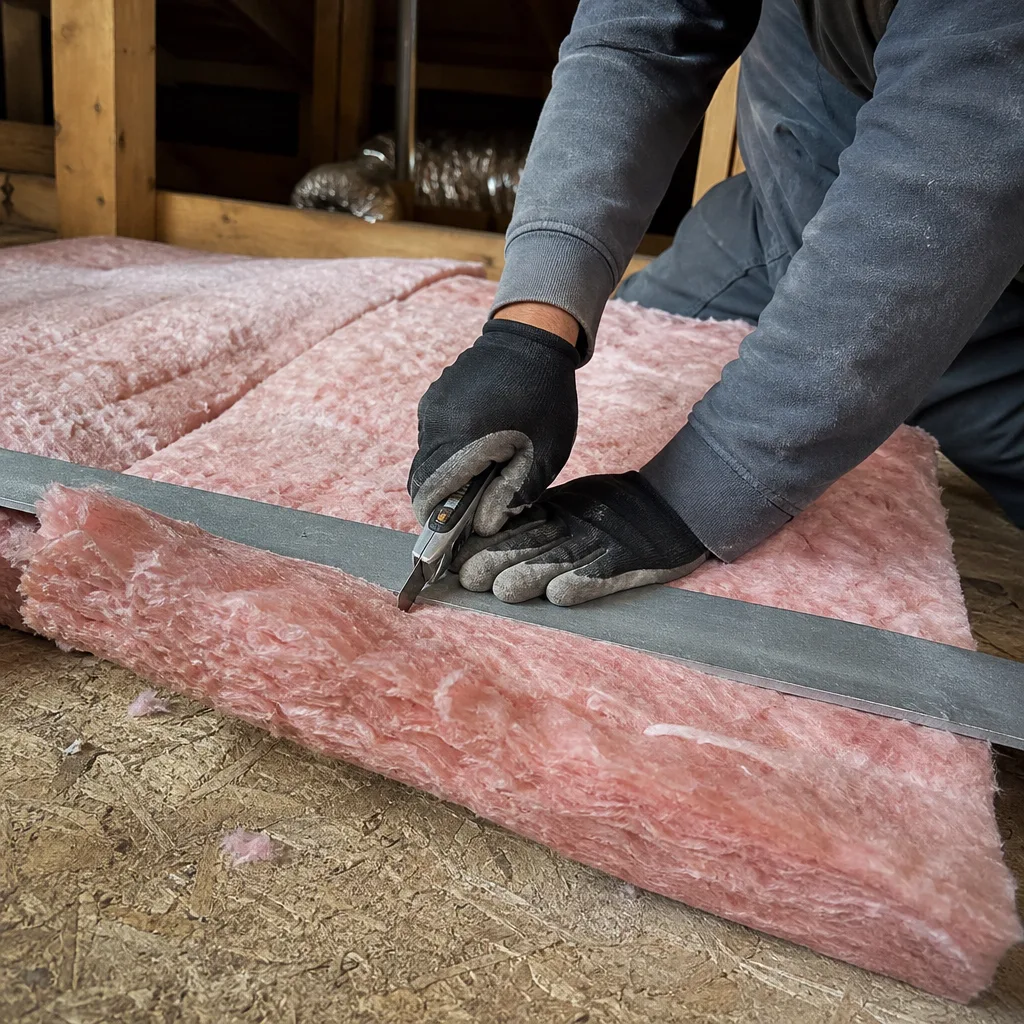
Radiant barriers only work when the reflective surface faces an open gap. Give it at least 1 inch of clear air between the foil and any adjacent material, and the radiative transfer is blocked. Lay foil-faced batts in contact with roof sheathing, which was common on 1990s-2000s North Las Vegas tract builds, and now heat conducts from the roof deck directly into the foil and into the batt. The radiant mechanism never engages. The homeowner sees no temperature change and blames the product.
We see this often in the master-planned subdivisions from that era. The classic North Las Vegas call is a 2003-2008 track home in Aliante or Eldorado where the original attic batts have fallen off the sloped ceiling plane or been blown flat, and the second-story bonus room hits 90°F inside by 4pm. Sometimes the builder installed a foil product; nearly as often it was laid wrong, and the fix is correcting the airspace, not buying a different brand.
What a Correct Installation Looks Like
- Perforated foil, not solid. Perforations let moisture vapor pass so condensation can’t collect on the foil’s cool side during dew-point swings, which happen in the desert too.
- Foil stapled to the underside of rafters, gap facing down. The reflective side faces the open attic volume, not the roof deck.
- Clear airflow at the ridge and soffit. A barrier that blocks ventilation creates a heat pocket instead of a cooled attic.
- Documented before-and-after. Attic temperature readings and photos, so you know what changed.
Why This Matters More in North Las Vegas Than Almost Anywhere
North Las Vegas sits in Climate Zone 3B, which means intense direct solar load and summer highs of 105-115°F, sustained. The dry air is an advantage for insulation generally, since moisture isn’t rotting your batts. But the same dry, dusty, windy conditions degrade a radiant barrier in two ways: dust coats the foil surface and raises its emissivity from 0.03 toward 0.20-0.30 over time, and monotone sun exposure breaks down weatherstripping and the foil itself.
That’s the degradation mechanism homeowners here need to know about. A barrier installed in 2006 in an Aliante attic, with deteriorated soffit screens letting grit in for nearly two decades, may now be functioning at roughly 70% of its original reflectivity. That’s why any honest retrofit assessment includes a documented photo record of the existing barrier’s condition. You can’t evaluate what you can’t see.
The housing stock makes the picture more complicated. North Las Vegas is one of the fastest-growing big cities in the US, and its housing divides sharply. The northern belt and subdivisions like Aliante and Eldorado run 1990s-2000s tract homes with settled R-13 or R-19 attic insulation. Older single-story ranch and block homes near downtown and the Nellis corridor often have little or no attic insulation at all. A radiant barrier plays a different role in each, and a good assessment tells you which one you’re dealing with.
What a Radiant Barrier Does Not Do
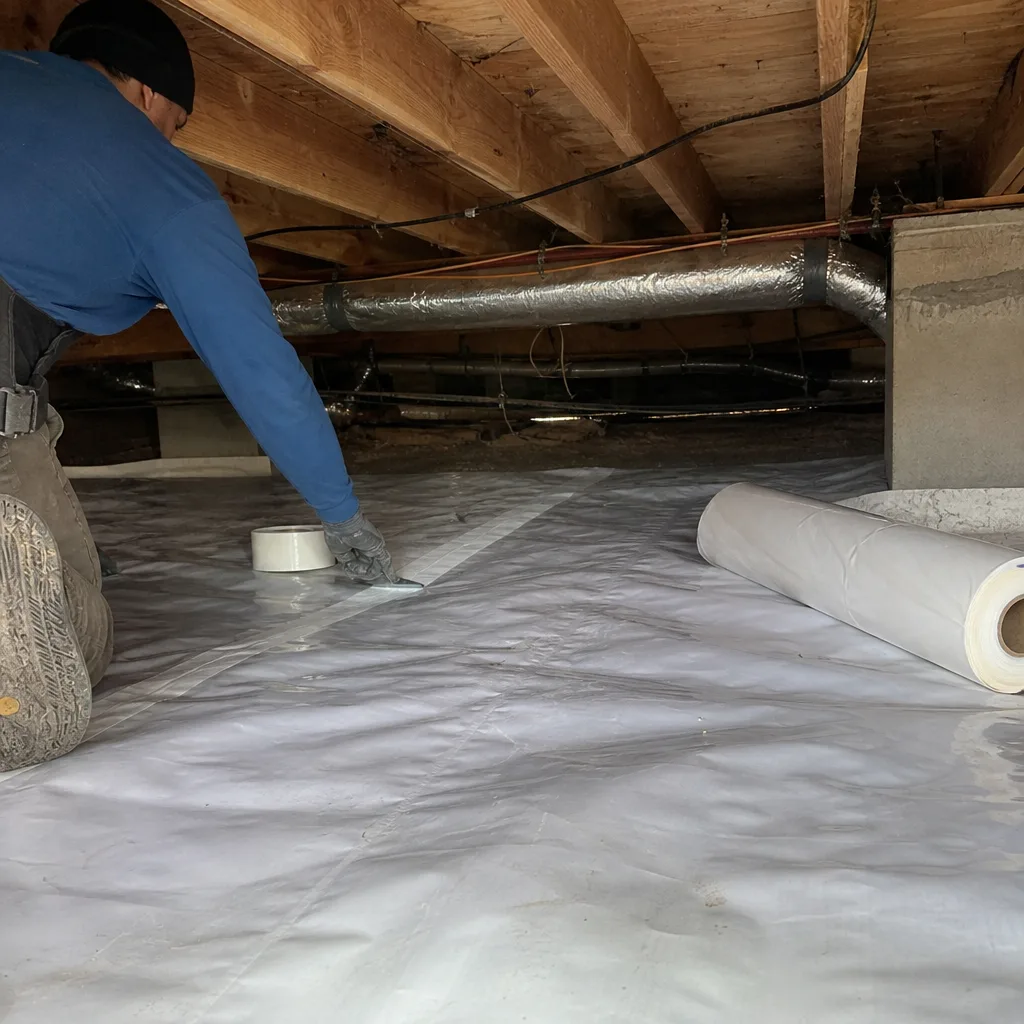
This is where a lot of North Las Vegas homeowners get sold something that won’t deliver. A radiant barrier does not add R-value to your insulation. It does not stop the air leaking through top plates, can lights, and penetrations, which is a separate problem. And it does not change a blower-door reading, because a blower-door test measures air leakage, not radiant heat.
The before-and-after ACH50 numbers on a radiant-barrier-only job will be identical. That’s not a failure of the product; it’s the product doing a different job. We publish those readings on every applicable job precisely so you can see what changed, which is how you separate a barrier’s actual function from a marketing claim. If your house also leaks air, the air sealing is a separate line item and it comes first, not in place of the barrier.
Radiant Barrier vs. Insulation Upgrade: What Each Fixes
| What you’re trying to fix | Radiant barrier helps? | Insulation upgrade helps? |
|---|---|---|
| Attic air temperature on a 115°F day | Yes, 20-30°F drop | No direct effect |
| Conduction through the attic floor | Indirectly, by shrinking the temperature difference | Yes, directly |
| Air leakage (top plates, can lights) | No | No, needs air sealing |
| Blower-door ACH50 reading | No change | No change |
| Bonus room that hits 90°F by 4pm | Often yes, along with air sealing and insulation | Often yes |
What you’ll usually get in a mid-2000s North Las Vegas tract home is a package: air seal the attic floor, bring the insulation up to code, then install the barrier correctly with its airspace. Materials come from Owens Corning, Johns Manville, or GreenFiber depending on the job, and we don’t lock you into a proprietary product. Every job starts with a written price and ends with a documented photo record. The radiant barrier installation service page for North Las Vegas covers the install scope in detail, and our home page has the full service line.
When It’s Worth Calling a Pro
If your barrier is already installed and you simply want to know whether it’s still working, an assessment is straightforward: photo record, attic temperature readings, and an honest verdict on condition. If nothing is installed, the bigger question is whether a barrier is the right spend for your house versus a plain insulation upgrade, and that depends on your roof, your existing R-value, and how much sun hits your west plane.
Our technicians have up to 10 years of experience working in desert attics, and the vetted local pros we connect you with are licensed and insured as their state requires. Estimates are free, and if you already have a competing written quote, we’ll read it with you and tell you what to ask about, a free second opinion on any written estimate.
FAQs
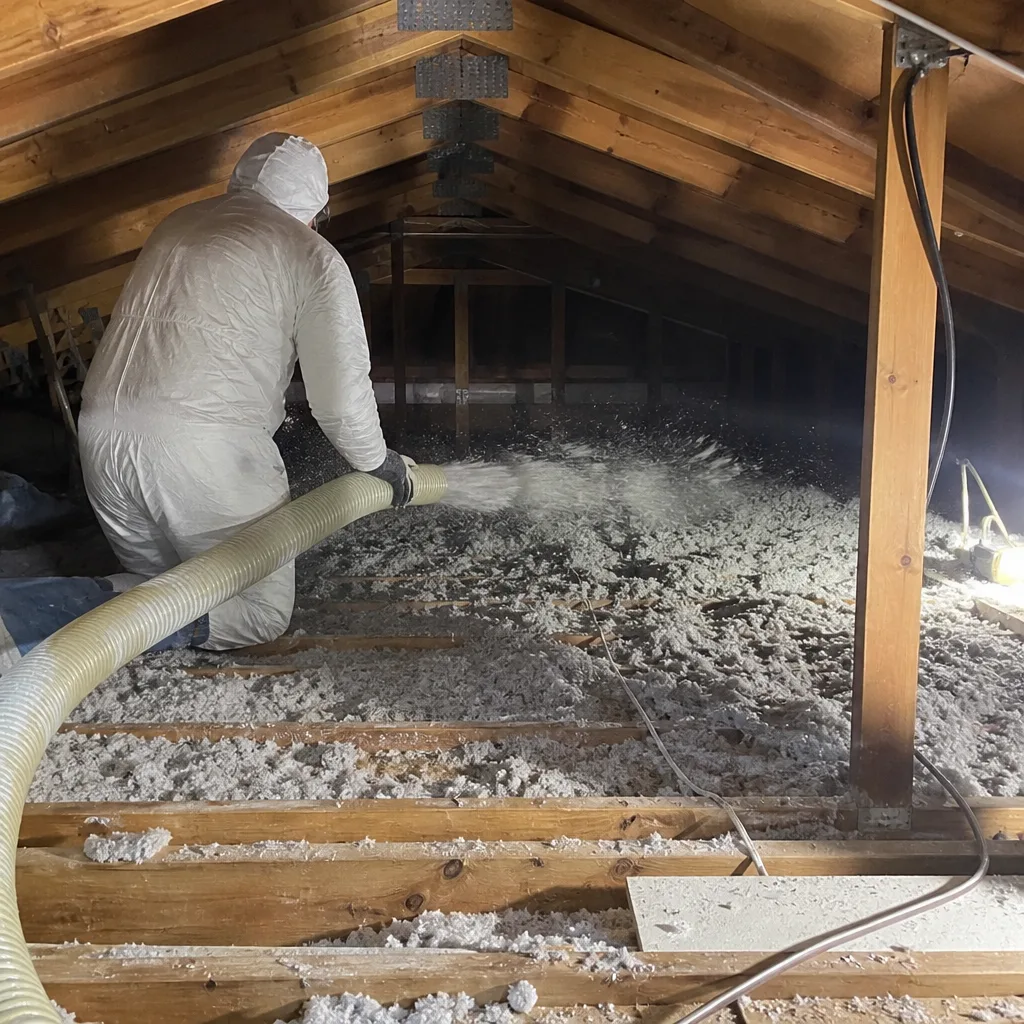
Yes, but only with an airspace above it. A barrier laid directly on top of existing blow-in insulation with no gap doesn’t function as a radiant barrier, because the foil conducts heat straight into the insulation below it. The correct install is foil attached under the rafters with the reflective side facing an open gap, not draped across the attic floor. Call (833) 630-4008 for a free estimate that confirms whether yours has the gap.
Yes, correctly installed ones reduce attic air temperature by 20-30°F on a 115°F day, which is a meaningful reduction given the solar load here. The effect is climate-specific and significantly larger in North Las Vegas’s intense direct sun than in a moderate or cloudy climate. The caveat is the install: laid wrong, it does nothing. Call (833) 630-4008 and we’ll check your attic and tell you what’s there.
Most correctly installed perforated foil barrier jobs run $1,400-$3,200 for a typical single-family attic in North Las Vegas, depending on attic size, roof complexity, and whether air sealing and insulation are bundled in. If your existing barrier just needs assessment, that’s a separate, smaller visit. Every job gets a written price before any work starts. Call (833) 630-4008 for an exact quote, and estimates are free.
It can reduce cooling runtime by shrinking the temperature differential across your insulation, but the size of the savings depends on how much heat your attic is transferring in the first place. If your attic floor is under-insulated or air leaks are unsealed, a barrier alone won’t get you the full benefit. That’s why we air seal first and insulate second. Call (833) 630-4008 for a free estimate on the whole package.
The most common sign is dust buildup that raises the foil’s emissivity and dulls its reflectivity, often visible in a documented photo record of the surface. A barrier installed in the 2000s with deteriorated soffit screens may be running at roughly 70% of its original reflectivity. A quick attic visit with a camera and a temperature reading tells the story. Call (833) 630-4008 to schedule an assessment in North Las Vegas.
If you’d rather have it looked at, Envelope Insulation North Las Vegas offers a no-pressure assessment in North Las Vegas. We’ll photograph what’s there, read your attic temperatures, and give you a written price before any work starts. Call (833) 630-4008.
Written by the team at Envelope Insulation North Las Vegas, serving North Las Vegas, NV.